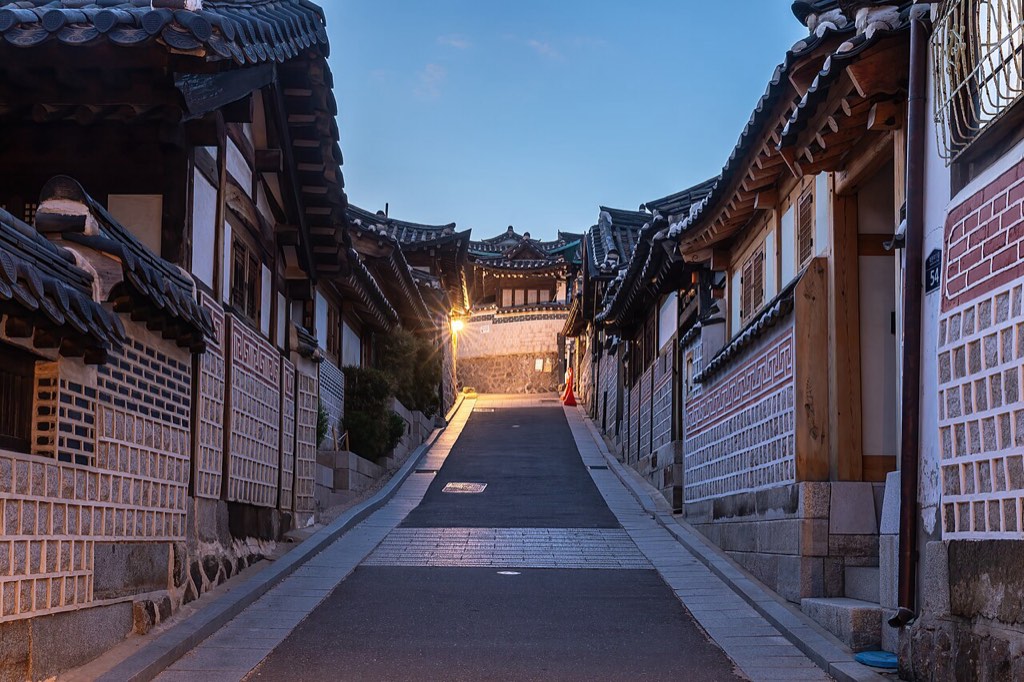
Bukchon Hanok Village
北村A hillside of hanok alleys between two palaces
Bukchon is a dense cluster of hanok — traditional tile-roofed houses — on the hill between Gyeongbokgung and Changdeokgung palaces, with roughly 900 of them still standing across the Gahoe-dong and Samcheong-dong neighborhoods. Its name means "the north village," the quarter uphill from Cheonggyecheon stream and Jongno, and in the Joseon era it housed the senior officials and yangban aristocrats who lived close to the palaces. The tightly packed rooflines you see today, however, are not Joseon originals but "urban hanok" built in the 1920s and 30s. Around 6.64 million people visited in 2024 by the district office's estimate — and yet this is still a residential neighborhood where people actually live, which shapes how you should walk it.
📖 The Story
In the Joseon era, Bukchon was the neighborhood of power. The hill sat between Gyeongbokgung and Changdeokgung, within easy reach of both, and so it was where senior officials and yangban families built their homes. A 1906 household register shows that 43.6% of Bukchon's household heads were yangban or officials. But the Bukchon of that time did not look like today's warren of small houses — it was a district of large residences sitting comfortably on generous plots of land.
The man who created today's landscape was Jeong Se-gwon (1888–1965), a developer active under Japanese colonial rule. In 1920 he founded the Geonyangsa construction company, subdivided Bukchon's large plots, and mass-produced improved hanok that ordinary Koreans could afford to buy. At a time when Japanese residential districts were pushing north across Cheonggyecheon stream, packing the hill with hanok was a way of keeping Bukchon a Korean neighborhood. The money he made flowed into the nationalist movement: as a director and treasurer of the Korean Production Movement Society, founded in 1923, he built and donated its headquarters in Nagwon-dong, and he also donated a building in Hwa-dong to the Korean Language Society — supporting the buy-Korean campaign and the Korean-language movement at the same time.
The alleys that were preserved this way now face a very different test. As visitor numbers climbed to 6.6 million a year, residents worn down by noise and intrusion began to move out, and in July 2024 the Seoul city government designated Bukchon the country's first "special tourism management zone." In the designated red zone — Bukchon-ro 11-gil and the Gahoe-dong 31 area — tourist visits are permitted only between 10:00 and 17:00, and since March 2025 violations carry a fine. Walking Bukchon means sharing an alley someone fought to keep a century ago with the people who live in it now.
✦ Highlights
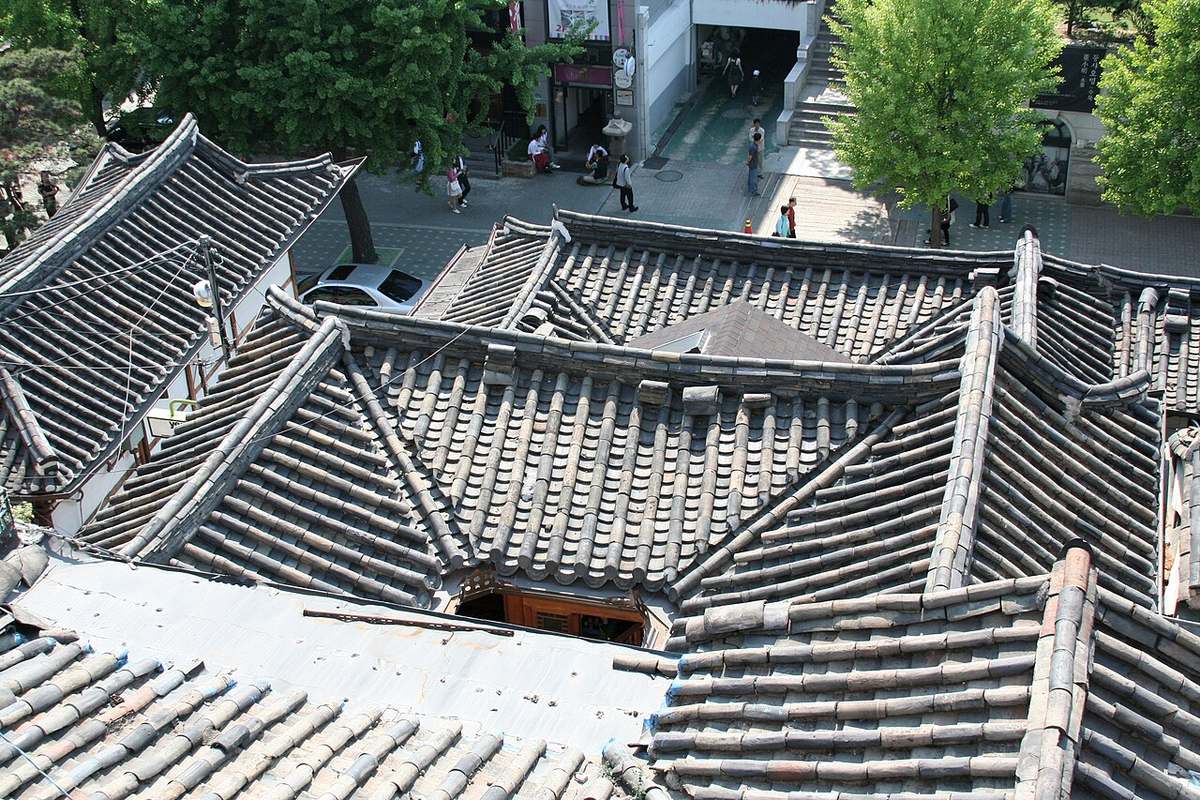
- ›Bukchon Viewpoint (View 4 of the Eight Views)Climb the hill at Gahoe-dong 31 and the tiled roofs ripple away beneath you, with the downtown skyline standing behind them like a backdrop. This is where Bukchon's signature photograph comes from.
More
This lookout is View 4 of the "Eight Views of Bukchon" designated by the Korea Tourism Organization. Down in the alleys you see only walls and eaves; from up here you can read at a glance how Jeong Se-gwon fitted houses onto subdivided plots — the near-total absence of space between one roof and the next is the fingerprint of 1920s–30s urban hanok development. Note that this slope sits inside the special management red zone, so tourist visits are allowed only from 10:00 to 17:00, and every building on either side is someone's home.
- ›The Gahoe-dong 31 Alley (View 7 of the Eight Views)Bukchon's most famous lane: a narrow, steep alley walled on both sides by an unbroken run of hanok gates and tiled eaves. It is also the very heart of the special tourism management red zone.
More
As View 7 of the Eight Views, this alley has been photographed more than any other spot here — and its residents have borne the brunt of it. When Seoul designated Bukchon the nation's first special tourism management zone on 1 July 2024, Bukchon-ro 11-gil and this block were placed inside the red zone, with tourist visits restricted to 10:00–17:00 (fines for violations took effect in March 2025). The rules are simple: don't come after 17:00, don't peer through gateways or lean on walls to take photos, and keep your voice down.
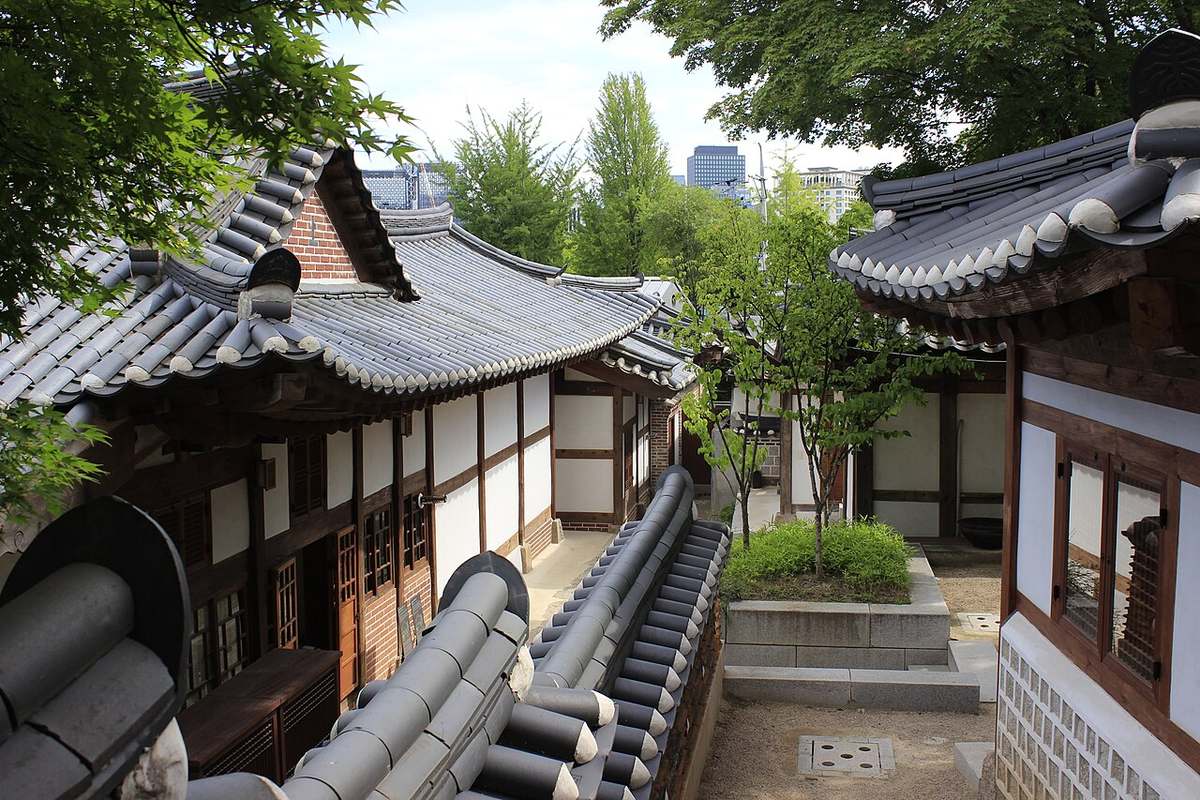
- ›Baek In-je HouseBuilt in 1913, this is one of Bukchon's landmark early-modern hanok, now open as a branch of the Seoul Museum of History — and admission is free. It is the one place here where you can actually walk inside a hanok instead of admiring walls from the street.
More
It was built in 1913 by the businessman Han Sang-ryong and later took the name of a subsequent resident, Baek In-je; today it is designated a Seoul Folklore Cultural Heritage. Several buildings spread comfortably across a generous lot, a scale that contrasts sharply with the compact urban hanok Jeong Se-gwon fitted onto subdivided plots — a plain picture of how uneven Bukchon was in that same era. It is also the best place to step out of the crowded alleys, sit on the wooden veranda, and simply look at a courtyard.
- ›The Samcheong-dong Stone Stairway (View 8 of the Eight Views)The final scene of the Eight Views is a stone stairway dropping from the Gahoe-dong hill toward Samcheong-dong. It lies outside the designated red zone of Bukchon-ro 11-gil and Gahoe-dong 31, so you can take it without watching the clock, and at the bottom the street opens into Samcheong-dong's run of cafés and galleries.
- ›Yun Po-sun HouseA 99-kan mansion from the 1870s, elevated to Historic Site status in 2002. It is still used as a private residence, so the interior is generally closed, but the gate and outer walls give a sense of the scale of a late-Joseon upper-class home.
🚶 Self-Guided Walk
- 1Anguk Station, Exit 3Come out of Exit 3 at Anguk Station on Line 3 and walk uphill toward the Bukchon Traditional Culture Center. From here on it is a climb.💡 Bukchon is one long series of slopes and stone steps — leave the heels behind.
- 2Bukchon Traditional Culture CenterAn information center housed in a hanok — a good first stop to step into a courtyard, pick up a map of Bukchon, and plan your route.
- 3Baek In-je HouseThe 1913 hanok mansion, now a free branch of the Seoul Museum of History. Seeing the inside of a hanok before you enter the crowded alleys changes how you read everything that follows.💡 Sit on the wooden veranda and look at the courtyard before you leave — few places in Bukchon let you sit like this.
- 4Bukchon Viewpoint (View 4)The lookout at the top of the Gahoe-dong 31 hill — layer upon layer of tiled roofs with the modern city rising behind them, the definitive Bukchon view.💡 Inside the red zone: tourist visits only between 10:00 and 17:00.
- 5The Gahoe-dong 31 Alley (View 7)Step down from the lookout into Bukchon's signature alley, lined with hanok gateways. Every door is a real home, so pass through quietly and without lingering at the gates.💡 ⚠ Tourist access is restricted after 17:00, and since March 2025 violations carry a fine.
- 6The Samcheong-dong Stone Stairway (View 8)The last of the Eight Views. Follow the stone steps down toward Samcheong-dong and the route ends on a street of cafés and galleries — a natural place to finish the walk.
🧭 Visitor Info
💡 Good to Know
- Bukchon is a residential neighborhood first and a sight second. Keep your voice down, never peer through a gateway, and don't climb onto someone's wall or steps for a photo — that is the basic etiquette here.
- In the red zone (Bukchon-ro 11-gil and the Gahoe-dong 31 area), tourist visits are allowed only between 10:00 and 17:00 — the result of Bukchon becoming Korea's first special tourism management zone in July 2024, with fines in force since March 2025.
- With nearly 6.6 million visitors a year, the alleys get crowded by midday. Walk the Samcheong-dong lanes outside the red zone early, then move into the red zone when it opens at 10:00 — fewer people, and you stay within the rules.
- Allow an hour to an hour and a half for the alleys alone, or half a day with Baek In-je House and the Samcheong-dong street. Changdeokgung, Gyeongbokgung, and Insadong are all within walking distance, so it is easy to build a full day around it.
🗺 Pair Your Visit
Jeong Se-gwon, who created Bukchon's hanok alleys, founded the Geonyangsa company in 1920 and mass-supplied urban hanok; he was also a director and treasurer of the Korean Production Movement Society (founded 1923), for which he built and donated a headquarters in Nagwon-dong. Because he likewise donated a building in Hwa-dong to the Korean Language Society, he is a favorite exam subject linking the colonial-era self-strengthening movement — the buy-Korean campaign and the Korean-language research societies — in a single question.