1 The Politics of the Heungseon Daewongun and the Rejection of Foreign Trade
In 1863, when the country had been shaken by 60 years of in-law (sedo) politics, the Heungseon Daewongun took power on behalf of the young King Gojong. Reforms to strengthen royal authority at home and the rejection of trade with the West abroad — these two axes defined Joseon on the eve of its opening.
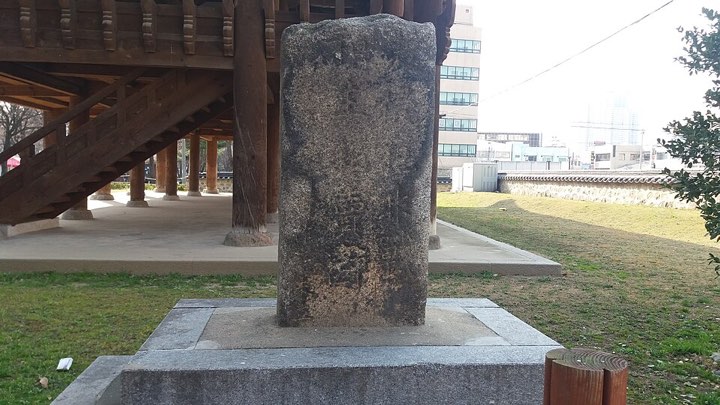
- Domestic reforms — reduced and abolished the Border Defense Council (Bibyeonsa) (reviving the State Council and the Three Armies Command), abolished all but 47 seowon (Confucian academies) ("anyone who harms the people I will not forgive, even if Confucius came back to life"), the hopo system (a military cloth tax levied even on the yangban — fierce yangban backlash), the sachang system (to fix the abuses of the grain-loan system), and the rebuilding of Gyeongbok Palace (excessive issue of wonnapjeon donations and the dangbaekjeon coin → soaring prices; logging of yangban graveyard forests → loss of popular support).
- The French Campaign (Byeongin Yangyo, 1866) — using the Byeongin Persecution (the execution of French priests) as a pretext, French forces invaded Ganghwa Island. They were repelled by Han Seong-geun (at Munsu Fortress) and Yang Heon-su (at Jeongjok Fortress). As they withdrew, they looted the Oegyujanggak Uigwe (royal protocols) (returned in 2011 on long-term loan).
- The United States Campaign (Sinmi Yangyo, 1871) — using the General Sherman incident (1866, when the soldiers and people of Pyongyang burned an American merchant ship) as a pretext, U.S. forces invaded Ganghwa Island. Eo Jae-yeon's troops fought to the death at Gwangseong Garrison (the Sujagi commander's flag was seized). Afterward, cheokhwabi monuments were erected across the country — "When the Western barbarians invade, not to fight is to make peace, and to advocate peace is to sell the country."
- The Oppert grave-robbing incident (1868, the tomb of Prince Namyeon) — an event that hardened the resolve to reject trade.
Exam points
- The hopo system = a military cloth tax even on the yangban / abolition of seowon — describe both as "stabilizing people's livelihoods + strengthening royal authority."
- Order of events: Byeongin Persecution → General Sherman → French Campaign (France) → Oppert → United States Campaign (U.S.) → cheokhwabi.
- Oegyujanggak Uigwe (French Campaign, France) vs. the Sujagi flag (United States Campaign, U.S.) — matching looted cultural properties.
2 The Opening of Ports, Enlightenment Policy, and Backlash — the Imo Mutiny and the Gapsin Coup
After the Daewongun stepped down, Joseon opened its doors with the Treaty of Ganghwa (1876). In the decade that followed, the moderate and radical enlightenment factions and the wijeong-cheoksa (defend orthodoxy, reject heterodoxy) faction clashed over the pace of enlightenment policy, and upheaval continued.
- The Treaty of Ganghwa — prompted by the Un'yō incident (1875). It was Korea's first modern treaty and an unequal one: ① Joseon is a sovereign state (→ intended to deny Qing suzerainty) ② opening of Busan, Wonsan, and Incheon ③ the right to survey the coast ④ consular jurisdiction (extraterritoriality). The Korea–U.S. Treaty of Amity and Commerce (1882) was Korea's first treaty with a Western power — with good offices and most-favored-nation treatment.
- Enlightenment policy — established the Office for the Management of State Affairs (Tongni Gimu Amun), created the modern Byeolgigun army, and sent missions: susinsa envoys (Kim Gi-su and Kim Hong-jip — who brought in the Joseon chaengnyak) and the Gentlemen's Sightseeing Mission (to Japan), the Yeongseonsa (to Qing China, for weapons manufacture — the Gigichang arsenal), and the Bobingsa (to the United States). The Joseon chaengnyak (Korea Strategy: befriend China, ally with Japan, connect with America) brought back by Kim Hong-jip triggered the wijeong-cheoksa movement, such as Yi Man-son's Yeongnam Manin-so (Petition of Ten Thousand from Yeongnam).
- The wijeong-cheoksa movement — 1860s opposition to trade (Yi Hang-ro, Gi Jeong-jin) → 1870s opposition to opening ports (Choe Ik-hyeon's theory that Japan and the West are one, and his ax-carrying appeal against appeasement) → 1880s opposition to enlightenment (the Yeongnam Manin-so) → 1890s carried on as anti-Japanese righteous armies.
- The Imo Mutiny (1882) — old-style soldiers, discriminated against (paid 13 months' overdue wages in rice mixed with chaff), erupted, joined by the urban poor. The Daewongun returned to power for 33 days → suppressed by Qing military intervention (the Daewongun was taken to Tianjin). Results: full-scale Qing interference in internal affairs (dispatch of advisers Ma Jianchang and Möllendorff), the Treaty of Jemulpo (indemnity to Japan + stationing of legation guards), and the Regulations for Maritime and Overland Trade between Qing and Joseon Subjects (granting Qing merchants the right to trade in the interior).
- The Gapsin Coup (1884) — radical enlightenment leaders including Kim Ok-gyun, Bak Yeong-hyo, and Seo Jae-pil staged a coup at the celebration for the opening of the Postal Administration, issuing a 14-point program (ending subservience to Qing, equal rights for the people, reform of the land tax, a cabinet system). Qing intervention made it a three-day regime. Results: the Treaty of Hanseong (indemnity to Japan) and the Convention of Tianjin (simultaneous Qing–Japan withdrawal and mutual notification before sending troops — a foreshadowing of the Sino-Japanese War 10 years later). Significance: the first political reform movement aimed at building a modern state / Limitations: imposed from above, dependent on Japan, and lacking popular support.
- After the Gapsin Coup — the Geomundo incident (1885–87, Britain's illegal occupation on the pretext of checking Russia) and the rise of proposals to neutralize Joseon (Buddler and Yu Gil-jun).
Exam points
- The two unequal clauses of the Treaty of Ganghwa (the survey right and consular jurisdiction) + the hidden intent of the "sovereign state" clause (excluding Qing).
- What the Imo Mutiny and Gapsin Coup share: both failed through Qing intervention → deepening Qing interference. Match the resulting treaties (Jemulpo / Hanseong and Tianjin).
- The wijeong-cheoksa lineage: opposition to trade → Japan-and-the-West-are-one theory (Choe Ik-hyeon) → the Yeongnam Manin-so (backlash against the Joseon chaengnyak) → righteous armies.
3 The Donghak Peasant Movement and the Gabo and Eulmi Reforms (1894–1895)
The year 1894 was a watershed in Korea's modern history. A revolution from below (the Donghak Peasant Movement), a reform from above (the Gabo Reforms), and the Sino-Japanese War over the peninsula all overlapped in a single year.
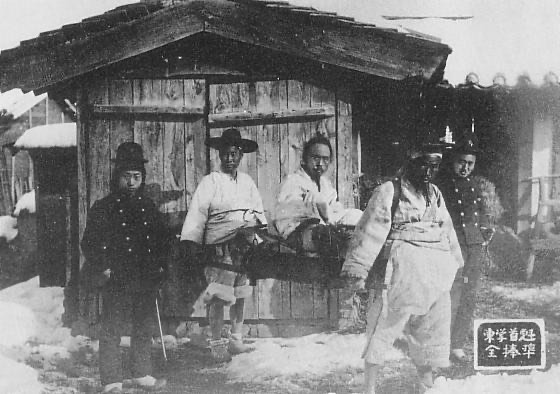
- Background — the tyranny of Jo Byeong-gap, the magistrate of Gobu (a water tax on the Manseokbo reservoir). Jeon Bong-jun's sabaltongmun (round-robin manifesto) → the Gobu uprising → the repression by inspector Yi Yong-tae, which provoked a second uprising.
- The first uprising (anti-feudal) — the Mujang and Baeksan uprisings ("save the nation and secure the people," "drive out violence and rescue the people"), victories at Hwangtohyeon and Hwangnyongchon, and the capture of Jeonju Fortress → the government asked Qing for troops → under the Convention of Tianjin, Japan also sent troops → fearing foreign intervention, the peasant army concluded the Jeonju Truce. Through the jipgangso (peasant self-government offices in 53 counties of Jeolla), they carried out a reform program — burning slave registers, allowing widows to remarry, punishing corrupt officials, and distributing land equally.
- The second uprising (anti-foreign) — against the Japanese seizure of Gyeongbok Palace (June) and interference in internal affairs, the Southern Assembly (Jeon Bong-jun) and Northern Assembly (Son Byeong-hui) rose again in alliance → they were defeated by Japanese and government forces at the Battle of Ugeumchi → Jeon Bong-jun was captured and executed. It had a dual "anti-feudal + anti-foreign" character, and the remaining forces later turned to the Hwalbindang and righteous armies.
- The Gabo Reforms (1894) — Phase 1: led by the Deliberative Council (Gungukgimucheo) — abolition of the status system (and slavery), abolition of the gwageo (civil service examination), a ban on early marriage and permission for widows to remarry, abolition of torture and guilt by association, unification of finance (under the Takji Amun), and adoption of the silver standard and cash payment of taxes. Phase 2: the Fourteen Articles (Hongbeom 14jo, with the character of Korea's first modern constitution), the Royal Edict on Education, and the establishment of courts. It was a modern reform that partly accepted the Donghak demands / but its limitations were that it proceeded under Japanese coercion and neglected military reform.
- The Eulmi Incident and the Eulmi Reforms (1895) — the Triple Intervention (Russia, France, Germany) weakened Japan → Joseon turned pro-Russian (drawing on Russia to keep out Japan) → Japan carried out the assassination of Empress Myeongseong (the Eulmi Incident). The Eulmi Reforms: the top-knot cutting order, the solar calendar, smallpox vaccination, and elementary schools → enraged by the hair-cutting order and the murder of the queen, the Eulmi righteous armies rose (Yu In-seok and Yi So-eung, the first anti-Japanese righteous armies). The reforms were halted by King Gojong's royal refuge at the Russian legation (Agwan Pacheon) (1896).
Exam points
- Arranging the Donghak sequence is the most common question: Gobu → Hwangtohyeon → Jeonju Truce (jipgangso) → Japanese seizure of Gyeongbok Palace → Ugeumchi.
- The core of the Gabo Reforms = abolition of the status system (accepting the Donghak demand). Distinguish the Deliberative Council (Phase 1) from the Fourteen Articles (Phase 2).
- The causal chain: Triple Intervention → pro-Russian turn → Eulmi Incident → hair-cutting order → Eulmi righteous armies → royal refuge at the Russian legation.
4 The Independence Club, the Korean Empire, and the Loss of Sovereignty (1896–1910)
After the royal refuge at the Russian legation, calls for self-strengthening independence (the Independence Club) and emperor-centered modernization (the Korean Empire) competed, but Japan, victorious in the Russo-Japanese War, stripped away Korea's sovereignty step by step. The order of the treaties in this loss of sovereignty is the backbone of this section.
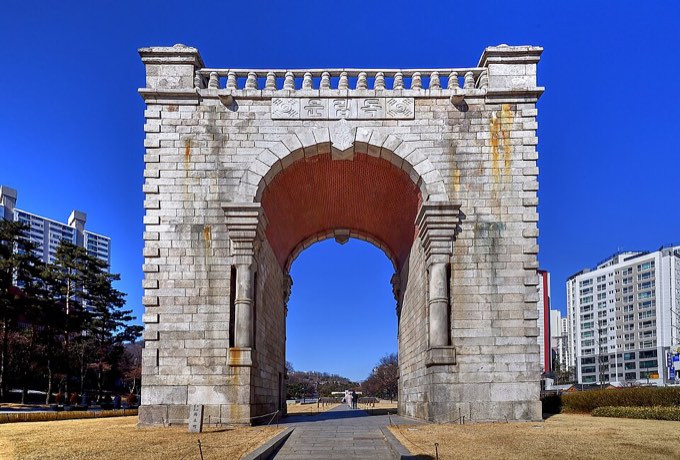
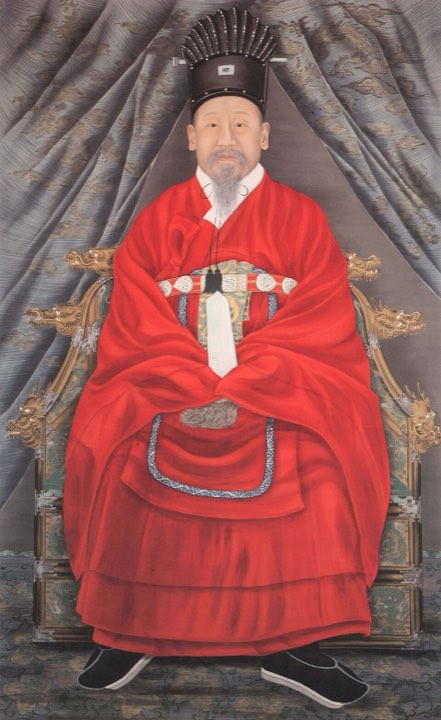
Photo — Independence Gate: Cultural Heritage Administration (KOGL Type 1)
| Year | Treaty / event | What was taken |
|---|---|---|
| Feb 1904 | Korea–Japan Protocol | Right to use strategic military sites (during the Russo-Japanese War) |
| Aug 1904 | First Korea–Japan Agreement | Rule by advisers — Megata for finance, Stevens for foreign affairs |
| Nov 1905 | The Eulsa Treaty (Second Korea–Japan Agreement) | Stripped of diplomatic sovereignty; a Residency-General was set up (first Resident-General: Itō Hirobumi) |
| Jul 1907 | New Korea–Japan Agreement (Jeongmi Seven-Article Treaty) | Rule by vice-ministers + disbandment of the army under a supplementary memorandum |
| 1909 | Giyu Memorandum | Stripped of judicial authority |
| Aug 29, 1910 | Korea–Japan Annexation Treaty (the National Disgrace of 1910) | National sovereignty — the Government-General of Korea was established |
- The Independence Club (1896–98) — founded by Seo Jae-pil, with the Tongnip Sinmun (The Independent) and Independence Gate (on the site of Yeongeunmun — a symbol of ending subservience to Qing). It held the Mass Assembly (Manmin Gongdonghoe) (the first modern popular assembly — blocking Russia's demand to lease Jeolyeongdo) and the Six Articles of the Joint Government-People Assembly (pushing to establish a parliament). It was disbanded after conservatives falsely accused it of plotting to establish a republic.
- The Korean Empire (1897) — returning from the Russian legation, Gojong ascended as emperor at the Hwangudan altar, with the era name 'Gwangmu.' The Gwangmu Reforms: "old as the foundation, new for reference" (gubon sincham) — the Korean Empire's constitution (Daehanguk Gukje, 1899, absolute imperial power), land surveys and the issue of jigye (modern land-ownership certificates), promotion of industry (founding factories and companies), and the Wonsubu (the emperor's supreme military command).
- Resistance to the Eulsa Treaty — Min Yeong-hwan's suicide, Jang Ji-yeon's editorial "I Wail Bitterly Today" (in the Hwangseong Sinmun), Gojong's Hague emissaries (1907, Yi Sang-seol, Yi Jun, and Yi Wi-jong — a failure that became the pretext for forcing Gojong to abdicate), the five-traitor assassination squad of Na Cheol and O Gi-ho, the shooting of Stevens by Jeon Myeong-un and Jang In-hwan (1908), and An Jung-geun's killing of Itō Hirobumi (1909, at Harbin — he wrote 'On Peace in the East' in prison).
- The anti-Japanese righteous army war — the Eulmi righteous armies (over the hair-cutting order) → the Eulsa righteous armies (Min Jong-sik and Choe Ik-hyeon — who died in captivity on Tsushima, and Sin Dol-seok — the first commoner righteous-army commander) → the Jeongmi righteous armies (1907, whose fighting power surged as disbanded soldiers joined) → the march on Seoul by the 13-Province Righteous Army (1908, Yi In-yeong and Heo Wi — a failure) → weakened by Japan's 'Grand Suppression of Southern Korea' (1909), they moved to Manchuria and the Maritime Province (→ the roots of the independence armies).
- The patriotic enlightenment movement — the Boanhoe (blocking Japan's demand for wasteland-reclamation rights), the Korea Self-Strengthening Society (opposing Gojong's abdication), and the Sinminhoe (1907, a secret society of An Chang-ho and Yang Gi-tak): aiming at a republic, running Daeseong School (Pyongyang) and Osan School (Jeongju), the Taegeuk Bookstore and a ceramics company, and building an independence base at Samwonbo in southern Manchuria (Sinheung Training School → Sinheung Military Academy) — it collapsed in the '105-Man Incident' (1911). The National Debt Repayment Movement (1907, begun by Seo Sang-don in Daegu and backed by the Daehan Maeil Sinbo — frustrated by the Residency-General's suppression).
Exam points
- Arrange the treaties of the loss of sovereignty: Korea–Japan Protocol → First Agreement (advisers) → Eulsa Treaty (diplomatic sovereignty) → Jeongmi Seven-Article Treaty (disbanding the army) → annexation. The most common question!
- Keywords for the Gwangmu Reforms: gubon sincham + jigye. Keywords for the Independence Club: the Mass Assembly + the Six Articles.
- Distinguish the three phases of righteous armies (Eulmi — hair-cutting order / Eulsa — Min Jong-sik, Choe Ik-hyeon, Sin Dol-seok / Jeongmi — disbanded soldiers, march on Seoul).
- The Sinminhoe = a republic + schools + an overseas base + the 105-Man Incident. Alone among patriotic enlightenment groups, it prepared for armed struggle.
5 Modern Institutions, the Press & Education (1883–1905)
After the ports opened, Western institutions—newspapers, schools, railways, telegraphs and hospitals—took root. The Korean History Exam often asks which was the "first," so the key here is to distinguish who founded each institution, when, and what it was first at.
| Newspaper | Publisher (year) | Notes |
|---|---|---|
| Hanseong sunbo | Bangmun-guk (1883) | The first modern newspaper; all-Chinese script, every ten days—halted by the Gapsin Coup |
| The Independent (Dongnip sinmun) | Seo Jae-pil (1896) | The first privately run newspaper; Korean and English editions |
| Hwangseong sinmun | Namgung Eok et al. (1898) | Mixed Korean-Chinese script; ran Jang Ji-yeon’s "Siilya bangseong daegok" |
| Daehan maeil sinbo | Bethell & Yang Gi-tak (1904) | Published by the Briton Bethell, so hard to censor—strongly anti-Japanese; backed the National Debt Redemption Movement |
- The press — the Hanseong sunbo (1883, Bangmun-guk, first modern paper), The Independent (1896, Seo Jae-pil, first private paper), the Hwangseong sinmun (1898, mixed script), the Daehan maeil sinbo (1904, Bethell & Yang Gi-tak, anti-Japanese) and the Manse-bo (1906, Cheondogyo). "First modern paper vs. first private paper" is the most common trap.
- Education — Wonsan haksa (1883, the first modern private school, founded by the residents and officials of Deokwon), the Dongmunhak (1883, interpreter training), Yugyeong gongwon (1886, a government school with foreign teachers such as Hulbert and Gilmore), Baejae haktang (1885, Appenzeller) and Ewha haktang (1886, Scranton). The Royal Rescript on Education (1895) of the Gabo–Eulmi reforms established government primary and normal schools.
- Facilities, telegraph & transport — Gwanghyewon (1885, Allen → Jejungwon, the first Western hospital), the telegraph (1885), the telephone, the streetcar (1899, Hanseong Electric Co., Seodaemun–Cheongnyangni), the Gyeongin Railway (1899, the first railway; Morse’s concession completed by Japan), the Gyeongbu Line (1905) and the Gyeongui Line (1906). The Ujeong chongguk (1884) was halted by the Gapsin Coup and resumed as the postal office in the Eulmi reforms. The Currency Reform (1905, Megata) abolished the mint (Jeonhwan-guk) and exchanged baekdonghwa coins at graded rates (A/B/C, with C refused), subordinating domestic commerce and finance to Japan.
Exam Points
- "First" matching traps — first modern paper (Hanseong sunbo) vs. first private paper (The Independent); first modern private school (Wonsan haksa) vs. first government school with foreign teachers (Yugyeong gongwon); first railway (Gyeongin Line); first Western hospital (Gwanghyewon).
- Tell the four papers apart by publisher and script — Bangmun-guk (all-Chinese), Seo Jae-pil (Korean & English), Hwangseong sinmun/Jang Ji-yeon (mixed script), Daehan maeil sinbo/Bethell (anti-Japanese).
- The Currency Reform = Megata + graded (A/B/C) exchange of baekdonghwa + abolition of the mint + blow to domestic merchants. The Gyeongin Line = Morse’s (U.S.) concession → completed by Japan.
6 Japanese Colonial Rule and Economic Exploitation
Japanese rule shifted every decade, and each period's political method of rule and economic exploitation are tested as a set. This table is the backbone of the entire colonial period.
| Period | Method of rule | Main policies | Economic exploitation |
|---|---|---|---|
| 1910s | Military rule | Gendarme police, the Korean Flogging Ordinance, teachers wearing uniforms and swords, and bans on the press and assembly | The Land Survey Project (1910–18), the Company Ordinance (a permit system), and the Fishery and Forestry Ordinances |
| 1920s | "Cultural rule" (a deceptive divide-and-rule policy) | Ordinary police (though their numbers and budget tripled), permission to publish newspapers (with censorship and suspensions), cultivation of pro-Japanese collaborators, and the Peace Preservation Law (1925) | The Rice Production Increase Plan (from 1920), abolition of the Company Ordinance (a notification system — opening the way for Japanese capital), and abolition of tariffs |
| 1930s–40s | Rule to erase national identity | "Japan and Korea as one body" and the common-ancestry theory, forced adoption of Japanese names, compulsory Shinto shrine worship and bowing toward the imperial palace, the effective abolition of the Korean-language subject, and recitation of the Oath of Imperial Subjects | Turning Korea into a supply base, the "cotton in the south, sheep in the north" policy, and the National Mobilization Law (1938) — forced requisitioning and rationing, and forced mobilization for labor conscription, military conscription, and as Japanese military "comfort women" |
- The Land Survey Project — justified as "establishing modern land ownership," but in reality, through a deadline-based reporting system, the Government-General seized unreported land, common land, and clan land → selling it cheaply to the Oriental Development Company and to Japanese settlers. Farmers lost their customary cultivation rights and were reduced to fixed-term tenants.
- The Rice Production Increase Plan — meant to solve the rice shortage in mainland Japan. More rice was taken away than the increase in output, so Korean per-capita rice consumption fell → people survived on Manchurian grains. Even the costs of increasing output, such as irrigation-association fees, were passed on to the farmers.
- The Peace Preservation Law (1925) — a legal weapon to suppress socialism and the independence movement. A prime example revealing the true nature of "cultural rule."
- From the 1930s on — as a way out of the Great Depression, Japan widened its wars of aggression (the Manchurian Incident 1931 → the Second Sino-Japanese War 1937 → the Pacific War 1941). It turned the peninsula into a supply base: munitions industry in the north, and the nammyeon-bugyang policy (cotton in the south, sheep in the north). After the National Mobilization Law came rice requisitioning, metal requisitioning (down to brass bowls and spoons), and forced mobilization (labor and military conscription, the Labor Service Corps, and Japanese military "comfort women").
Exam points
- Keywords to identify the period: flogging and gendarmes = 1910s / the Peace Preservation Law and rice-increase plan = 1920s / forced name change and requisitioning = 1930s on.
- The Land Survey Project = "deadline-based reporting system" + the Oriental Development Company. The rice-increase plan = "increase in output < amount taken away."
- The Company Ordinance: a permit system (1910, to suppress Korean capital) → abolished for a notification system (1920, to bring in Japanese capital) — note the reason for the reversal.
7 The March First Movement and the Provisional Government of the Republic of Korea
The March First Movement (1919) was the largest national movement of the colonial period and the root of today's Republic of Korea — the preamble of the current constitution states that it inherits "the legitimacy of the Provisional Government of the Republic of Korea, established by the March First Movement."
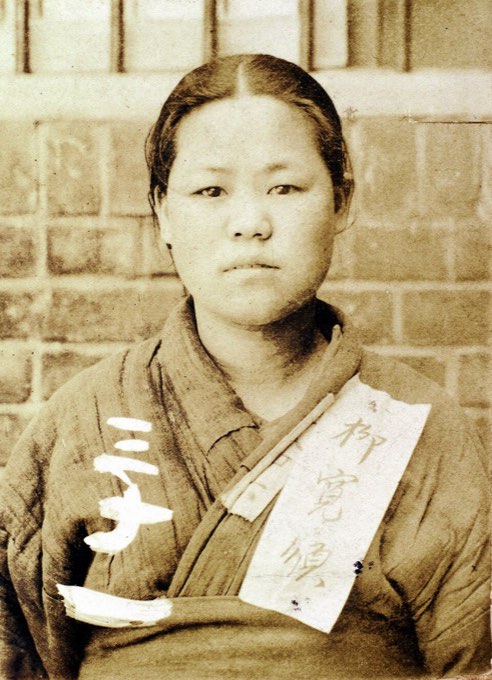
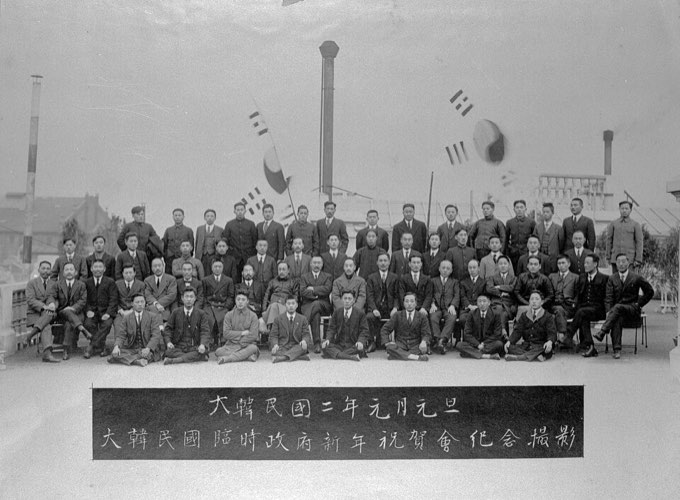
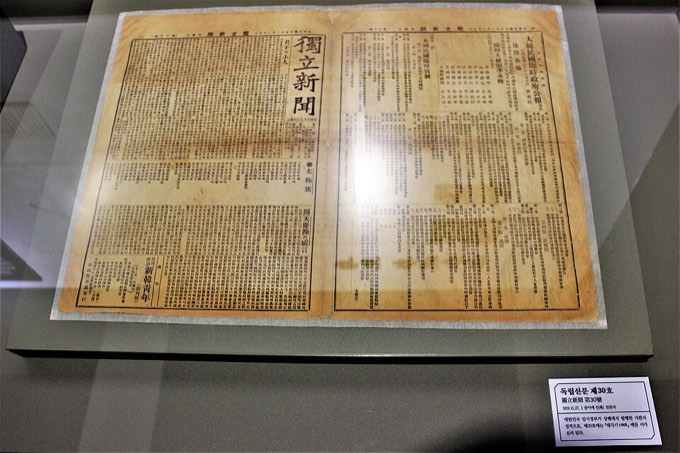
Photo — Tongnip Sinmun no. 30: Trainholic, CC BY-SA 4.0
- Background — Wilson's principle of national self-determination, the New Korea Youth Party's dispatch of Kim Gyu-sik to the Paris Peace Conference, the February 8 Declaration of Independence (by Korean students in Tokyo), and the death of Gojong (with rumors of poisoning) and his funeral day.
- Development — the Declaration of Independence by the 33 national representatives (at Taehwagwan) plus the mass cheers of students and citizens at Tapgol Park → spread nationwide (2 million people over two months) → as it spread to the countryside it turned into armed resistance → brutal Japanese suppression: Yu Gwan-sun (at the Aunae market; she died at Seodaemun Prison) and the Jeam-ri massacre (villagers locked in a church and burned).
- Significance and impact — ① the direct trigger for establishing the Provisional Government of the Republic of Korea ② a shift in Japan's method of rule (military → "cultural") ③ influence on China's May Fourth Movement, India's nonviolent movement, and others ④ the popularization and organization of the independence movement.
- Establishing the Provisional Government (April 1919, Shanghai) — the first democratic-republican government (Article 1 of the Provisional Charter: "The Republic of Korea shall be a democratic republic"), launched under Premier Syngman Rhee. In September 1919 it merged the various provisional governments (the legitimacy of the Hanseong government + the Shanghai location) and reorganized under a presidential system — President Syngman Rhee, Premier Yi Dong-hwi.
- Activities — the yeontongje (a secret domestic administrative network) and the Communications Bureau (liaison), issuing independence bonds (war funds), the Tongnip Sinmun, a historical compilation office (the Collected Materials on Korea–Japan Relations), and the Korean Commission to America and Europe (Syngman Rhee, diplomacy). Kim Gyu-sik of the Paris commission submitted a petition for independence to the peace conference.
- Trials and reorganization — the collapse of the yeontongje and Communications Bureau, poor diplomatic results, and ideological conflict → the National Representatives' Conference (1923) broke down (the creation faction vs. the reform faction) → stagnation → Kim Gu found a way forward with the Korean Patriotic Corps (1931): Yi Bong-chang (Tokyo, throwing a bomb at the Japanese emperor's carriage) and Yun Bong-gil (1932, Hongkou Park, Shanghai) — Yun Bong-gil's action led China's Nationalist government to begin actively supporting the Provisional Government (Chiang Kai-shek: "A single Korean patriot did what a million Chinese troops could not").
Exam points
- The greatest significance of the March First Movement = establishing the Provisional Government (a democratic republic). Questions linking it to the constitution's preamble are common.
- The four activities of the Provisional Government: the yeontongje, the Communications Bureau, independence bonds, and the Tongnip Sinmun.
- The National Representatives' Conference (1923) = the creation faction vs. the reform faction breaking down → stagnation → overcome through the Korean Patriotic Corps.
- Yi Bong-chang (Tokyo) vs. Yun Bong-gil (Shanghai) — as a set with the result of Yun Bong-gil's action (Chinese Nationalist support).
8 National Movements at Home and Abroad — Armed Struggle, Self-Strengthening, and Mass Movements
From the 1920s on, the independence movement developed along several lines. Armed struggle in Manchuria, self-strengthening and mass movements at home, and solidarity across ideologies (the Singanhoe) — the key is to organize them by their differing approaches.
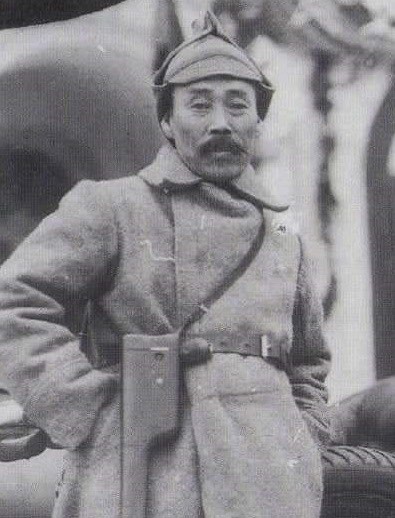
- The course of armed struggle — the Battle of Bongodong (June 1920, Hong Beom-do's Korean Independence Army) → the Battle of Cheongsanri (October 1920, an alliance of Kim Jwa-jin's Northern Military Command and Hong Beom-do — a great victory in more than ten engagements over six days) → Japan's reprisal, the Gando Massacre (slaughter of Korean villages) → while gathering at Mishan and moving into Russia, the Free City Incident (1921) → the formation of three administrations (Chamuibu, Jeonguibu, Sinminbu) → the Mitsuya Agreement (1925, a pact between Japan and Manchurian warlords to suppress the independence armies).
- Korean–Chinese joint operations in the 1930s — solidarity with China after the Manchurian Incident: in southern Manchuria the Korean Revolutionary Army (Yang Se-bong — the battles of Yeongneungga and Heunggyeongseong), and in northern Manchuria the Korean Independence Army (Ji Cheong-cheon — the battles of Ssangseongbo and Daejeonjaryeong).
- The Uiyeoldan (1919, Kim Won-bong) — guided by Sin Chae-ho's 'Declaration of the Korean Revolution' (a call for direct revolution by the people), it destroyed colonial institutions and struck down key officials: Kim Ik-sang (Government-General), Kim Sang-ok (Jongno Police Station), and Na Seok-ju (Oriental Development Company). It later changed course — entering the Whampoa Military Academy, forming the Korean National Revolutionary Party (1935), and the Korean Volunteer Corps (1938, the first Korean armed unit within China proper).
- The Korean Liberation Army (1940, Chongqing) — the Provisional Government's regular army (commander-in-chief Ji Cheong-cheon). It declared war on Japan (1941), fought jointly with British forces on the India–Myanmar front, absorbed part of Kim Won-bong's Korean Volunteer Corps (1942), and trained with the U.S. OSS for a homeland-entry operation — canceled just before execution by Japan's surrender (why Kim Gu lamented: "We did not win it back by our own strength").
- The self-strengthening movement — the Korean Products Promotion Movement (early 1920s, Cho Man-sik in Pyongyang — "my livelihood by my own goods," using homemade products), the Movement to Found a National University (Yi Sang-jae — "ten million Koreans, one won each" — which Japan defused by creating Keijō Imperial University), and the anti-illiteracy campaign (the Vnarod movement, the Dong-a Ilbo).
- Mass and social movements — the June 10 Independence Movement (1926, on Sunjong's funeral day — an attempted student–socialist alliance), the Gwangju Student Independence Movement (1929, sparked by a clash between Korean and Japanese students, the largest since March First — the Singanhoe sent an investigation team), the youth movement (Bang Jeong-hwan, Children's Day), the Hyeongpyeong (Equalization) Movement (1923, Jinju — abolishing discrimination against the baekjeong outcasts), and the Geunuhoe (1927, women — a sister organization of the Singanhoe).
- The Singanhoe (1927–31) — prompted by the Jeong'uhoe Declaration, it was the largest legal organization of left–right cooperation between uncompromising nationalists and socialists (chairman Yi Sang-jae). With over 140 branches nationwide, it supported the Gwangju Student Movement. / The Korean Language Society — it set a unified Korean orthography and standard language and attempted to compile a great dictionary of Korean → forcibly disbanded in the Korean Language Society Incident (1942).
Exam points
- Arrange the armed-struggle timeline: Bongodong → Cheongsanri → Gando Massacre → Free City Incident → the three administrations → Mitsuya Agreement.
- Match the 1930s Korean–Chinese alliances: Yang Se-bong – Korean Revolutionary Army – southern Manchuria / Ji Cheong-cheon – Korean Independence Army – northern Manchuria.
- The Uiyeoldan = Kim Won-bong + the Declaration of the Korean Revolution (Sin Chae-ho). The Korean Volunteer Corps = the first within China proper.
- The Singanhoe = left–right cooperation + support for the Gwangju Student Movement. The Hyeongpyeong Movement = the baekjeong. The Korean Products Promotion Movement = "my livelihood by my own goods."
9 Liberation, the Founding of the Republic of Korea, and the Korean War
Liberation in 1945 came with the Allied victory, but amid the division of the country at the 38th parallel, efforts to form a unified government failed and led to partition and war. The sequence of events over the eight years from Liberation (1945) to the armistice (1953) is the whole of this section.
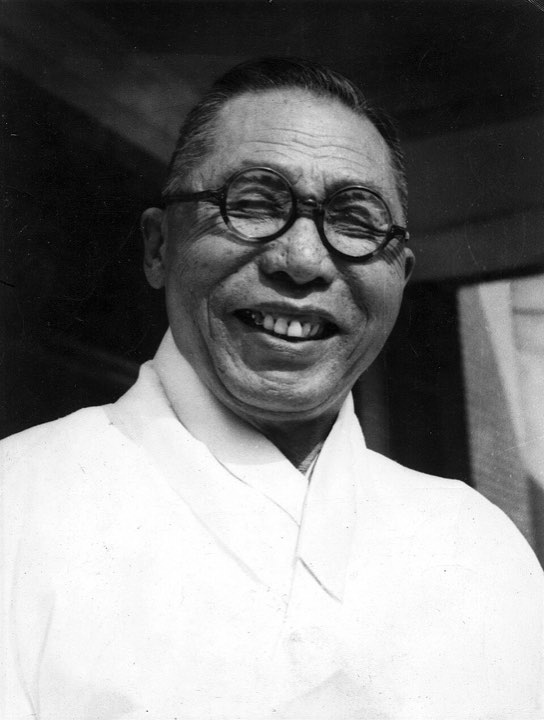
- Around Liberation — the Cairo Declaration (1943, Korean independence "in due course" — the first international promise of independence), Yeo Un-hyeong's Korean Independence League → on the day of Liberation, the Committee for the Preparation of Korean Independence (managing the vacuum in security and administration, with 145 branches nationwide). The U.S. and Soviet division of the country at the 38th parallel and their military governments.
- The Moscow Conference of Foreign Ministers (December 1945) — it decided on forming a provisional democratic government + a U.S.–Soviet Joint Commission + trusteeship for up to five years → the trusteeship issue set left and right clashing (the right opposed it, while the left turned to full support) — the beginning of the split.
- Efforts to form a unified government, and their failure — the first U.S.–Soviet Commission broke down (1946) → Syngman Rhee's Jeongeup statement (hinting at a separate government in the South) → the left–right coalition movement (Yeo Un-hyeong and Kim Gyu-sik, the Seven Principles of Left–Right Cooperation — shunned by both extremes and losing momentum with Yeo Un-hyeong's assassination in 1947) → the second U.S.–Soviet Commission broke down → referral to the UN: a resolution for elections by population ratio → the Soviet refusal in the North → a decision to hold elections "where possible" → Kim Gu's "A Tearful Appeal to Thirty Million Compatriots," and the North–South negotiations (April 1948, Kim Gu and Kim Gyu-sik going to Pyongyang — frustrated with no result). The Jeju April 3 incident (mass killing of innocent civilians while suppressing an armed uprising against the separate election).
- Founding the government — the May 10 general election (1948, universal, equal, direct, and secret voting for men and women aged 21 and over — the first democratic election) → the founding constitution (July 17) → the founding of the government on August 15. In the North, the Democratic People's Republic of Korea was established on September 9 — cementing the division. The Constituent Assembly: the Anti-National Acts Punishment Law (the Special Investigation Committee — undermined by the Rhee government's noncooperation, the National Assembly spy case, and the police raid on the committee, leaving the purge of collaborators unfinished) / land reform (implemented in 1950, a 3-jeongbo ceiling, purchase with compensation and distribution for payment — dismantling the landlord system, in contrast to the North's confiscation and free distribution).
- The Korean War — the Acheson Declaration (January 1950, excluding Korea from the U.S. Far East defense line) → the North's invasion of the South (June 25) → the Nakdong River defensive line (Dabudong) → the Incheon Landing (September 15) → the recovery of Seoul (September 28) and the advance to the Yalu → Chinese intervention → the Hungnam evacuation and the January 4 Retreat (1951) → after retaking Seoul, a stalemate at the 38th parallel → two years of armistice talks (delayed over the prisoner-repatriation issue; Syngman Rhee's release of anti-communist POWs) → the Armistice Agreement (July 27, 1953) + the ROK–U.S. Mutual Defense Treaty (October 1953). Losses: millions of casualties, ten million separated family members, and the whole land in ruins — cementing the division and deepening hostility.
Exam points
- Order of the post-liberation period: Preparation Committee → Moscow Conference (trusteeship) → first U.S.–Soviet Commission → Jeongeup statement → left–right coalition → second U.S.–Soviet Commission → UN → North–South negotiations → May 10 election.
- Land reform = purchase with compensation and distribution for payment + a 3-jeongbo ceiling. The collapse of the Special Investigation Committee = the purge of collaborators left unfinished.
- The four phases of the war (invasion → Incheon → Chinese troops → armistice) and the dates (June 25 / September 15 / July 27); the Acheson Declaration is background.
10 The Growth of Democracy — from the April 19 Revolution to the June Uprising
The Republic of Korea's democracy is a history that citizens won with their blood. You should study the three great events — the April 19 Revolution (1960) → the May 18 Democratization Movement (1980) → the June Democratic Uprising (1987) — together with the tightening of dictatorship in between.
| Democracy movement | Background | Development | Outcome |
|---|---|---|---|
| April 19 Revolution (1960) | Syngman Rhee's prolonged rule through the 'excerpt' amendment (1952) and the 'rounding-off' amendment (1954), and the rigged March 15 election | Protests in Masan — spreading nationwide after the body of the martyr Kim Ju-yeol was found, and a march by university professors | Syngman Rhee's resignation — the first time citizens replaced a dictatorial regime. A constitutional amendment to a cabinet system → the Chang Myon cabinet |
| May 18 Democratization Movement (1980) | The October 26 incident → the December 12 coup (the new military clique) → the 'Seoul Spring' → the nationwide expansion of martial law on May 17 | Protests by Gwangju citizens and students → martial-law troops opened fire → a citizens' militia formed → suppression on May 27 | The new military clique took power. Its records were inscribed on the UNESCO register (2011) — a spiritual source for later democracy movements |
| June Democratic Uprising (1987) | The cover-up of Bak Jong-cheol's death under torture (January 14) and the April 13 measure to defend the constitution (refusing a direct-election amendment) | The June 10 national rally — anger erupting over the wounding of Yi Han-yeol, the chant "abolish the constitutional stonewalling, topple the dictatorship," and the "necktie brigade" of office workers joining in | The June 29 Declaration — a direct presidential-election amendment (the current constitution, a single five-year term) |
- The Rhee government's turn to dictatorship — the 'excerpt' amendment (1952, a direct-election amendment amid the Busan political crisis — for his reelection), the 'rounding-off' amendment (1954, using 'rounding' to remove the term limit for the first president), the Progressive Party case (1958, the execution of Cho Bong-am — acquitted in a 2011 retrial), and the rigged March 15 election (1960).
- The Park Chung-hee government — the May 16 military coup (1961) → the Korea–Japan Treaty (1965, the Kim Jong-pil–Ōhira memo — opposed in the June 3 protests) and the dispatch of troops to Vietnam (the Brown Memorandum) → the third-term amendment (1969) → the Yushin Constitution (October 1972): indirect election by the National Conference for Unification (a six-year term with no term limit), presidential nomination of one-third of the National Assembly, and the powers of emergency measures and to dissolve the Assembly — in effect a system of permanent rule.
- Opposition to Yushin and its collapse — the one-million-signature petition for constitutional revision (Jang Jun-ha), the March 1 Declaration for the Salvation of Democracy (1976), and the YH Trading incident → the expulsion of Assemblyman Kim Young-sam → the Busan–Masan Democratic Uprising (October 1979) → the October 26 incident (the assassination of Park Chung-hee) ended Yushin.
- The Chun Doo-hwan government — the December 12 coup → taking power after crushing the May 18 movement by force (indirect election by the National Conference for Unification → a single seven-year term by indirect election). The Special Committee for National Security Measures and the Samcheong 're-education' camps, the forced merger of media and press guidelines, and the '3S' policy. Behind its conciliatory measures lay rule by torture → Bak Jong-cheol and Yi Han-yeol → the June Uprising forced acceptance of direct elections.
- The settling of procedures after democratization — direct presidential elections have been kept since 1987, peaceful transfers of power (1998, Kim Dae-jung — the first horizontal transfer between ruling and opposition parties), full implementation of local self-government (1995), and the growth of civil society.
Exam points
- The "background–development–outcome" set for the three democracy movements: rigged March 15 election → April 19 → resignation / December 12 → May 18 / Bak Jong-cheol and the April 13 measure → June Uprising → direct elections.
- The flow of constitutional amendments: 'excerpt' (direct election) → 'rounding-off' (removing the term limit) → third-term amendment → Yushin (indirect election) → the ninth amendment (1987, direct election, single five-year term).
- The three features of the Yushin Constitution: indirect election by the National Conference for Unification + emergency measures + abolition of the term limit.
- Order of Yushin's collapse: YH incident → expulsion of Kim Young-sam → Busan–Masan Uprising → October 26.
11 Economic Development and Efforts Toward Peaceful Unification
From the ruins of war to one of the world's ten largest economies — and from confrontation to dialogue. This section organizes the stages of economic growth and the milestones of inter-Korean relations by period.
| Period | Economy | Keywords |
|---|---|---|
| 1950s | Postwar recovery — an economy based on U.S. aid | The 'three whites' industries (flour milling, sugar refining, cotton spinning) |
| 1960s | Five-Year Economic Development Plans (first and second) | Labor-intensive light-industry exports (wigs, textiles, shoes) |
| 1970s | Heavy and chemical industrialization (third and fourth plans) | The Gyeongbu Expressway (1970), Pohang Iron & Steel (1973), $10 billion in exports (1977), the Saemaul (New Village) Movement, and the oil shocks (1973 and 1979) |
| 1980s | The 'three lows' boom (low oil prices, low interest rates, a weak dollar) | Rapid growth in automobile and electronics exports, and the Seoul Olympics (1988) |
| 1990s on | Globalization and overcoming crisis | Joining the OECD (1996) → the foreign-exchange crisis (1997) → early recovery through the gold-collecting campaign and restructuring (2001) → semiconductors and the Korean Wave |
- The shadows of growth — low wages and long hours: Jeon Tae-il's self-immolation (November 1970, "Obey the Labor Standards Act") — the starting point of the labor movement. The urban poor (the Gwangju Housing Complex incident), the neglect of the countryside (→ the Saemaul Movement), a chaebol-centered structure, and collusion between government and business.
- The foreign-exchange crisis (1997) — a chain of big-business bankruptcies and a shortage of foreign currency → an IMF bailout. The gold-collecting campaign (227 tons donated by the whole nation), corporate and financial restructuring, and the pain of mass unemployment → early repayment in 2001. "From a country that received aid to one that gives it" (joining the OECD DAC in 2009 — the only country in the world to do so).
- Milestones in inter-Korean relations — the July 4 South–North Joint Communiqué (1972): the three principles of independence, peace, and grand national unity (the first agreement — though both sides used it to tighten their dictatorships) → the first reunion of separated families (1985) → simultaneous UN membership of the two Koreas (September 1991) → the Basic Agreement between South and North (December 1991): mutual recognition of each other's systems and nonaggression + the Joint Declaration on the Denuclearization of the Korean Peninsula → the Mount Kumgang tours (1998) → the June 15 South–North Joint Declaration (2000, the first inter-Korean summit, Kim Dae-jung and Kim Jong-il): the Kaesong Industrial Complex, reconnecting the Gyeongui railway, and regular family reunions → the October 4 Declaration (2007) → the Panmunjom Declaration (2018).
- Social change — the expansion of compulsory education and educational zeal, abolition of the family-head (hoju) system (2005), entry into a multicultural society, the challenges of low birthrates and an aging population, and the globalization of K-culture (Parasite at the 2020 Academy Awards, BTS, Squid Game).
Exam points
- Match the economic periods: the 'three whites' industries (50s) / light-industry exports (60s) / heavy-chemical industry and Saemaul (70s) / the 'three lows' boom (80s) / IMF (97).
- Jeon Tae-il (1970) = demanding compliance with the Labor Standards Act = a symbol of the labor movement.
- Match the inter-Korean agreements: July 4 (the three principles) / the Basic Agreement (1991, mutual recognition of systems) / June 15 (2000, the first summit). Together with the year and the government in power.