1 The Founding of Joseon — Dynastic Revolution and the Move to Hanyang
Yi Seong-gye and the new Neo-Confucian literati such as Jeong Dojeon, who seized power through the return march from Wihwado Island (1388), first built an economic base with the Gwajeonbeop land law (1391) and then founded Joseon (1392). The name 'Joseon' declared succession to Gojoseon, and Hanyang was a planned city designed on Confucian principles.
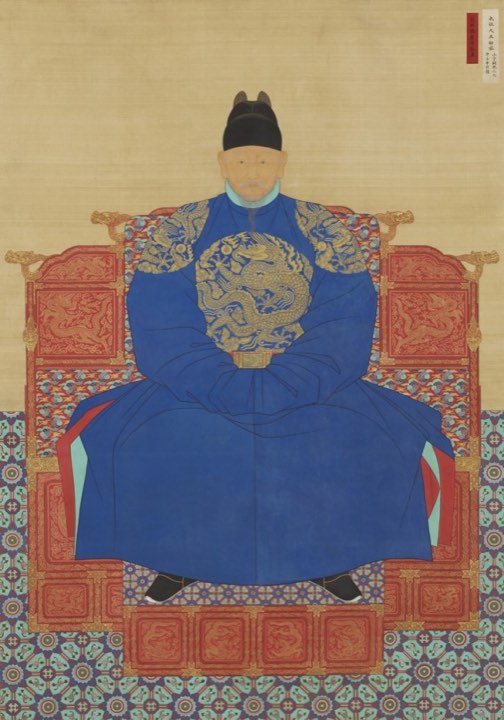
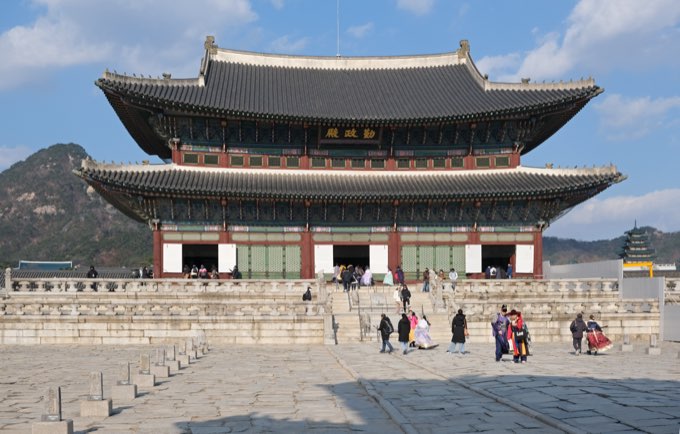
Photo — Geunjeongjeon Hall, Gyeongbokgung: kallerna, CC BY-SA 4.0
| Category | Jeong Do-jeon (rule through ministers) | King Taejong, Yi Bang-won (rule through the throne) |
|---|---|---|
| Political vision | The chief minister at the center of government: "there is one king, but the chief minister is the ablest of the able" | The king commands his officials directly, with the ministers’ powers cut back |
| Key institution | Government run through the State Council | Direct reporting by the Six Ministries, bypassing the State Council to report straight to the king |
| Main writings and measures | Joseon gyeongguk jeon, Gyeongje mun-gam, Bulssi japbyeon | Abolition of private armies · the hopae identity-tag law · the petition drum · an independent Office of Censors |
| Outcome | Eliminated in the First Strife of Princes (1398) | Secured royal authority, which carried into Sejong’s cultural reign |
- Founding process — the return march from Wihwado (with its four arguments against the campaign) → removal of the moderate literati (Jeong Mongju — the loyalist poem Dansimga, "Though this body die and die again…," killed at Seonjukgyo Bridge) → the enthronement of Yi Seong-gye (1392) → the move of the capital to Hanyang (1394).
- Confucian design of Hanyang — with Gyeongbokgung at the center, the layout followed jwamyo-usa (the royal ancestral shrine Jongmyo on the left, the altar of land and grain Sajikdan on the right), and the four main gates embodied Confucian virtues: Heunginjimun (benevolence), Donuimun (righteousness), Sungnyemun (propriety), and Sukjeongmun (in the wisdom group), plus Bosingak (faithfulness) at the center.
- Jeong Dojeon's blueprint — Joseon gyeonggukjeon and Gyeongjemun-gam (norms of governance) and Bulssi japbyeon (a critique of Buddhism — declaring a Neo-Confucian state), and a theory of prime-minister-centered politics ("there is but one king, while the prime minister is the ablest of the able"). → He clashed with Yi Bang-won, who wanted royal-centered rule, and was eliminated in the First Strife of Princes (1398) — the prelude to the eternal tension in Joseon political history (royal power vs. ministerial power).
- King Taejong (Yi Bang-won)'s consolidation of royal power — the Six Ministries direct-report system (bypassing the State Council), abolition of private armies, the hopae identity-tag law (for men aged 16 and over — to track population and military service), the sinmun-go petition drum, independence of the Saganwon, and land surveys.
Exam points
- Order of the founding: return march from Wihwado → Gwajeonbeop → founding → move to Hanyang.
- Jeong Dojeon = prime-minister-centered rule + Joseon gyeonggukjeon + Bulssi japbyeon ↔ Taejong = the Six Ministries direct-report system + the hopae law + abolition of private armies.
- The virtues of benevolence, righteousness, propriety, and wisdom in Hanyang's four main gates — evidence of a city built on Confucian ideals.
2 Consolidating the System of Government — the Gyeongguk daejeon Order
On the royal power that Taejong had solidified, King Sejong and King Seongjong completed the institutions. The core of Joseon governance was "checks and balances" — a structure in which organs of royal power and organs of ministerial power kept one another in check.
| Category | Organ | Role |
|---|---|---|
| Deliberation & administration | State Council – Six Ministries | The three chief councillors deliberate (State Council) → the Six Ministries execute. The Six Ministries direct-report system (Taejong, Sejo) vs. the State Council deliberation system (Sejong) — a seesaw of royal and ministerial power |
| Remonstrance (ministerial power) | The Three Offices: Saheonbu, Saganwon, Hongmun-gwan | Inspection, remonstrance, and advice — checking power. A safeguard reflecting the idea that "a king who silences remonstrance is a tyrant" |
| Directly under the king | Seungjeongwon (royal secretariat) · Uigeumbu (royal tribunal under the king) | Organs supporting royal power — tested in contrast with the Three Offices |
| Others | Hanseongbu (capital administration) · Chunchugwan (historical records) · Seonggyun-gwan (highest education) | Compilation of the Veritable Records (sacho draft records and sijeonggi → stored in the sago archives) |
- Local administration — under the eight provinces (each headed by a gwanchalsa governor) came the bu, mok, gun, and hyeon districts: a magistrate was sent to every district (the sokhyeon indirectly ruled districts disappeared — a decisive difference from Goryeo). Magistrates held administrative, judicial, and military authority (the magistrate's seven duties), while the hyangni were demoted to hereditary petty clerks (a decline from their status in Goryeo). The yuhyangso (headed by jwasu and byeolgam — village self-rule and support of the magistrate) and the gyeongjaeso (central control of the yuhyangso).
- Military service, education, and the examinations — universal conscription of commoners and the unity of farming and soldiering (jeong-gun active soldiers plus bo-in supporters), the central Five Guards and provincial garrison troops. Education: village schools → the Four Schools (Seoul) and hyanggyo county schools (provinces) → the Seonggyun-gwan. The gwageo (civil service examination): the civil exam (the lesser exam producing saengwon and jinsa → the greater exam), the military exam (held, unlike in Goryeo!), and the technical exams. Recommendation (Jo Gwangjo's hyeollyanggwa).
- King Sejo and King Seongjong — Sejo: took power through the Gyeyu coup (1453) → ascended the throne when King Danjong abdicated (1455) → the Six Martyred Ministers' attempt to restore King Danjong (1456) → their execution, revived the Six Ministries direct-report system, abolished the Jiphyeonjeon academy and the royal lectures, introduced the jikjeonbeop (granting land-tax rights only to serving officials), and began compiling the Gyeongguk daejeon. Seongjong: set up the Hongmun-gwan and revived the royal lectures, and completed and promulgated the Gyeongguk daejeon (1485) — completing "Confucian rule by law."
Exam points
- The Three Offices (remonstrance, ministerial power) vs. the Seungjeongwon and Uigeumbu (royal power) — distinguishing the nature of these organs is the most frequent question.
- Sending a magistrate to every district + the demotion of the hyangni = the completion of Joseon centralization (compared with Goryeo).
- The Gyeongguk daejeon: begun under Sejo → completed under Seongjong. The Six Ministries direct-report system (Taejong, Sejo) vs. the State Council deliberation system (Sejong).
3 King Sejong the Great — the Peak of National Culture
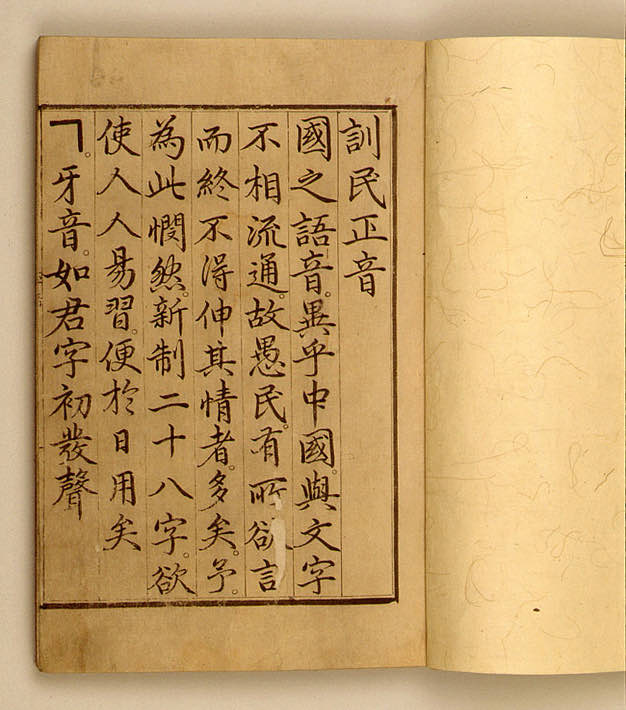
King Sejong (r. 1418–1450) nurtured talent at the Jiphyeonjeon and created "things suited to our own conditions." Hunminjeongeum (the Korean script), the Chiljeongsan calendar, and the Nongsa jikseol farming manual were all self-reliant achievements born of the awareness that "Chinese things do not fit us."
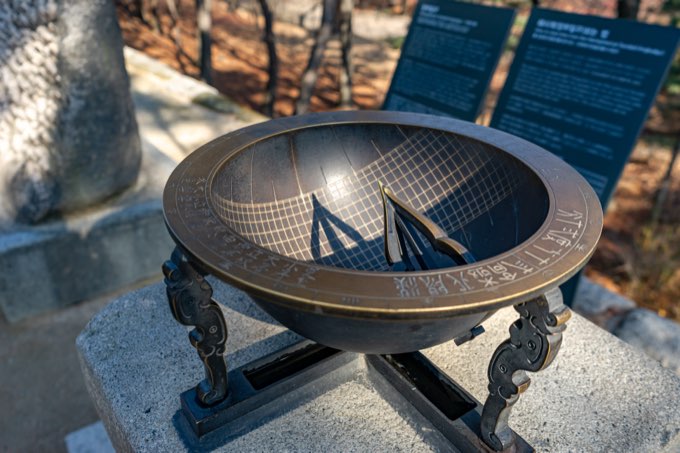
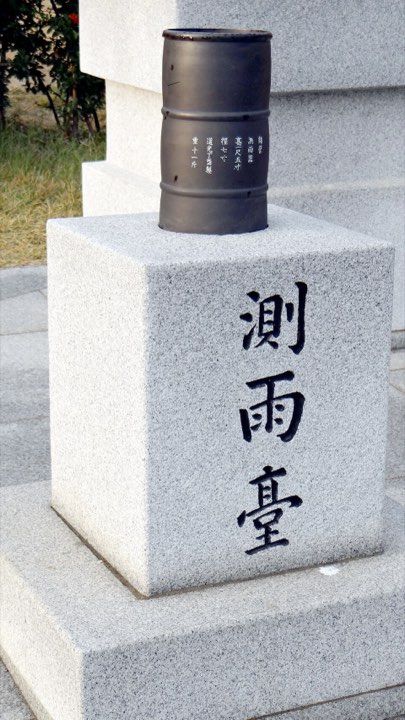
Photos — angbuilgu: Nina R, CC BY 2.0 · cheugugi: Steve46814, CC BY-SA 3.0
- Hunminjeongeum (the Korean script) — created in 1443, promulgated in 1446. A scientific script whose consonants model the speech organs and whose vowels are modeled on heaven, earth, and humankind. "The correct sounds to instruct the people" — the spirit of people-first governance. The Hunminjeongeum Haerye is a UNESCO documentary heritage. Yongbi eocheon-ga (the first text written in the Korean script) and the Samgang haengsildo (spreading ethics).
- Science and technology (by Jang Yeong-sil, Yi Cheon, and others) — the cheugugi (1441, the world's first rain gauge), the jagyeongnu (automatic water clock), the angbuilgu (sundial), and the honcheon-ui and ganui (astronomical instruments). The Chiljeongsan calendar, inner and outer volumes — the first independent calendar based on the meridian of Hanyang (studying the Yuan Shoushi calendar and the Arabic Huihui calendar). The gabinja metal movable type.
- Territory and diplomacy — the opening of the Four Forts (Choe Yun-deok) and Six Garrisons (Kim Jong-seo) → fixing the border along the Yalu and Tumen Rivers (resettling people from the south under a migration policy). After the conquest of Tsushima (Yi Jong-mu, 1419), the opening of three ports (Busanpo, Jepo, Yeompo) and the Gyehae Treaty — a dual hard-and-soft policy toward Japan.
- Compilations and institutions — the Nongsa jikseol (farming methods for our own climate — gathering farmers' experience), the Hyangyak jipseongbang (on native medicinal herbs) and the Uibang yuchwi (a medical encyclopedia), and the gongbeop tax law (six grades of land fertility and nine grades of harvest — enacted after a survey of 170,000 people!).
Exam points
- Chiljeongsan = "an independent calendar based on the meridian of Hanyang" — a keyword for self-reliance. The Nongsa jikseol and Hyangyak jipseongbang share the same theme.
- The Four Forts and Six Garrisons (Choe Yun-deok, Kim Jong-seo) = today's border. Paired with the conquest of Tsushima (Yi Jong-mu).
- Matching photos of the cheugugi, jagyeongnu, and angbuilgu. The anecdote of the gongbeop opinion survey is also tested.
4 The Rise of the Sarim and the Literati Purges
The sarim (Yeongnam Neo-Confucians such as Kim Jong-jik, in the scholarly line of Jeong Mongju and Gil Jae), whom King Seongjong appointed to check the hungu (the meritorious-subject faction descended from Sejo's supporters), suffered through four literati purges yet built up strength in the countryside through seowon (Confucian academies) and hyangyak (village codes), and finally took power under King Seonjo.
| Category | Hun-gu, the established meritorious elite | Sarim, the Neo-Confucian literati |
|---|---|---|
| Origins | Merit subjects who helped King Sejo take the throne | Neo-Confucian scholars of the Yeongnam region in the line of Jeong Mong-ju and Gil Jae |
| Scholarly style | The official-academy school, which valued literary composition | The private-academy school, which valued the classics and their practice |
| Economic base | Large estates built on merit-subject land grants | Small and mid-sized landholders in the countryside |
| Political aim | Central control, a rich country and a strong army | Local self-government and rule by virtue |
| Source of strength | Office and merit rank | Seowon academies and hyangyak village codes: why they revived after every purge |
| Purge | King | Trigger |
|---|---|---|
| Muo Purge (1498) | Yeonsan-gun | Kim Il-son entered Kim Jong-jik's Joui-jemun (an allegory criticizing Sejo) into the draft records |
| Gapja Purge (1504) | Yeonsan-gun | Purge of those connected to the affair of Yeonsan-gun's mother, the deposed Queen Yun |
| Gimyo Purge (1519) | Jungjong | Jo Gwangjo's radical reforms (the hyeollyanggwa, cancellation of false merit awards, abolition of the Sogyeokseo) provoked a hungu backlash — the "Juchowiwang" affair (a prophecy, engineered on leaves, that "Jo shall become king") |
| Eulsa Purge (1545) | Myeongjong | A power struggle between the royal in-law factions Daeyun (Yun Im) and Soyun (Yun Won-hyeong) |
- Jo Gwangjo's reforms — the hyeollyanggwa (appointing sarim by recommendation), abolition of the Sogyeokseo (ending Daoist rites), cancellation of false merit awards (stripping three-quarters of those honored for the coup that enthroned Jungjong — the hungu's sorest point), spread of the hyangyak, and promotion of the Sohak. His radicalism unsettled even Jungjong → he was ordered to take poison in the Gimyo Purge (his death poem, "To love my lord as I love my father…").
- The base of the sarim's recovery — seowon (Confucian academies): the Baegundong Seowon (Ju Se-bung, 1543 — the first) → on Yi Hwang's recommendation, Sosu Seowon received a royal charter (with tax and service exemptions). Serving both worship (of past sages) and education, they were centers of sarim opinion. hyangyak (village codes): self-governing village compacts (mutual encouragement of virtue, mutual correction of faults, mutual courtesy in customs, and mutual aid in hardship) — through which the sarim organized villagers under the Neo-Confucian order.
- The evils of in-law politics under Myeongjong — Yun Won-hyeong and Queen Munjeong, and the revolt of Im Kkeok-jeong (1559, Hwanghae Province) — a righteous bandit who resisted exploitation.
Exam points
- The order of the four purges (Muo → Gapja → Gimyo → Eulsa) and matching their triggers. Gimyo = Jo Gwangjo = the Juchowiwang affair.
- Seowon (Baegundong → the royal-chartered Sosu Seowon) and hyangyak = the sarim's rural base — "why the sarim survived the purges."
- The Joui-jemun (Muo) and the cancellation of false merit awards (Gimyo) — prepare for source-based questions.
5 The Emergence of Factions and the Neo-Confucian Order
The sarim, who took power under King Seonjo, soon split into the Easterners and Westerners (1575). A bungdang (faction) combined "scholarly lineage + political line," and in the early period a principle of mutual criticism and coexistence was at work.
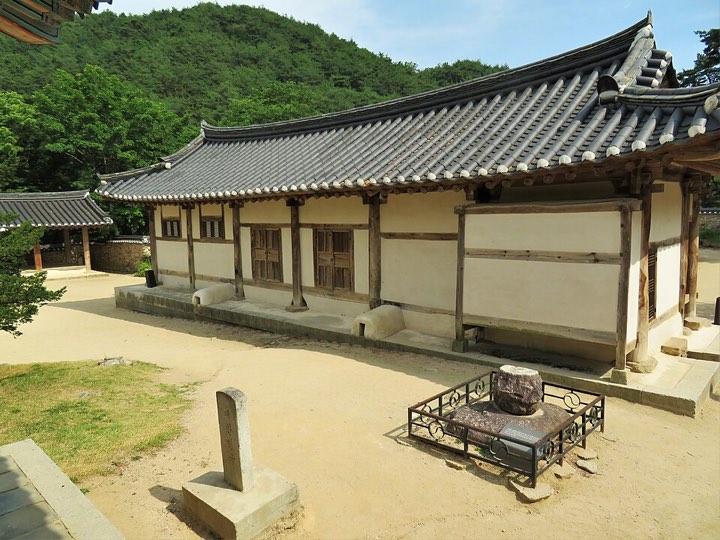
Photo — Sosu Seowon: Kyle, CC BY 2.0
| Category | Yi Hwang (Toegye) | Yi I (Yulgok) |
|---|---|---|
| Theory | Primacy of principle (i) | Emphasis on material force (gi) |
| Main works | Seonghak sipdo, Jujaseo jeoryo | Seonghak jibyo, Dongho mundap |
| View of the ruler | The ruler must cultivate himself and become a sage | A wise minister must guide the ruler |
| Practical reform | The Yean village code, weighted toward moral instruction | The Haeju village code · the sumibeop grain-tax reform · the proposal to train 100,000 soldiers |
| Academy and lineage | Dosan Seowon. His line ran to the Easterners and later the Southerners, and shaped Neo-Confucianism in Japan | Jaun Seowon in Paju. His line ran to the Westerners |
- The trigger of the split — a clash over the post of ijo jeonnang, which held appointment power, between Kim Hyo-won (the newcomers) and Sim Ui-gyeom (the established faction — a brother of King Myeongjong's queen) → the Easterners (Kim Hyo-won's house was to the east; the scholarly line of Yi Hwang and Jo Sik) and the Westerners (Sim Ui-gyeom's house was to the west; the line of Yi I and Seong Hon).
- The division of the Easterners — through the Jeong Yeo-rip treason case (1589, the Gichuk purge) and the crown-prince investiture dispute, they split by their stance toward the Westerners: the Southerners (moderate; the line of Yu Seong-ryong and Toegye Yi Hwang) vs. the Northerners (hardline; the line of Jeong In-hong and Nammyeong Jo Sik — in power under Gwanghae-gun).
- Two masters of Neo-Confucianism — Yi Hwang (the primacy-of-principle theory; the Seonghak sipdo — stressing the ruler's own self-cultivation, influential on Japanese Neo-Confucianism, Dosan Seowon) vs. Yi I (the primacy-of-material-force theory; the Seonghak jibyo — a wise minister guiding the ruler, practical reform ideas such as the sumibeop, and the proposal to train 100,000 soldiers).
- Spread of the Neo-Confucian social order — the diffusion of the Zhuzi jiali (family rites for coming-of-age, marriage, funerals, and ancestral rites) and the Sohak, the compilation of genealogies (the Andong Kwon clan's Seonghwabo — the oldest surviving), and stricter discrimination against secondary sons and restrictions on widows' remarriage — a patriarchal order began to take root (completed in the late Joseon period).
Exam points
- The rise of factions = the ijo jeonnang post + attitudes toward purging royal in-laws. The scholarly lines of the Easterners (Yi Hwang, Jo Sik) vs. the Westerners (Yi I, Seong Hon).
- Yi Hwang (Seonghak sipdo, Dosan Seowon, influence on Japan) vs. Yi I (Seonghak jibyo, the sumibeop, training 100,000 soldiers) — a very common comparison.
- The Easterners → the split into Southerners (moderate) and Northerners (hardline), triggered by the Jeong Yeo-rip case and the crown-prince investiture dispute.
6 The Imjin War (Japanese invasions, 1592–1598) — a Nation Saved by the Sea and Righteous Armies
After Toyotomi Hideyoshi unified Japan's Warring States, he invaded on the pretext of "borrowing a road to attack Ming" (jeongmyeong gado). The crisis of Hanyang falling within the first 20 days was turned around by a three-part effort — the navy, righteous armies, and the entry of Ming forces.
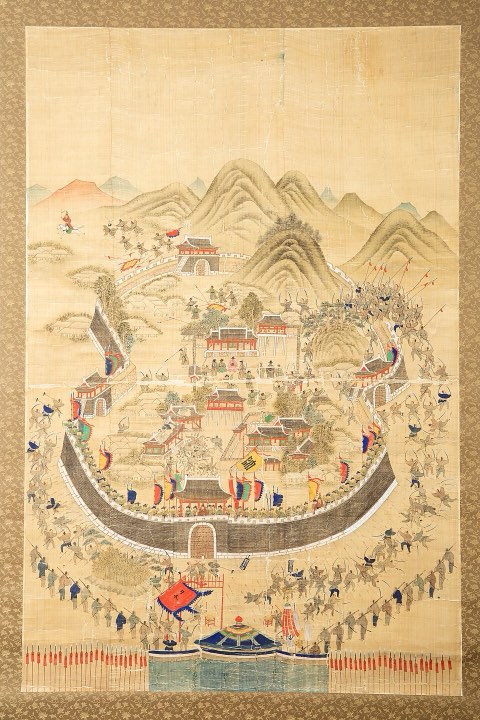
- The early collapse — the fall of Busanjin (Jeong Bal) and Dongnae-seong (Song Sang-hyeon — "It is easy to fight and die, but hard to lend a road") → the collapse of Sin Rip's last-stand formation at Tangeumdae in Chungju → King Seonjo's flight to Uiju (requesting reinforcements from Ming).
- Yi Sun-sin's command of the sea — Okpo (first victory) → Sacheon (the turtle ship's first sortie) → Dangpo and Danghangpo → the Great Victory at Hansando (the crane-wing formation — annihilating the main Japanese fleet): it thwarted the Japanese strategy of a coordinated land-and-sea advance, preserved the granary of Jeolla Province, and cut the supply lines. "Without Honam, there is no nation" (yak mu Honam si mu gukga).
- The counterattack by righteous armies and regulars — Gwak Jae-u (the Red-Robed General, Uiryeong — the first righteous army), Jo Heon and Yeonggyu (Geumsan), Go Gyeong-myeong, Jeong Mun-bu (the Bukgwan Victory), and the monk-generals Seosan and Samyeong (monk-soldiers). Kim Si-min's Great Victory at Jinju, the Joseon–Ming allied recapture of Pyongyang (1593.1), and Gwon Yul's Great Victory at Haengju. During the truce, the Hunryeon dogam (three-skill troops: gunners, archers, and lancers) and the sogo militia system were organized.
- The Jeongyu War and the war's end — the collapse of negotiations brought a second invasion (1597) → the crushing defeat at Chilcheollyang (Won Gyun) → the Battle of Myeongnyang, fought by Yi Sun-sin after returning from serving as a common soldier ("Your servant still has twelve ships…" — 13 ships vs. 133) → the death of Hideyoshi → the Battle of Noryang (1598, Yi Sun-sin killed in action — "Do not announce my death").
- Impact of the war — Joseon: a sharp population drop and the loss of land registers (yangan), the burning of Gyeongbokgung, Bulguksa, and the archives, the reckless sale of honorary office warrants (gongmyeongcheop) (the start of the unsettling of the status system), and the abduction of potters (Yi Sam-pyeong — Japan's Arita ware). Japan: the founding of the Edo shogunate and the transmission of Neo-Confucianism and ceramics — a request to restore relations → the dispatch of the tongsinsa envoys (from 1607, cultural missions). Ming: exhausted, opening the way for the rise of the Jurchen (Later Jin) — a realignment of the East Asian order.
Exam points
- The three great victories: Hansando (Yi Sun-sin, naval, crane-wing formation) / Jinju (Kim Si-min) / Haengju (Gwon Yul) — matching place and person.
- Two different "three great victories" — don't mix them up — the Three Great Victories of the Imjin War (Hansando, Jinju, Haengju — a national-level set) and Yi Sun-sin's personal three great victories (Hansando, Myeongnyang, Noryang — naval battles only) are different groupings. If asked for "Yi Sun-sin's three great victories," the answer is Myeongnyang and Noryang, not Jinju and Haengju.
- The strategic meaning of the Great Victory at Hansando = command of the sea + cutting supply lines + preserving Jeolla Province. A frequent essay topic.
- The three-country impact set: Joseon (the status system shaken) — Japan (the Edo shogunate and ceramics) — Ming (decline → Later Jin). The tongsinsa = postwar cultural envoys.
7 Gwanghae-gun's Neutral Diplomacy and Byeongja Horan
Gwanghae-gun, who led postwar reconstruction, pursued a pragmatic neutral diplomacy between Ming and Later Jin, but was deposed in the Westerners' Injo coup. The subsequent shift to a "pro-Ming, anti-Jin" line invited two Manchu invasions.
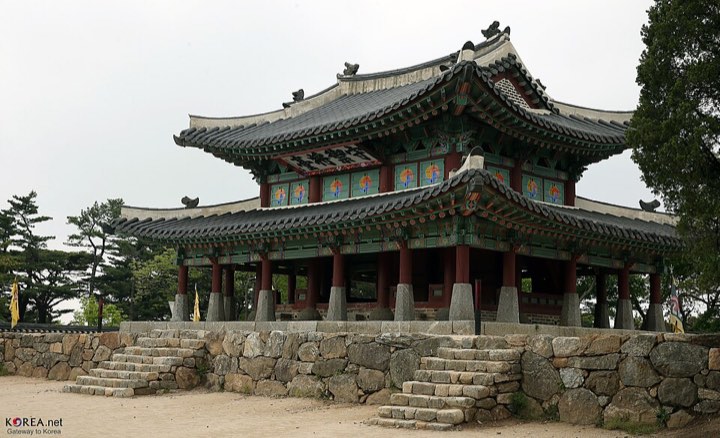
Photo — Namhansanseong: Government of the Republic of Korea (Korea.net), CC BY-SA 2.0
| Category | First Manchu invasion (1627) | Second Manchu invasion (1636) |
|---|---|---|
| Invader | The Later Jin | The Qing, after renaming the dynasty and proclaiming an emperor |
| Background | Injo’s pro-Ming, anti-Jin policy, and remnants of Yi Gwal’s revolt defecting to the Later Jin | Joseon refused the Qing demand for a ruler-and-subject relationship, the anti-peace party having prevailed |
| Course | Injo fled to Ganghwa Island; militias under Jeong Bong-su at Yonggolsanseong and under Yi Rip fought on | Injo held out for 47 days at Namhansanseong, and Ganghwa Island fell |
| Outcome | Peace on the terms of a brotherly oath | The humiliation at Samjeondo: a ruler-and-subject relationship, Crown Prince Sohyeon and Prince Bongnim taken hostage, and the three anti-peace scholars executed |
- Gwanghae-gun's domestic rule — land surveys and household registers, the first implementation of the Daedongbeop (the Uniform Land Tax) in Gyeonggi (1608, Yi Won-ik), and the Dongui bogam (Heo Jun, 1610 — a UNESCO documentary heritage). The pragmatism of postwar recovery.
- Neutral diplomacy — in response to Ming's request for troops, he sent Gang Hong-rip with 10,000 men but with a secret order to "act according to the situation" → surrendering to Later Jin at the Battle of Sarhu (1619) — walking a tightrope between principle (jaejojieun, the debt of gratitude to Ming for saving the dynasty) and pragmatism. + The execution of Grand Prince Yeongchang and the confinement of Queen Dowager Inmok (deposing the mother and killing a brother) → the pretext for the Westerners' Injo coup (1623).
- The Jeongmyo Horan (1627) — the Injo regime's pro-Ming, anti-Jin stance plus the surrender to Later Jin of remnants from Yi Gwal's revolt (1624) → the Later Jin invasion → the righteous armies of Jeong Bong-su (Yonggolsanseong) and Yi Rip → peace settled through an oath of brotherhood.
- Byeongja Horan (the Manchu invasion of 1636) — Later Jin renamed itself 'Qing,' its ruler took the title of emperor, and it demanded a subject-to-sovereign relationship → Joseon refused (the anti-peace stance). Emperor Taizong of Qing invaded with 120,000 men (a swift midwinter campaign) → King Injo held out for 47 days in Namhansanseong (Ganghwa Island fell, and the refuge of the crown princess and Grand Prince Bongrim collapsed) → the humiliation at Samjeondo (the ritual of three bows and nine kowtows) — a subject-to-sovereign relationship, Crown Prince Sohyeon and Grand Prince Bongrim taken hostage, and the execution of the three anti-peace scholars (Hong Ik-han, Yun Jip, Oh Dal-je).
- War party vs. peace party — Kim Sang-heon (anti-peace: "a life without principle is worse than death") vs. Choe Myeong-gil (pro-peace: "only if the nation survives can there be principle") — a classic debate of international politics. Later came King Hyojong's northern-expedition plan (Song Si-yeol and Yi Wan, strengthening the Eoyeongcheong — never carried out), the Naseon expeditions (against Russia, two campaigns by musketeer units — an ironic use of troops raised for the northern expedition), and the Baekdusan boundary stele under King Sukjong (1712).
Exam points
- Gwanghae-gun's three points: neutral diplomacy (Gang Hong-rip) + the start of the Daedongbeop + the Dongui bogam. Plus the pretext for the Injo coup (deposing the mother and killing a brother).
- The Jeongmyo Horan (a brotherly relationship) → Byeongja Horan (a subject-to-sovereign relationship, Samjeondo) — distinguish the outcomes.
- Kim Sang-heon (anti-peace) vs. Choe Myeong-gil (pro-peace) contrasted through sources. The relationship between the northern expedition (Hyojong) and the Naseon expeditions.