1 Seasonal Customs — One Question Every Session, Easy Points to Lose
The Korean History Exam sets a question on holiday and seasonal customs almost every session. The pattern is simple — just match three things: the date (lunar calendar) · the signature custom · the signature food. Memorize the table below and you are set.
| Holiday / season | Date | Customs | Food |
|---|---|---|---|
| Seollal (Lunar New Year) | 1st day, 1st lunar month | Ancestral rites, sebae (New Year bows), hanging a bokjori (lucky strainer), yut game, seesaw jumping | Tteokguk (sliced rice-cake soup) |
| Jeongwol Daeboreum (first full moon) | 15th day, 1st lunar month | Daljip-taeugi (burning a moon house) and jwibullori (fire-swinging), bridge-walking, moon-gazing | Bureom (nuts cracked for health), five-grain rice, ear-quickening wine, dried herbs |
| Hansik (Cold Food Day) | 105 days after the winter solstice (early April) | Grave visits and tomb tending, using no fire (from the tale of Jie Zitui) | Cold food |
| Chopail (Buddha's Birthday) | 8th day, 4th lunar month | Lantern festival and pagoda-circling (the Buddha's Birthday) | — |
| Dano (fifth-day-of-fifth-month festival) | 5th day, 5th lunar month | Washing the hair in iris-infused water, ssireum (Korean wrestling), swinging, gifts of fans — also called Surinal. The Gangneung Danoje festival (UNESCO) | Surichwi-tteok (mugwort rice cake), cherry punch |
| Chilseok (seventh night) | 7th day, 7th lunar month | The legend of the Herdsman and the Weaver Girl, gyeolgyo (praying for sewing skill), airing books and clothes in the sun | Wheat noodles, wheat pancakes |
| Baekjung (servants' day) | 15th day, 7th lunar month | A farmhands' holiday — homissigi (washing the hoe, a rest from farming), ssireum matches | — |
| Chuseok (harvest festival, Hangawi) | 15th day, 8th lunar month | Ancestral rites and grave visits, Ganggangsullae (circle dance), ssireum, bullfighting, banbogi (a mid-way family reunion) | Songpyeon (half-moon rice cakes), taro soup |
| Jungyangjeol (double-ninth) | 9th day, 9th lunar month | Autumn-foliage outings, viewing chrysanthemums | Chrysanthemum pancakes and wine |
| Dongji (winter solstice) | Around December 22 (solar) | The longest night — a "little New Year." The Gwansanggam (Royal Astronomical Bureau) issued the new-year calendar | Patjuk (red-bean porridge, with rice-ball dumplings — to ward off misfortune) |
- Sambok (the three dog days) — beating the summer heat: dog-meat soup and samgyetang (ginseng chicken soup). It is not asked whether these are true seasonal divisions rather than folk days — only the food matching is.
- Chronological-order questions also appear: Seollal → Jeongwol Daeboreum → Hansik → Dano → Chilseok → Baekjung → Chuseok → Jungyangjeol → Dongji.
Exam points
- Dano = Surinal = iris water, swinging, ssireum, surichwi-tteok — the most frequent. Learn it as a set together with the "Gangneung Danoje festival (UNESCO intangible heritage)."
- Dongji = patjuk = calendar issuance / Jeongwol Daeboreum = bureom and daljip-taeugi / Hansik = cold food and grave visits.
- Trap: Ganggangsullae belongs to Chuseok (the South Jeolla coast), daljip-taeugi to Daeboreum — they are swapped in questions.
2 Regional History — "Which of These Happened in This Place?"
This type presents a particular city and asks you to pick a historical fact from that region. The standard method is to memorize, for each city, a set of three or four keywords that span the eras.
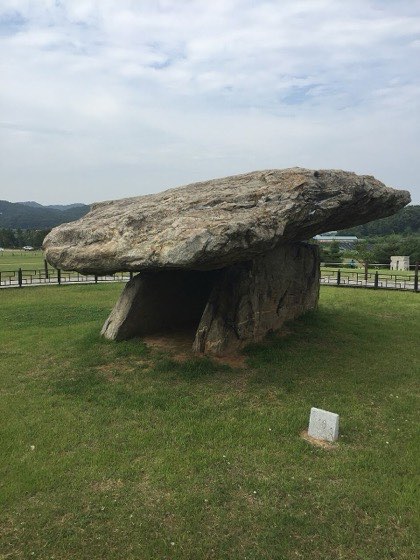
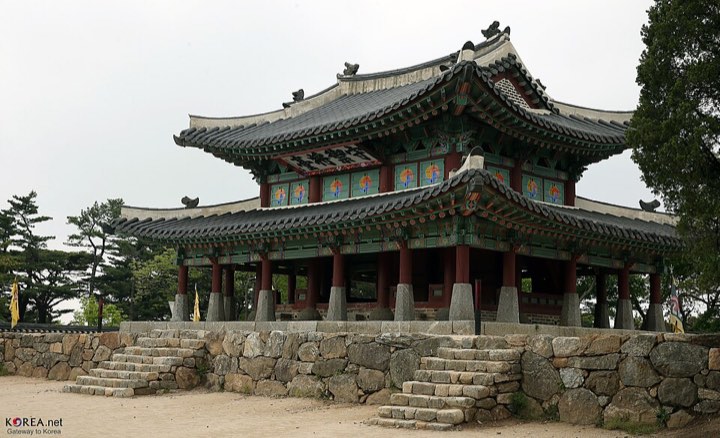
Photos — Ganghwa dolmen: ChongDae, CC BY-SA 3.0 · Namhansanseong: Government of the Republic of Korea (Korea.net), CC BY-SA 2.0
| Region | Key keywords (in chronological order) |
|---|---|
| Ganghwa Island | The Bugeun-ri dolmens (UNESCO) → temporary capital during the resistance to the Mongols and the carving of the Tripitaka Koreana → the Jeongjoksan archive → the French campaign of 1866 (the Oegyujanggak) and the American campaign of 1871 (Gwangseongbo) → the Treaty of Ganghwa (1876) |
| Kaesong | Capital of Goryeo (Manwoldae and Seonjukgyo bridge — where Jeong Mong-ju was killed) → base of the Songsang merchants (songbang) → North Korea after the Korean War → the Kaesong Industrial Complex (2000s inter-Korean exchange) |
| Pyongyang | Goguryeo — King Jangsu's transfer of the capital (427) → Myocheong's movement to move the capital to Seogyeong → the General Sherman incident (1866) → the start of the Movement to Promote Korean Products (Jo Man-sik) → inter-Korean summits |
| Gyeongju | Silla's thousand-year capital — Cheomseongdae, Bulguksa, Seokguram, and the East Palace and Wolji Pond, the Gyeongju Historic Areas (UNESCO) and Yangdong village |
| Gongju · Buyeo | Baekje's Ungjin (Gongju — the Tomb of King Muryeong and Gongsanseong) and Sabi (Buyeo — the five-story stone pagoda of the Jeongnimsa site and Gungnamji Pond), the Baekje Historic Areas (UNESCO). The Seokjang-ri Paleolithic site in Gongju, the Battle of Ugeumchi (1894) |
| Jeonju | Capital of Hubaekje (Later Baekje) under Gyeon Hwon → ancestral home of the Joseon royal house (Gyeonggijeon — a portrait of King Taejo, and an archive) → the Jeonju Truce of the Donghak Peasant Movement (1894) |
| Cheongju | Heungdeoksa Temple — printing of the Jikji simche yojeol (1377, the oldest surviving book printed with metal movable type), Sangdangsanseong |
| Jinju | The Great Battle of Jinju in the Imjin War (Kim Si-min) → the Imsul Peasant Uprising (1862, led by Yu Gye-chun in protest at the extortion of Baek Nak-sin) → the Hyeongpyeong Movement (1923, to abolish discrimination against the baekjeong outcasts) |
| Daegu | Start of the National Debt Redemption Movement (1907, Seo Sang-don) → the February 28 Student Protest (1960, the spark of the April 19 Revolution) |
| Gwangju | The Gwangju Student Anti-Japanese Movement (1929) → the May 18 Democratization Movement (1980, whose records are inscribed by UNESCO) |
| Wonsan | A treaty port opened by the Treaty of Ganghwa → the Wonsan Haksa (1883, the first modern private school) → the Wonsan General Strike (1929, the largest labor dispute) |
| Jeju | The Sambyeolcho's last stand (Hangpaduri, Kim Tong-jeong) → Hamel's shipwreck landing → the Jeju April 3 Incident (1948) → the volcanic island and lava tubes (UNESCO natural heritage) |
| Dokdo | Silla's King Jijeung — Isabu's subjugation of Usan-guk (512) → Joseon's King Sukjong — An Yong-bok's voyages to Japan → the Korean Empire's Imperial Edict No. 41 (1900, specifying administration under Uldo county) → Japan's illegal annexation in 1905 (to Shimane Prefecture) |
Exam points
- Ganghwa Island is the most frequent region, running from prehistory (dolmens) to modern times (treaties) — remember that it was the capital during the resistance to the Mongols and that the Oegyujanggak was here.
- Jinju (Hyeongpyeong Movement) vs Daegu (National Debt Redemption) vs Wonsan (general strike and Wonsan Haksa) — a trap matching cities to modern social movements.
- The four-item set of evidence for Dokdo: Usan-guk (512), An Yong-bok, Imperial Edict No. 41 (1900), and the Geography Section of the Annals of King Sejong — grounds for the essay "refuting Japan's claim."
3 Figures and Histories — Matching Works and Activities
This type gives a passage from a source or work and asks you to identify the person. The lineage of history books and the independence activists and historians are its two main axes.
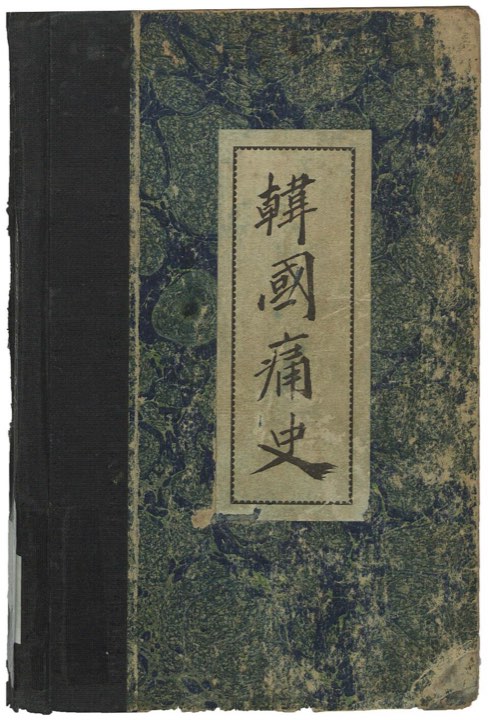
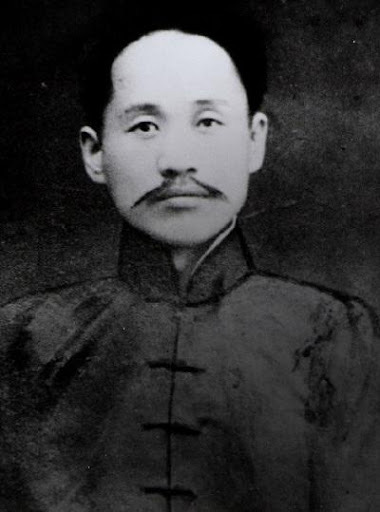
| Figure | Works / activities | Keywords |
|---|---|---|
| Hyecho (Unified Silla) | "Wang ocheonchukguk-jeon" (Memoir of the Pilgrimage to the Five Kingdoms of India, 727) | A travel account of a pilgrimage through India and Central Asia — not a UNESCO Memory of the World item (a favorite wrong-answer trap) |
| Kim Bu-sik (Goryeo) | Samguk sagi (1145) | Oldest surviving history · annals-biography (gijeon) style · Confucian rationalism |
| Iryeon (Goryeo) | Samguk yusa (reign of King Chungnyeol) | Records the Dangun myth · centered on Buddhism and legends |
| Yi Gyu-bo (Goryeo) | The Dongmyeongwang-pyeon in the Dongguk Yisanggukjip | A consciousness of succeeding Goguryeo — an epic of Jumong |
| Yi Seung-hyu (Goryeo) | Jewang ungi | Narrated from Dangun — an independent-minded view during the period of Yuan interference |
| Yu Deuk-gong (late Joseon) | Balhaego | First use of the term "North–South States" — treating Balhae as part of our history |
| Kim Jeong-hui (late Joseon) | Geumseok gwaanrok · the Chusa script | Proved that the Bukhansan stele was a royal tour stele of King Jinheung |
| Park Eun-sik | Hanguk tongsa · Hanguk dongnip undong ji hyeolsa | "The nation is the body (hyeong); its history is the spirit (sin)" — stressing the national soul. The second president of the Provisional Government |
| Sin Chae-ho | Doksa sillon · Joseon sanggosa · the Joseon Revolutionary Declaration | "History is the struggle of the Self (a) and the Non-Self (bia)" · wrote the manifesto of the Uiyeoldan · nationalist historiography |
| Baek Nam-un | Joseon sahoe gyeongjesa | Socioeconomic historiography — a rebuttal of the stagnation theory of the colonial view of history (universal laws of historical development) |
| Jeong In-bo | Joseonsa yeongu · the Joseonhak (Korean Studies) movement | Stressed the "spirit" (eol) — published the Yeoyudang jeonseo with An Jae-hong and Mun Il-pyeong |
| Yi Byeong-do and others | The Jindan Society · the Jindan hakbo (1934) | Empirical historiography — centered on documentary verification |
- Set of independence-movement figures — An Chang-ho (the Sinminhoe, Daeseong School, Heungsadan), Yi Seung-hun (Osan School, the 105-Man Incident), the Yi Hoe-yeong brothers (who sold their entire fortune — the Sinheung School, later the Sinheung Military Academy), Jo So-ang (the Three Equalities principle — the ideology of the Provisional Government's founding platform), Yeo Un-hyeong (the New Korea Youth Party — the Committee for the Preparation of Korean Independence), Kim Won-bong (the Uiyeoldan and the Korean Volunteer Corps), Ji Cheong-cheon (the Korean Independence Army — commander-in-chief of the Korean Liberation Army).
- Matching acts of resistance — An Jung-geun (1909, Harbin; died a martyr while writing his Treatise on Eastern Peace), Yi Bong-chang (Tokyo, the emperor's carriage), Yun Bong-gil (Hongkou, Shanghai — the occasion for support from China's Nationalists), Kang U-gyu (a bomb thrown at Governor-General Saitō), Na Seok-ju (the Oriental Development Company).
- Women independence activists — Yu Gwan-sun (the Aunae demonstration), Nam Ja-hyeon (Manchuria — "the mother of the independence army"), Yun Hui-sun (the first woman righteous-army commander).
Exam points
- Park Eun-sik vs Sin Chae-ho: "national soul, tongsa" = Park Eun-sik / "Self and Non-Self, Joseon Revolutionary Declaration" = Sin Chae-ho. Both are nationalist historiography.
- The framework rebutting the colonial view of history: nationalist (Park Eun-sik, Sin Chae-ho, Jeong In-bo) / socioeconomic (Baek Nam-un) / empirical (the Jindan Society) — three schools.
- Whenever the term "North–South States" appears, it always means Yu Deuk-gong's Balhaego.
4 UNESCO Heritage — the List Itself Is the Exam Scope
The type "Which of these is not a UNESCO World Heritage site?" is set repeatedly. You must memorize World Heritage (cultural and natural) and the Memory of the World register separately.
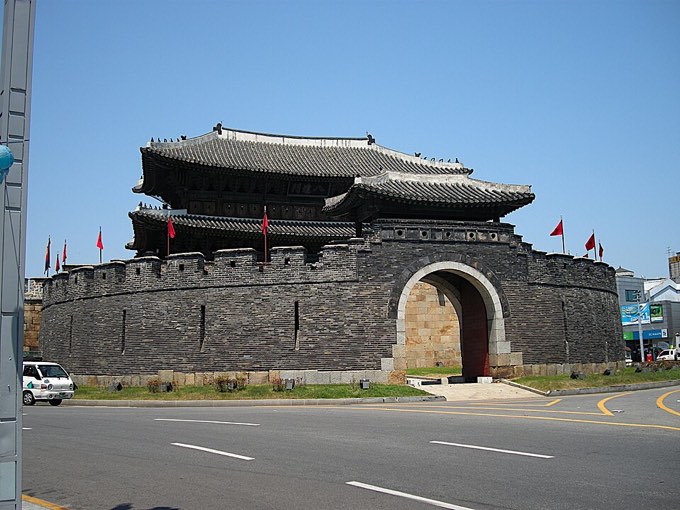
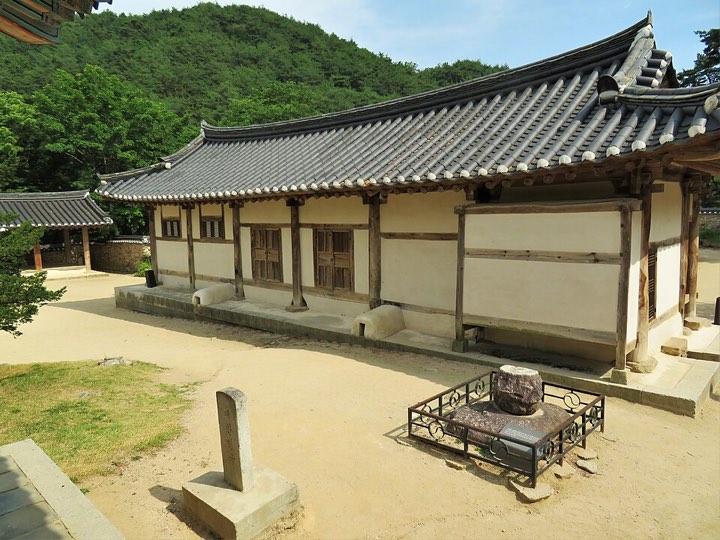
Photos — Hwaseong Fortress: Kbarends, CC BY-SA 3.0 · Sosu Seowon: Kyle, CC BY 2.0
| Category | List |
|---|---|
| World Heritage (cultural) | Seokguram Grotto and Bulguksa Temple, the Haeinsa Janggyeong Panjeon (the building is inscribed — the woodblocks are Memory of the World), and Jongmyo Shrine (all 1995) · Changdeokgung Palace and Hwaseong Fortress (1997) · the Gyeongju Historic Areas and the Gochang, Hwasun, and Ganghwa Dolmen Sites (2000) · the Royal Tombs of the Joseon Dynasty (2009) · the Hahoe and Yangdong villages (2010) · Namhansanseong (2014) · the Baekje Historic Areas (2015) · Sansa, Buddhist mountain monasteries (7 sites incl. Tongdosa and Buseoksa, 2018) · Seowon, Neo-Confucian academies (9 sites incl. Sosu and Dosan, 2019) · the Gaya Tumuli (2023) · Petroglyphs along the Bangucheon Stream (2025, Korea's first prehistoric World Heritage site) |
| World Heritage (natural) | Jeju Volcanic Island and Lava Tubes (2007) · Getbol, Korean Tidal Flats (2021) |
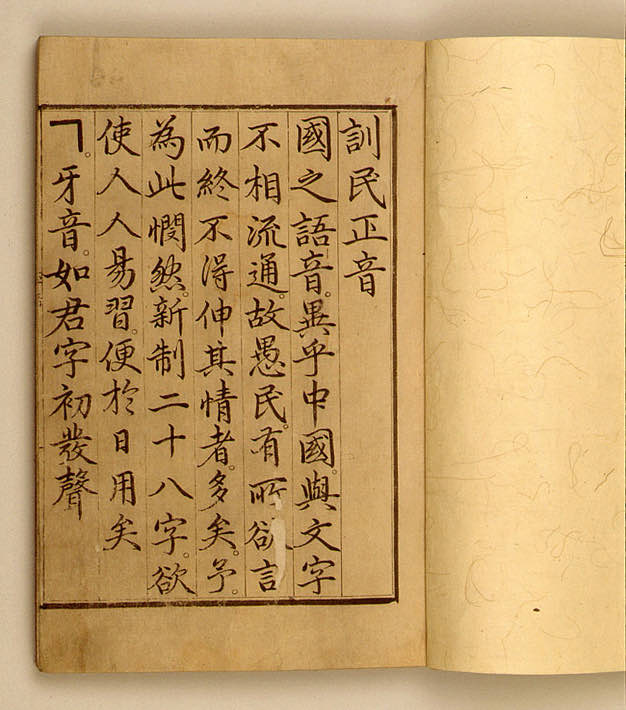
| Memory of the World | The Hunminjeongeum Manuscript and the Annals of the Joseon Dynasty (1997) · the Jikji and the Seungjeongwon ilgi, Diaries of the Royal Secretariat (2001) · the royal Uigwe protocols and the Haeinsa Tripitaka Koreana woodblocks (2007) · the Donguibogam (2009) · the Ilseongnok and the May 18 archives (2011) · the Nanjung ilgi (War Diary) and the Saemaul Undong archives (2013) · the KBS reunion-of-separated-families broadcast (2015) · the royal seals and investiture books, the National Debt Redemption Movement archives, and the Joseon Tongsinsa documents (2017) · the archives of the April 19 Revolution and the Donghak Peasant Revolution (2023) |
| Intangible Cultural Heritage | The Jongmyo ancestral ritual and its music (2001) · Pansori (2003) · the Gangneung Danoje festival (2005) · Ganggangsullae and Namsadang Nori (2009) · Arirang (2012) · Kimjang (2013) · Nongak (2014) · tugging rituals and games (2015) · the Jeju haenyeo (women divers) (2016) · Ssireum (2018, jointly with North Korea) · Yeondeunghoe (2020) · Talchum (2022) |
Exam points
- The top trap: the Haeinsa Temple Janggyeong Panjeon (architecture, World Heritage) vs the Tripitaka Koreana woodblocks (Memory of the World) — inscribed separately.
- The Wang ocheonchukguk jeon and the Daedong yeojido are not on any UNESCO list — a common wrong-answer choice.
- Memory of the World is "books and documents" (the Annals, the Uigwe, diaries); World Heritage is "places and architecture" (palaces, fortresses, villages) — use this rule when in doubt.
5 Institutional Change — the Lineage of Land, Taxation, and Education
A staple of the "arrange (A)–(D) in order" type — the order of institutional change. Attach the "who and why" of each institution to avoid wrong answers.
- Land system (Silla–Unified Silla) — nogeup (nobles' right to collect) → granting of gwallyojeon (office land) and abolition of nogeup (King Sinmun, 687 and 689 — strengthening royal power) → granting of jeongjeon (King Seongdeok, 722) → revival of nogeup (King Gyeongdeok, 757 — the nobility grew again).
- Land system (Goryeo) — yeokbunjeon (King Taejo, for merit subjects) → the jeonsigwa: sijeong (King Gyeongjong, by rank and character) → gaejeong (King Mokjong, by office) → gyeongjeong (King Munjong, for serving officials only) → collapse after the military coup → nokgwajeon (King Wonjong) → the gwajeonbeop (1391, King Gongyang — the economic base of the new scholar-officials).
- Land system (Joseon) — the gwajeonbeop (limited to Gyeonggi, with the abuse of hereditary susinjeon and hyulyangjeon) → the jikjeonbeop (King Sejo, for serving officials only) → the gwansu gwangeup system (King Seongjong — the state collected and paid, barring officials from collecting directly) → abolition of the jikjeonbeop (King Myeongjong, 16th century — only stipends paid → the spread of the landlord-tenant system).
- Tax system (Joseon) — land tax: the gongbeop (King Sejong, 6 land grades and 9 harvest grades) → the yeongjeongbeop (King Injo, a fixed 4 du regardless of harvest) / tribute: the abuse of bangnap → the Daedongbeop (King Gwanghae, Gyeonggi in 1608 → nationwide by King Sukjong in 1708, paid in rice, cloth, or coin — the rise of the gongin and the growth of a commercial money economy) / military service: bangun-supo → the gyunyeokbeop (King Yeongjo, 1750, from 2 bolts of cloth to 1 — made up by the gyeoljak surtax, seonmu gungwanpo, and fishing and salt taxes).
- Educational institutions — Goguryeo's Taehak (in the capital, the first) and gyeongdang (in the provinces, letters and martial arts) → Unified Silla's Gukhak (King Sinmun) → Goryeo's Gukjagam (King Seongjong), the twelve private academies (Choe Chung's Munheongongdo), and the yanghyeongo fund (King Yejong) → Joseon's Seonggyungwan (the highest), the four district schools, the hyanggyo (public provincial schools), the seowon (private — the Baegundong Seowon was the first, chartered as the Sosu Seowon), and the seodang.
| Institution | King | Key one-liner |
|---|---|---|
| Gwallyojeon / abolition of nogeup | King Sinmun | Cut off the nobility's control over land and labor |
| Jeonsigwa gyeongjeong | King Munjong (Goryeo) | For serving officials only — completion of the jeonsigwa |
| Gwajeonbeop | King Gongyang (1391) | Collection rights limited to Gyeonggi — the economic base of the scholar-officials |
| Jikjeonbeop | King Sejo | For serving officials only (abolishing susinjeon and hyulyangjeon) |
| Gwansu gwangeup system | King Seongjong | The state collected and paid the taxes — preventing abuse of collection rights |
| Daedongbeop | King Gwanghae–King Sukjong | Tribute → rice (12 du per gyeol) — the rise of the gongin and commerce |
| Gyunyeokbeop | King Yeongjo | Military cloth from 2 bolts to 1 — made up by the gyeoljak surtax |
Exam points
- Order of Joseon land systems: gwajeonbeop → jikjeonbeop (King Sejo) → gwansu gwangeup (King Seongjong) → abolition of the jikjeonbeop (King Myeongjong) — arrange them together with the kings.
- The result of the Daedongbeop = the rise of the gongin and the growth of a commercial money economy — stopping at "easing the farmers' burden" is only half the answer.
- Seowon = private (the first, Baegundong, chartered as the Sosu Seowon) vs hyanggyo = public (in every county) — what the Regent Heungseon Daewongun abolished was the seowon.