📜 Source Cards
“He who kills another shall be put to death at once. He who injures another shall pay compensation in grain. He who steals shall be made a slave; to be pardoned, he must pay 500,000 jeon per person.”
- A class society that valued life, labor, and private property
- The existence of a concept of money
- Only 3 of the 8 articles survive
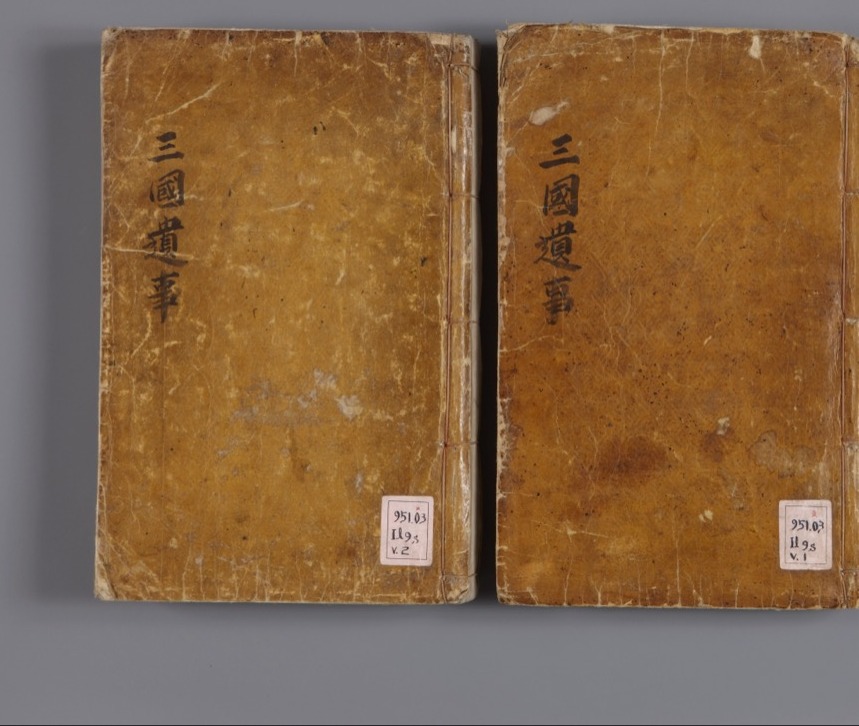
“Hwanung descended with three thousand followers to the foot of the sindansu (divine tree) on Mt. Taebaek and named the place Sinsi. Leading the masters of wind, rain, and clouds, he took charge of some 360 human affairs, including grain, lifespan, disease, punishment, and good and evil. … The bear became a woman, married Hwanung, and bore a son, who was called Dangun Wanggeom.”
- The masters of wind, rain, and clouds (pungbaek, usa, unsa) = an agricultural society
- Union with a bear-worshipping tribe = totemism
- Dangun Wanggeom = the unity of religious and political authority (jejeong ilchi)
“In the first month of the Yin calendar (the twelfth month), they sacrifice to Heaven; the people of the whole country gather in great numbers and for days on end drink, sing, and dance — this is called Yeonggo. At this time they judge criminal cases and release prisoners.”
- A 12th-month rite to Heaven (a hunting-society tradition)
- The Sachuldo governed by the maga, uga, jeoga, and guga (four clan chiefs)
- The 'ilchaek sibibeop' law — a thief repaid twelvefold
“Because they believe in spirits, each capital settlement appoints one man to preside over the sacrifices to the Heavenly God; he is called the cheongun. Each state also has a separate town called a sodo, where they erect a great tree, hang bells and drums upon it, and serve the spirits. Anyone who flees into it is not sent back.”
- Separation of the cheongun (priest) from the sinji and eupcha (political rulers) = the separation of religious and political authority
- Sodo = a sacred, inviolable zone
“Your divine plans have plumbed the heavens; / your subtle reckoning has mastered the earth. / Your merit in victory is already high — / may you know contentment and cease.”
- The invasion by Emperor Yang of Sui's army of 1.13 million
- Annihilating the 300,000-strong detachment of Yu Zhongwen and Yuwen Shu at the Salsu (Cheongcheon River)
“First, serve the king with loyalty. Second, serve your parents with filial piety. Third, keep faith with your friends. Fourth, never retreat in battle. Fifth, be discriminating in the taking of life.”
- The monk Wongwang — a Buddhist priest who combined Confucian virtues
- The Hwarang — reorganized into a state institution under King Jinheung
“In the second month of the eighth year of Queen Jinseong (894), Choe Chiwon submitted ten-odd points on the affairs of the time; the queen received them favorably and made him an achan.”
- A reform attempt by a head-rank-six (yukdupum) scholar who had studied in Tang and passed its exam for foreigners
- Blocked by jingol aristocrats and never carried out → the limits of the bone-rank (golpum) system
- Author of the Gyewon pilgyeong and the proclamation against Huang Chao
“Muye (King Mu) respectfully declares: … Muye has presumed to preside over many states and command many peoples, recovering the old lands of Goguryeo and keeping the customs of Buyeo. We therefore send envoys to seek our neighbor and bind our friendship.”
- 'Recovering Goguryeo's old lands, keeping Buyeo's customs' = the classic evidence of Goguryeo-successor consciousness
- Opening relations with Japan while checking Tang and Silla (King Mu's hard line — Jang Munhyu's raid on Dengzhou, Shandong)
- Later, under King Mun, Japan's replies still addressed the Balhae ruler as 'King of Goryeo (Goguryeo)'—the same consciousness continued
“The great enterprise of our state owes itself to the protection of the many buddhas — therefore encourage Buddhism. … Seogyeong, whose water-virtue flows favorably, is the root of our land's geomantic veins; reside there more than a hundred days each year to secure tranquility. … Do not neglect the Yeondeunghoe (Lantern Festival) and the Palgwanhoe.”
- A pro-Buddhist policy + the Yeondeunghoe (Lantern Festival) and Palgwanhoe
- Emphasis on Seogyeong (Pyongyang) = the northward-expansion policy
- Governing instructions left for later kings
“Practicing Buddhism is the root of cultivating oneself; practicing Confucianism is the source of governing the state. Cultivating oneself is for the life to come; governing the state is the urgent task of today. … Dispatch local officials to look after the people.”
- Confucianism = the basis for governing the state → establishing Confucian political ideology
- The basis for establishing the 12 mok (provincial centers) and dispatching local officials
- Curtailing Buddhist events (Yeondeung, Palgwan)
“Xiao Sunning: 'Your country rose from Silla land, and the lands of Goguryeo belong to us — how dare you encroach upon them?' Seo Hui: 'No. Our country is the very successor of old Goguryeo. That is why it is named Goryeo and made its capital at Pyongyang. Both banks of the Yalu River lie within our territory, but the Jurchen now block the way — drive them out and open the road, and why would we not exchange envoys?'”
- A source for the consciousness of succeeding Goguryeo
- Securing the Gangdong Six Garrisons without fighting
- Promising to cut ties with Song and open relations with the Khitan
“Since the years Gyeongin and Gyesa, many risen from the lowborn have reached high office. How could generals and ministers be born of a special seed? When the time comes, anyone can do it. Let each of us kill his master and burn the slave registers.”
- A status-liberation movement during the military-rule period
- The 'Gyeongin and Gyesa years' = the military coup (1170) and Kim Bodang's revolt
- An organized uprising plotted by private slaves (sanobi)
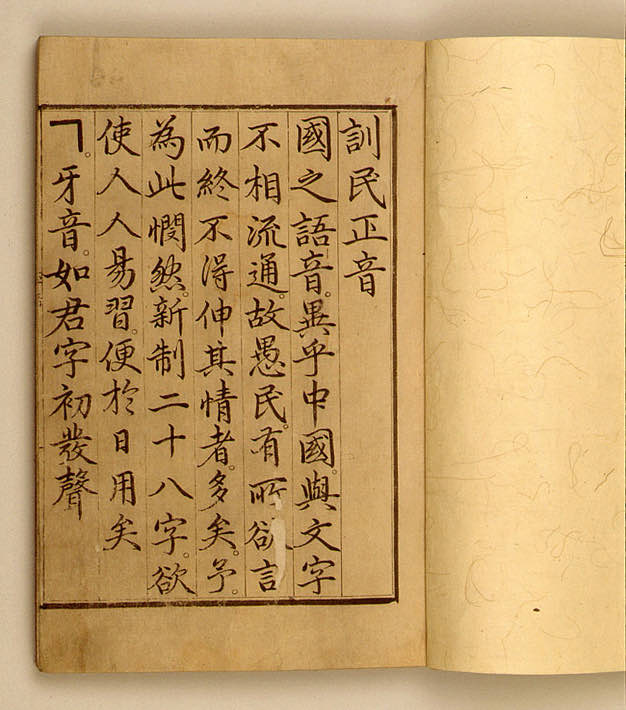
“The speech of our country differs from that of China and does not match the written characters, so among the unlettered people there are many who, though they have something to say, cannot in the end express their meaning. Taking pity on this, I have newly made twenty-eight letters, wishing only that every person may learn them with ease and use them daily with comfort.”
- The people-first spirit ('taking pity on the unlettered people')
- Created 1443 · promulgated 1446
- The Haerye edition = a UNESCO Memory of the World
“In a dream a divine being appeared and said, 'I am Sun Xin, King Huai of Chu, slain by the Hegemon-King of Western Chu (Xiang Yu) and sunk in the Bin River,' and then vanished. Waking from the dream in astonishment, I reflected … and so composed this text of mourning.”
- The tale of Xiang Yu killing the Righteous Emperor = an allegory for Sejo deposing Danjong
- Kim Ilson entered it in the draft history (sacho) → the Purge of 1498 under Yeonsangun
- The first literati purge (sahwa) to strike the Sarim
“Never has the harm of factions been worse than in our day. What began as disputes over right and wrong within Confucian learning has now come to branding the whole of one side as traitors. … To associate widely without taking sides is the fair mind of the gentleman; to take sides without associating widely is the selfish mind of the petty man.”
- Erecting the Tangpyeong Stele in front of Sungkyunkwan
- Moderate (wallon) tangpyeong after Yi Injwa's revolt (1728)
- Paired with the Gyunyeok Law and the Sok daejeon (Supplement to the Code)
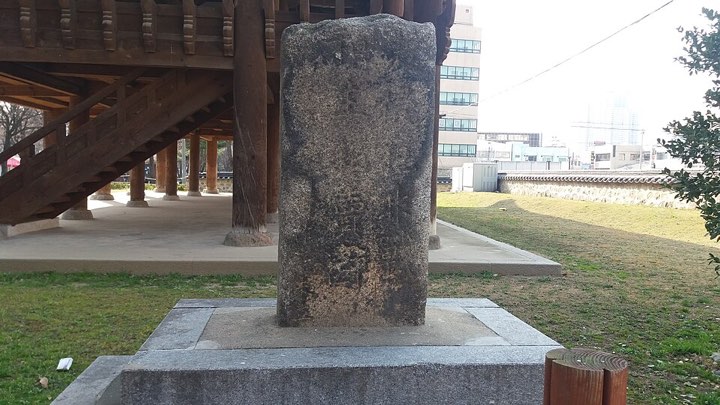
“When the Western barbarians invade, not to fight is to make peace with them, and to urge peace is to sell the country. We warn our descendants for ten thousand generations. Composed in the byeongin year, erected in the sinmi year.”
- Erected nationwide after the French (Byeongin, 1866) and American (Sinmi, 1871) disturbances
- 'Composed in byeongin, erected in sinmi' — the years of the two Western disturbances are in the inscription
- Removed after the Daewongun's failed return to power following the Imo Mutiny
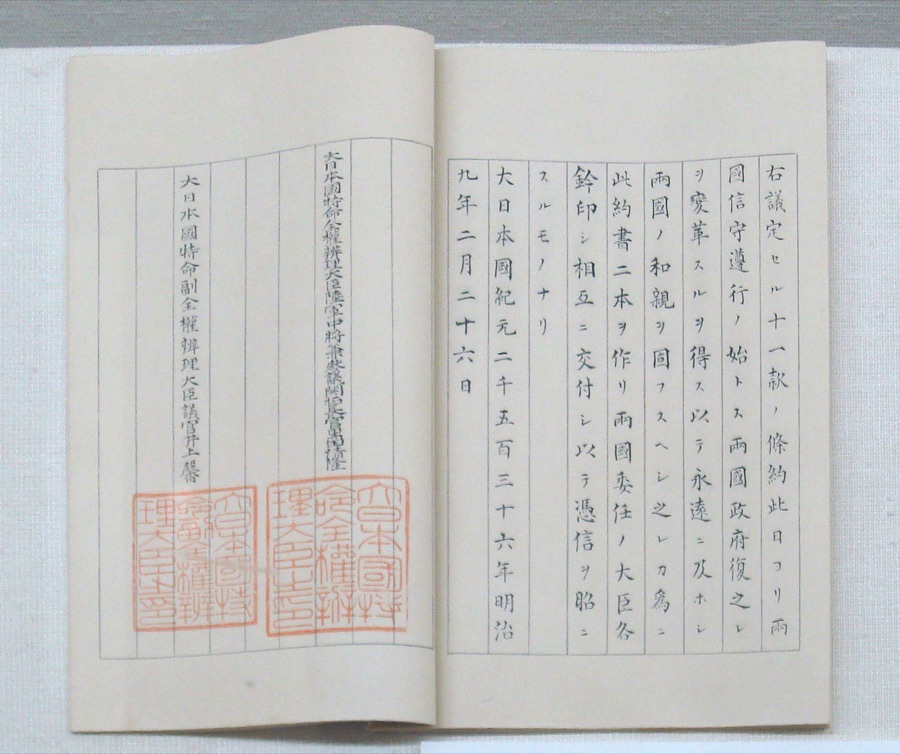
“Article 1: Joseon is an autonomous state and possesses equal rights with Japan. … Article 7: Japanese navigators are permitted to survey the coasts freely. … Article 10: When Japanese subjects commit crimes in Joseon ports, they shall all be tried by Japanese officials.”
- 'Autonomous state' = intended to deny Qing suzerainty
- Coastal survey rights and consular jurisdiction (extraterritoriality) = the unequal clauses
- The Unyo-ho incident was the pretext
“Corrupt officials shall be investigated and severely punished. Slave registers shall be burned. The treatment of the seven despised classes shall be improved, and the pyeongnyang hat worn by butchers shall be abolished. Young widows shall be permitted to remarry. Those who collude with the Japanese shall be severely punished. Land shall be divided equally for cultivation.”
- Burning slave registers and letting widows remarry = anti-feudal
- 'Severely punish those who collude with the Japanese' = anti-foreign
- Carried out through the jipgangso councils after the Treaty of Jeonju
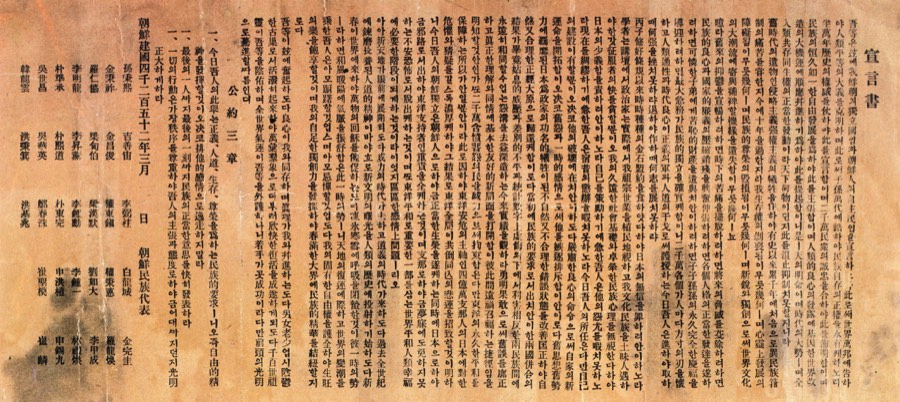
“We hereby declare that Korea is an independent nation and that Koreans are a self-governing people. We proclaim this to all the nations of the world to make clear the great principle of human equality, and we enjoin it upon our descendants for ten thousand generations, that they may forever enjoy the rightful claim of our people to an independent existence.”
- Gojong's funeral + the February 8 Declaration + Wilson's principle of national self-determination
- The occasion for founding the Provisional Government
- The trigger for Japan's shift to 'cultural rule'
“Bandit Japan has abolished our national name, seized our sovereignty, and stripped away every condition necessary for our survival. … The masses are the headquarters of our revolution. Violence is the only weapon of our revolution. Let us go among the masses, join hands with them, and overthrow the rule of bandit Japan with unceasing violence — assassination, destruction, and uprising.”
- Written by Sin Chaeho at Kim Wonbong's request
- The theory of direct revolution by the masses — criticizing the diplomacy and self-strengthening approaches
- The ideological basis for the attacks by Kim Iksang, Kim Sangok, and Na Seokju
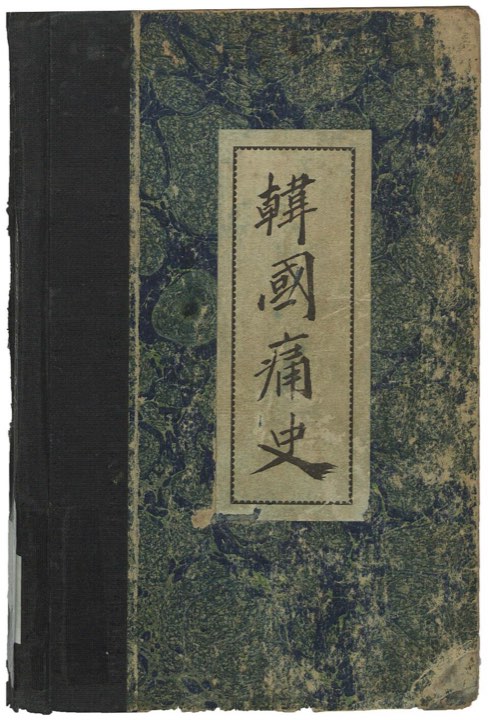
“The ancients said that a nation may perish but its history cannot perish, for the nation is the body (hyeong) and history is the spirit (sin). Now the body of Korea has crumbled — can its spirit not remain, even alone?”
- Preserve the national soul (gukhon) and the nation can be recovered
- Continued in the Hanguk dongnip undong ji hyeolsa (Bloody History of the Korean Independence Movement)
- The second president of the Provisional Government
“Only when Korea exists can there be Koreans, and only when there are Koreans can there be democracy or communism. … Even if I should fall with the 38th parallel as my pillow while striving to build a unified homeland, I will not, for the cheap comfort of my own person, cooperate in establishing a separate government.”
- Opposing the UN Little Assembly's decision to hold a separate election in the South
- Kim Gu and Kim Gyusik's trip north for the negotiations → thwarted
- Boycotting the May 10 general election
“Article 39 (1): The President shall be elected by the National Conference for Unification by secret ballot without debate. Article 47: The President’s term of office shall be six years. Article 53 (1): When national security or public order faces, or is likely to face, a grave threat … the President may take emergency measures across the whole range of state affairs. Article 59 (1): The President may dissolve the National Assembly.”
- Indirect election by the National Conference for Unification + removal of the re-election limit → long-term rule became possible
- Maximized presidential power — emergency measures, dissolution of the National Assembly
- Proclaimed with the October Yushin (Oct. 1972) under the Park Chung-hee government and confirmed by referendum; ended with the Bu-Ma protests and the October 26 incident (1979)
“First, through agreement between the ruling and opposition parties, the Constitution should be speedily amended for direct presidential elections, and through an election under the new Constitution a peaceful transfer of government should be realized in February 1988. … The people are the masters of the country, and the people’s will comes before everything.”
- Background: the death of Park Jong-chul under torture → the April 13 constitution-protection decree → the June Uprising ('scrap constitutional protection, end dictatorship')
- The 9th amendment (Oct. 1987) — a single 5-year term with direct presidential elections = the current Constitution
- A declaration in which the ruling party's presidential candidate accepted the demand for direct elections