🏛 World Heritage Cards
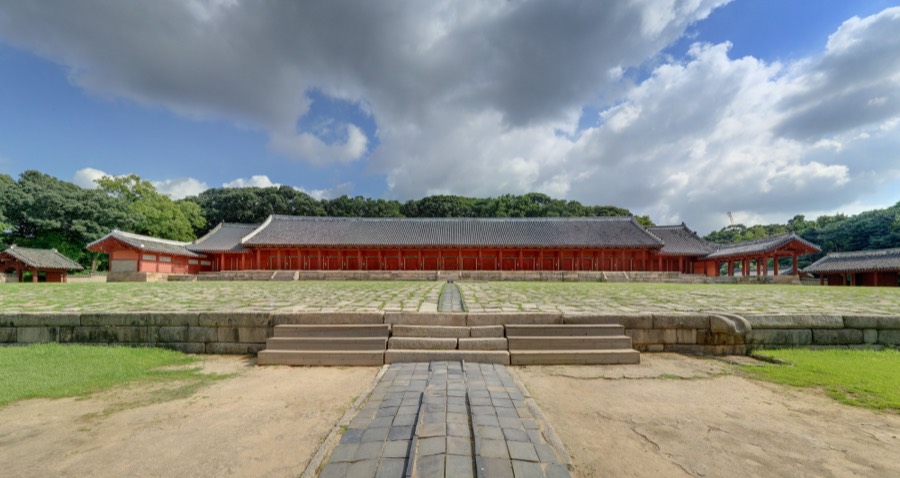
A Confucian shrine housing the spirit tablets of the kings and queens of Joseon. It consists of the Jeongjeon and Yeongnyeongjeon halls, and the Jongmyo Jerye rite with its ritual music is performed there every year.
📖 The story & what to see
As soon as King Taejo moved the capital to Hanyang, he built Jongmyo before anything else, alongside the palace. Placed east of Gyeongbokgung under the Confucian planning rule of 'shrine on the left, altars on the right,' it was the founding architectural statement that Joseon would be a Confucian state.
Jeongjeon chose austere restraint over ornament. Each time a new chamber was needed for enshrined tablets, one was simply added to the side — producing 19 chambers extending horizontally under a single roof, a form rarely seen anywhere in the world. Its low, long roofline is itself a symbol of Confucian restraint.
Above all, this heritage is still alive. The state rite of Jongmyo Jerye is performed every year with its ritual music and line dance — the architecture was inscribed as a World Heritage site in 1995, while the rite and its music were inscribed as Intangible Cultural Heritage in 2001, a rare case worldwide where tangible and intangible heritage continue together in one place.
- Jeongjeon — a wooden hall of 19 chambers under one gabled roof, enshrining royal tablets (National Treasure)
- Yeongnyeongjeon — an auxiliary hall for relocated tablets and posthumously honored kings (Treasure)
- Jongmyo Jerye — the Confucian royal ancestral rite still held each year
- Jongmyo Jerye-ak — the music, song, and dance accompanying the rite
- Samdo — three stone paths dividing the routes of spirits, king, and crown prince
- The Confucian ancestral-worship space of the Joseon royal house
- Jongmyo Jerye-ak is separately inscribed as Intangible Cultural Heritage
- Jeongjeon is among the longest single wooden buildings in the world
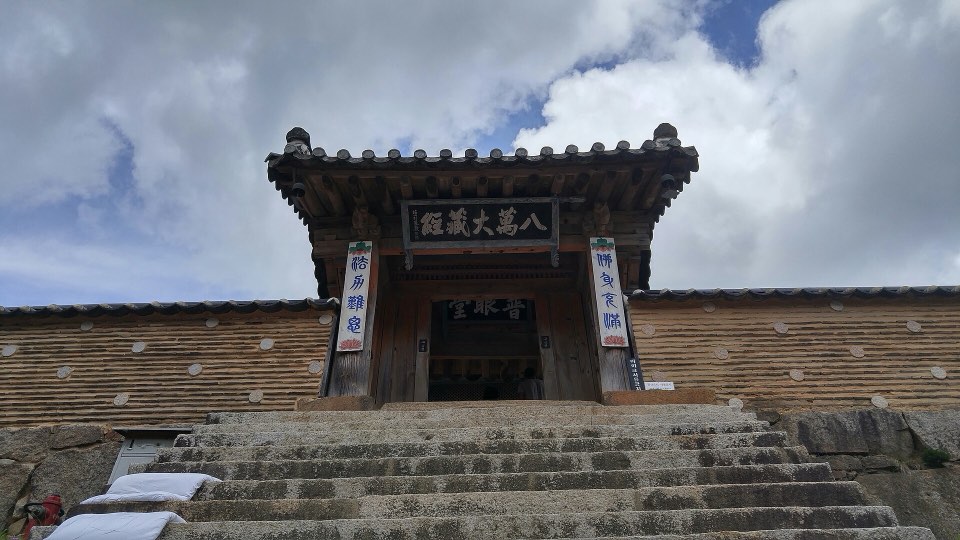 Entrance to the Janggyeong Panjeon — 'Tripitaka Koreana' plaque
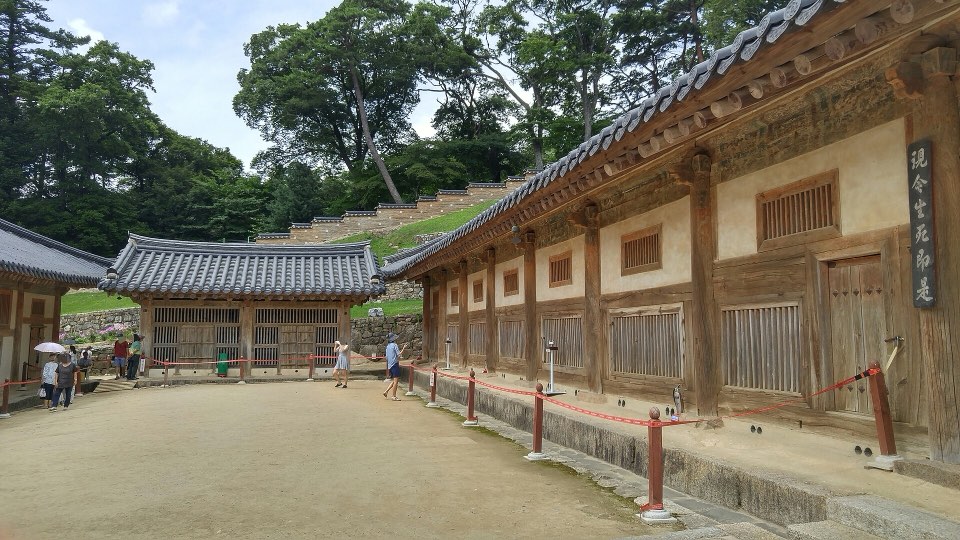 A depository hall — ventilation windows of differing sizes
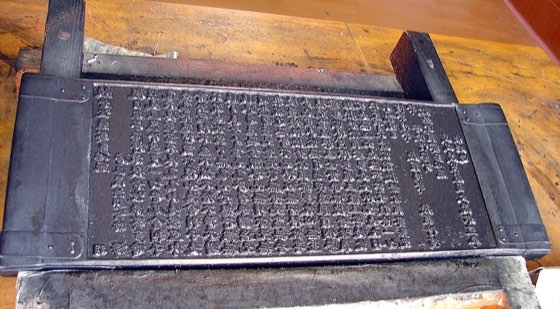 A Tripitaka Koreana woodblock
Buildings erected in early Joseon (15th century) to store the Tripitaka Koreana woodblocks carved in the Goryeo period. Praised as a scientific preservation design using natural ventilation and humidity control.
📖 The story & what to see
When the Mongols invaded, Goryeo began carving the Buddhist canon on Ganghwa Island, in the hope of defending the nation through the power of the Buddha. Cut over 16 years onto some 80,000 woodblocks, this Tripitaka Koreana is regarded today as the most complete Buddhist canon in the world.
What was inscribed as a World Heritage site, however, is not the blocks but the building that has protected them. The early-Joseon Janggyeong Panjeon lets air circulate on its own by making front and rear, upper and lower windows different sizes, and controls moisture with charcoal, salt, and lime laid beneath the floor — a masterpiece of preservation design that kept the woodblocks intact for more than 600 years, long before modern science.
- Janggyeong Panjeon — the 15th-century wooden depositories, the oldest part of Haeinsa (National Treasure)
- Tripitaka Koreana — over 80,000 woodblocks, the most complete Buddhist canon (National Treasure)
- Natural ventilation — windows of differing sizes and a floor of charcoal, salt, and lime
- Sudarajang and Beopbojeon — the two main depository halls
- The inscription covers not the woodblocks but the storage buildings (Janggyeong Panjeon)
- The woodblocks themselves are separately inscribed as a Memory of the World (2007)
- The buildings are early Joseon while the blocks are Goryeo — beware of confusing the periods
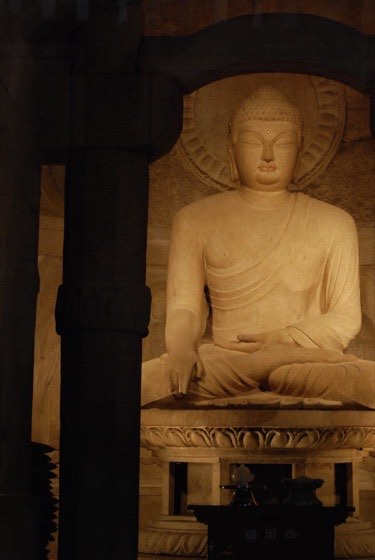 Seokguram Buddha
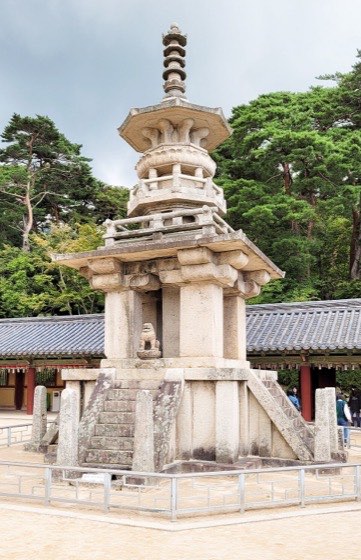 Dabotap Pagoda
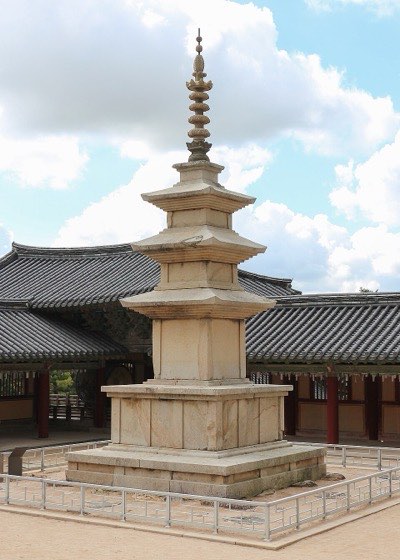 Seokgatap Pagoda
Created under King Gyeongdeok of Unified Silla at the vow of Kim Daeseong. Seokguram is an artificial grotto temple; Bulguksa is a temple embodying the ideal of the Buddha Land.
📖 The story & what to see
The Samguk Yusa relates that Chief Minister Kim Daeseong built Bulguksa for his parents in this life and Seokguram for his parents in a past life. Though the two sit apart, above and below on Mt. Toham, they were inscribed together as a single World Heritage site — the summit of Unified Silla Buddhist art.
Seokguram is not a natural cave but an artificial grotto assembled stone by stone from granite. Its hemispherical domed ceiling, exact bilateral proportions, and moisture-managing structure rank it among the masterpieces of 8th-century East Asian Buddhist sculpture. The main Buddha sits serenely facing the East Sea, toward the rising sun.
At Bulguksa two pagodas face each other — the ornately carved Dabotap and the austere, balanced Seokgatap. Later, while Seokgatap was being dismantled for repair, the Mugujeonggwang Dharani Sutra, believed to be the world's oldest woodblock print, was found inside it.
- Seokguram Buddha — a seated Buddha in earth-touching mudra within the grotto, facing the East Sea (National Treasure)
- Dabotap — an ornate, unconventional stone pagoda at Bulguksa (National Treasure)
- Seokgatap — a classic Unified Silla pagoda where the Mugujeonggwang Dharani was found (National Treasure)
- Cheongun-gyo and Baegun-gyo — symbolic stone stairways rising to the Buddha Land (National Treasure)
- The bodhisattva, disciple, and deva reliefs lining the grotto's rotunda
- The essence of Unified Silla Buddhist art
- The proportions of the Seokguram Buddha and its domed ceiling are exam regulars
- The Mugujeonggwang Dharani was found in Bulguksa's three-story pagoda (Seokgatap)
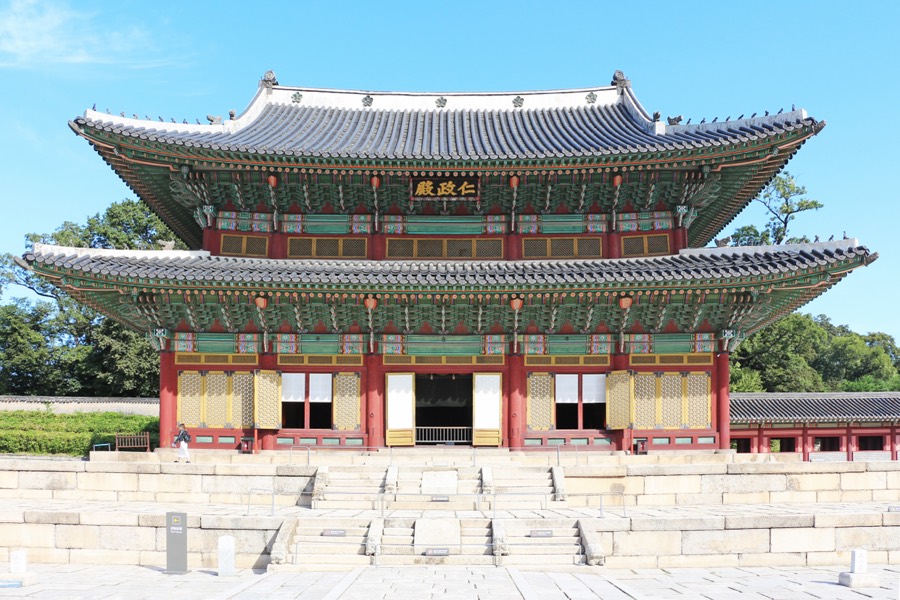
Built as a secondary palace of Joseon, it served as the main palace after the Imjin War (Japanese invasions, 1592–1598). Famous for a layout that follows the natural terrain and for its rear garden (Biwon).
📖 The story & what to see
Rather than leveling the land to impose a grid, Changdeokgung set its buildings along the ridges and valleys of the hillside as they were. Unlike the symmetrical Gyeongbokgung, its paths and halls flow freely with the terrain — a 'nature-conforming' layout praised as an outstanding example of East Asian palace design.
After all the palaces burned in the Imjin War, Changdeokgung was the first to be rebuilt. While Gyeongbokgung lay empty for a long time afterward, it functioned as the effective main palace of Joseon for about 270 years — the palace where kings actually governed and lived.
Behind the palace spreads a vast rear garden. Running from the Buyongji pond and Buyongjeong pavilion up to the Juhamnu, it minimizes artifice and leaves forest and water largely as they are — the finest expression of the Joseon royal garden.
- Injeongjeon — the palace's throne hall, used for enthronements and audiences (National Treasure)
- Donhwamun — the oldest surviving wooden palace main gate (Treasure)
- The rear garden — Buyongji, Juhamnu, and Aeryeonjeong, a royal garden shaped by nature
- Seonjeongjeon — the king's council hall, roofed with blue-glazed tiles
- Nakseonjae — the modest residence of the late-Joseon and modern royal family
- Inscribed for 'architecture in harmony with nature'
- The rear garden's landscaping, such as the Buyongji pond, is a key point
- Unlike Gyeongbokgung, it is not laid out in artificial bilateral symmetry
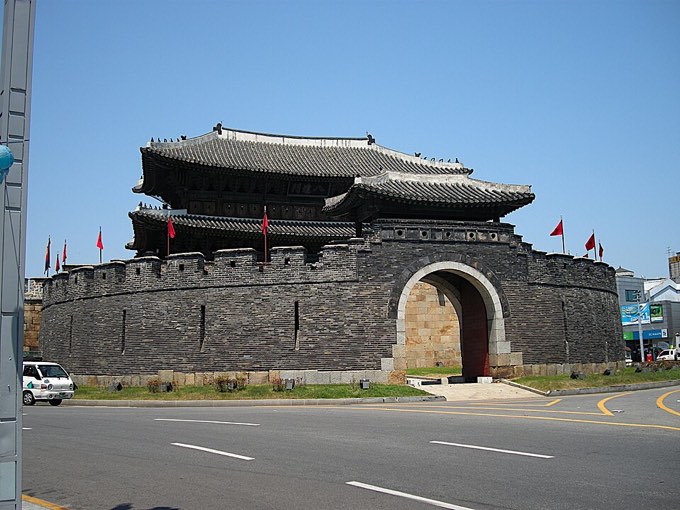
A fortress built when King Jeongjo relocated the tomb of his father, Crown Prince Sado, and constructed a new city. Jeong Yagyong aided the construction with devices such as the geojunggi (a traditional crane).
📖 The story & what to see
King Jeongjo moved the tomb of his wronged father, Crown Prince Sado, to Suwon and set out to build a new planned city beside it. Hwaseong was not merely a defensive work but a fortress inscribed with Jeongjo's dream — to strengthen royal authority and embody the ideals of his reform politics.
Its construction employed pulley machines devised by the Silhak scholar Jeong Yagyong — the geojunggi crane and the noro windlass — which lifted heavy stones with little force and sharply cut both time and cost. Combining Eastern and Western fortification techniques, Hwaseong is regarded as an outstanding example of early-modern fortress architecture.
Above all, the entire construction was documented in minute detail in a book, the Hwaseong Seongyeok Uigwe. Thanks to it, the fortress could be restored to its original form even after damage from events like the Korean War — a heritage, in effect, brought back to life by its own records.
- A roughly 5.7 km wall enclosing flatland and Mt. Paldal, in the form of a town fortress
- Janganmun and Paldalmun — the grand north and south gate towers (Paldalmun is a Treasure)
- Hwahongmun and Banghwasuryujeong — a water gate and pavilion over the Suwon Stream
- Seojangdae — the command post atop Mt. Paldal
- Gongsimdon and Bongdon — hollow watchtowers and a beacon-fire station
- Jeongjo's plan to consolidate royal authority and defend the capital's south
- Jeong Yagyong's geojunggi crane shortened the construction period
- The Hwaseong Seongyeok Uigwe recorded the whole building process
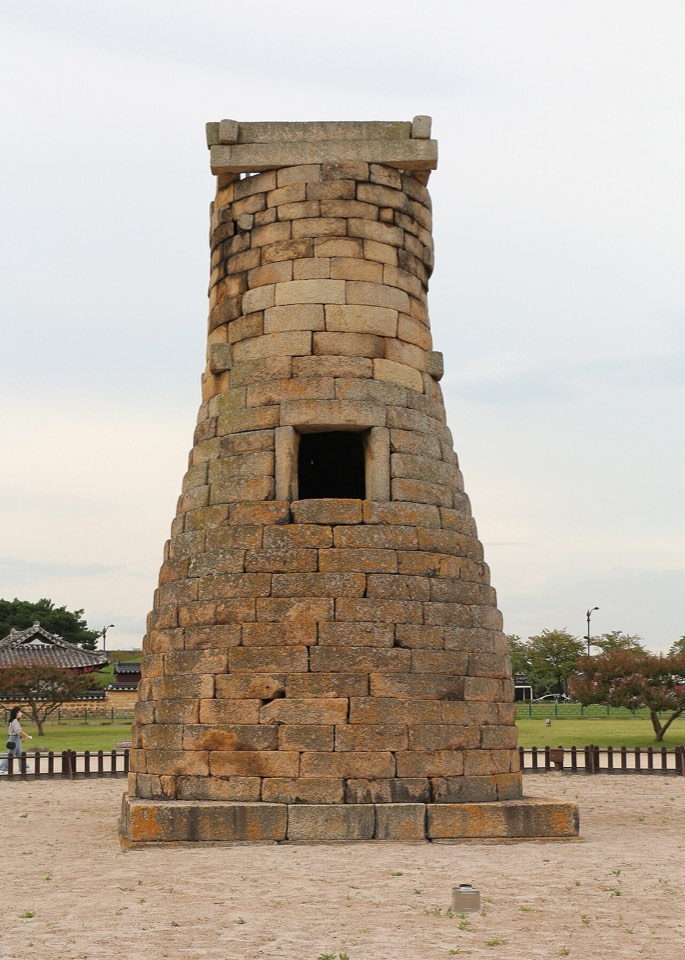 Cheomseongdae — the oldest surviving observatory in East Asia
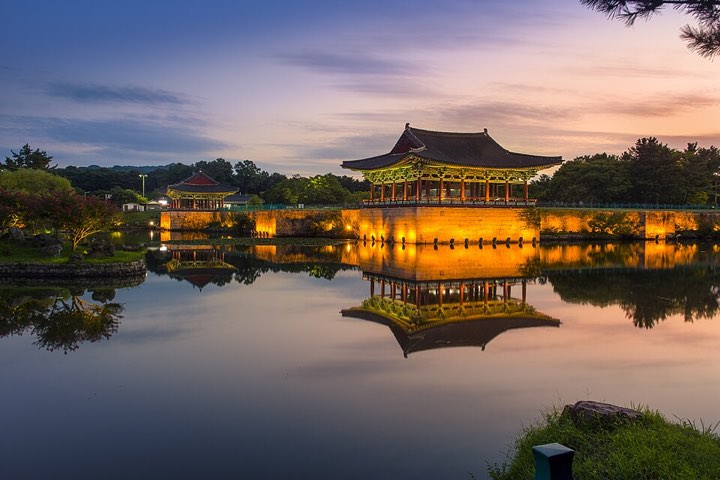 Donggung Palace and Wolji Pond (Anapji) at night
The remains of Silla's thousand-year capital, inscribed as five zones — Namsan, Wolseong, Daereungwon, Hwangnyongsa, and the fortress area — spanning the Three Kingdoms period through Unified Silla.
📖 The story & what to see
For about a thousand years Silla kept its capital in one place, Gyeongju. Palace sites, royal tombs, temple grounds, and mountain fortresses remain scattered everywhere — so much so that the whole city is, in effect, one vast open-air museum.
The World Heritage site groups these remains into five zones by character: Namsan, dense with Buddhist relics; Wolseong, with the palace site, the Cheomseongdae observatory, and the Gyerim forest; Daereungwon, where great tombs cluster; the Hwangnyongsa temple site; and the fortress zone that guarded the capital. Together they present Silla culture whole — palace, tomb, Buddhism, and defense woven into one city.
- Namsan zone — a trove of Buddhist relics called an 'open-air museum'
- Wolseong zone — the palace site, Cheomseongdae, Gyerim, and the Donggung and Wolji pond
- Daereungwon zone — Silla tomb clusters including Cheonmachong and Hwangnamdaechong
- Hwangnyongsa zone — the Hwangnyongsa temple site and Bunhwangsa's brick-style pagoda
- Fortress zone — capital defenses such as Myeonghwal Mountain Fortress
- Inscribed not as individual sites but as five integrated zones
- The Daereungwon zone comprises Silla tombs such as Cheonmachong
- The Hwangnyongsa site is a temple ground where only the wooden-pagoda foundation remains
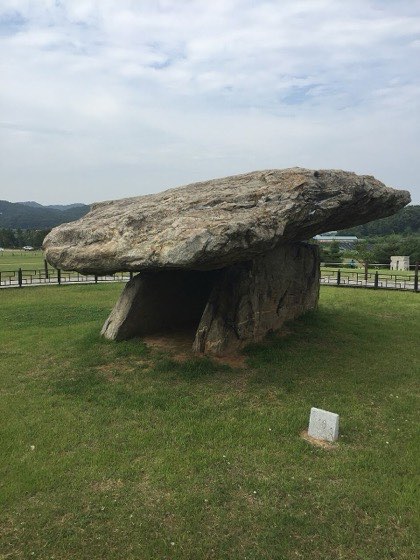 Ganghwa Bugeun-ri — table type
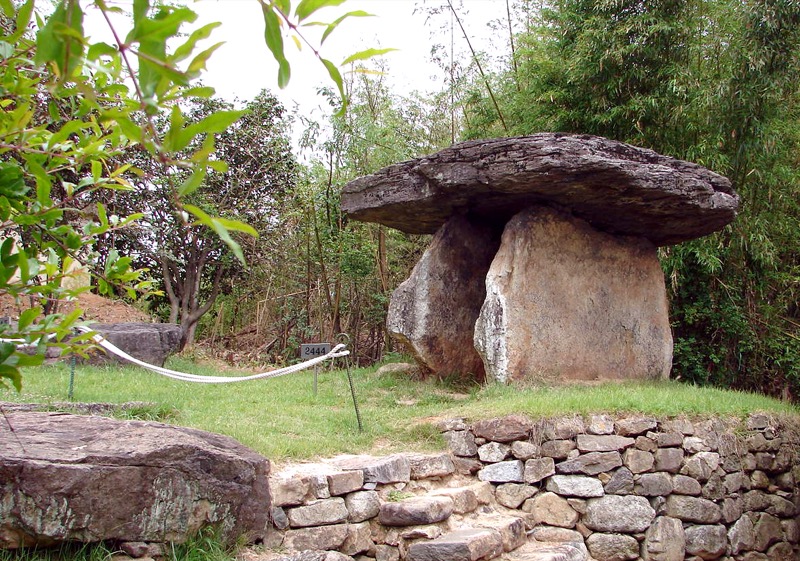 Gochang dolmen site
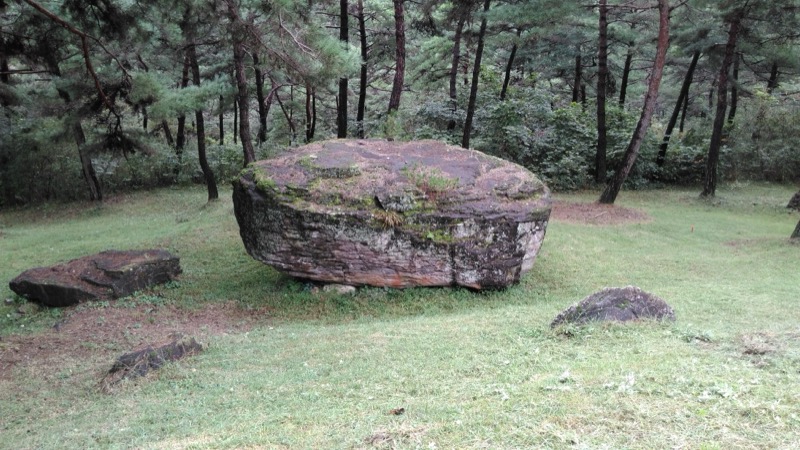 Hwasun dolmen site
A joint inscription of three areas where dolmens, presumed tombs of Bronze Age ruling elites, are densely distributed. The Korean Peninsula holds the world's densest concentration of dolmens.
📖 The story & what to see
A dolmen is a Bronze Age tomb built from great stones. In the three areas of Gochang, Hwasun, and Ganghwa gather the densest and most varied dolmens in the world — showing at a glance why the Korean Peninsula is called the 'land of dolmens.'
Quarrying, moving, and raising capstones weighing tens of tons demanded the organized labor of many people. So dolmens are read as more than tombs — as evidence of a Bronze Age society in which power and social rank had emerged, able to command that labor. At Hwasun even the quarry where the stones were cut survives, letting us trace the process.
- Gochang cluster — one of Korea's densest fields, with varied types in a small area
- Hwasun cluster — preserved with its quarry, revealing how they were built
- Ganghwa Bugeun-ri dolmen — a large table-type (northern) dolmen
- A diversity of forms — table, go-board, and capstone types side by side
- Dolmens are evidence of Bronze Age class society
- Distinguish the types: table, go-board, and capstone
- The world's dolmens are extraordinarily concentrated on the Korean Peninsula
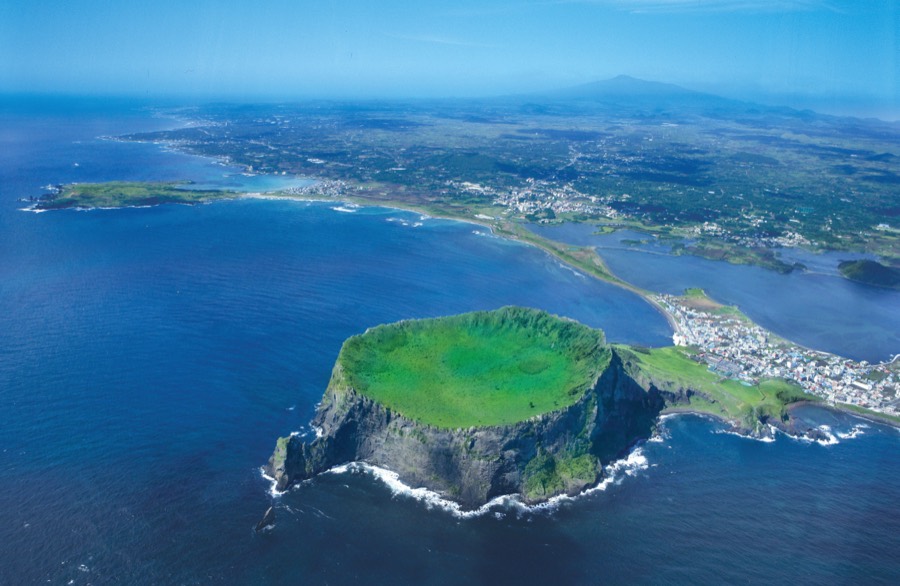 Seongsan Ilchulbong — a tuff cone risen from the sea
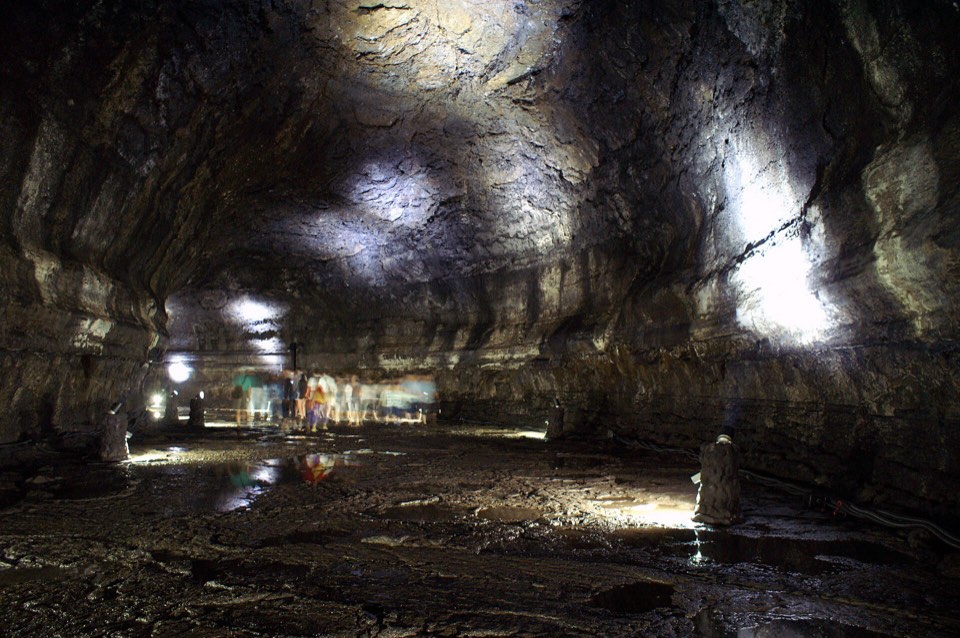 Inside Manjanggul — one of the world's largest lava tubes
Comprising Hallasan, Seongsan Ilchulbong, and the Geomunoreum Lava Tube System. The Republic of Korea's first UNESCO World Natural Heritage site.
📖 The story & what to see
Jeju is a rare large shield volcano, built by repeated eruptions over a hot spot in the middle of a continental plate. The World Heritage site captures the island's essence in three places — Hallasan, Seongsan Ilchulbong, and the Geomunoreum Lava Tube System.
The tube system formed by lava flowing from Geomunoreum — including Manjanggul — holds a rich array of features such as carbonate stalactites and stalagmites, and ranks among the finest lava-tube systems in the world. Seongsan Ilchulbong, rising from the sea, is a textbook example of a tuff cone, formed when magma met shallow water and exploded.
- Geomunoreum Lava Tube System — including Manjanggul, among the world's finest lava tubes
- Seongsan Ilchulbong — a tuff cone (hydrovolcano) risen from the sea
- Hallasan — South Korea's highest peak, with the Baengnokdam crater lake and layered vegetation
- Korea's first natural heritage site — all earlier inscriptions were cultural
- The Geomunoreum Lava Tube System includes Manjanggul
- Seongsan Ilchulbong is a hydrovolcanic (tuff-cone) landform
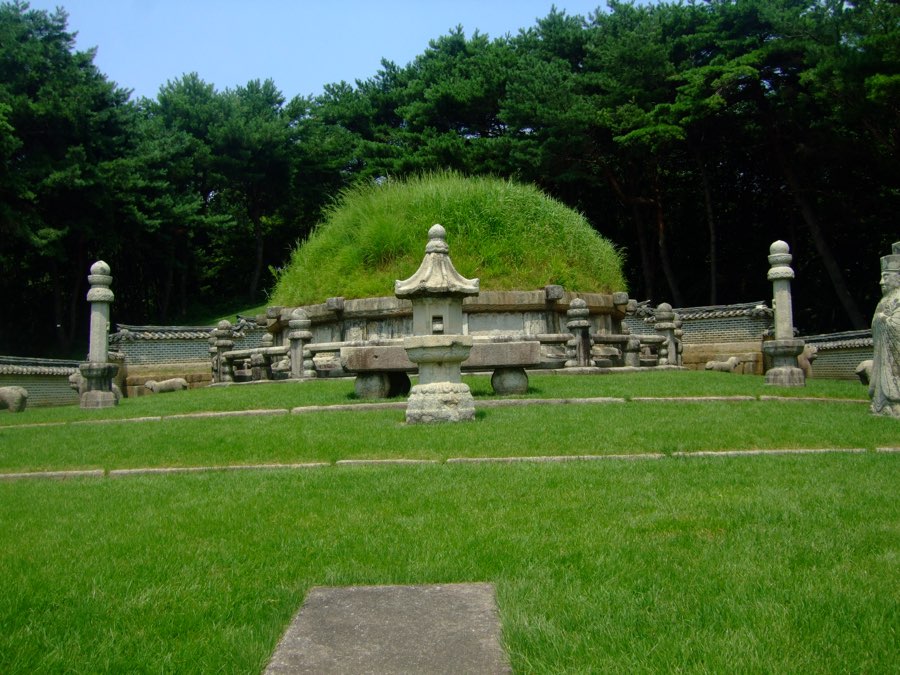
A joint inscription of all 40 tombs of Joseon kings and queens (excluding two located in North Korea). Their siting and stone arrangements maintained consistent principles for 500 years.
📖 The story & what to see
For 500 years, whenever a king or queen died, Joseon built the tomb by the same principles. Sites were chosen by geomancy — mountain behind, water in front — and the burial mound, T-shaped shrine, red-spiked gate, and stone figures were arranged with consistent formality, without greatly disturbing the natural terrain.
That 40 tombs of a single dynasty survive so nearly intact is rare anywhere in the world. And since descendants still carry out the royal ancestral rites at the tombs, they are at once spaces of the dead and stages of a living tradition.
- Donggureung — the largest tomb group, with nine tombs including Taejo's Geonwolleung, in Guri
- Hongyureung — imperial-tomb style of the Korean Empire (Gojong and Sunjong)
- The T-shrine, red-spiked gate, and stone figures common to every tomb's ritual space
- The burial mound with its low wall, and the military, civil, and animal stone guardians
- All the Joseon royal tombs (40 of 42) were inscribed at once
- Ranked as neung (kings/queens), won (crown princes, etc.), and myo (others)
- Sites were chosen by geomancy — mountain behind, water in front
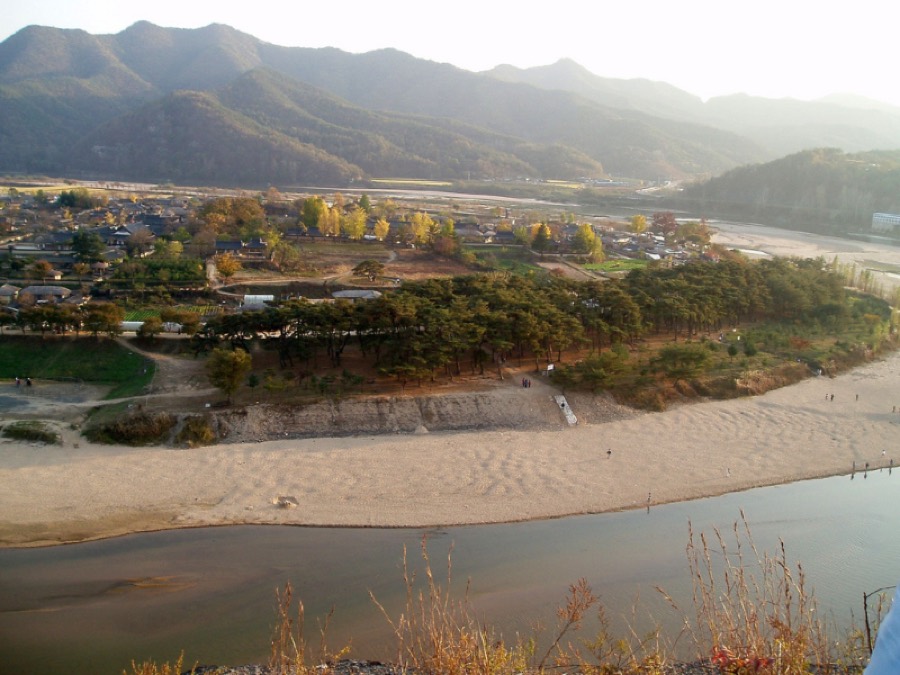 Andong Hahoe Village, wrapped in a bend of the Nakdong River
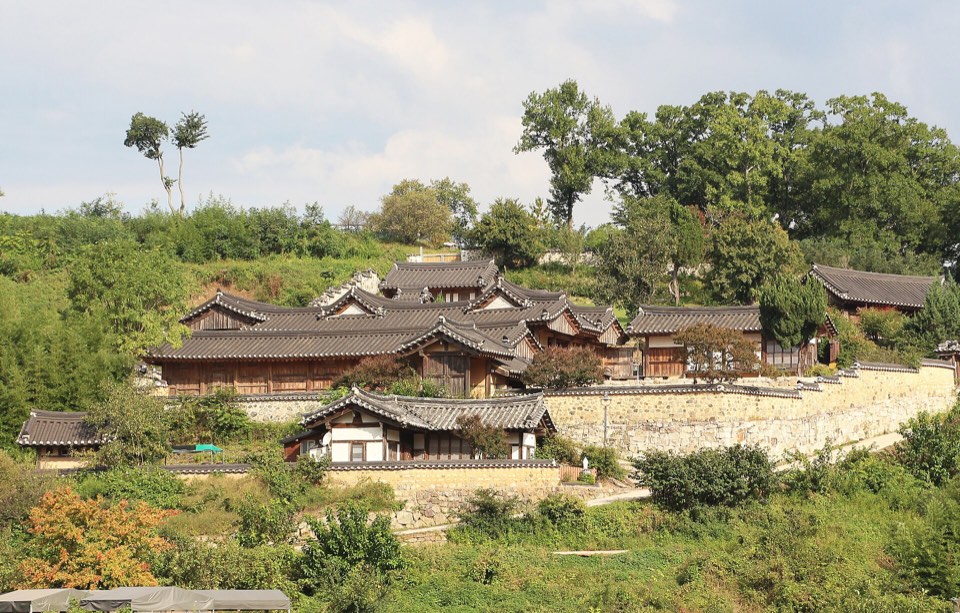 Gyeongju Yangdong Village — tiled and thatched houses of a yangban clan village
Representative single-clan villages preserving the original form of Joseon-era clan villages, formed by the Pungsan Ryu clan (Hahoe) and the Wolseong Son and Yeogang Yi clans (Yangdong).
📖 The story & what to see
Hahoe and Yangdong are representative Joseon single-clan villages, where the descendants of one surname have lived for generations. Set on auspicious ground — mountain behind, water and fields in front — they preserve to this day the ideal Confucian village that early-Joseon aristocrats aspired to.
In both villages, aristocrats' tiled houses and commoners' thatched cottages, academies and pavilions stand together according to status and function, mirroring the structure of Joseon society. At Hahoe the masked Byeolsingut dance is still performed with Hahoe masks, and head-family rites continue, so the whole village remains a living heritage.
- Hahoe (Andong) — the Nakdong River loops around it in an S, home to the Pungsan Ryu clan
- Yangdong (Gyeongju) — a hillside village of the Wolseong Son and Yeogang Yi clans
- Aristocratic houses, thatched cottages, academies, and pavilions arranged by status and use
- The Hahoe Byeolsingut mask dance, handed down with the Hahoe masks
- The leading examples of single-clan villages
- Tested in connection with the Hahoe mask dance and Byeolsingut
- A village landscape where aristocratic and common houses survive together
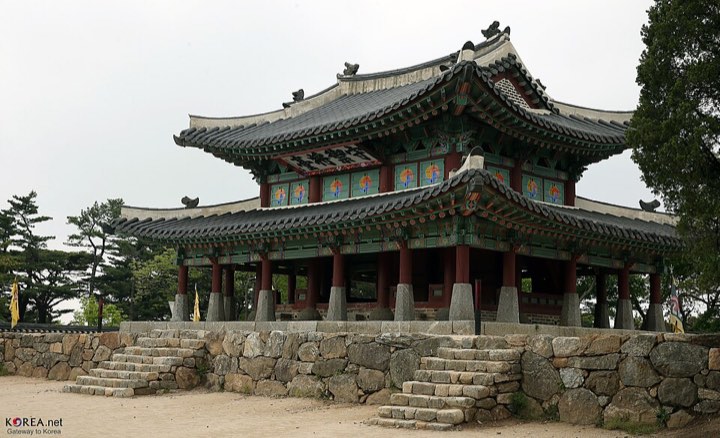
A mountain fortress built to serve as an emergency capital of Joseon. The historic site where King Injo resisted for 47 days during Byeongja Horan (the Manchu invasion of 1636) before surrendering at Samjeondo.
📖 The story & what to see
As the threat from Qing (Later Jin) grew, Namhansanseong was designed as an 'emergency capital' to stand in for the main city in a crisis. Its walls follow the natural ridgelines, and within them a temporary palace, offices, and even temples were provided — a stronghold as if a whole city had been moved onto the mountain.
When Byeongja Horan broke out in 1636, King Injo took refuge here and held out for 47 days, but in the end left the fortress and surrendered to the Qing emperor at nearby Samjeondo. Among those who built and defended the walls were monk-soldiers — so Namhansanseong is also a culmination of Joseon fortress-building that joined Buddhist tradition to military works.
- The wall — a valley-enclosing mountain fortress following the natural ridges
- The haenggung — a temporary palace for the king in an emergency
- Sueojangdae — a pavilion for command and observation
- Gukcheongsa and Janggyeongsa — temples where monk-soldiers who built and guarded the walls were based
- The last stand of Byeongja Horan (1636–1637)
- Linked to Injo's humiliation at Samjeondo (surrender to the Qing emperor)
- The fortress-building technology prepared for real warfare is itself a point of value
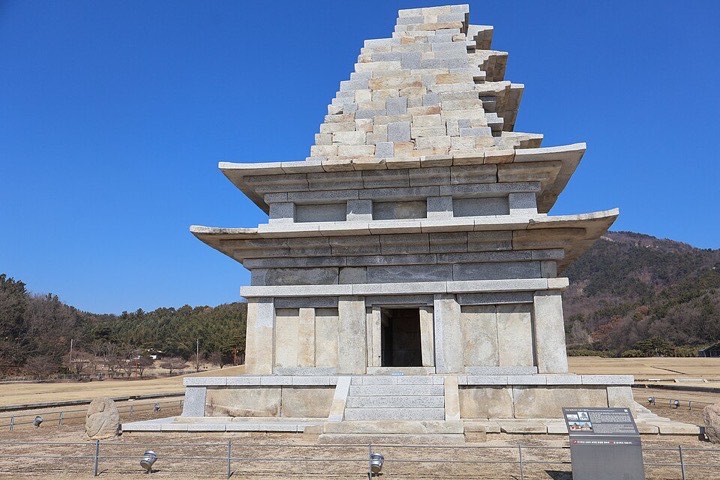 Iksan Mireuksa Temple pagoda — the oldest and largest extant stone pagoda
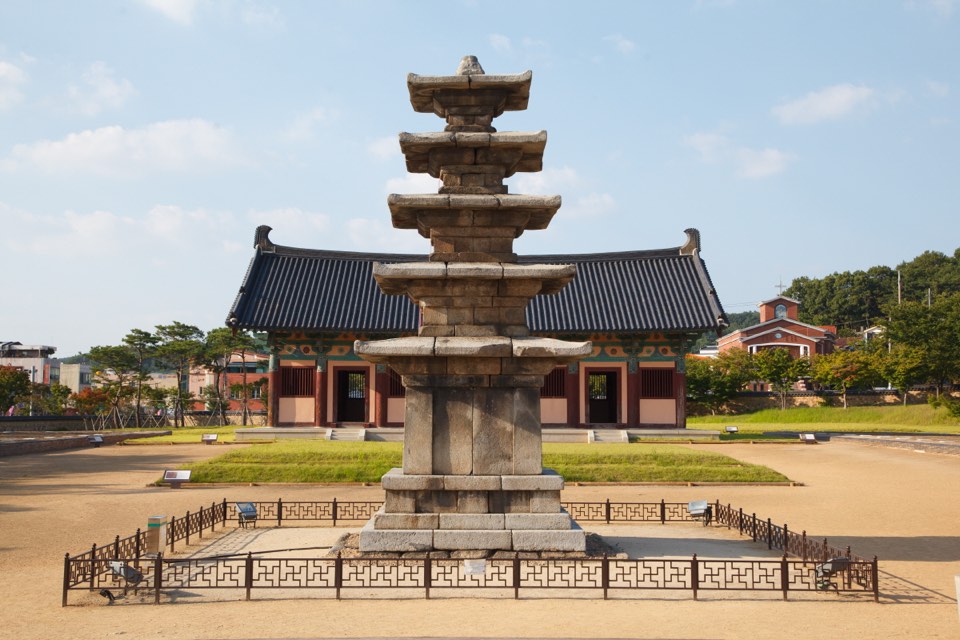 Buyeo Jeongnimsa Temple five-story stone pagoda
A joint inscription of Baekje sites from the Ungjin period (Gongju), the Sabi period (Buyeo), and the attempted move to Iksan — including Gongsanseong Fortress and the Songsan-ri tombs, Busosanseong Fortress and the Jeongnimsa temple site, and the Mireuksa temple site.
📖 The story & what to see
Pushed south by Goguryeo, Baekje moved its capital and made its culture bloom again at Ungjin (Gongju) and Sabi (Buyeo), even dreaming of a further move to Iksan. The World Heritage site ties together eight places scattered across these three cities — palaces, fortresses, temple sites, and royal tombs — to present late Baekje's capital system as a whole.
At the Songsan-ri tombs in Gongju, the tomb of King Muryeong was found undisturbed, even yielding a memorial stone — a rare Three Kingdoms royal tomb whose occupant and date are confirmed. The stone pagoda at the Mireuksa site in Iksan, the oldest surviving Baekje pagoda, shows the transition from wooden to stone pagodas. Baekje passed such culture across the sea, all the way to Japan.
- Gongsanseong (Gongju) — the royal fortress of the Ungjin period
- Songsan-ri tombs (Gongju) — the Baekje royal tombs including King Muryeong's
- The five-story pagoda at Jeongnimsa (Buyeo) — a masterpiece of Baekje stonework (National Treasure)
- The Mireuksa pagoda (Iksan) — the oldest and largest surviving Baekje stone pagoda
- Remains of the Ungjin and Sabi periods among Baekje's three capitals (Hanseong, Ungjin, Sabi)
- The brick-tomb style of King Muryeong's tomb in the Songsan-ri cluster
- The Mireuksa pagoda — the oldest surviving Baekje stone pagoda
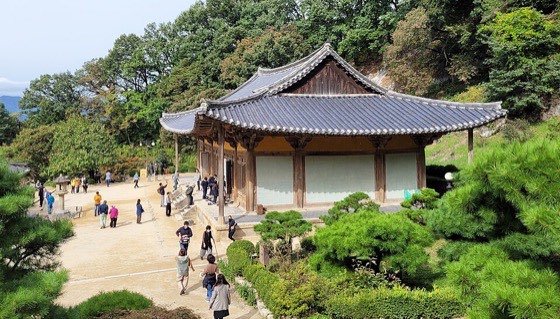 Muryangsujeon Hall at Buseoksa, Yeongju — a masterpiece of Goryeo wooden architecture
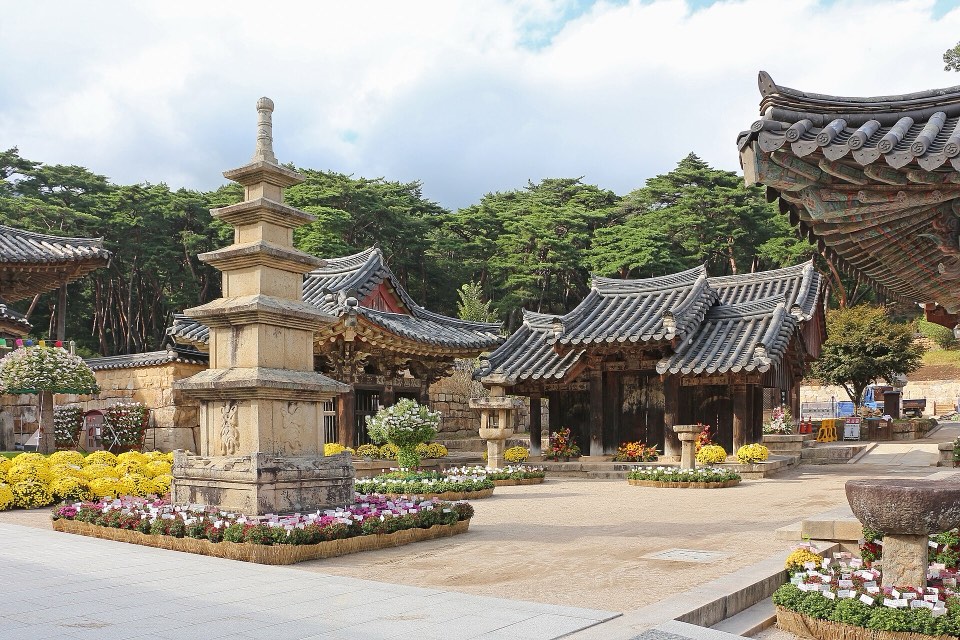 Tongdosa, Yangsan — the 'Buddha-jewel' temple
A joint inscription of seven mountain monasteries. Mostly founded in the Unified Silla period, they have maintained a mountain-monastery layout uniting spaces for worship, practice, and daily life through Goryeo and Joseon.
📖 The story & what to see
Tongdosa, Buseoksa, Bongjeongsa, Beopjusa, Magoksa, Seonamsa, and Daeheungsa — these seven mountain temples across the country mostly opened in Unified Silla and have been living monasteries for over a thousand years, honoring the Buddha and practicing in the mountains.
The mountain temples became World Heritage not for the splendor of individual buildings but for a distinctively Korean mountain layout — a hall, pavilion, lecture hall, and monks' quarters ringing a central courtyard — and a monastic tradition uniting faith, practice, and daily life. Ancient wooden buildings such as Buseoksa's Muryangsujeon and Bongjeongsa's Geungnakjeon live on within them.
- Tongdosa (Yangsan) — a temple enshrining relics of the Buddha himself
- Buseoksa (Yeongju) — a mountain temple of superb layout, with the Muryangsujeon hall
- Bongjeongsa (Andong) — the Geungnakjeon, among the oldest wooden buildings in Korea
- Beopjusa, Magoksa, Seonamsa, and Daeheungsa — the four remaining mountain temples
- The central courtyard, ringed by hall, pavilion, lecture hall, and quarters
- A joint inscription of seven temples, not of any single temple
- Distinct from the Buseoksa Muryangsujeon as a building — the value lies in the monastery-layout tradition
- The term 'monastery' — a union of worship, daily life, and administration
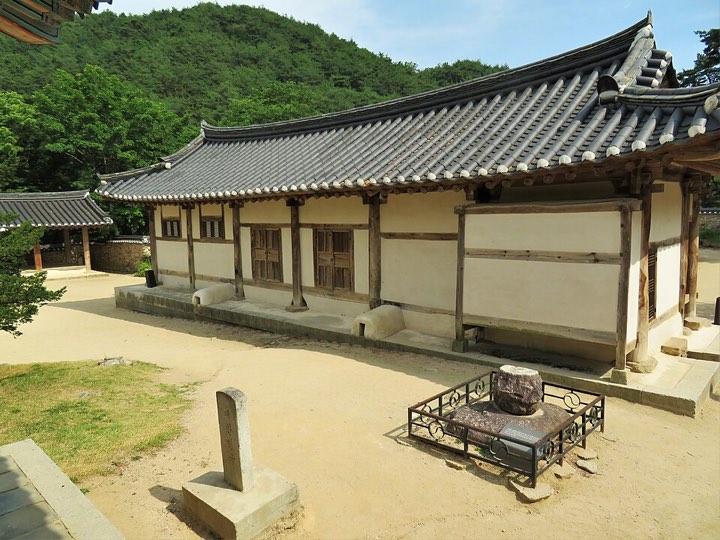 Sosu Seowon, Yeongju — the first royally chartered seowon
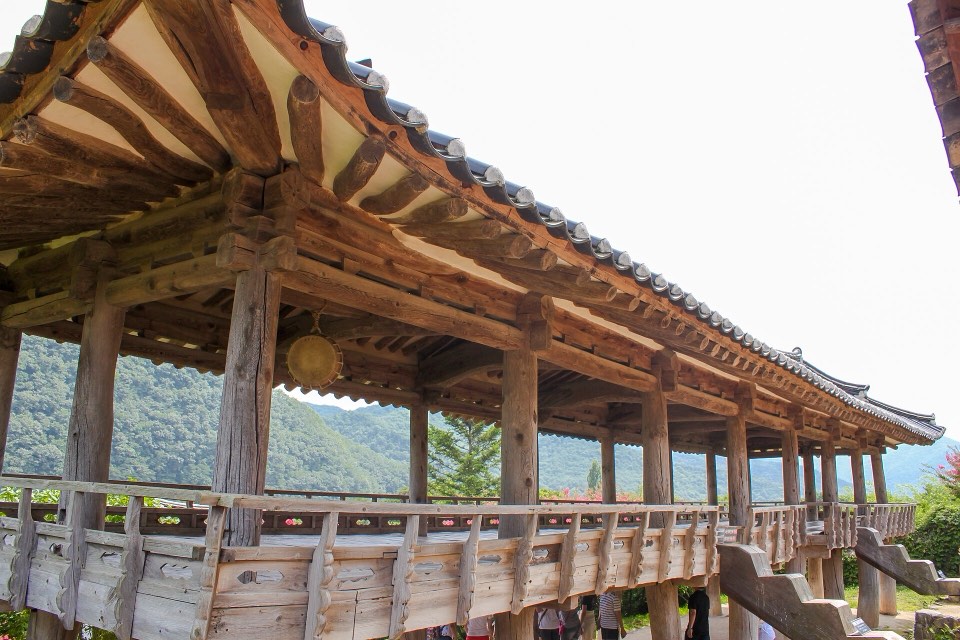 Mandaeru Pavilion at Byeongsan Seowon, Andong — seowon architecture opening onto nature
A joint inscription of nine Neo-Confucian academies founded by the sarim literati in the 16th century, including Sosu Seowon (the first royally chartered seowon), Dosan Seowon, and Byeongsan Seowon.
📖 The story & what to see
Unlike the state-run local schools (hyanggyo), a seowon was a private academy founded by the provincial literati (sarim) themselves. Enshrining and honoring eminent past worthies on one hand, and teaching later students on the other, they spread Joseon Neo-Confucianism to every corner of the country.
The nine academies sit at a restrained scale within natural scenery, showing the archetype of the Korean seowon that joined a teaching space to a shrine space. It all began with Sosu Seowon, founded by Ju Se-bung, which became the first royally chartered academy — receiving a name plaque and books from the king that publicly confirmed the seowon's standing.
- Sosu Seowon (Yeongju) — the first seowon and the first to be royally chartered
- Dosan Seowon (Andong) — enshrines Yi Hwang (Toegye), a symbol of Joseon Neo-Confucianism
- Byeongsan Seowon (Andong) — celebrated for the Mandaeru pavilion over the Nakdong River
- Lecture hall, shrine, and dormitories — the common structure joining teaching and rites
- Sosu Seowon = the first seowon and first royally chartered one (renamed from Baegundong Seowon)
- A joint inscription of nine academies
- A space uniting ritual (honoring past worthies) and instruction
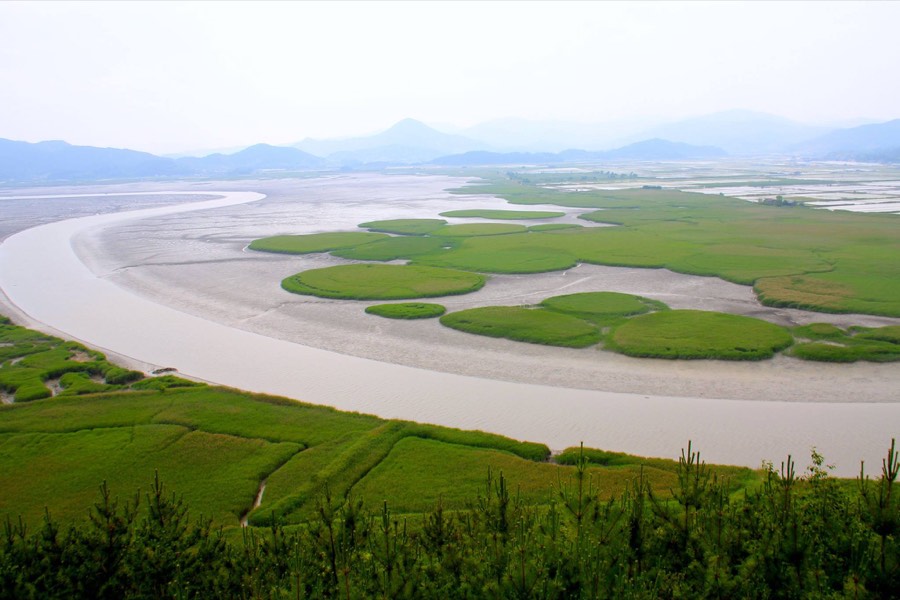
A joint inscription of four tidal flats on the southwestern coast, recognized for their biodiversity value as stopover sites for diverse migratory waterbirds.
📖 The story & what to see
A tidal flat is land built up over long ages as mud and sand settle with the coming and going of the tides. The four flats — Seocheon, Gochang, Sinan, and Boseong–Suncheon — represent different types (estuarine, open-bay, archipelago, and semi-enclosed), together showing the diversity of Korea's tidal flats.
These flats are an essential stopover for migratory birds traveling the East Asian–Australasian Flyway on their long journeys. Countless creatures, including endangered waterbirds, feed and rest here, so the flats were recognized for their biodiversity value (criterion x) and became Korea's second World Natural Heritage site, after Jeju in 2007.
- Sinan flat — the archipelago type, the largest of the four zones
- Seocheon flat — the estuarine type
- Gochang flat — the open-bay type
- Boseong–Suncheon flat — the semi-enclosed type, a key habitat for migratory birds
- Korea's second World Natural Heritage site (the first was Jeju)
- A key stopover on the East Asian–Australasian migratory flyway
- A joint inscription of four tidal flats
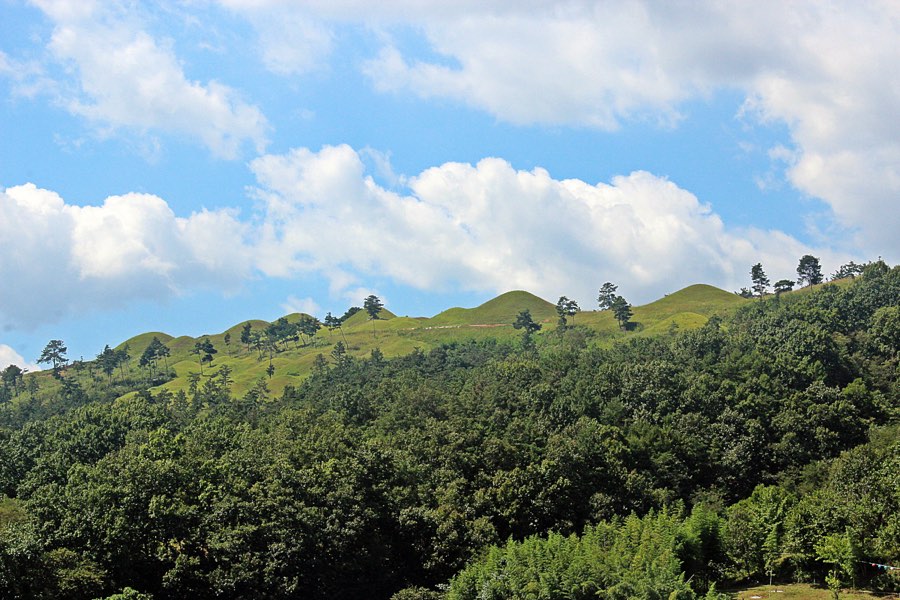
A joint inscription of seven tumuli clusters of the Gaya polities — Geumgwan, Ara, So, and Dae Gaya. They attest to the distinctive political system of the Gaya confederacy, which did not develop into a centralized state.
📖 The story & what to see
Gaya was not a centralized state ruled by a single king but a confederacy in which many small polities — Geumgwan, Dae, and Ara Gaya among them — stood loosely side by side. This distinctive political system, which kept its autonomy between the powerful neighbors of Silla and Baekje, is itself the value recognized as World Heritage.
From the mounded tombs strung along the ridgelines pour iron armor, horse gear, and refined pottery, telling how Gaya thrived on the production and trade of iron. The Daeseong-dong tombs in Gimhae (Geumgwan Gaya) and the Jisan-dong tombs in Goryeong (Dae Gaya) are the foremost examples. Inscribed in 2023, the Gaya Tumuli are Korea's most recent World Heritage site.
- Daeseong-dong tombs (Gimhae) — the central cluster of Geumgwan Gaya
- Jisan-dong tombs (Goryeong) — Dae Gaya's great mounded tombs along the ridge
- Marisan tombs (Haman) — the cluster of Ara Gaya
- The Okjeon, Songhak-dong, Yugok-ri and Durak-ri, and Gyo-dong and Songhyeon-dong clusters
- Gaya coexisted with the Three Kingdoms but remained at the 'confederated kingdom' stage
- A joint inscription of seven clusters — Korea's most recent inscription (2023)
- The Daeseong-dong (Geumgwan Gaya) and Jisan-dong (Dae Gaya) tombs are representative
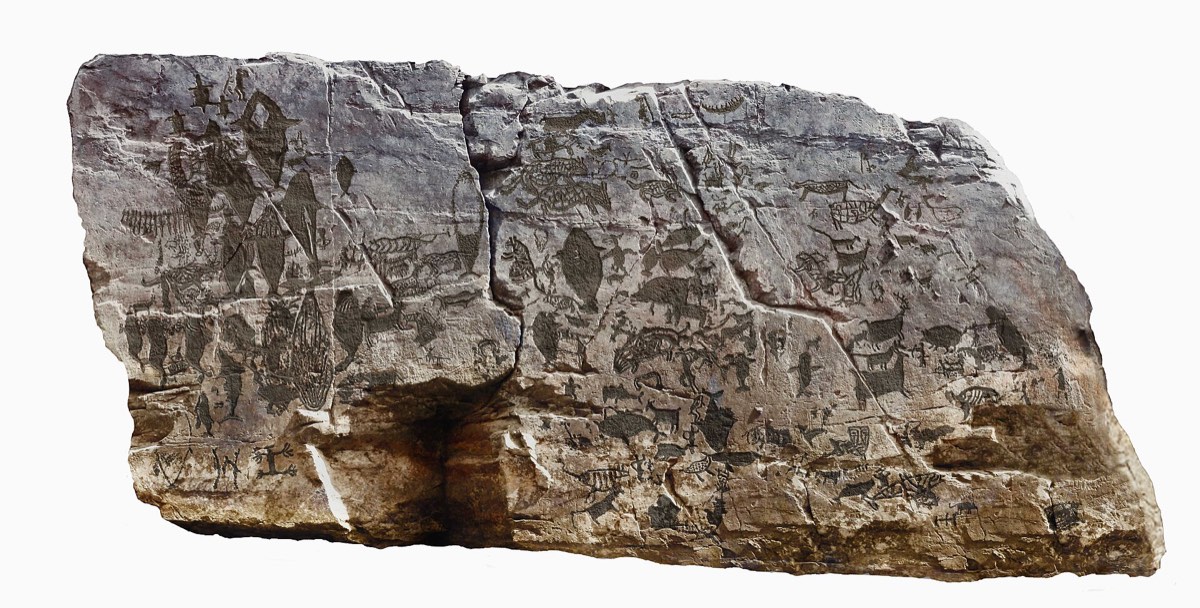 The main Bangudae rock panel — some 300 carvings of whales, tigers and more
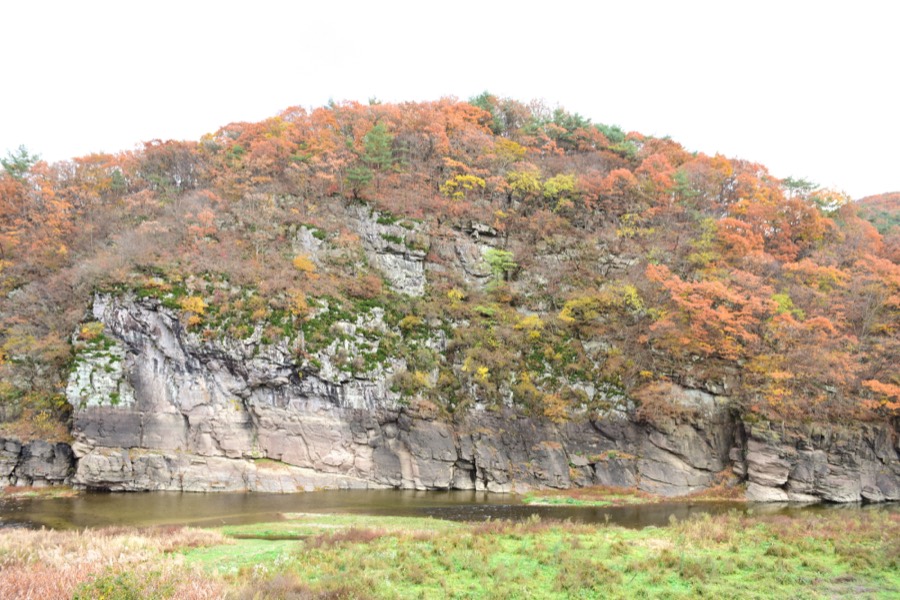 The petroglyph cliff on the Daegokcheon stream
Prehistoric rock carvings along the upper Bangucheon Stream of the Taehwa River in Ulsan. The Bangudae Petroglyphs (a National Treasure) bear some 300 images of whale hunting, deer and tigers, revealing prehistoric marine-hunting life, while the Cheonjeon-ri carvings combine geometric patterns with later Silla-era inscriptions and drawings. Thought to date from the Neolithic to the Bronze Age, they were inscribed on the World Heritage List in 2025.
📖 The story & what to see
On the cliffs of the Bangucheon survive over 300 images carved by prehistoric people. Among them, scenes of whale hunting — figures with harpoons, boats, and caught whales — are regarded as the earliest depictions of whaling in the world. This masterful quality earned recognition under criterion (i).
The official name 'Petroglyphs along the Bangucheon Stream' embraces not one site but two National Treasures — the Bangudae Petroglyphs at Daegok-ri and the Cheonjeon-ri carvings. A rock-carving tradition of some 6,000 years, reaching back to the Neolithic, is layered through this valley, making it Korea's 17th World Heritage site and its first from the prehistoric age.
- Bangudae Petroglyphs (National Treasure) — a cliff face carved with over 300 images, including whale hunts
- Cheonjeon-ri carvings (National Treasure) — Silla inscriptions and drawings overlaid on prehistoric geometric patterns
- Whale-hunting scenes — harpoons, boats, and caught whales, the earliest whaling depictions in the world
- The Bangucheon (Daegokcheon) valley — the stream landscape linking the two carving sites
- The Bangudae Petroglyphs are regarded as the world's oldest depiction of whale hunting
- The Cheonjeon-ri carvings layer Silla hwarang inscriptions over prehistoric geometric patterns
- Korea's 17th and most recent World Heritage inscription (2025)