Incheon Chinatown
仁川 中華街The hill where jjajangmyeon was born, and 140 years of Chinese Korea
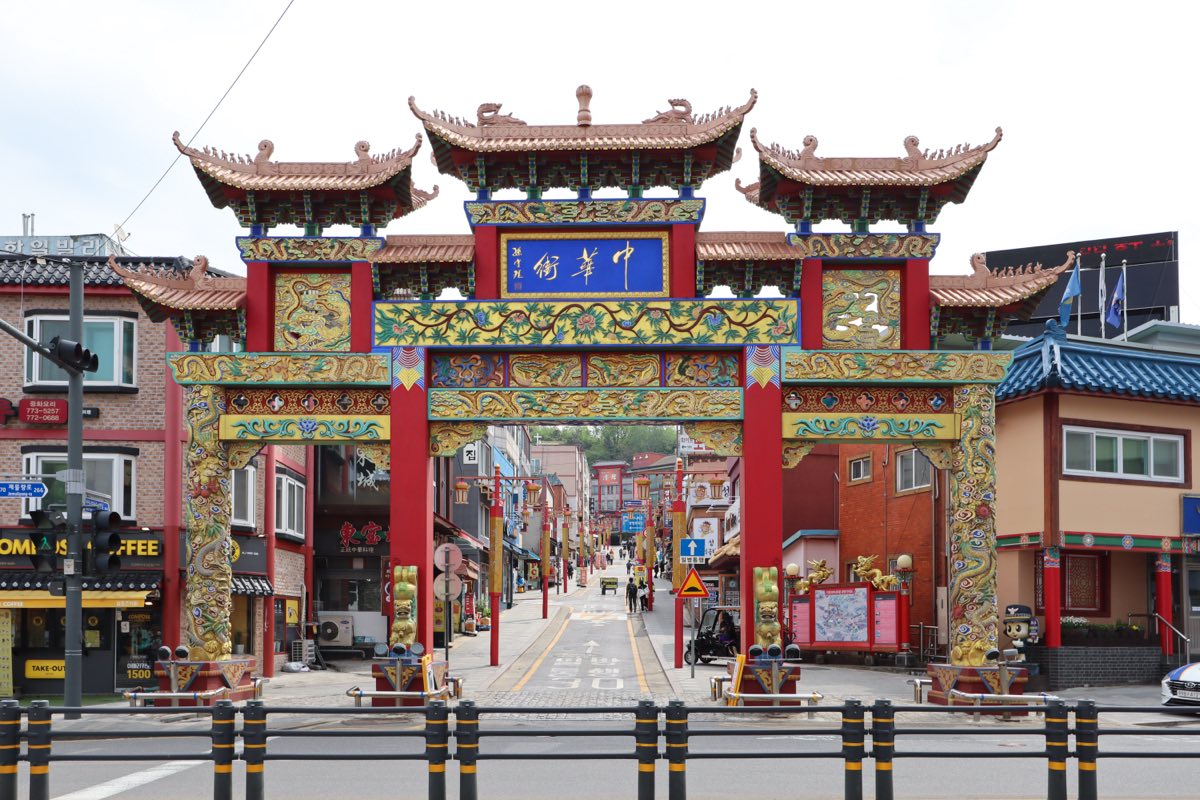
Come out of Exit 1 at Incheon Station and a red paeru gate stands directly in front of you. The street climbing the hill beyond it is the only officially recognised Chinatown left in Korea. When the Qing concession was laid out in 1884, people from Shandong settled on this slope, and the noodles they sold to dockworkers became one of the dishes Koreans eat most. Walking between the red lanterns and the smell of black-bean sauce, you begin to see that this street is a 140-year-old immigrant community before it is a tourist attraction.
📖 The Story
In March 1884, the year after Jemulpo opened, the Incheon Chinese Merchants' Settlement Agreement set out the Qing concession. The 235 Chinese residents of Incheon at the time of the opening had grown to nearly a thousand by around 1890, most of them from Shandong across the sea. Today about five hundred remain in the quarter. The numbers tell a story of decline, but the Overseas Chinese Jungsan School, founded in 1901 and still running on this hill, tells another. This street was not built as a set for visitors; it is a neighbourhood people have gone on living in.
Gonghwachun, the restaurant at the centre of the jjajangmyeon story, carries three different dates. In 1905 Woo Hui-gwang, from Shandong, opened an eating house and inn called the Shandong Guild Hall; around 1908 craftsmen from Shandong helped raise a two-storey building around a courtyard; and in 1912, when the Qing fell and the Republic of China was founded, the name was changed to Gonghwachun to mark it. The founding year differs between sources because the opening, the building and the renaming happened in different years. The restaurant closed in 1983, the building was listed as national registered heritage in 2006, and it reopened in 2012 as the Jajangmyeon Museum.
Exactly when and by whose hand jjajangmyeon appeared has never been settled. The usual account is that zhajiangmian, eaten by labourers who came over from Shandong, grew sweeter and thicker at the port to suit Korean tastes, and pinning it on one shop is difficult. Still, there is a reason this street is called the dish's home: dock labour, Shandong immigration and the demand for one cheap fast bowl all came together here. Call it a street that shows how a single dish can be a product of migration and harbour economics.
✦ Highlights
- ›The First Paeru GateThe red gate across from the station plaza, bearing the name Chinatown in Chinese characters. Pass under it and the colour and sound of the street change completely.
More
A paeru is the gateway architecture of a Chinese city. Several stand at different points along this quarter, and they work as markers for how far the old concession reached. This first one, met straight out of the station, is the most photographed spot here, so an early morning shot before the crowds is worth taking.
- ›Jajangmyeon Museum (former Gonghwachun)The Gonghwachun building of around 1908, restored and opened as a museum in 2012. It recreates a 1960s Chinese restaurant kitchen, and the building itself is registered national heritage.
More
It began as the Shandong Guild Hall, became Gonghwachun in 1912 and closed in 1983. The displays use a single bowl of noodles as a window onto Chinese immigration and the eating-out culture of Korea's industrial decades, with delivery bicycles, wooden bowls and old menus moved in whole. Best done in this order: see the museum, then eat a bowl on the street outside.
- ›Boundary Steps of the Qing and Japanese ConcessionsThe stone steps dividing Chinatown from the open-port district. Chinese-style buildings stand on one side and Japanese-style on the other, so the old boundary is still visible.
More
This single flight of steps was a border between two countries. The Qing concession of 1884 and the Japanese concession of 1883 faced each other across this line, and the lanterns and building styles on either side still testify to it. Climb to the top and you reach Jayu Park, laid out in the general foreign settlement. One short slope holds three concessions in sequence.
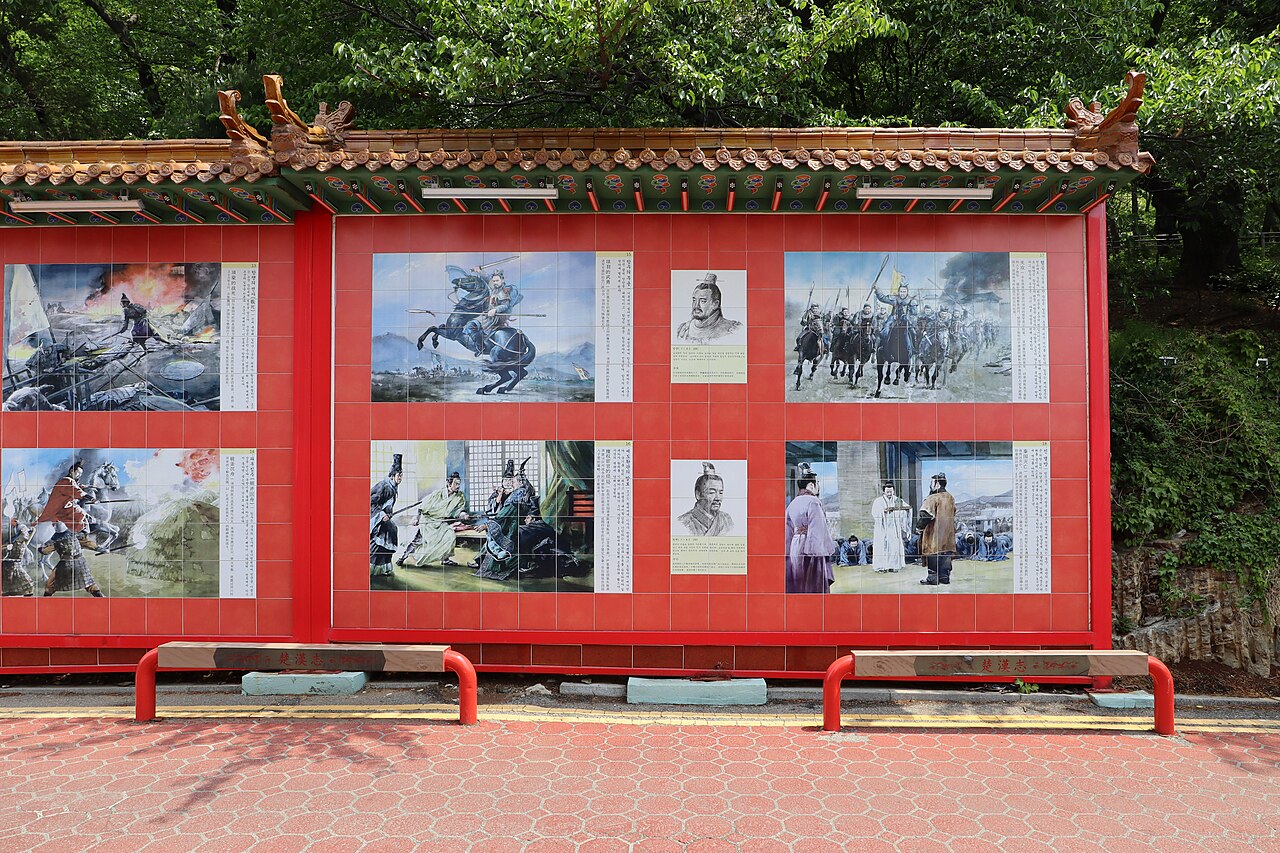
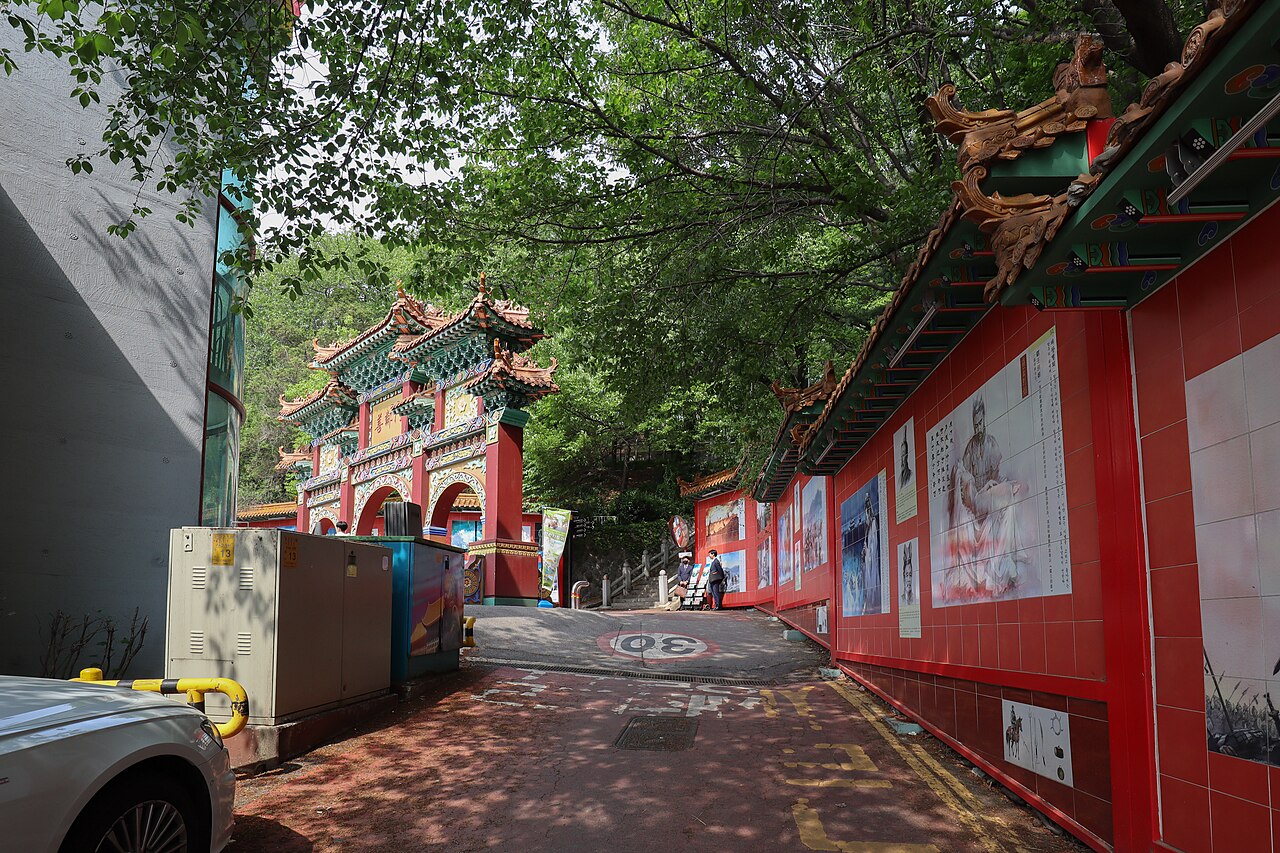
- ›Three Kingdoms Mural StreetA red wall carrying some eighty scenes from the Romance of the Three Kingdoms in tile murals, running in order from the oath in the peach garden so you can follow the story as you walk.
More
Each panel carries a caption in Chinese characters and Korean, so the sequence can be read even if the novel is unfamiliar. Benches are set along the climb, and the far side of the wall is shaded by trees, which makes it walkable even in summer. With children, this is the stretch of Chinatown where you will linger longest.
- ›Uiseondang ShrineA Chinese shrine founded by the community in 1884 and reopened in 2005, honouring Guan Yu alongside the sea goddess: the faith of an immigrant community.
More
This is a living place of worship rather than a visitor attraction. People who had crossed the sea prayed here for safe voyages and good trade, and the combination of deities enshrined says a great deal about their lives. Notices about photography and etiquette are posted inside and worth following; on some days the doors are closed.
🚶 Self-Guided Walk
- 1Incheon Station Exit 1 and the first paeruLeave the exit and the red gate stands across the plaza. Passing under it begins the street.
- 2Jajangmyeon MuseumThe former Gonghwachun. Visiting before you eat changes the context of the bowl that follows.💡 Closed on Mondays, so check the day before planning around it.
- 3The eating streetThe main run of restaurants and bakeries: noodles, hollow sugar bread, mooncakes. At lunchtime the queues at the best-known places are long.💡 Going in around 11:30 cuts the wait considerably.
- 4Three Kingdoms Mural StreetThe mural wall with its eighty-odd scenes in sequence, followed on the way up the slope.
- 5Uiseondang ShrineThe community shrine of 1884. It remains in use, so look around quietly.
- 6Boundary Steps of the Qing and Japanese ConcessionsThe end of Chinatown and the start of the open port. Check how the building styles part to left and right, then continue up.💡 Above the steps is Jayu Park; back down and to the side is the modern architecture street.
🧭 Visitor Info
💡 Good to Know
- Weekend lunchtime is the busiest. For a calmer visit come on a weekday morning or after three in the afternoon; if you do not insist on the famous names, plenty of places have no wait at all.
- This is a residential quarter as well as a destination. The Overseas Chinese Jungsan School, founded in 1901, is a working school, and Uiseondang is a place of worship. A little care with photography and noise goes a long way.
- Chinatown and the open-port district are joined by a single stairway, so walk them together. Half a day covers both comfortably, and the pair make the densest route in the city.
- There are slopes. The mural street and the way to Jayu Park climb steadily, so wear comfortable shoes; with a pushchair or wheelchair, the level stretch along the eating street is the easier circuit.
🗺 Pair Your Visit
The opening of Incheon in 1883 and the Qing concession of the following year come up often in questions on foreign powers in the open-port period. Remember that a concession was a residential quarter where foreigners exercised administrative and police authority, and that Incheon held Japanese, Qing and general foreign concessions side by side. The arrival and settlement of the Chinese community is also cited as a leading case in the history of modern migration.