Incheon Open Port Modern History Street
Where Korea first came face to face with the wider world, in 1883
Step off at Incheon Station, the last stop on Line 1, walk a few paces toward the hill, and the face of the city changes. A stone building that used to be a bank, a clubhouse where Westerners played billiards, a rainbow-shaped stone gate cut straight through a hillside: all of it inside a few blocks. When Jemulpo opened in 1883, Japan, Qing China and the Western powers each took a share of this slope, and the buildings they put up still fill the lanes. This is the first page of Korea's modern history, read on foot rather than in a book.
📖 The Story
The Treaty of Ganghwa opened Busan in 1876, Wonsan followed in 1880, and Jemulpo in 1883. Because it was the port nearest the capital, Incheon's opening was different in kind: the moment a foreign power set foot here, it was already looking at Seoul. Foreign quarters, called concessions, duly carved up the hill behind the harbour. The Japanese concession came in 1883, the Qing Chinese concession in March 1884, and then a general foreign settlement shared among several nations. That is why identifying the nationality of a building on this street is the same as reading the balance of power at the time. One caution: the Treaty of Jemulpo, signed after the 1882 Imo Mutiny, only shares the name. It is not the agreement that opened the port, and the two are easy to confuse.
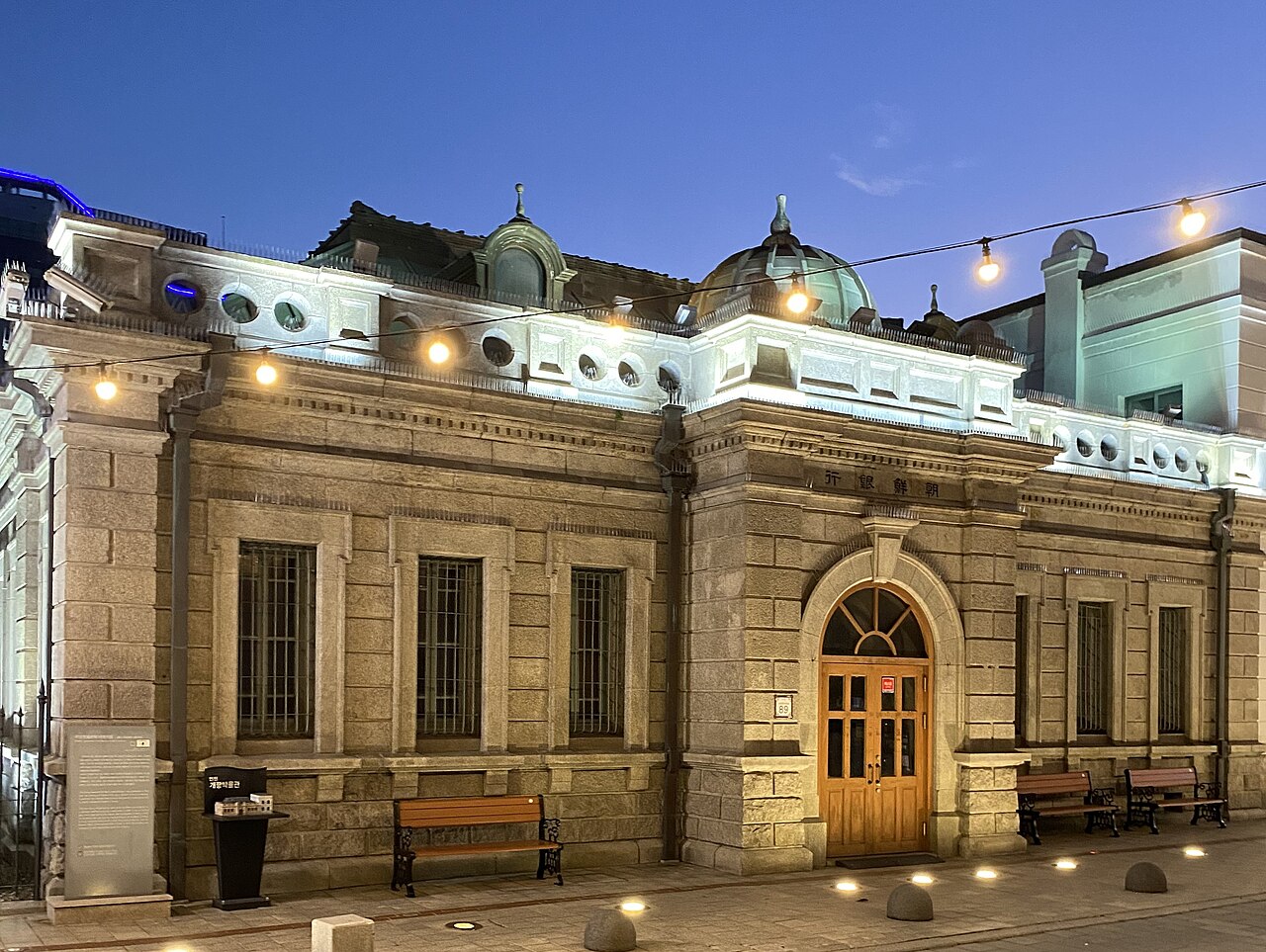
Finance and shipping were the business of the open port. The Incheon branch of Japan's First Bank was raised to full branch status in 1888 and put up its present stone building in 1899, shipping in every material except sand, gravel and lime from Japan. In 1911 it became the Incheon branch of the Bank of Chosen, and after liberation the Incheon branch of the Bank of Korea. The characters for Bank of Chosen are still carved above the entrance, so a single facade lets you see the three names one building has worn. Beside it stands the Incheon branch of Japan's Eighteenth Bank, completed in 1890 and the oldest surviving bank building in the city.
The building that best tells this street's rise and fall is not a bank but a hotel. Built in 1888 as a three-storey Western-style house, the Daebul Hotel was the first Western hotel in Korea, because anyone arriving by ship slept a night in Incheon before going up to Seoul the next day. Then the Gyeongin Line opened in 1899, that night disappeared, and the hotel closed in 1907. A single railway changed the trade of a city. Today the Daebul Hotel Exhibition Hall, opened in 2018 above the excavated foundations, holds the spot. One more note: in July 2026 the inland part of the old Jung-gu district merged with Dong-gu to form Jemulpo-gu. The name Jemulpo, which the open port carried, has come back as the name of the district after some 140 years, though signboards and older sources still say Jung-gu.
✦ Highlights
- ›Incheon Open Port Museum (former First Bank of Japan, Incheon branch)A stone bank building of 1899, in use as a museum since 2010, with permanent displays on finance, trade and the coming of the railway in the open-port years.
More
This building changed its name three times. Built for the First Bank of Japan, it became the Incheon branch of the Bank of Chosen in 1911 and of the Bank of Korea in 1950, and later served as a procurement office and a land registry. That is why the characters carved above the door read Bank of Chosen. Look for them before you go in. The building was designated a Tangible Cultural Heritage of Incheon in 1982.
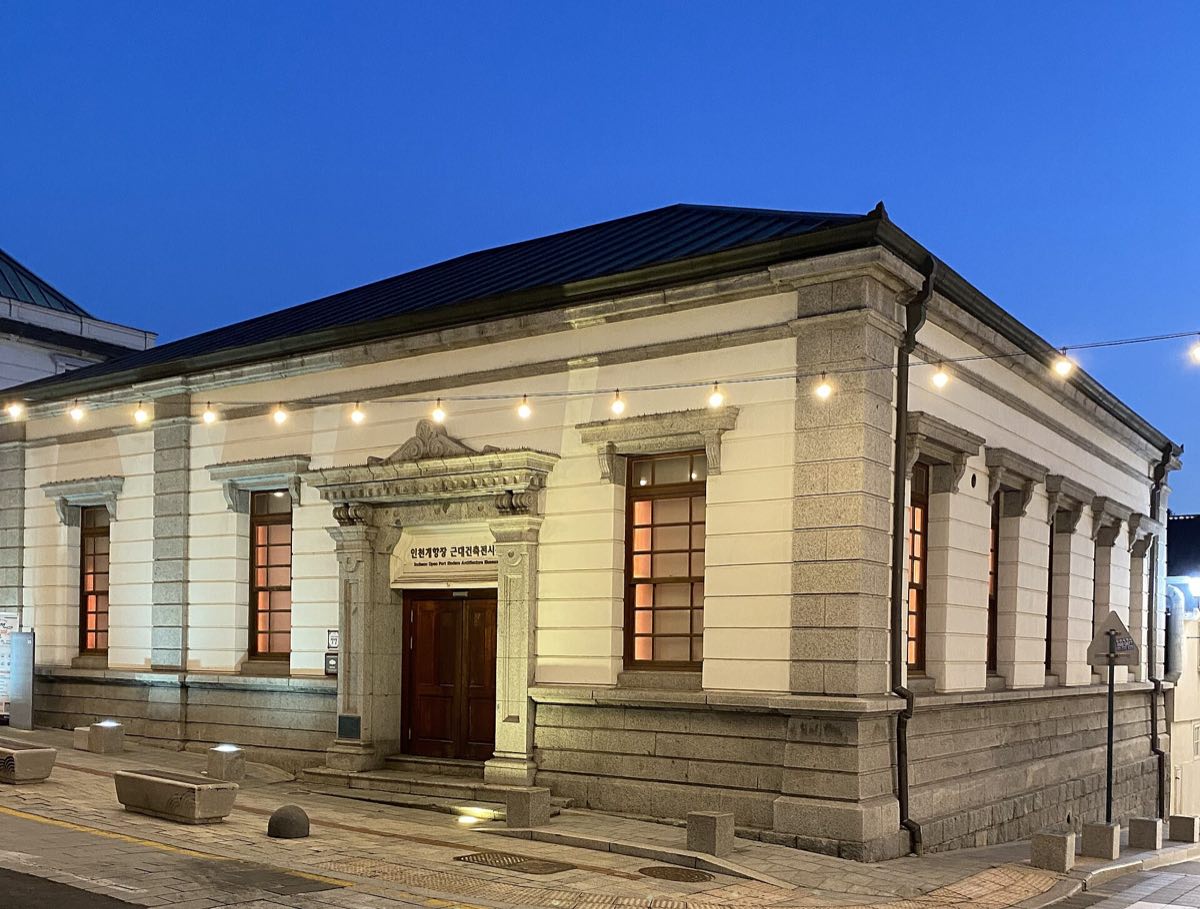
- ›Modern Architecture Exhibition Hall (former Eighteenth Bank of Japan, Incheon branch)Completed in October 1890, this single-storey building is the oldest surviving bank in the city. It now houses an exhibition on open-port architecture, with models and drawings.
More
Its head office was in Nagasaki. Tracing which cities the open-port banks came from is a way of seeing the trade routes: Nagasaki, Incheon and Shanghai sat on the same shipping line. Inside are models of open-port buildings that no longer exist, so a visit before you walk the street lets you picture what survived alongside what did not.
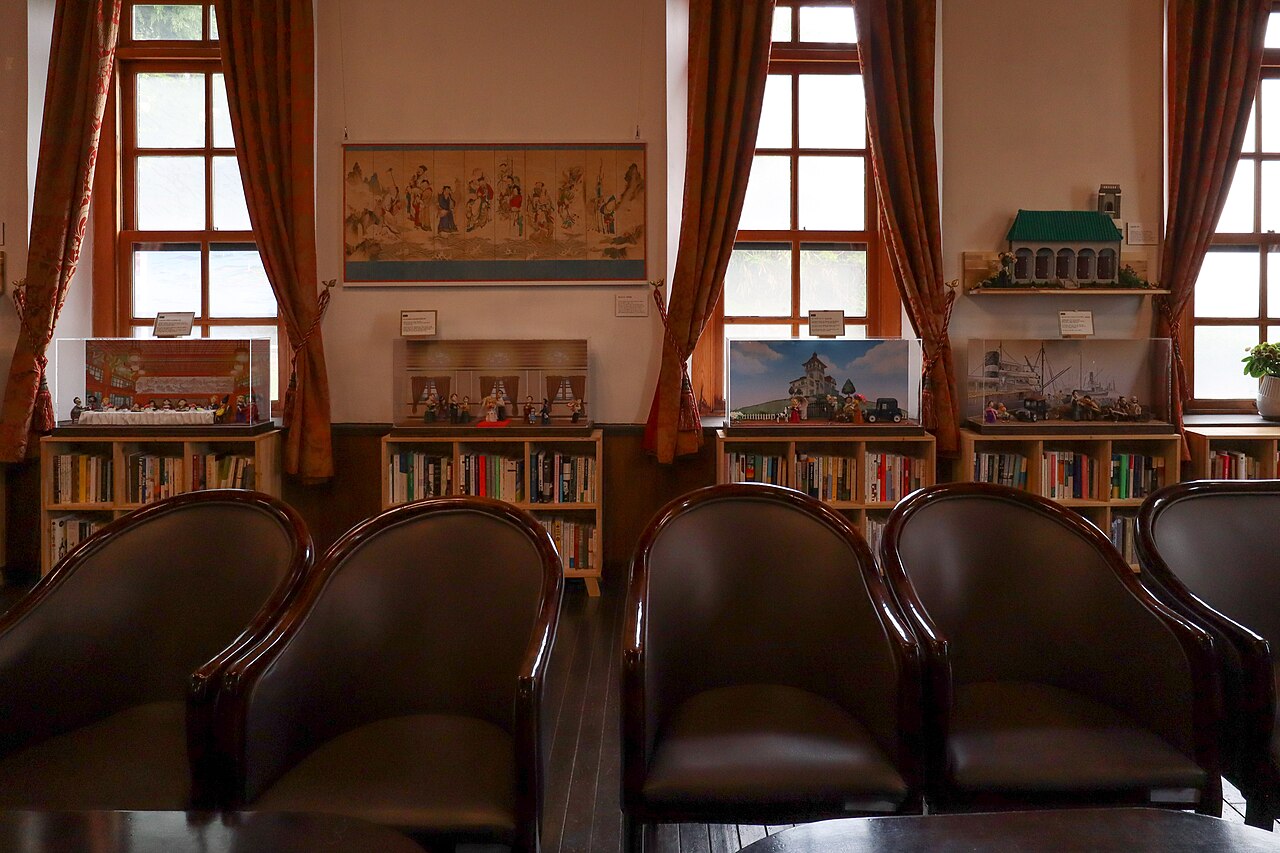
- ›Jemulpo ClubA social club for foreign residents built around 1901, with a lounge, a billiard room and a library. Now the city's historical archive, it is known for its round-arched windows.
More
Here the foreign residents of the general settlement gathered to play billiards and read the papers. Sources give 1901 or 1902 for its founding, most likely because the year it was built and the year it opened were recorded separately. Inside, the tall curtained windows and leather chairs remain, and it becomes easy to feel how a day in the open port did not end at the harbour but carried on into a drawing room on this hill.
- ›Daebul Hotel Exhibition HallThe site of Korea's first Western-style hotel, opened in 1888. An exhibition hall opened above the excavated foundations in 2018; a second hall covers Incheon life in the 1960s and 70s.
More
The life of this hotel is a history of transport. It prospered while travellers arriving by ship had to spend a night in Incheon; once the Gyeongin Line opened in 1899 and Seoul could be reached the same day, the guests stopped coming and it closed in 1907. In 1918 Chinese owners took it over and ran it as Junghwaru, a Beijing-cuisine restaurant, so open-port history and the history of the Chinese community overlap in one building. Through glass panels in the floor you can see the excavated foundations.
- ›Jayu ParkLaid out in the general foreign settlement in 1888, this was Korea's first Western-style park. It looks down over the harbour, and took its present name in 1957 when the MacArthur statue was erected.
More
The park has had four names: it began as Gakguk Park, the park of all nations, became West Park in 1914, Manguk Park in 1945, and Jayu (Freedom) Park in 1957. The sequence of names is the sequence of powers that held the city. The Russian architect Sabatin is widely named as its designer, though the attribution is not firmly established and is better treated as tradition than fact. Climb the steps and look down at the harbour, and the whole open port lies in front of you at once.
🚶 Self-Guided Walk
- 1Incheon StationThe terminus of the Gyeongin Line, opened in 1899. Starting here is itself the first scene of the walk; across the plaza stands the Chinatown gate.💡 Look toward the hill from the station plaza and the whole day's walk is in front of you.
- 2Boundary Steps of the Qing and Japanese ConcessionsStone steps laid on the line between the Qing and Japanese concessions. The buildings to either side are still built in different styles, so the idea of a concession becomes something you can see.💡 Stand in the middle of the steps and look left, then right: the most textbook-perfect shot on this street.
- 3Incheon Open Port MuseumThe former First Bank of Japan building. Its permanent displays on trade, finance and the railway give you the background for everything else on the street.
- 4Modern Architecture Exhibition HallThe former Eighteenth Bank of Japan, built in 1890 and the senior building on this street, now showing open-port architecture in model form.
- 5Jemulpo ClubA short climb brings you to the foreigners' clubhouse, where you feel how close the labour of the harbour was to the drawing rooms above it.
- 6Jayu ParkKorea's first Western-style park, from 1888. It overlooks the harbour, so you can retrace from above the route you have just walked.💡 The view toward the harbour is best around sunset.
- 7Hongyemun ArchA rainbow-shaped stone gate cut through Eungbongsan to link the harbour with the town behind it. Begun in 1906 and finished in 1908, it still carries traffic underneath.
- 8Incheon Art PlatformOpen-port warehouses and offices converted into an arts complex that opened in 2009. The red-brick lanes survive intact and photograph well.💡 Even when no exhibition is on, the courtyard and lanes are open to walk through.
🧭 Visitor Info
💡 Good to Know
- If you plan to see more than one hall, take the combined five-hall ticket. The Open Port Museum, the Modern Architecture Exhibition Hall, the Jajangmyeon Museum, the Daebul Hotel Exhibition Hall and the Korea-China Culture Centre are all within a ten-minute walk.
- The halls close on Mondays. If you come on a Monday, the street, the park and the arch are still yours to walk; only the indoor visits need another day.
- The district is a half-day on foot: three to four hours at an unhurried pace with two or three halls, or about an hour and a half if you only look at the facades. There are slopes, so wear comfortable shoes.
- The district name changed recently. Since July 2026 this area has been Jemulpo-gu, but many signs and map apps still say Jung-gu. Treat the two names as pointing to the same place.
🗺 Pair Your Visit
The order in which the ports opened, Busan in 1876 under the Treaty of Ganghwa, Wonsan in 1880 and Incheon (Jemulpo) in 1883, is a standard question in the Korean History Proficiency Test. Keep it separate from the similarly named Treaty of Jemulpo of 1882, which settled the aftermath of the Imo Mutiny. The Gyeongin Line of 1899 was Korea's first railway, and the transfer of its construction rights from the American Morse to a Japanese company is another frequent topic.