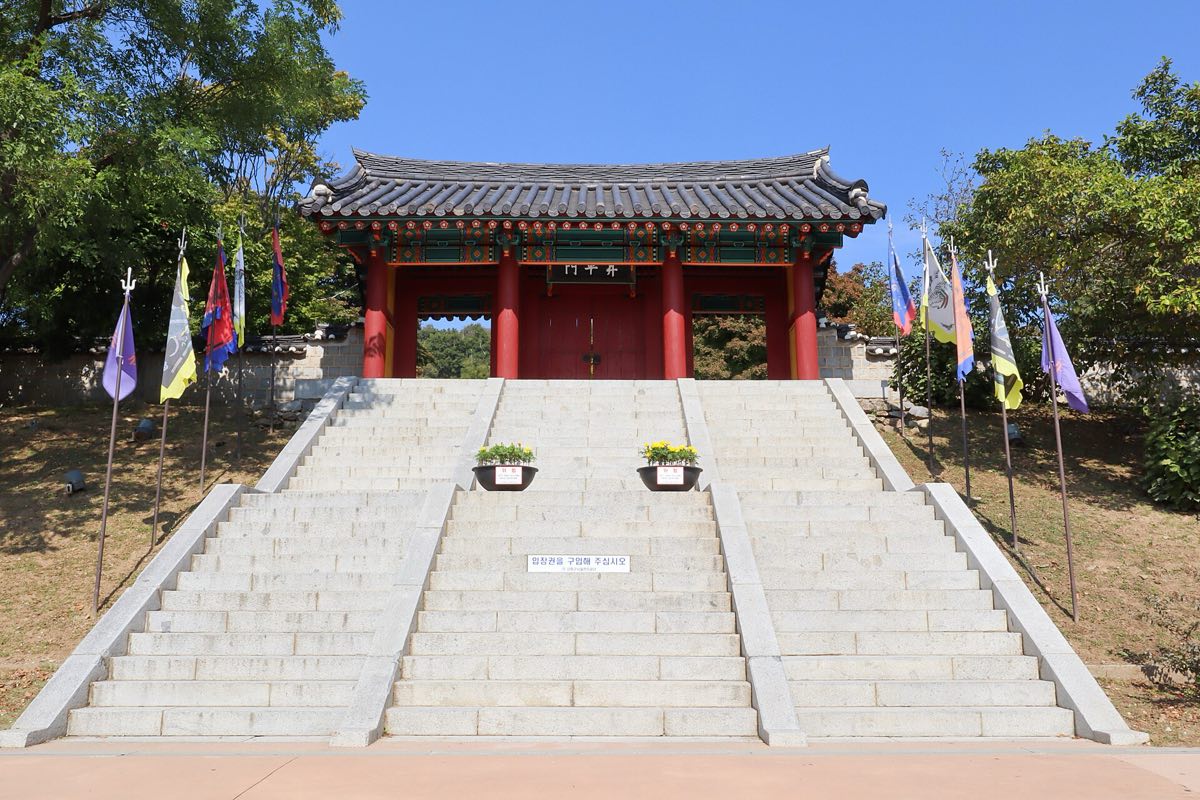
Goryeo Palace Site and Ganghwa Fortress Wall
高麗宮址The capital of Goryeo for 39 years, and the reason nothing of it is left
When the Mongols invaded, Goryeo moved its capital to Ganghwa Island in 1232, and this hill held the royal palace for the 39 years until the court returned to Kaesong in 1270. One thing is worth knowing before you go: not a single Goryeo building stands here. They were all pulled down at the Mongols' demand when the court went back. What you see today are Joseon government offices and the Outer Gyujanggak library, rebuilt in 2003.
📖 The Story
The move of 1232 was a retreat and a strategy at once. Mongol cavalry was unbeatable on steppe and plain, but it could not handle boats. The Choe military regime staked the country on that single weakness and shifted the court to an island a little over thirteen kilometres across the water, and Ganghwa was in fact never taken in 39 years. While the people on the mainland absorbed six invasions with their own bodies, the court held out here. The Tripitaka Koreana was carved in that time. It was a prayer to defend the country by the power of the Buddha, and at the same time a declaration, at home and abroad, that the country was still alive.
When the court returned to Kaesong in 1270, the Mongols demanded that the walls and the palace of Ganghwa be torn down. The point was to make sure Goryeo could never flee to this island again, and Goryeo complied. So only the ground is left. This is when the Sambyeolcho, refusing to accept the return, carried their resistance on to Jindo and then Jeju. Joseon later built the offices of the Ganghwa magistracy on the same spot, and King Jeongjo placed a library here for royal books. Then, during the French campaign of 1866, French troops carried those books away and set the building on fire. One hill was erased twice, by two different foreign powers, in much the same way.
✦ Highlights
- ›Seungpyeongmun Gate and the empty groundPast the main gate a wide lawn opens up. The emptiness itself is what remains of the Goryeo palace.
More
Hunting for restored buildings, it is easy to walk past this gap. But imagining what would be standing here had it not been pulled down in 1270 comes closer to the way this site should be read. That the condition for returning to Kaesong was to demolish your own walls and palace says more about the period than any surviving building could.
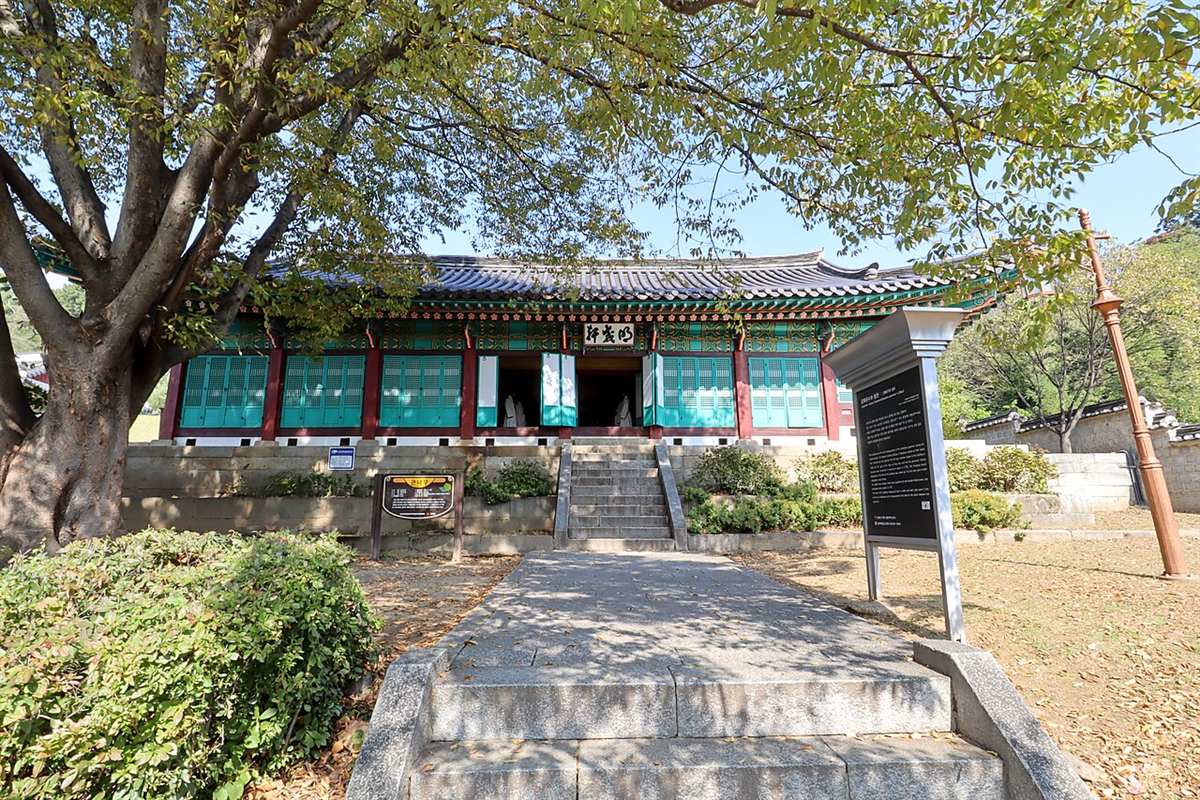
- ›The Ganghwa magistracy hallThe administrative hall of Joseon-era Ganghwa, rebuilt in 1638. Its plaque reads Myeongwiheon.
More
A yusubu was a special administrative district assigned to former capitals and places of military importance. That Ganghwa held that rank says how Joseon saw this island: the last redoubt of the capital's defence, and the place the king would flee to in an emergency. King Injo did try for Ganghwa during the Qing invasion of 1636, found the road cut, and turned for Namhansanseong instead.
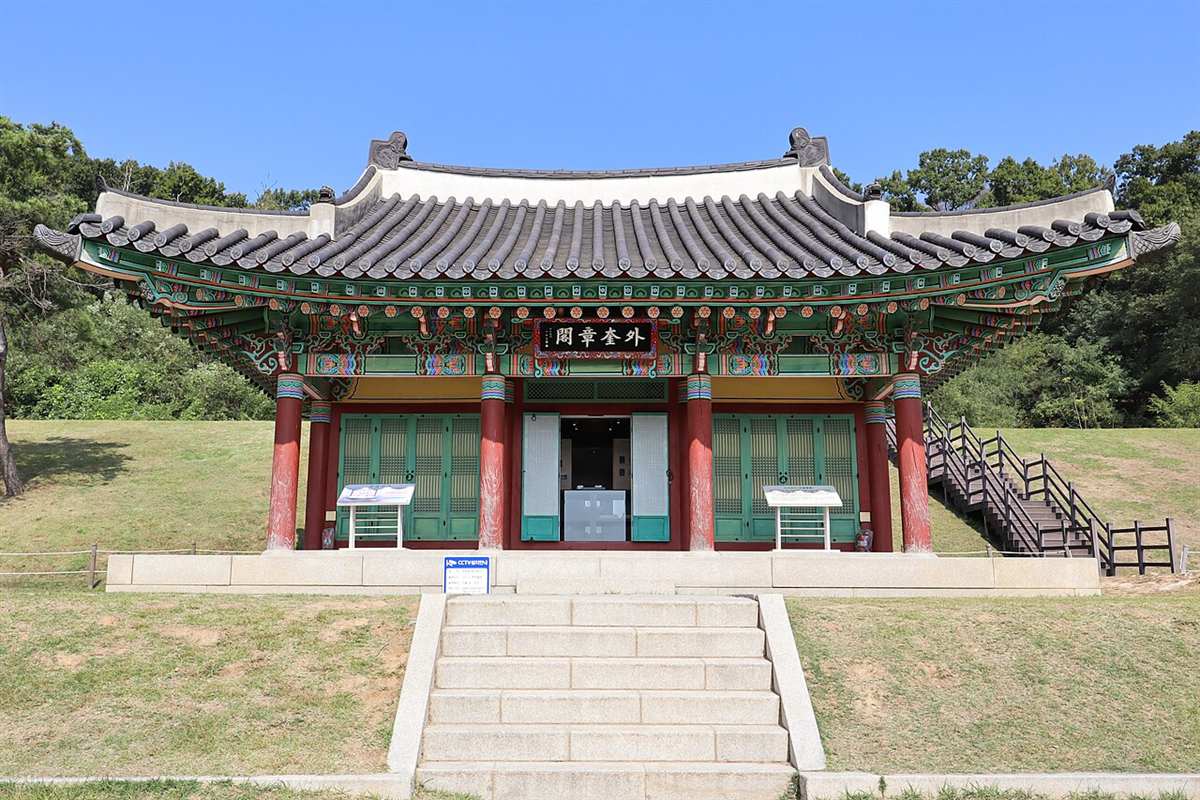
- ›The Outer GyujanggakThe library King Jeongjo built to hold royal books. It burned during the French campaign of 1866 and was rebuilt in 2003.
More
The royal protocols the French took away came back in 2011. The arrangement, though, is not a return but a loan renewed every five years. It is treated as effectively permanent, yet the question of ownership was left unresolved. It took a country 145 years to get its own records back, and even then in the form of a loan. Both of those facts sit inside this building.
- ›The Ganghwa fortress wallRooted in the wall of the years on Ganghwa and rebuilt to its present scale under King Sukjong of Joseon. It runs up the hill north of the palace site.
More
During the years on the island the court is said to have thrown up inner, middle and outer walls, one inside the other. The detailed chronology differs from source to source, but the ambition of turning an entire island into a fortress is clear enough. What you can walk today is the Joseon wall, and climbing towards the north gate brings the town and the sea beyond it into the same view.
🚶 Self-Guided Walk
- 1Seungpyeongmun GateThe main gate of the palace site. From here the lawn opens uphill.💡 It is within walking distance of the Ganghwa bus terminal.
- 2The magistracy hall (Myeongwiheon)The offices of the Joseon magistracy of Ganghwa. Read the plaque before you step inside.
- 3IbangcheongAn annex to the offices built in 1654, where the day-to-day clerical work was done.
- 4The Outer GyujanggakRebuilt further up the hill with its painted dancheong. The plaque reads Oegyujanggak.💡 It is the highest point in the grounds, so the town lies below you.
- 5Towards the north gate of the fortress wallThe wall path running on behind the palace site. Follow it up and the town and the sea come into view together.💡 From here on it is free and there is no closing time.
🧭 Visitor Info
💡 Good to Know
- Come expecting Goryeo buildings and you will be disappointed. All of them were pulled down at the Mongols' demand when the court returned to Kaesong in 1270; what is left is the ground and Joseon structures.
- Ganghwa Island has no subway. Intercity buses from Sinchon or Yeongdeungpo in Seoul take about an hour and a half.
- Admission is around 1,000 won and there is a combined ticket for Ganghwa County sites. Prices and coverage change often, so check at the ticket office.
- The palace site itself is small and half an hour covers it. How much of the fortress wall you walk decides the length of the visit.
🗺 Pair Your Visit
The move to Ganghwa in 1232 was how the Choe military regime chose to resist the Mongols. It exploited the fact that a power built on cavalry could not handle the sea, and Ganghwa was never taken in 39 years, during which the Tripitaka Koreana was carved. When the court returned to Kaesong in 1270 the walls and palace were pulled down at the Mongols' demand, and the Sambyeolcho, who refused to accept this, moved their base to Jindo and then Jeju to carry on the fight. Under Joseon the offices of the Ganghwa magistracy and the Outer Gyujanggak were built on this spot, and during the French campaign of 1866 French troops carried off the library's books and burned the building.