Gwangseongbo and Chojijin
廣城堡Come by ship and you reach here first, which is why it was the front line all three times
The Ganghwa strait is the mouth of the waterway into Seoul. For anyone arriving by ship it was the first gate, and so all three of late Joseon's foreign incidents began at the same place: the French in 1866, the Americans in 1871 and the Japanese with the Unyo in 1875, each appearing in turn off Chojijin. Gwangseongbo is where the worst of them, the American campaign of 1871, was fought.
📖 The Story
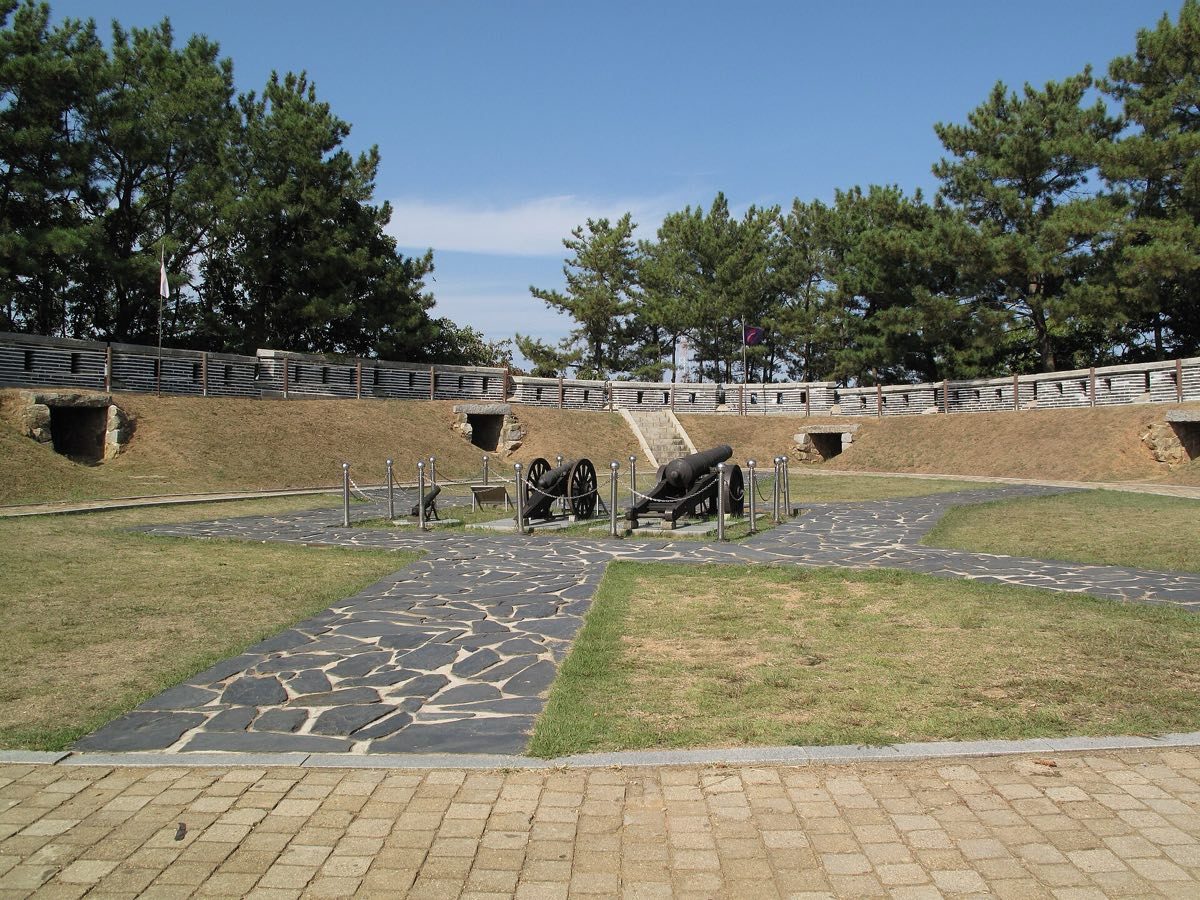
This is a case of terrain deciding history. To enter the estuary of the Han you must pass the narrow channel between Ganghwa Island and Gimpo, and Chojijin sits at its mouth. Under King Hyojong, Joseon lined that strait with garrisons, forts and gun emplacements set close together. The roots go back further. The outer wall of Ganghwa, begun in 1233 after Goryeo moved its court to the island, is the foundation, and it took its present form when it was rebuilt in stone under King Sukjong. A defence line raised against the Mongols was inherited two centuries later by Joseon and set in front of Western fleets.
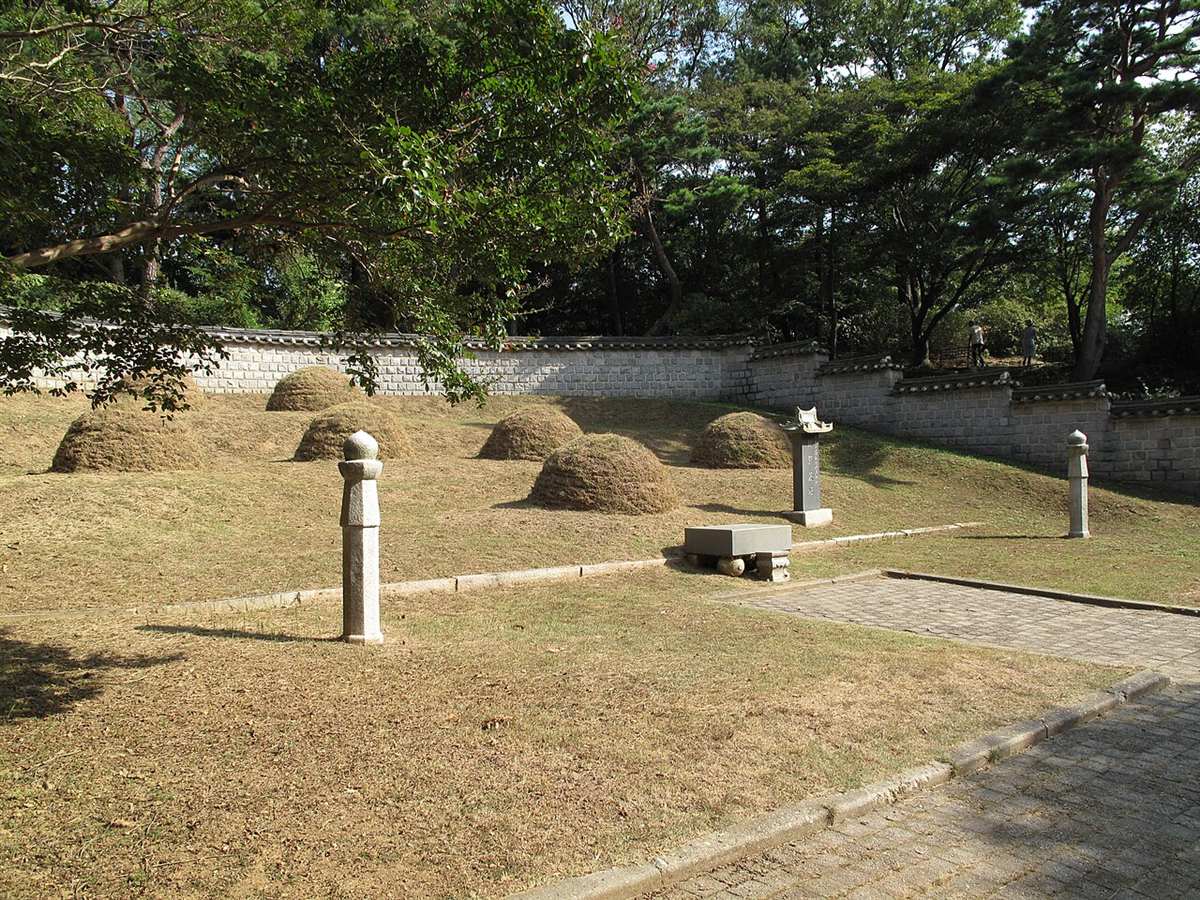
In June 1871, American forces took Chojijin and pushed on to Gwangseongbo the next day. Korean weapons were simply outranged. The commander Eo Jae-yeon fell together with his younger brother Eo Jae-sun, and most of the soldiers died rather than give ground. The Americans recorded the engagement as their victory, yet withdrew without obtaining the opening of Korea. Inside Gwangseongbo today stand the pavilion holding the memorial stele to the two brothers and the Sinmi burial mounds, which gather the graves of the dead whose names were never recorded. Two men left their names; the rest are seven mounds.
✦ Highlights
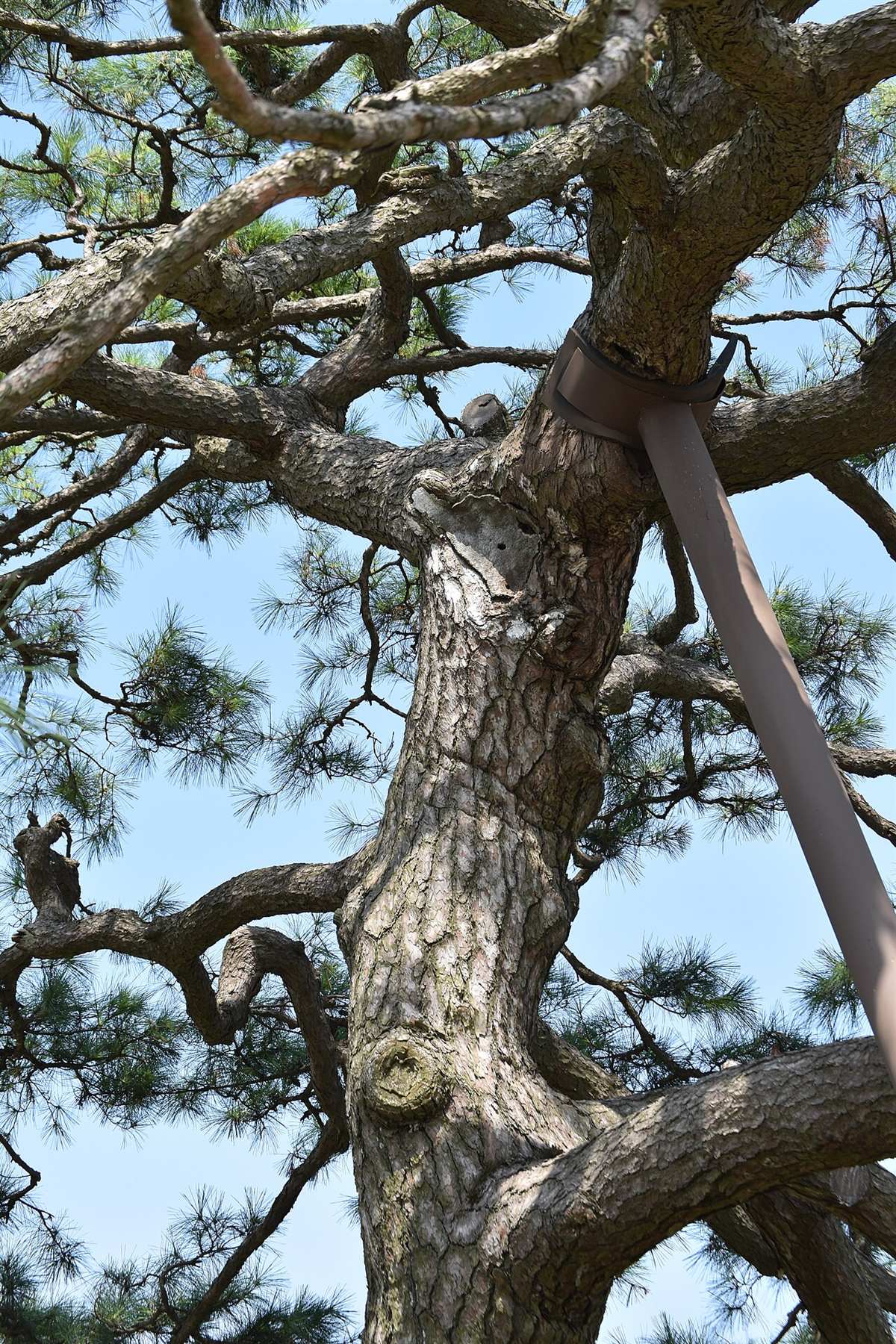
- ›Chojijin and its old pineThe fort at the mouth of the strait, built in 1656. A hongipo cannon sits on the restored wall, and beside it stands a scarred old pine.
More
The signage says those marks were left by shells during the American campaign of 1871. Whether every one of them is a shell scar cannot be checked, but the tree certainly stood in that place through that time. Chojijin was the first target in 1866, in 1871 and again in 1875. That three different nations picked the same point tells you what the geography here means.
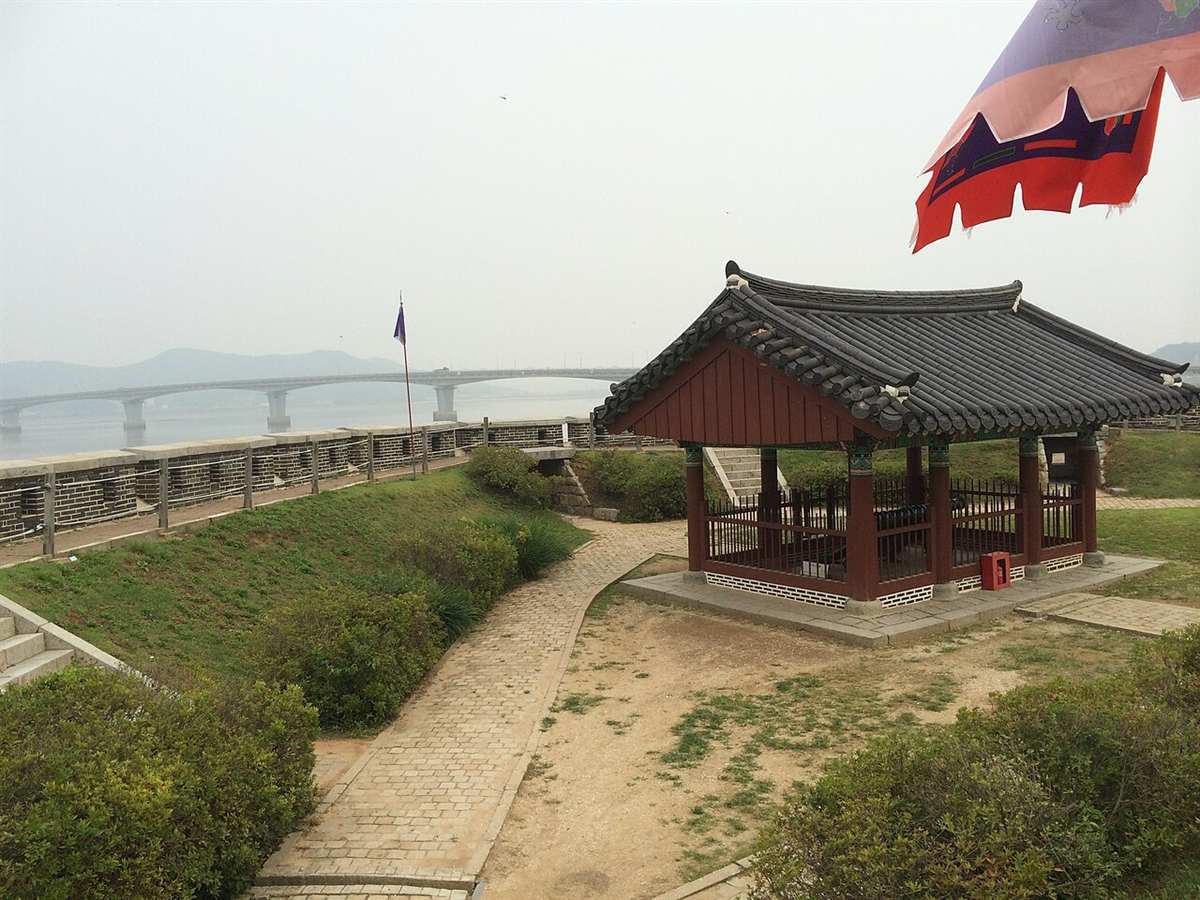
- ›Anhaeru Gate and Gwangseong emplacementThe gate of Gwangseongbo, built in 1745, and the gun emplacement inside it. Both face the strait.
More
A dondae is a rounded lookout and gun platform raised at key points along a coast or a wall. The Ganghwa shore had a line of them, and Gwangseongbo held Gwangseong, Yongdu, Odu and Hwado. Climb the gate tower and look down at the channel and it becomes obvious in one glance why a work of this size was built here.
- ›The memorial stele and the Sinmi burial moundsThe pavilion honouring the brothers Eo Jae-yeon and Eo Jae-sun, who fell together in 1871, and the mounds holding the dead whose names went unrecorded.
More
Sources give different figures for the number killed, because they count on different bases. That fact is itself a sign that Joseon could not keep a full record of its own soldiers' names. Neither grand nor large, this row of seven mounds is nonetheless the place in Ganghwa where visitors end up standing longest.
- ›Sondolmok and Yongdu emplacementsThe emplacements guarding the narrowest neck of the strait. Yongdu juts out a long way into the water.
More
Sondolmok is known for rough currents. The name carries a story about Sondol, a boatman who guided vessels through the channel. Walk out to Yongdu and water surrounds you on three sides, and you feel in your body how this point must have looked from a ship coming upriver.
🚶 Self-Guided Walk
- 1ChojijinBegin at the fort at the mouth of the strait. See the wall, the hongipo cannon and the scarred old pine.💡 It is not large, so half an hour is enough.
- 2Anhaeru Gate at GwangseongboDrive on and enter Gwangseongbo through its gate. From here the route follows the shore.💡 It is about 5 km from Chojijin, too far to walk.
- 3Gwangseong emplacementThe first emplacement past the gate. The strait lies directly below.
- 4The memorial stele and the Sinmi burial moundsThe pavilion for the Eo brothers stands beside the mounds of the unnamed dead.💡 This is where you will linger longest on the route.
- 5Sondolmok emplacementThe emplacement at the narrowest point of the channel, reached up a path through pines.
- 6Yongdu emplacementThe emplacement reaching far out into the water. Water on three sides, and the whole strait in view.💡 It is the last point of Gwangseongbo and the best view.
🧭 Visitor Info
💡 Good to Know
- Gwangseongbo and Chojijin are about 5 km apart along the coast road. That is not a walkable distance, so move between them by car or bus.
- Admission is around 1,000 won at each, and there is a combined Ganghwa County ticket. Prices and coverage change often, so check at the ticket office.
- Gwangseongbo runs along the shore from Anhaeru to Yongdu, so allow about an hour there and back.
- Ganghwa Island has no subway. Take an intercity bus from Seoul to the Ganghwa terminal, then continue from there.
- Some stretches have little shade, so a hat and water are worth bringing on a summer afternoon.
🗺 Pair Your Visit
The Ganghwa strait is the mouth of the waterway into Seoul, so all three foreign incursions of late Joseon began here. The French in 1866, the Americans in 1871 and the Japanese with the Unyo in 1875 each attacked Chojijin first. During the American campaign of 1871 the Americans took Chojijin and advanced on Gwangseongbo, where Eo Jae-yeon, his younger brother Eo Jae-sun and most of the Korean troops were killed. The United States nonetheless withdrew without obtaining the opening of Korea, and the Heungseon Daewongun used these two incidents to justify the stelae rejecting negotiation with the West and to harden his policy of refusing trade and diplomatic relations.