Gyeonggijeon Shrine
慶基殿Where the dynasty left the face of its founder
Gyeonggijeon was built in Jeonju in 1410 to enshrine the royal portrait — the eojin — of King Taejo, the founder of the Joseon dynasty. Jeonju was the ancestral seat of the Jeonju Yi clan, the family the dynasty traced itself back to, and so it was here that the kingdom chose to keep its founder's face. Inside the walls you find not only the main hall that holds the portrait but also the Jeonju Archive, which once stored the Annals of the Joseon Dynasty, a Royal Portrait Museum, and a bamboo grove — which makes this one compound at the entrance to the Hanok Village something close to an open-air museum of Joseon history. The site was designated a Historic Site in 1991, and the main hall was separately designated a Treasure in 2008.
📖 The Story
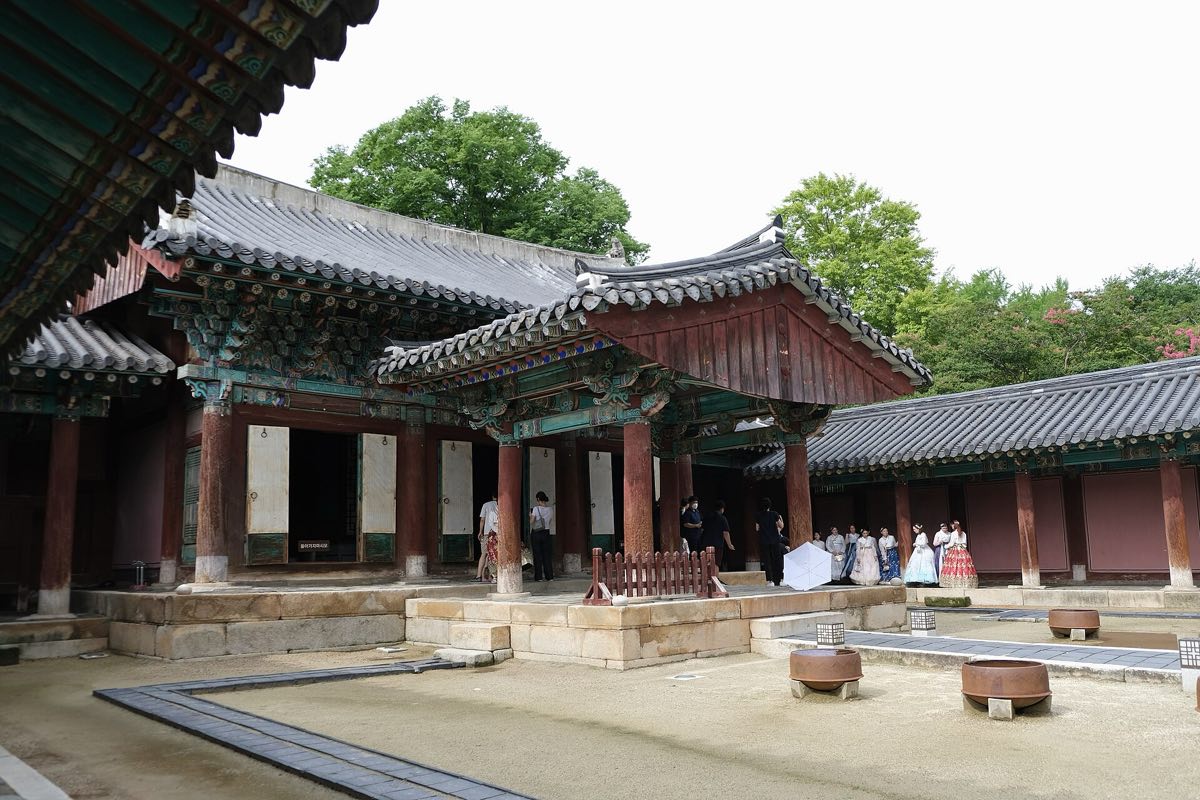
After founding the dynasty, Joseon distributed portraits of its founder to several provincial shrines. The building raised in Jeonju in 1410 to enshrine the portrait of King Taejo was called the Eoyongjeon; by 1412 it was known as Taejo Jinjeon, and in 1442, when the court standardized the names of these portrait halls across the country, it became Gyeonggijeon. The building burned down in 1597 during the second Japanese invasion. The main hall you see inside the walls today was rebuilt in 1614 and extensively renovated in 1872, which gave it its present form.
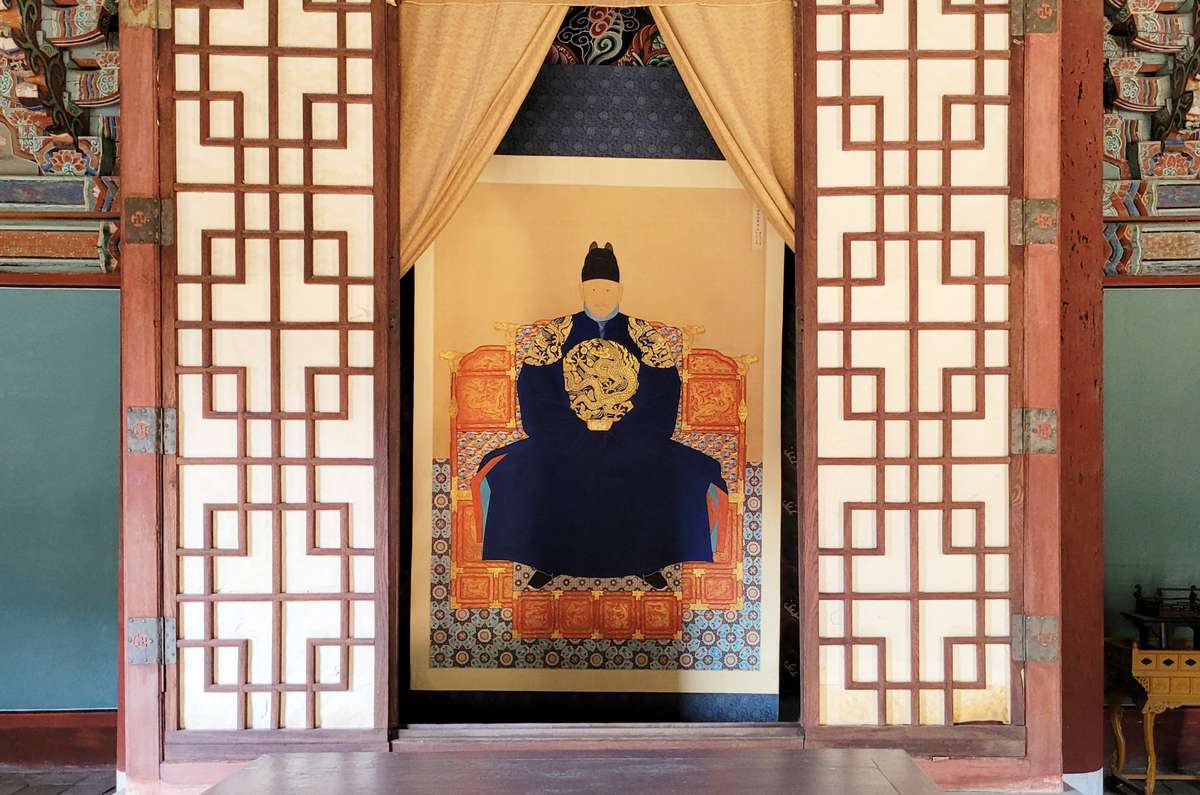
Portraits of King Taejo were once kept at six sites across Joseon; only the Jeonju one survives. And even that is not the original from the early dynasty but a copy redrawn in 1872. That 1872 portrait was designated Treasure No. 931 in 1987 and elevated to National Treasure No. 317 in 2012. What visitors actually see in the main hall or in the Royal Portrait Museum, however, is not the National Treasure itself: the original is kept in storage for conservation, and what hangs in the permanent display is a reproduction made for exhibition. The original comes out only for short special exhibitions — the 2024 autumn showing ran from 29 October to 12 November, about two weeks. It is more accurate to think of what you see here not as the king's face, but as the method by which that face has been kept.
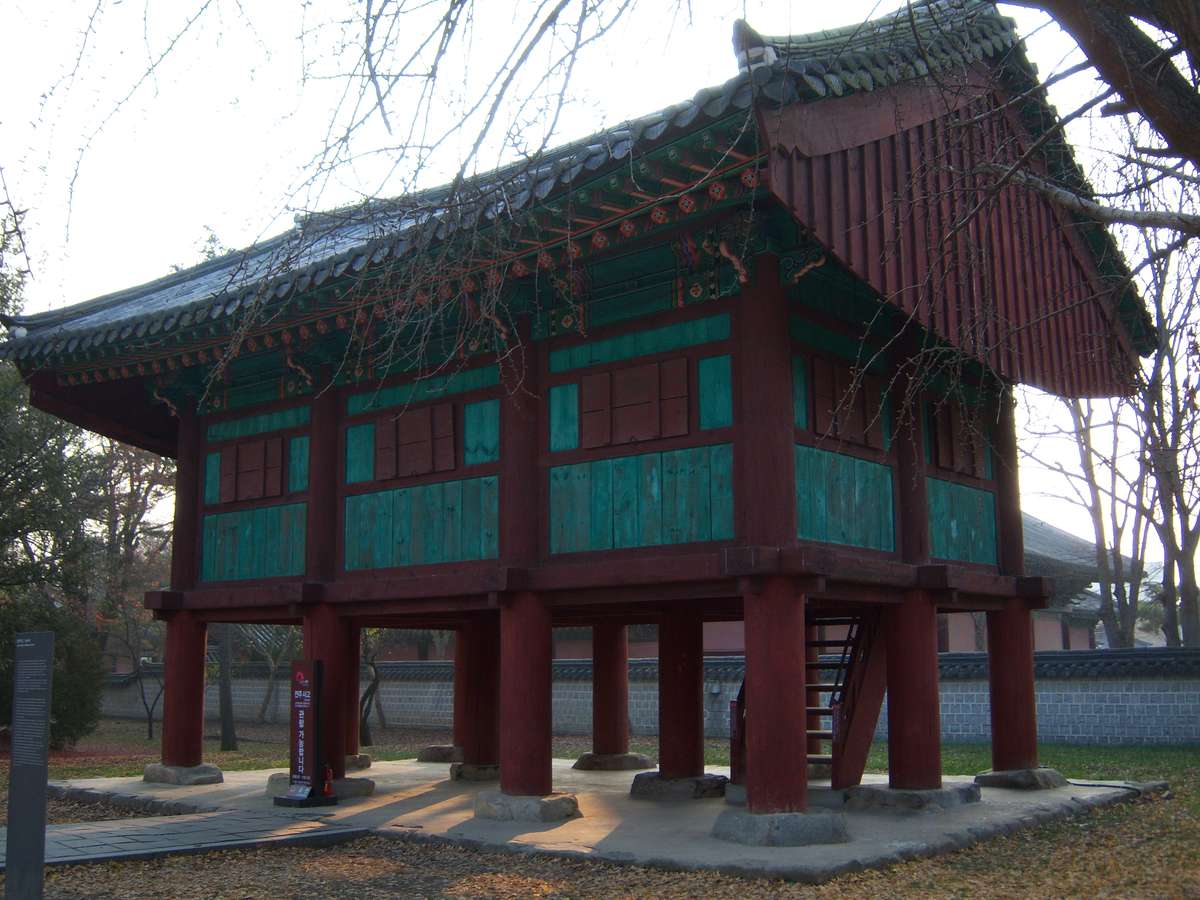
In one corner of the grounds stands the Jeonju Archive. Joseon kept the Annals in four archives — Chunchugwan in the capital, Chungju, Seongju, and Jeonju — and when the Japanese invasion came in 1592, three of them burned and only the Jeonju set survived. Not because the building was sturdy, but because people carried the books out: Ahn Ui and Son Hong-rok, two Confucian scholars from Jeongeup, spent their own money to move the Annals and the royal portrait to Mount Naejangsan for safekeeping. The Jeonju set they saved became the basis of the Annals of the Joseon Dynasty as we read them today. The archive building standing here now was reconstructed in 1991 — which is exactly the point of the place: what survived was not the building but the books.
✦ Highlights
- ›The Main Hall — where the portrait is enshrinedThe main hall, rebuilt in 1614 and designated a Treasure in 2008. The portrait of King Taejo hangs squarely in the middle of the open doorway, so from the courtyard it looks as though a single blue royal robe were floating in the dark interior.
More
A long, narrow stone path — wide enough for one person — runs up to the hall, an architectural way of imposing formality on the approach to an enshrined portrait. The portrait facing you is the permanently displayed reproduction; the 1872 original, the designated National Treasure, is in storage. Photograph it from the courtyard through the doorframe, and follow the on-site signage for anything closer.
- ›The Royal Portrait MuseumIncluded in the Gyeonggijeon ticket. It gathers the apparatus around the portrait — the palanquins and regalia used to move it, the process of copying it — and explains why the single painting you just saw in the main hall is handled the way it is.
More
⚠ Best to clear up the most common misunderstanding before you go in. The portrait of King Taejo on permanent display is a reproduction made for exhibition; the 1872 original, National Treasure No. 317, is kept in storage for conservation. The original is shown only during limited special exhibitions — in 2024 that meant roughly two weeks, from 29 October to 12 November — so planning a trip "to see the original" does not work outside those windows. What the museum does show you is how the Jeonju portrait came to be the only survivor of the six, and the ceremony with which such a painting was carried and attended, as if it were the king himself.
- ›The Jeonju Archive (Jeonju Sago)One of the four archives that held the Annals of the Joseon Dynasty — and the one whose set came through the 1592 war. Note that the floor is lifted well clear of the ground on tall pillars: a raised, pavilion-like form built to keep books away from damp and insects.
More
In 1592 the archives at Chunchugwan, Chungju, and Seongju all burned, leaving only the Jeonju set of the Annals. What saved it was not the building but two men: Ahn Ui and Son Hong-rok, Confucian scholars from Jeongeup, who paid out of their own pockets to move the Annals and the royal portrait to Mount Naejangsan. The Annals of the Joseon Dynasty were inscribed on the UNESCO Memory of the World Register in 1997, which makes this spot the physical starting point of that inscription. The structure you see, though, was reconstructed in 1991 — less an exact replica than a revival modelled on other surviving archive buildings.
- ›The Hamabi — a stele carried by haetaeThe "dismount here" stele in front of the main gate, designated a Jeollabuk-do Tangible Cultural Heritage. Two haetae — mythical lion-like guardian beasts — carry the stone on their backs, an unusual arrangement that tends to hold people longer than anything else at the entrance.
More
A hamabi orders everyone, however high their rank, to get down from horse or palanquin at this line. That such a stone stood not at a palace where a king lived but at a hall where a king's portrait hung tells you, in a single object, what rank Joseon assigned to a royal portrait. This stele was erected in the 6th year of King Gwanghaegun and re-carved in the 7th year of King Cheoljong.
- ›The bamboo grove and King Yejong's placenta chamberThe bamboo grove east of the archive became famous as a filming location for historical dramas and is now the busiest photo spot on the grounds. Elsewhere in the compound stands the placenta chamber of King Yejong, moved here in 1970 — a stone monument marking where a prince's placenta was buried, designated a Jeollabuk-do Folklore Cultural Heritage.
More
A taesil records a Joseon royal custom: when a child was born to the royal family, the placenta was sealed in a jar, buried at an auspicious site, and marked with a stele. King Yejong's stele was raised in 1578 and moved into the Gyeonggijeon grounds in 1970. With the royal portrait (a king's face) and the placenta chamber (a king's beginning) inside the same wall, it becomes clear that Gyeonggijeon is not simply a shrine but a place where the roots of the dynasty were gathered.
🚶 Self-Guided Walk
- 1Hongsalmun GateTwo red posts topped with a row of arrow-like spikes: the standard marker that what lies beyond is sacred ground. A visit to Gyeonggijeon starts by walking through it.
- 2The Hamabi SteleThe "dismount here" stele standing before the gate, carried on the backs of two haetae — an unusual form worth crouching down to look at rather than walking past.💡 Remember that this stone stands not where a king lived but where a king's portrait hangs — it changes the weight of the painting you are about to see.
- 3The Main HallThe hall rebuilt in 1614. Approach along the narrow stone path and the portrait of King Taejo faces you through the open doors — normally the exhibition reproduction.💡 From the courtyard, use the doorframe as a frame and shoot straight on — the portrait and the painted eaves land in one image.
- 4Jogyeongmyo ShrineA shrine within the same compound, dedicated to the ancestral roots of the Jeonju Yi royal house. Coming here after the portrait answers the question of why Jeonju, of all places.
- 5The Jeonju ArchiveThe raised pavilion that stored the Annals. In 1592 only this archive's set survived out of four; the building you see was reconstructed in 1991.💡 Look up at how tall the pillars are — lifting the floor off the ground was itself a way of protecting the books.
- 6The Royal Portrait MuseumYour Gyeonggijeon ticket gets you straight in. It assembles how the portrait was painted, transported, and protected — tying the main hall and the archive you have just seen into one story.💡 The permanent display is a reproduction. The 1872 original, a National Treasure, appears only briefly during special exhibitions.
- 7The bamboo groveThe bamboo stand east of the archive. Known as a historical-drama filming location, it is now the busiest photo spot on the grounds — and a good place to end the walk.💡 Leave toward the main gate from here and you step straight into the Hanok Village streets and on to Jeondong Cathedral.
🧭 Visitor Info
💡 Good to Know
- Allow roughly an hour to take in the main hall, the archive, the museum, and the bamboo grove at an unhurried pace. Since it sits at the entrance to the Hanok Village, making it your first stop keeps the day tidy.
- ⚠ You will hear that wearing hanbok gets you into Gyeonggijeon free at any time — there is no basis for this in current official guidance. The confirmed benefits are free admission on the last Wednesday of each month and 50% off on the fourth Saturday, so if you want to save on the ticket, match the date instead.
- Hours shift with the season — 20:00 in summer, 18:00 in winter — and last admission is an hour before closing. If you start with the Hanok Village late in the afternoon you may find the gate shut, so it is safer to do Gyeonggijeon first.
- If you are going specifically to see the original portrait of King Taejo, reconsider. What hangs permanently is an exhibition reproduction; the 1872 original, National Treasure No. 317, stays in storage and appears only for short special exhibitions — about two weeks in 2024.
- Remember that while the Hanok Village streets are free, Gyeonggijeon is a ticketed site. Inside the walls it is quieter and shadier than the village lanes, which also makes it a good place to sit out the midday heat in summer.
🗺 Pair Your Visit
Gyeonggijeon is where the founding of Joseon and its record-keeping culture meet in one place. It was built in 1410 to enshrine the portrait of King Taejo (renamed Gyeonggijeon in 1442), and the Jeonju portrait — the only survivor of six across the country — was designated a National Treasure in 2012. The Jeonju Archive matters most: when the archives at Chunchugwan, Chungju, and Seongju all burned during the 1592 Japanese invasion, only the Jeonju set of the Annals survived, because the Jeongeup scholars Ahn Ui and Son Hong-rok carried it to Mount Naejangsan. Exam questions trip students up here — it was the books that were evacuated and saved, not the building that endured. The Annals of the Joseon Dynasty were inscribed on the UNESCO Memory of the World Register in 1997.