Gyeongju National Museum
The indoor treasure house of Gyeongju, the museum without a roof
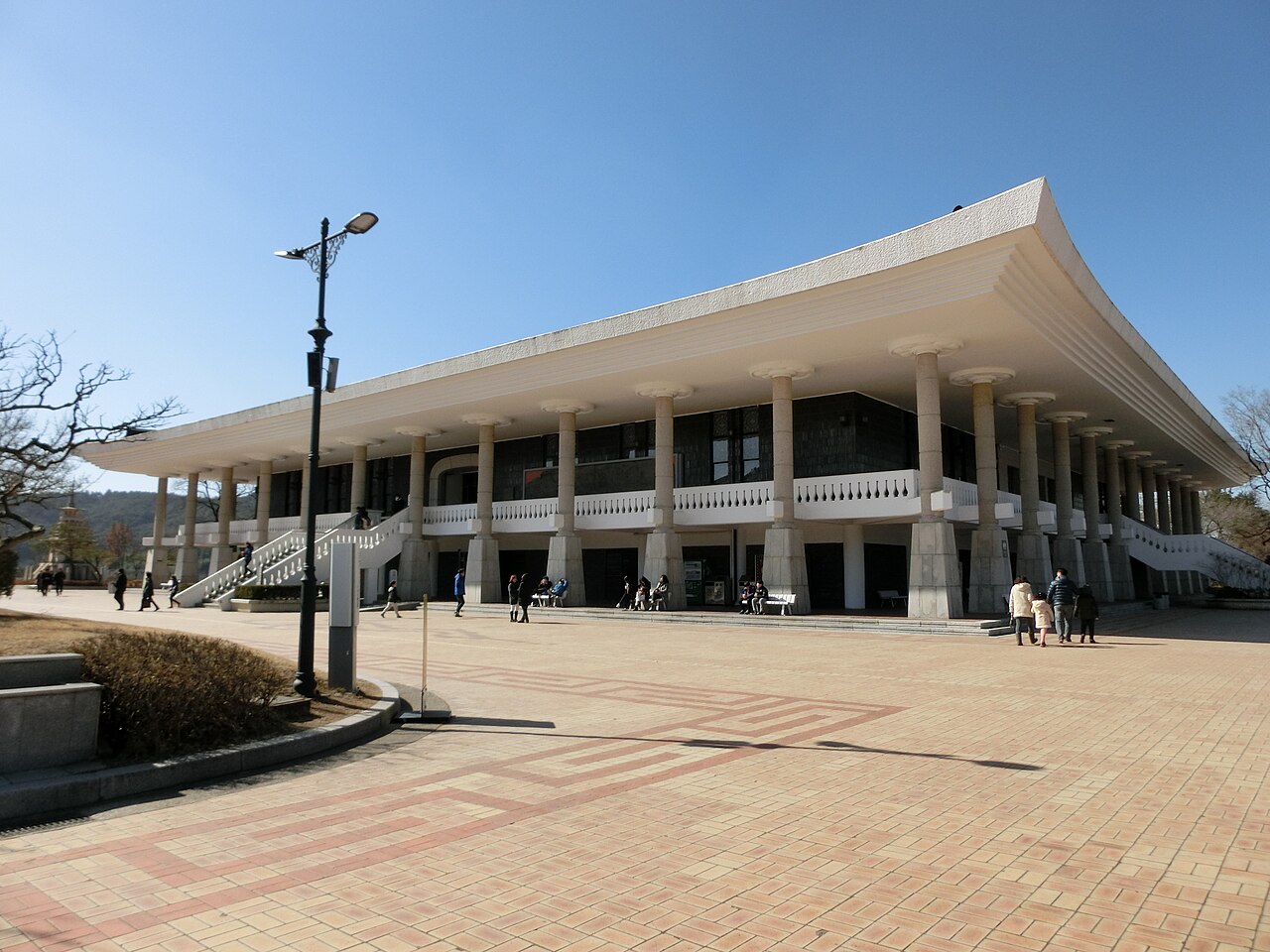
Gyeongju is often called a museum without a roof — an entire city of tombs, temple sites and palace ruins in the open air. Gyeongju National Museum is where everything that city kept buried for a thousand years is gathered under one roof. It stands in the middle of the Gyeongju Historic Areas, southeast of Wolseong Palace and right beside the Donggung Palace and Wolji Pond, so you can walk straight in from the ruins outside — and the permanent galleries are free. The moment you stand before the Divine Bell of King Seongdeok hanging in its open-air pavilion, the Silla you had only read about arrives with the weight of the real thing.
📖 The Story
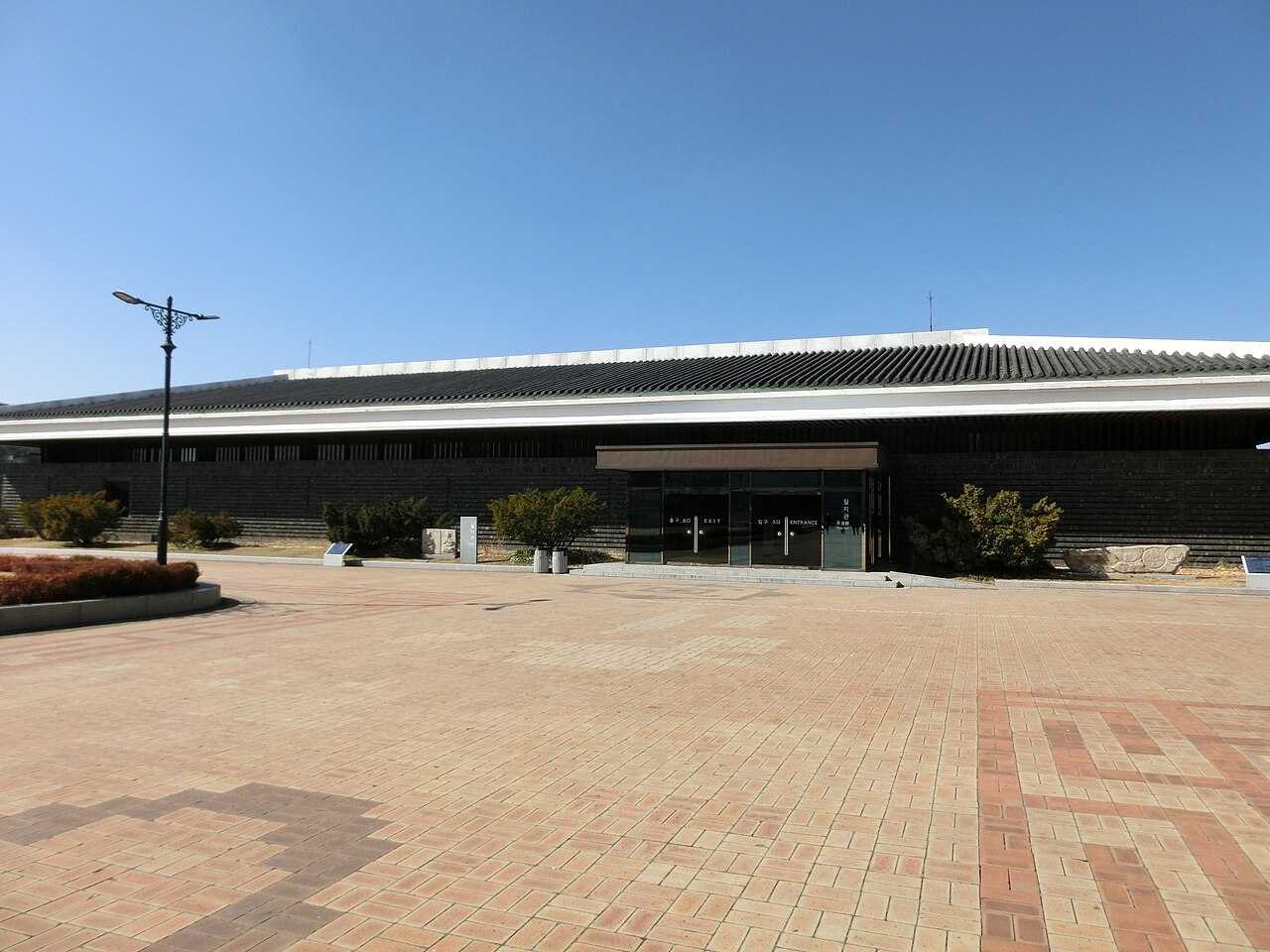
The museum's history begins in 1913, when the Gyeongju Antiquities Preservation Society — founded by local residents — opened a display hall for artifacts unearthed in the area. In 1926 it became the Gyeongju branch of the Government-General Museum, and after liberation, in 1945, the Gyeongju branch of the National Museum. Then in 1975 it moved into new buildings on its present site in Inwang-dong and was elevated to the Gyeongju National Museum. More than a century of keeping what Gyeongju's soil gave up, in Gyeongju itself, is the museum's own biography.
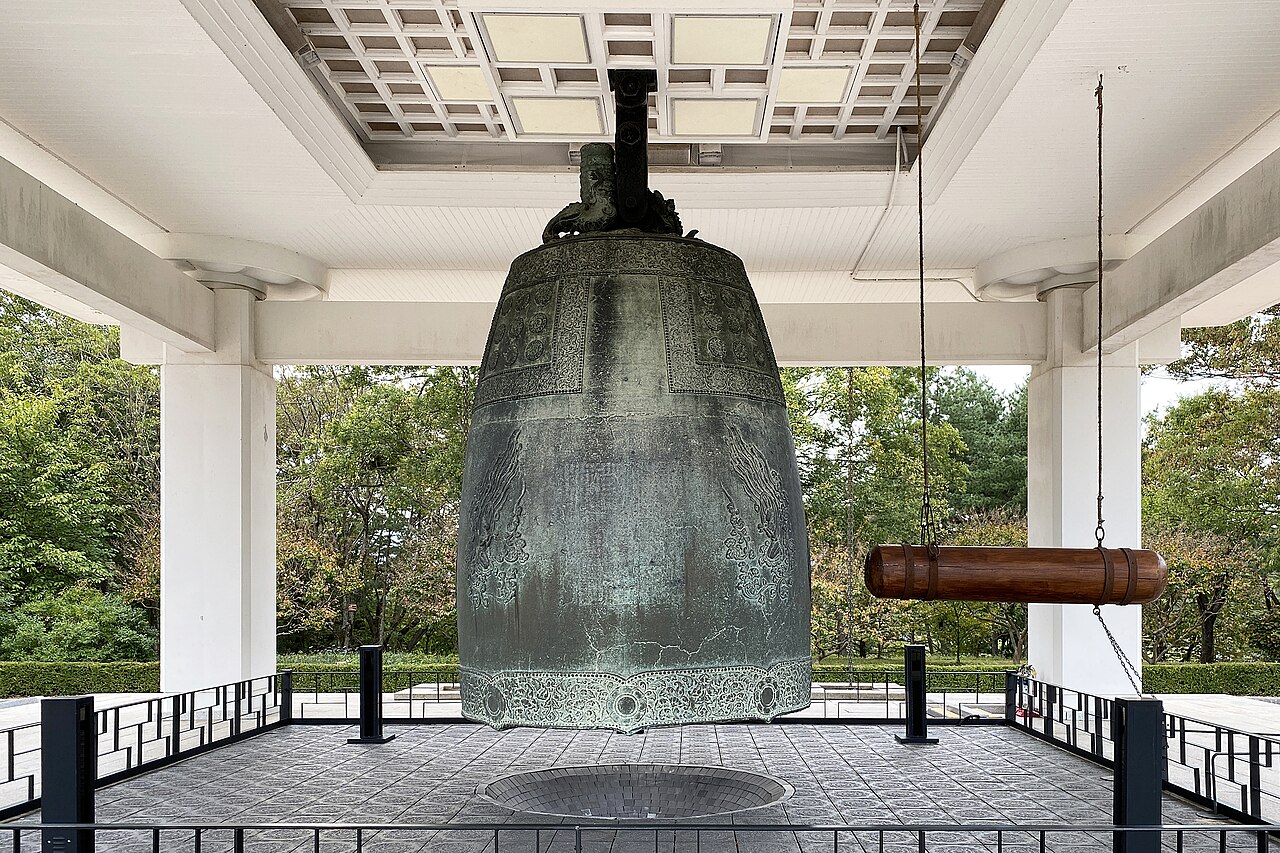
You meet the Divine Bell of King Seongdeok before you even enter a gallery. Completed in 771, in the reign of King Hyegong, this National Treasure stands 3.66 meters tall and weighs 18.9 tons — the largest surviving Korean temple bell. It is more widely known by its nickname, the Emille Bell, and the ornament covering every inch of its body says without words how far Unified Silla metalwork had come. Because it hangs in an open-air pavilion, it is also the one masterpiece you can still see on days when the indoor galleries happen to be closed.
Step inside and you see, rather than read, why Silla was called the kingdom of gold. In the golden-culture hall of the Silla History Gallery, the gold crown from Cheonmachong and the gold crown from the north mound of Hwangnamdaechong stand side by side. Nearby sits an object of an entirely different temper: the roof-end tile with a human face, known as the Smile of Silla. Taken to Japan in 1934, it was returned in 1972 and designated a Treasure in 2018. That the gleam of a royal crown and the grin on a single roof tile are two faces of the same century is the impression this museum leaves longest.
✦ Highlights
- ›Divine Bell of King SeongdeokCompleted in 771, this National Treasure is the largest surviving Korean temple bell — 3.66 m tall and 18.9 tons. Hanging in an open-air pavilion, it is the first thing you meet, with no ticket required.
More
Cast in the reign of King Hyegong, it is better known by its nickname, the Emille Bell. The figure 18.9 tons means nothing until you are standing in front of it — the shoulder of the bell begins well above eye level, and you have to step back several paces to fit it in a single frame. Walk a full circle around the pavilion and follow how the ornament shifts from one face of the bell to the next. Because it hangs outdoors, the color of the bronze changes with the season and the hour; late afternoon light gives it the most depth.
- ›Silla History Gallery — the Golden Culture HallThe room where the gold crown from Cheonmachong and the gold crown from Hwangnamdaechong's north mound stand together — why Silla was called the kingdom of gold, settled in one place.
More
Both crowns are National Treasures. Move a few steps left and right in front of the case and you will see the gold catch differently at every angle — these were not made to sit still, but to be worn by someone in motion. If you have just come from the grass mounds of Daereungwon, standing here is where the earth outside and what came out from under it finally join up. It is worth planning your day in that order.
- ›The Face-Patterned Roof Tile — the Smile of SillaA palm-sized roof-end tile pressed with a smiling face. Taken to Japan in 1934, returned in 1972 and designated a Treasure in 2018, it has become Silla's best-known image.
More
If the crowns are the face of a king, this tile is the face of a nameless craftsman. A sumaksae caps the end of an eaves line, so this face originally sat well above eye level, meant to be looked up at. It was taken to Japan in 1934, returned in 1972, and designated a Treasure in 2018 — the travels of this single object are themselves a scene from Korea's modern history. Standing before the original explains why this face is reproduced endlessly across Gyeongju's souvenirs and symbols today.
- ›Wolji GalleryA gallery devoted to the royal artifacts recovered from Donggung Palace and Wolji Pond next door — the everyday objects of a Silla palace, pulled from the bottom of a pond, gathered in one room.
More
These came from the pond next door — Donggung Palace and Wolji, still familiar to many by its older name, Anapji. They are not grave goods assembled for a burial but things the court actually used, which gives the room a texture entirely unlike the galleries before it: it turns Silla from a dynastic timeline into a place where people lived. See them by day, then walk about ten minutes to the pond after dark. On the lit water, the owners of what you have just seen quietly reassemble.
🚶 Self-Guided Walk
- 1Divine Bell of King Seongdeok (outdoor pavilion)Start outdoors, where no ticket or entrance is needed. Circle the pavilion once — the apsara reliefs, the inscription, the resonance pit beneath the bell — and everything in the galleries afterward reads differently.💡 Even on days when the indoor galleries are closed, this bell can still be seen.
- 2Silla History GalleryThe permanent gallery that follows Silla's history in chronological order. The gold crowns from Cheonmachong and Hwangnamdaechong's north mound, in the golden-culture hall, are the high point.💡 If you visited Daereungwon first, the mounds and their contents finally line up in front of these crowns.
- 3Silla Art GalleryThe gallery of Silla Buddhist art. Where the earlier galleries show the Silla of kings and tombs, this one shows how Silla became a Buddhist country.
- 4Wolji GalleryThe gallery of royal artifacts from Donggung Palace and Wolji Pond. These were objects in daily palace use, so they show a Silla completely unlike the one in the two galleries before.
- 5Special Exhibition HallThe space for temporary exhibitions. Themes rotate through the year and some special shows are ticketed, so check the board at the entrance for what is on that day.
- 6Donggung Palace and Wolji Pond after dark (on foot)About a ten-minute walk from the museum gate brings you to the pond. Seeing the artifacts in the Wolji Gallery by day and crossing to the water after sunset is how this route ends.💡 On Saturdays from March to October the museum stays open until 20:00 — ideal for going straight from the galleries to the night view.
🧭 Visitor Info
💡 Good to Know
- The permanent galleries are free (ticketed special exhibitions aside). On a Gyeongju trip it is the first card to play when rain sets in or the midday heat gets to be too much.
- Unlike most Korean museums, this one does not close on Mondays — a useful slot when everything else is shut. The exception is the second Monday of March and November, when the galleries close for maintenance; even then the garden and the outdoor exhibits, including the great bell, remain open.
- From March to October the museum stays open until 20:00 on Saturdays. Arrive in the late afternoon, finish the galleries, and continue to the night view at Donggung Palace and Wolji Pond, ten minutes away on foot.
- Taking the main galleries at an unhurried pace runs about an hour and a half to two hours. Seeing only the great bell and moving on is a perfectly good choice too.
- Where a particular object is displayed can change with gallery reorganizations or loans. If there is something you especially want to see, ask at the information desk by the entrance before you go in.
🗺 Pair Your Visit
The Divine Bell of King Seongdeok, completed in 771 in the reign of King Hyegong, is the largest surviving Korean temple bell and a showcase of Unified Silla's Buddhist culture and metalworking. It appears often in questions on Unified Silla culture in the Korean History Proficiency Test; pair it with the gold crowns from Cheonmachong and Hwangnamdaechong's north mound, the emblems of the earlier Silla tomb culture.