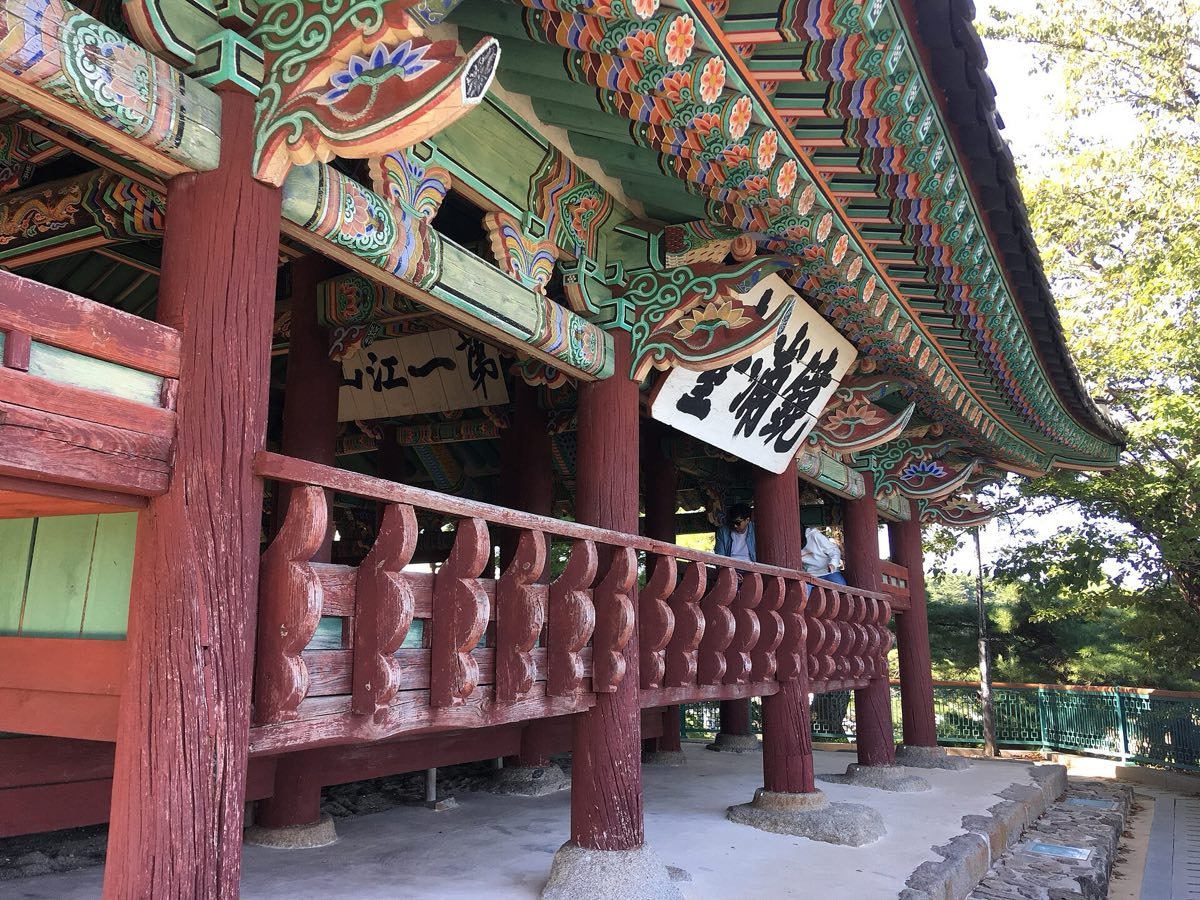
Gyeongpodae Pavilion and Gyeongpo Lake
鏡浦臺The pavilion where five moons rise, first among the Gwandong Eight Scenic Spots
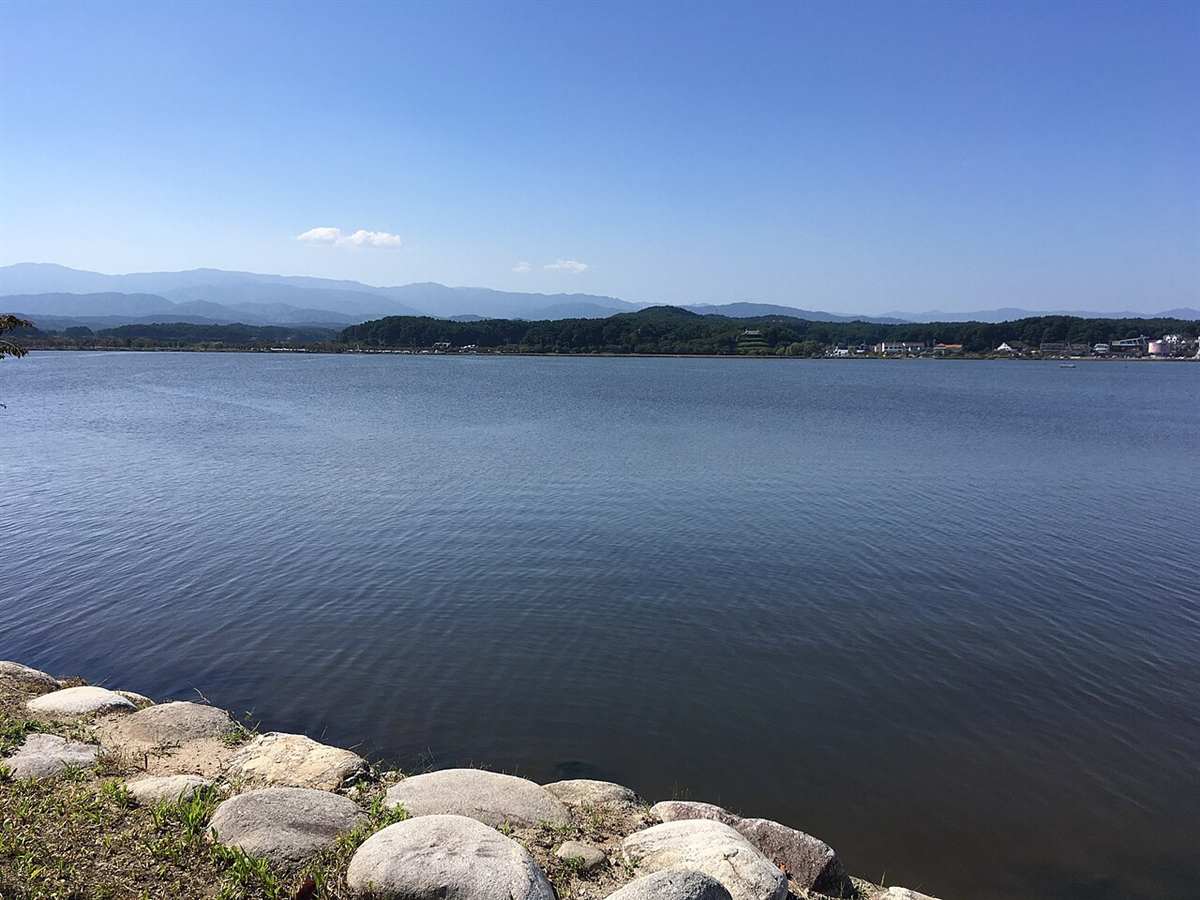
Gyeongpodae is a pavilion looking down over Gyeongpo Lake, and Gyeongpo Lake is a lagoon formed where sand closed off the sea. In 2013 the two were designated together as a single Scenic Site, Gyeongpodae Pavilion and Gyeongpo Lake, and the pavilion itself became a Treasure in 2019. Raised under King Chungsuk of Goryeo, it has been called the first of the Gwandong Eight Scenic Spots for seven hundred years, and countless poems were written on this floor. In the evening, they say, the moon rises five times: in the sky, on the sea, on the lake, in the wine cup, and in the eyes of the person sitting across from you.
📖 The Story
The founding year, 1326, is the thirteenth year of King Chungsuk of Goryeo. The character chung, meaning loyalty, at the head of the king's name is the key to reading the period. Goryeo had become a son-in-law state of the Yuan, its kings received posthumous titles declaring loyalty to the Yuan, and the reigns of Chungnyeol, Chungseon, Chungsuk and Chunghye fill that era. The pavilion was raised by Bak Suk-jeong, an official of the Privy Council, and its first site was further inland, on the grounds of the former Inwolsa temple. In 1508 Han Geup, the magistrate of Gangneung, is said to have moved it to the spot with the best view of the lake, where it stands today.
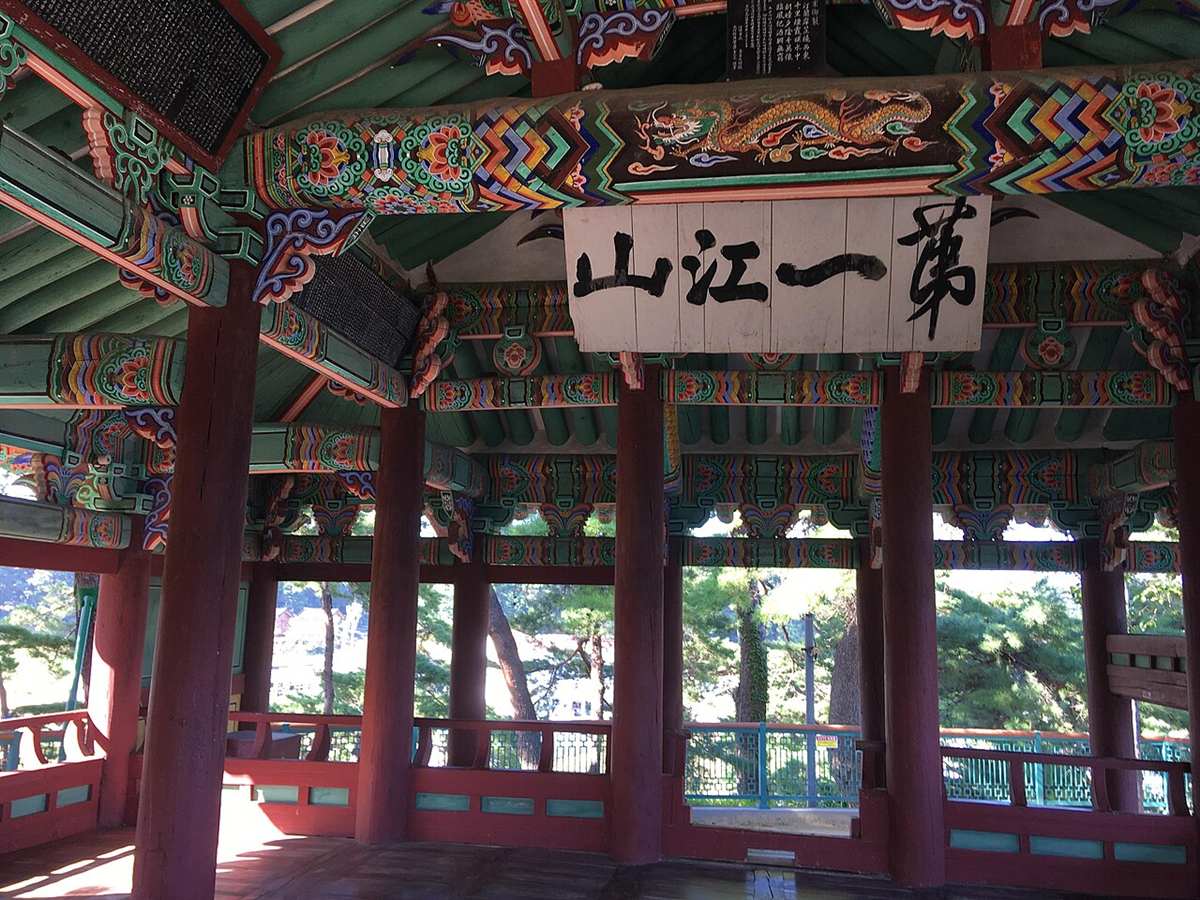
Climb up and you find the floor split into two levels. The upper part is edged with a low meoreum sill, the lower with a gyeja balustrade, so the two sit at different heights; this is precisely the arrangement the heritage authorities called an unparalleled composition when they designated the pavilion a Treasure. Below the ceiling the plaques crowd together. Two boards carry the name Gyeongpodae on the front, one in seal script and one in regular script, and inside hang the four characters of Jeilgangsan, the finest landscape under heaven, along with a poem by King Sukjong, the ridge-beam text by Jo Ha-mang, and the Gyeongpodaebu, said to have been composed by a ten-year-old Yi I. This floor is a guest book seven hundred years deep.
✦ Highlights
- ›A floor built on two levelsA large pavilion, five bays across and five deep. The floor is divided into an upper and a lower level, finished with a meoreum sill above and a gyeja balustrade below.
More
Pavilions normally lay one floor at a single height. Gyeongpodae raises the inner section by a step, separating where you sit from where you stand, and even varies the form of the railing between the levels. That composition is written into the 2019 Treasure designation. Taking off your shoes and feeling the change in level underfoot is the quickest way to understand this building.
- ›The plaques and inscriptionsThe Jeilgangsan plaque, a poem by King Sukjong, the ridge-beam text by Jo Ha-mang, and the Gyeongpodaebu, said to have been written by Yi I at the age of ten.
More
The name board on the front alone comes in two versions, the seal script of Yu Han-ji and the regular script of Yi Ik-hoe. The same three characters hang twice in different hands, which is not unusual in a pavilion. Most of the interior plaques are in classical Chinese and hard to read, but the four large black characters of Jeilgangsan on their white ground can be picked out by their shape alone.
- ›Gyeongpo Lake, a coastal lagoonA natural lake formed when waves piled up sand and shut out the sea. The sandbar between lake and sea is Gyeongpo Beach itself.
More
Lagoons like this run in a line down the east coast. Gyeongpo, though, is in no state to boast about its scale. Its average depth has fallen from two or three metres to around one, and since seawater was let back in from 2004 the salinity has been rising. The still surface you see is not a finished view but a landform still changing.
- ›The five moonsThe saying that you see the moon in the sky, on the sea, on the lake, in the wine cup, and in the eyes of the person sitting across from you, all at once.
More
It is a phrase handed down locally, so no single source can be pinned to it. Once you know the terrain, though, it is clear why it arose. The lake lies in front of the pavilion, and beyond it a single sandbar is all that separates you from the open sea. When the moon rises over two sheets of water laid one behind the other, it really does appear more than once.
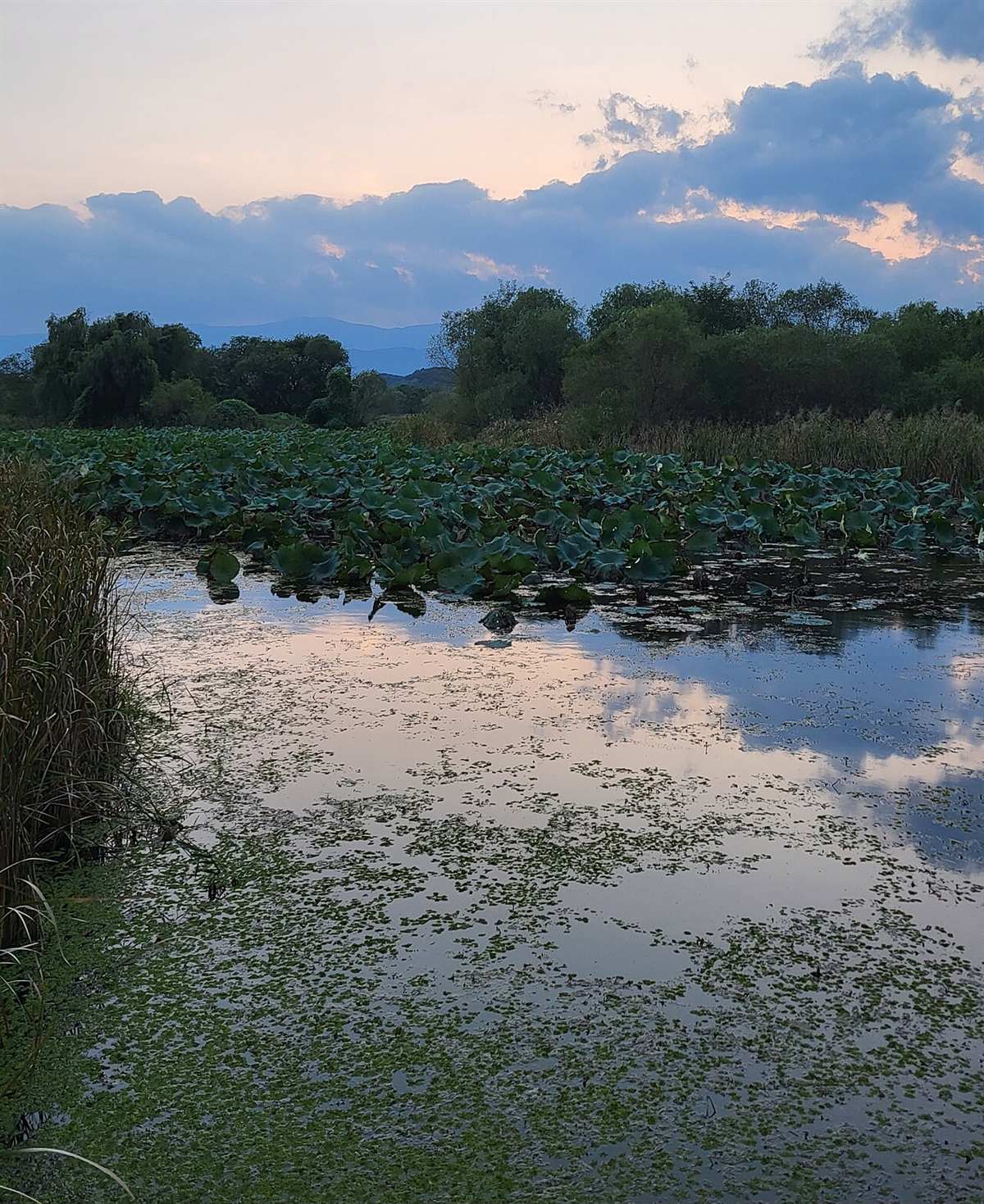
- ›The Gyeongpo prickly waterlily wetlandA wetland restored with the prickly waterlily and the otter as flagship species, both gone from here since the early 1970s. The walking route crosses the channel by ferry boat.
More
This stretch at the south-western end of the lake was returned to something close to its state before the land was filled in. The prickly waterlily is an aquatic plant with spines on its leaves that grows only where water is shallow and slow. That its leaves have opened again after half a century is the wetland's own progress report. It is also the quietest section of the lakeside path.
🚶 Self-Guided Walk
- 1Gyeongpodae PavilionThe pavilion sits on a rise looking down over the lake. Take off your shoes, step onto the floor and start with the plaques.💡 Access to the floor may be restricted depending on maintenance and operations, so check the notices on site.
- 2The north shore path and Hongjangam RockThe stretch down from the pavilion along the water's edge, with Hongjangam Rock at the shoreline.
- 3The Gyeongpo prickly waterlily wetlandThe restored wetland inside the lake, where a boardwalk runs between reeds and lotus leaves.💡 It is the least crowded part of the circuit and a good place to watch birds.
- 4Heo Gyun and Heo Nanseolheon Memorial ParkIn Chodang-dong, south of the lake. A literary park honouring Heo Gyun, author of The Tale of Hong Gildong, and his sister Heo Nanseolheon.💡 Admission is free, but it opens 09:00-18:00 and closes on Mondays, unlike Gyeongpodae.
- 5Gyeongpo BeachThe beach on the sandbar dividing lake from sea. Turn your back on the lake and the East Sea is right there.💡 How close the lake and the sea really are only registers once you stand here.
- 6Anmok coffee streetA run of cafes along the shore to the south, the stretch where the day tends to end looking out at the sea.
🧭 Visitor Info
💡 Good to Know
- The pavilion and the lakeside path are free with no closing time. Time your visit for dusk and the place earns its reputation.
- Gangneung has no subway. Come from KTX Gangneung Station by city bus or taxi.
- A full circuit of the lake is about 5 km. If you would rather not walk all of it, the pavilion to the wetland and back is enough.
- Heo Gyun and Heo Nanseolheon Memorial Park closes on Mondays. On a Monday visit, plan the route without it.
- The cherry blossom follows the path around the lake. In early April the crowds are heavy, so aim for early morning.
🗺 Pair Your Visit
The year Gyeongpodae was founded, 1326, is the thirteenth year of King Chungsuk of Goryeo, which places it in the period of Yuan domination. The character chung, loyalty, at the head of the posthumous titles of Chungnyeol, Chungseon, Chungsuk and Chunghye marked Goryeo's status as a son-in-law state. It is also worth remembering that there are two works called Gwandong byeolgok. An Chuk's Gwandong byeolgok, written in 1330, is a gyeonggiche song; Jeong Cheol's Gwandong byeolgok, written in 1580, is a gasa. Same title, different genre, 250 years apart.