Hwaseong Haenggung
華城行宮The palace that came before the fortress, and the eight days in which Jeongjo showed his politics whole
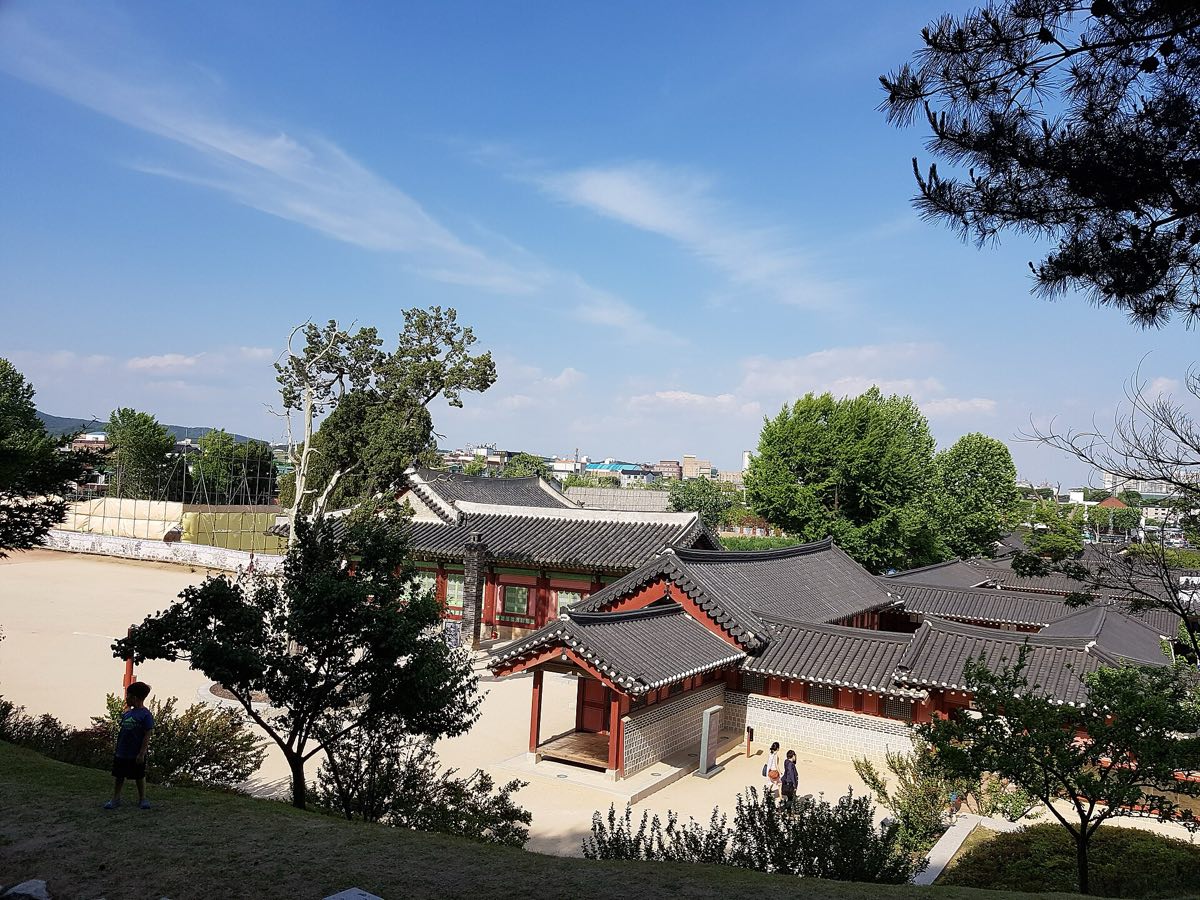
Hwaseong Haenggung is the detached palace King Jeongjo built when he moved his father Crown Prince Sado's tomb to Suwon and raised a new city beside it. People assume the fortress came first, but the order runs the other way: the palace dates from 1789, the walls from 1794 to 1796. In the leap second month of 1795 Jeongjo spent eight days here for his mother Lady Hyegyeong's sixtieth birthday, and those eight days survive as the most minutely recorded royal event in all of Joseon.
📖 The Story
King Jeongjo had to carry his father's death politically for the whole of his reign. Being the son of Crown Prince Sado, who died shut inside a rice chest, followed him all his life, and rather than hide that burden he built it into a city. In 1789 he moved his father's tomb to Suwon, shifted the whole town to the foot of Mount Paldal, and set the palace at its centre. At 576 kan, the bay unit by which Korean buildings were counted, it was the largest detached palace in Joseon. Work on the fortress walls did not begin for another five years, so on this ground the palace comes before the wall. That a king built himself quarters on this scale outside the capital tells you that Hwaseong was conceived not as a stopping place but as a second capital.
What happened in this courtyard over the eight days from the ninth to the sixteenth of the leap second month of 1795 shows at a glance what King Jeongjo was trying to do. On the thirteenth he held his mother's sixtieth birthday banquet at Bongsudang. At Naknamheon he announced the successful candidates of a special civil and military examination held for people of the region, and laid on a banquet for the local elders. The next day he came out in front of Sinpungnu Gate and handed out rice and salt to widowers and widows, to orphans and old people with no one to depend on, and to the poor, and had porridge cooked and served. Filial duty, the recruitment of talent and the relief of the destitute were staged in one place, outside the capital, in plain sight of the people. The eight days survive in words and pictures in the Wonhaeng Eulmyo Jeongni Uigwe, the official account of the procession, and in the eight-panel screen painted of it, and they are now the single most important basis for reconstructing Joseon court ceremony.
And then the palace nearly disappeared. It began in 1905, when a school was installed on the site of Uhwagwan, the guest hall. By 1911 Bongsudang, the main hall, had become a colonial charity hospital, Naknamheon the county office and the northern barracks a police station. In 1923 part of the grounds was demolished and a provincial hospital put up in its place. Naknamheon came through those years without being torn down. Restoration began in 1996 and opened 482 kan in October 2003; the last 94 kan around Uhwagwan, which could only be touched once the school had moved out, were finished in April 2024. Counting from the year the damage began, it took 119 years. So the thing to weigh here is not the age of the buildings but the age of the drawings. It could be undone and redone because the record survived.
✦ Highlights
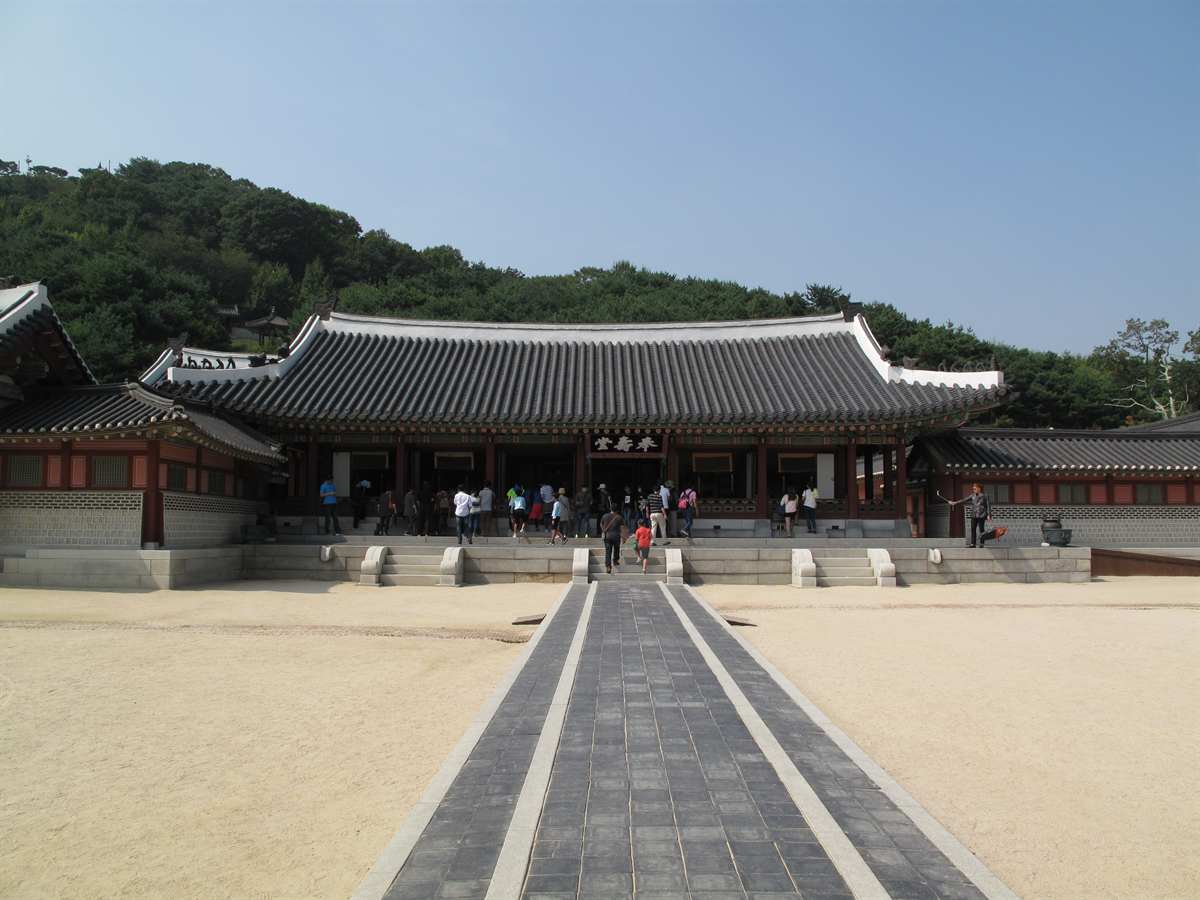
- ›BongsudangThe highest-ranking hall of the palace. This is the very building where Lady Hyegyeong's sixtieth birthday banquet was held in 1795.
More
It was originally called Jangnamheon. For the birthday it was renamed Bongsudang, built around the character su, meaning long life, as a wish for his mother's years. A royal path runs up the middle of the forecourt and a raised stone terrace stands before the building. This is a detached palace observing the forms of a main one, and this single hall says what Suwon meant to King Jeongjo.
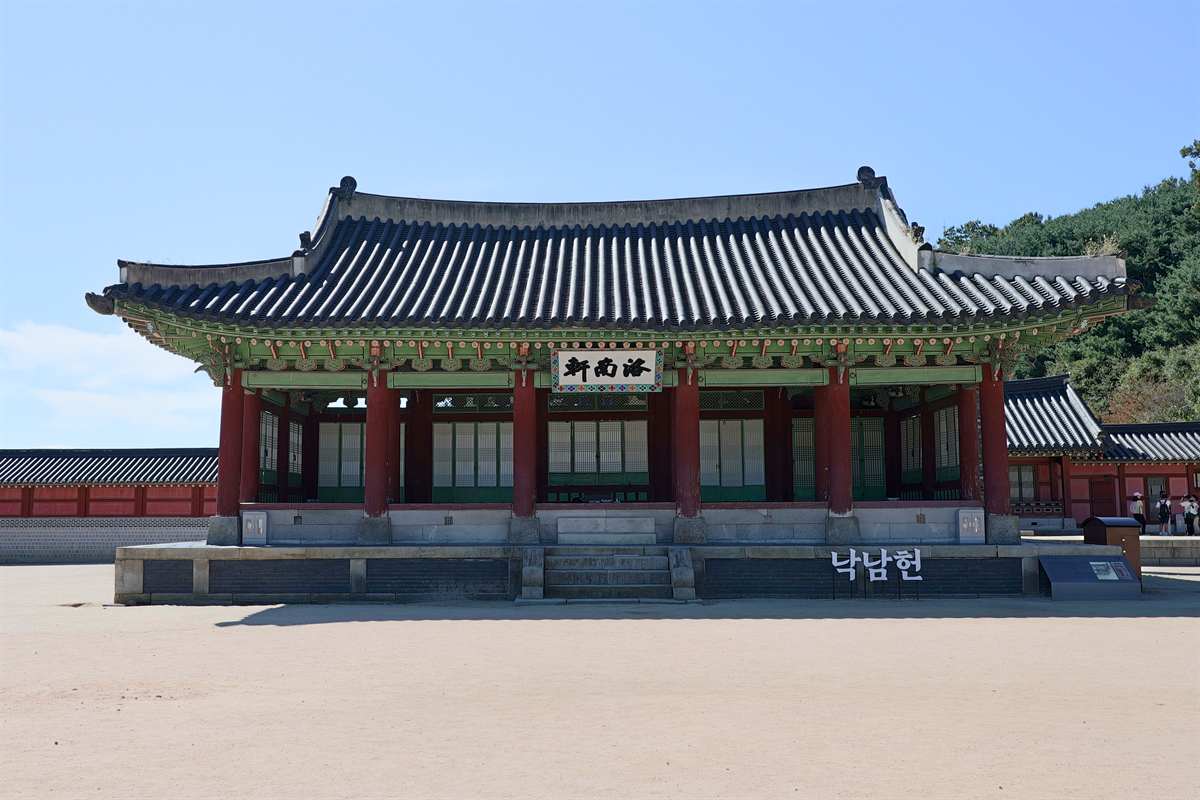
- ›NaknamheonA ceremonial hall open on all sides, without walls. It stood through the colonial period without being pulled down.
More
The name recalls Emperor Gaozu of Han, who feasted the followers who had helped him found his dynasty at the southern palace of Luoyang. In 1795 the results of a special civil and military examination for local candidates were proclaimed in front of it, and a banquet for the district elders was held here too. Where most of what you see around it was raised again from drawings, this hall passed through that time itself. Stand on the floor and look out at the courtyard and you understand why it was given no walls.
- ›Sinpungnu GateThe main gate of the palace. The lower storey is the entrance and the upper one held a drum.
More
It was first called Jinnamnu and became Sinpungnu in 1795. Sinpung takes its name from Feng, the home district of Emperor Gaozu of Han, and carries King Jeongjo's meaning that Hwaseong was a second home to him. The ground in front of this gate is also where the relief distribution of 1795 took place. That the sight of a king stepping outside his own gate to hand rice to the hungry was set down in a painting tells you exactly what kind of procession this was.
- ›Noraedang and MirohanjeongThe annexe King Jeongjo built with an eye to the old age he meant to spend at Hwaseong after handing over the throne, and the small pavilion on the rear garden slope.
More
Noraedang means "old age comes", and Mirohanjeong takes its name from a line holding that only leisure won before one grows old is true leisure. King Jeongjo died in 1800 at forty-eight, so the buildings were never used as intended. Walk past the grand halls and up to the little pavilion on the slope and you find that the old age that stayed a plan occupies the quietest corner of this palace.
- ›Hwaryeongjeon and UnhangakA separate shrine beside the palace, raised in 1801, the year after King Jeongjo's death, to enshrine his portrait.
More
Unhangak, the main hall, and Iancheong, where the portrait was moved for safekeeping, are joined by a covered corridor in a U-shaped plan, and the three were designated a Treasure in 2019. The palace is a Historic Site and Hwaryeongjeon is a separate one, so the designations are not the same. It sits behind a single wall and is easy to walk past, but a place for a dead king standing next to the place a living one stayed only makes sense if you see them together.
🚶 Self-Guided Walk
- 1Sinpungnu GateStart at the main gate. The square in front of it is wide, and events are often held there.💡 Stand with the gate at your back and the street in front of the palace opens up. This is where the relief distribution of 1795 took place.
- 2Jwaikmun and JungyangmunTwo more gates stand between you and the main hall. The more gates there are, the higher the rank of what lies inside.
- 3BongsudangThe main hall, with its royal path and raised stone terrace. This is where the birthday banquet of 1795 was held.💡 The raised path up the middle was reserved for the king.
- 4YuyeotaekThe building where King Jeongjo received reports from his officials. It adjoins the main hall.
- 5NaknamheonThe open hall without walls. It feels different from the rest because it was never pulled down.💡 This is where you will end up standing longest on this route.
- 6Noraedang and DeukjungjeongThe annexe built for an old age at Hwaseong, and next to it the pavilion used for archery.
- 7MirohanjeongA short climb up the rear garden slope brings you to a small pavilion looking down over the palace roofs.💡 It is the emptiest spot in the palace.
- 8HwaryeongjeonRound the wall and you reach the shrine that held King Jeongjo's portrait. Check the plaque on Unhangak before you go in.💡 Whether your palace ticket also covers this is worth asking at the ticket office.
🧭 Visitor Info
💡 Good to Know
- The palace alone takes an hour to an hour and a half. Climb Mount Paldal behind it to Seojangdae and walk the fortress wall and it becomes a half-day outing.
- A Muye 24-gi martial arts demonstration is performed from Tuesday to Sunday at 11:00 and lasts about thirty minutes. It pauses on Mondays and in the height of summer, and the location is sometimes changed, so check the notices on the day.
- There is a combined ticket covering Hwaseong Haenggung, the Suwon Hwaseong Museum and the Suwon Museum. If you mean to see more than one of them, ask at the ticket office.
- No subway station serves the palace directly. You have to change to a city bus at Suwon Station on Line 1 or the Suin-Bundang Line, and it is not within walking distance.
- Mount Paldal rises straight up behind the palace, so the fortress side is all uphill. If you plan to walk the wall, give some thought to your shoes.
🗺 Pair Your Visit
Hwaseong Haenggung is the detached palace King Jeongjo built in 1789 while moving Crown Prince Sado's tomb to Suwon and laying out a new city, which makes it earlier than the Hwaseong walls of 1794 to 1796. The key episode is the royal procession of the leap second month of 1795, the 19th year of his reign: for his mother Lady Hyegyeong's sixtieth birthday the king stayed here eight days, held the banquet at Bongsudang, staged a special civil and military examination and a banquet for the elderly at Naknamheon, and distributed relief to the poor in front of Sinpungnu Gate. The whole progress was recorded in the Wonhaeng Eulmyo Jeongni Uigwe and in an eight-panel painted screen, which makes it a standard exam subject for the reform politics that runs from the Gyujanggak library through the Jangyongwi guards to Hwaseong itself.