Jeonju Hanok Village
全州韓屋마을Some 700 tiled roofs gathered in the dynasty's ancestral city
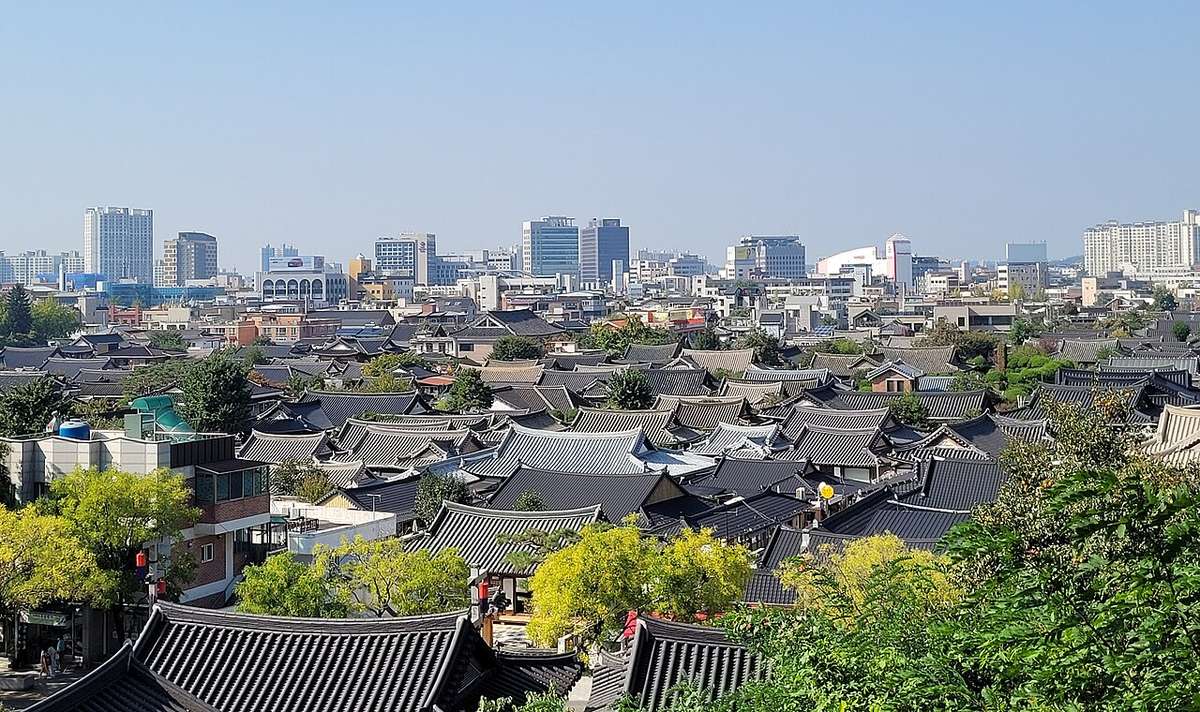
Jeonju Hanok Village is a neighborhood of some 700 traditional tile-roofed houses packed into the middle of a modern city. The ground it stands on was the seat of Later Baekje — Gyeon Hwon made Wansanju, today's Jeonju, his capital in 900 — and later the ancestral home of Yi Seong-gye, founder of the Joseon dynasty, which earned the city the epithet pungpae-jihyang, "the hometown of the founding king." The hanok landscape itself, however, is not a Joseon relic but a twentieth-century creation: after 1905, as Japanese-run commerce took over the old downtown, Koreans gathered in the Gyo-dong and Pungnam-dong neighborhoods, and by around 1930 the dense quarter you see today had taken shape. Now the lanes fill with visitors in rented hanbok, and from Omokdae on the hill above you can take in the whole sweep of those roofs at once.
📖 The Story
Jeonju's history is bound up with two dynasties. The first is Later Baekje: in 900 Gyeon Hwon made Wansanju — today's Jeonju — his capital. The second is Joseon. Jeonju was the ancestral seat of the Jeonju Yi clan, and so the royal house treated the city as the root of the dynasty; that is why Jeonju came to be called pungpae-jihyang, "the hometown of the founding king." It is also why Gyeonggijeon, the shrine built in 1410 to enshrine the portrait of King Taejo, was raised here and nowhere else.
The hanok village itself is far younger than that long lineage. After the 1905 protectorate treaty, Japanese-run commerce spread through the Daga-dong and Jungang-dong districts and pushed into the heart of the city, and in 1911 Jeonju's town wall was demolished, leaving only its south gate, Pungnammun. Koreans displaced by that shift settled into the Gyo-dong and Pungnam-dong area, and by around 1930 the dense quarter of hanok had formed. The same years saw urban hanok multiplying in Seoul's Bukchon, and Jeonju's rooflines belong to that same current: less a tradition that simply survived than a twentieth-century choice to hold on to Korean ground in a colonial city.
Walking this village therefore means moving up and down through layers of different eras. Omokdae, on the hill, carries the story of Yi Seong-gye gathering his kinsmen for a victory feast in 1380 on his way back from defeating Japanese raiders at Hwangsan; Jeonju Hyanggyo, at the eastern edge, holds the seat of Joseon provincial education; and Pungnammun, at the southern entrance, is the last surviving piece of the demolished town wall. Between them move visitors in hanbok, and every lane smells of food — in 2012 the city of Jeonju was designated a UNESCO City of Gastronomy within the Creative Cities Network.
✦ Highlights
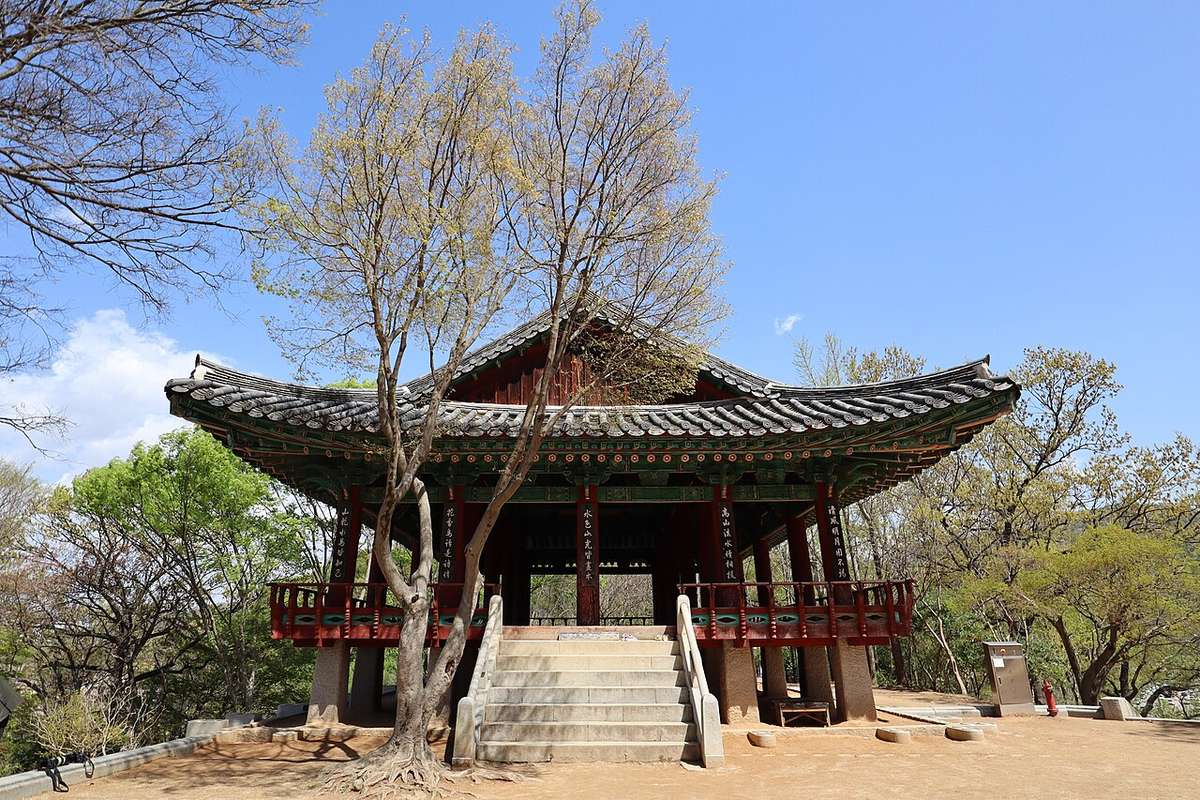
- ›Omokdae and ImokdaeClimb the hill on the eastern edge and the tiled roofs open out beneath you, with the modern city standing behind them. This is where Yi Seong-gye is said to have held a victory feast with his kinsmen in 1380, on his way home from defeating Japanese raiders at Hwangsan — and it is where almost every panorama of the village is taken.
More
The dates are worth pausing on. The Battle of Hwangsan in 1380 came eight years before Yi Seong-gye turned his army around at Wihwado in 1388 — so the feast at Omokdae belongs not to the aftermath of that turning point but to a moment when the founding of Joseon was still entirely undecided. Tradition also holds that he recited the Chinese "Song of the Great Wind" here, and the hill carries a stele inscribed by King Gojong in 1900. About 70 m away across a pedestrian bridge stands Imokdae, said to be the birthplace of Mokjo (Yi An-sa), Taejo's fifth-generation ancestor; the two sites were designated together as North Jeolla Provincial Monument No. 16 in 1974.
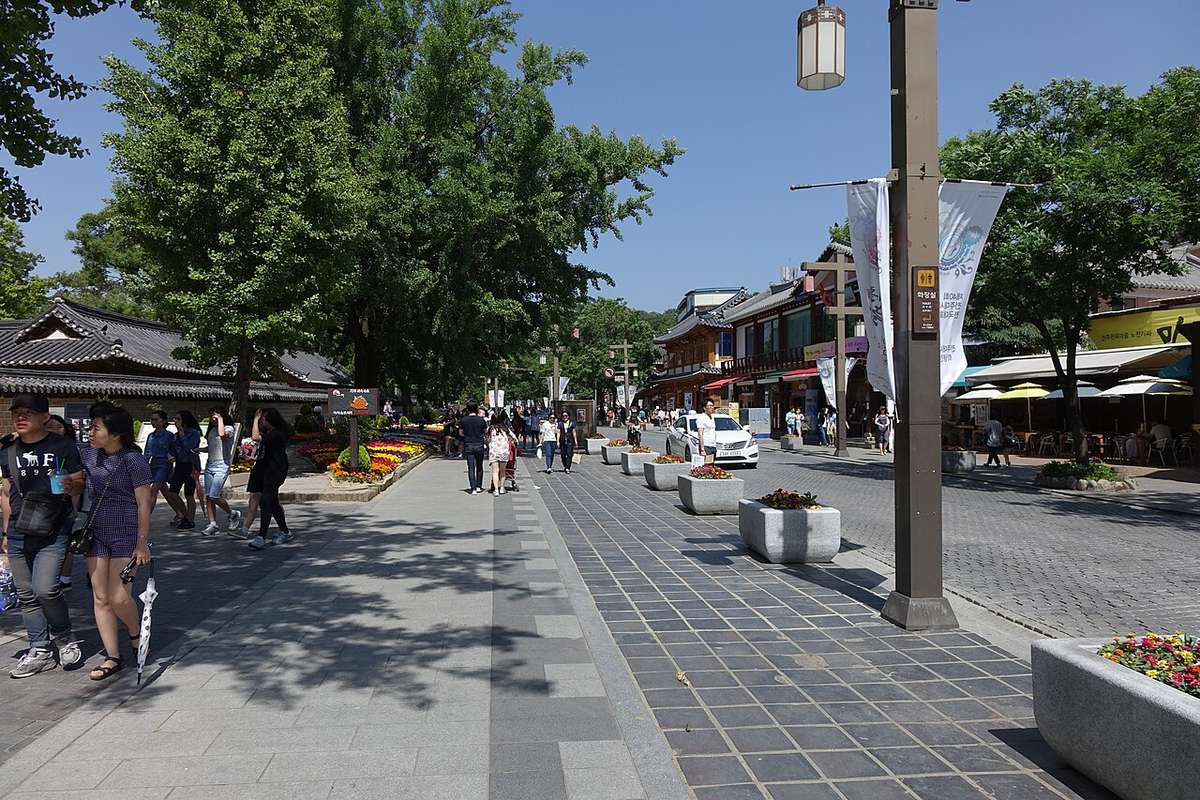
- ›700-odd Roofs and Taejo-roTaejo-ro, a 550 m street running north–south, is the spine of any walk here. Roughly 700 hanok fan out into alleys on either side of it, threaded with craft workshops, teahouses, and hanbok rental shops.
More
That figure of "about 700" tells you what kind of place this is. It is not one or two preserved monuments but an entire neighborhood that stayed hanok, and that changes how you walk it: there is no set viewing order, and the scene shifts every time you turn off the main street into a lane. Remember, though, that these roofs are not Joseon-era — they are houses built around 1930. The commercial hanok along the main street and the family homes tucked into the alleys look distinctly different, and comparing the two is one good way to read the village.
- ›Jeonju Hyanggyo (Confucian School)A Joseon-era provincial Confucian school at the eastern edge of the village, designated a Historic Site. The noise of the main street drops away the moment you step inside, which is why many people end their walk here.
More
It is said to have been founded in 1354, and it moved to its present site in 1603. The layout is distinctive: the Daeseongjeon hall enshrining Confucius stands in front and the lecture halls where students studied stand behind it, an arrangement known as jeonmyo-huhak, "shrine first, school behind." The ginkgo trees in the courtyard are reported to be around 400 years old, and November is said to be when their yellow is at its best. The school is designated Historic Site No. 379.
- ›Pungnammun GateThe south gate of the old Jeonju town wall — the only one of its gates still standing, and a designated Treasure. It sits at the southern entrance to the village, which makes it a natural place to begin.
More
It was destroyed during the second Japanese invasion of 1597, and after a fire in 1767 (the 43rd year of King Yeongjo) it was rebuilt the following year. When the town wall came down in 1911, this south gate alone was spared — which also makes it the gate that explains why the hanok village grew up exactly here. As the walls vanished and Japanese-run commerce took the downtown, Koreans gathered into Gyo-dong and Pungnam-dong around this gate and built their houses. It carries the designation Treasure No. 308.
- ›The Table of a City of GastronomyIn 2012 the city of Jeonju was designated a UNESCO City of Gastronomy within the Creative Cities Network — the first in Korea and the fourth in the world. In a city known for Jeonju bibimbap and hanjeongsik banquet courses, eating takes up as much of a visit as sightseeing does.
More
Two distinctions are worth keeping straight. First, the designation belongs to the city of Jeonju as a whole, not to the hanok village. Second, the UNESCO Creative Cities Network is a different scheme entirely from World Heritage — it is a cooperation programme between cities built around cultural industries. So calling this "a UNESCO-listed village" would not be accurate. Just south of the village, beside Pungnammun, Nambu Market is known for kongnamul-gukbap (bean-sprout rice soup), and its second-floor Cheongnyeonmol ("youth mall") of small independent shops offers a table with a different texture from the tourist streets of the village itself.
🚶 Self-Guided Walk
- 1Pungnammun GateStart at the gate on the southern edge. Pungnammun is the only surviving gate of the old Jeonju town wall — when the wall came down in 1911, this one was spared. Picture the missing wall before you set off and the village's location starts to make sense.💡 The gate looks quite different from inside and out — look up at it from both sides.
- 2Taejo-roThe 550 m street that runs north–south through the village, lined with visitors in hanbok, craft workshops, and teahouses. Gyeonggijeon on this street and Jeondong Cathedral across from it each have their own detailed page on this site, so here you can simply concentrate on walking the street.💡 This is the busiest stretch in the village — walk it early in the morning and it feels like a different neighborhood.
- 3OmokdaeClimb the eastern hill to the pavilion and the whole village lies below you. This is where Yi Seong-gye is said to have feasted with his kinsmen in 1380 after defeating Japanese raiders at Hwangsan, and a stele inscribed by King Gojong in 1900 stands beside it.💡 Most photographs of the village come from this spot — including the first image on this page.
- 4ImokdaeAbout 70 m from Omokdae, across a pedestrian bridge. It is said to be the birthplace of Mokjo (Yi An-sa), the fifth-generation ancestor of King Taejo. Omokdae and Imokdae were designated together as North Jeolla Provincial Monument No. 16 in 1974.💡 The bridge you cross leads straight on into the Jaman Mural Village.
- 5Jaman Mural VillageA small neighborhood clinging to the hillside by Imokdae, where the walls of its narrow lanes are covered in murals. After nothing but tiled roofs the sudden color breaks the rhythm of the walk — which is exactly the point.💡 People live here too — keep your voice down in front of gates and windows.
- 6Jeonju HyanggyoCome down off the hill and head east to reach the Joseon-era Confucian school. The Daeseongjeon hall enshrining Confucius stands in front and the lecture halls behind it — the jeonmyo-huhak layout — and the ginkgo trees in the courtyard are reported to be around 400 years old.💡 It contrasts most sharply with the crowded main street, so saving it for last lets the walk end quietly.
- 7Nambu Market and its Night MarketA traditional market beside Pungnammun, roughly a five-minute walk away. It is known for kongnamul-gukbap, bean-sprout rice soup, and its second floor houses the Cheongnyeonmol, a cluster of shops run by young owners. On Friday and Saturday evenings a night market takes over, carrying the day on well past dark.💡 Night-market hours shift with the season, so check before you go.
🧭 Visitor Info
💡 Good to Know
- Jeonju has no subway. From Jeonju Station it is about 25 minutes by city bus or 10–15 minutes by taxi; bus routes are reorganized fairly often, so check signage or a map app rather than a fixed route number. Once you are in the village, everything is walkable.
- Hanbok rentals are charged by the hour and generally start somewhere around 20,000 won, though prices vary by shop and by outfit. Wearing hanbok may bring free or discounted entry at some paid sites, so ask on the spot rather than assuming.
- Omokdae and Imokdae sit up on the hill, linked by a pedestrian bridge about 70 m long. Seeing the village from above means climbing that slope at least once, so wear comfortable shoes.
- If you can choose your timing, November is the month — the ginkgo trees at Jeonju Hyanggyo are said to peak then. As for the day of the week, Friday and Saturday coincide with the Nambu Market night market.
- Many of the hanok here are still family homes or working shops. Don't peer over walls or block someone's gateway to take a photo — that is the basic etiquette of the place.
🗺 Pair Your Visit
Jeonju was where Gyeon Hwon of Later Baekje placed his capital at Wansanju in 900, and it was also the ancestral home of Yi Seong-gye, founder of Joseon — so it appears in exam questions tied to the dynasty's founding. The sharpest trap concerns the Veritable Records of the Joseon Dynasty kept at the Jeonju archive: they were the only set of the four archives to survive the Japanese invasions of 1592, and they survived not because the building was spared but because An Ui and Son Hong-rok carried the volumes away to Naejangsan.