Myeongdong and Gwangjang Market
A shopping street and a hundred-year-old market — the two faces of Seoul
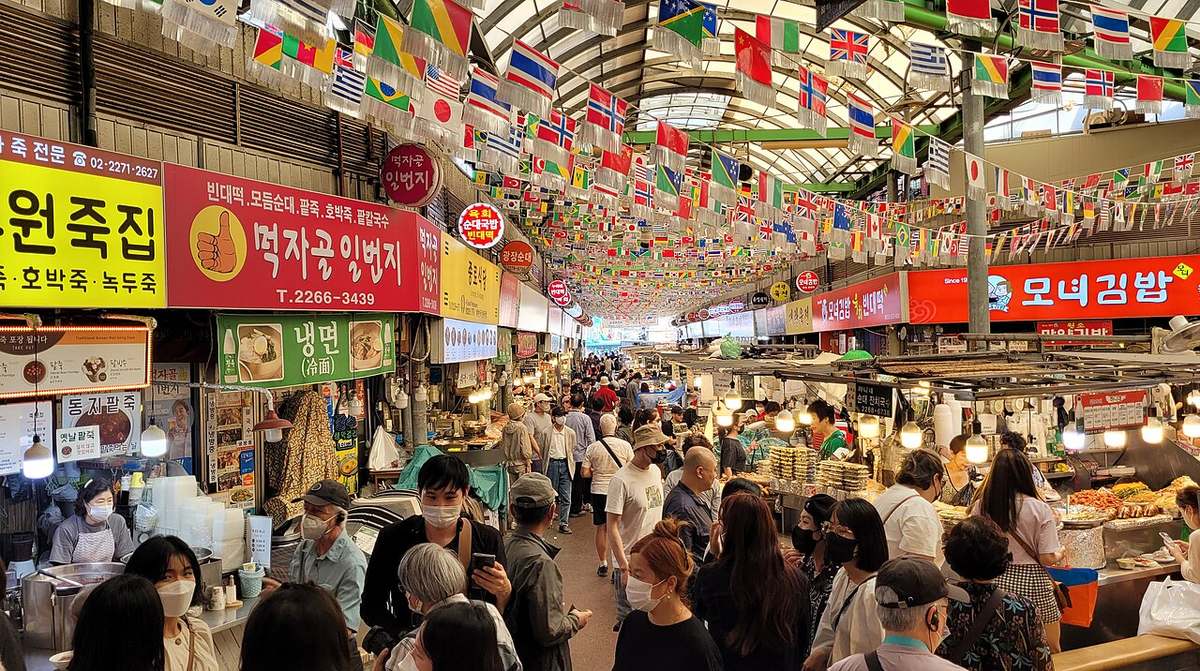
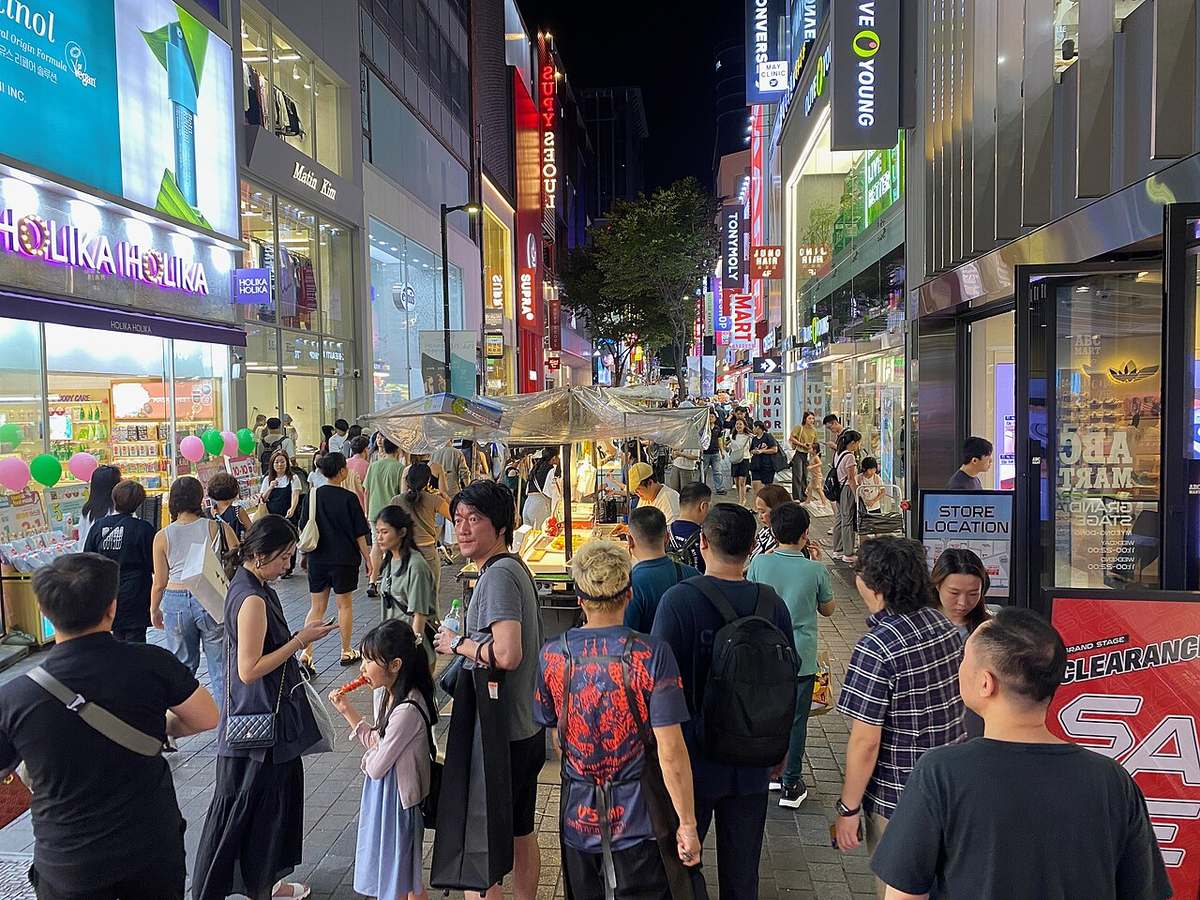
Myeongdong has the highest foot traffic and the highest land prices in the country. Its alleys, lined shoulder to shoulder with cosmetics shops, are the number-one K-beauty shopping destination for foreign visitors, and in the middle of it all the red-brick Myeongdong Cathedral, consecrated in 1898, stands on its low hill. Barely a dozen subway minutes away lies Gwangjang Market, opened in 1905 as Korea's first permanent market, where some 65,000 people a day squeeze past sizzling mung-bean pancakes and plates of raw beef. New Myeongdong and old Gwangjang — linking the two in a single day may be the fastest way to understand Seoul.
📖 The Story
Myeongdong was Myeongnyebang, one of the administrative wards of Joseon-era Hanseong (Seoul). It lay in Namchon, the 'southern village' below the Cheonggyecheon stream — a quiet residential quarter where scholars of modest official prospects made their homes. The neighborhood turned commercial under Japanese colonial rule: as the Japanese settlement spread across Namchon, Myeongnyebang was rebuilt as a busy shopping district and renamed Meijicho. After liberation the colonial name was dropped, and it became the Myeongdong we know today.
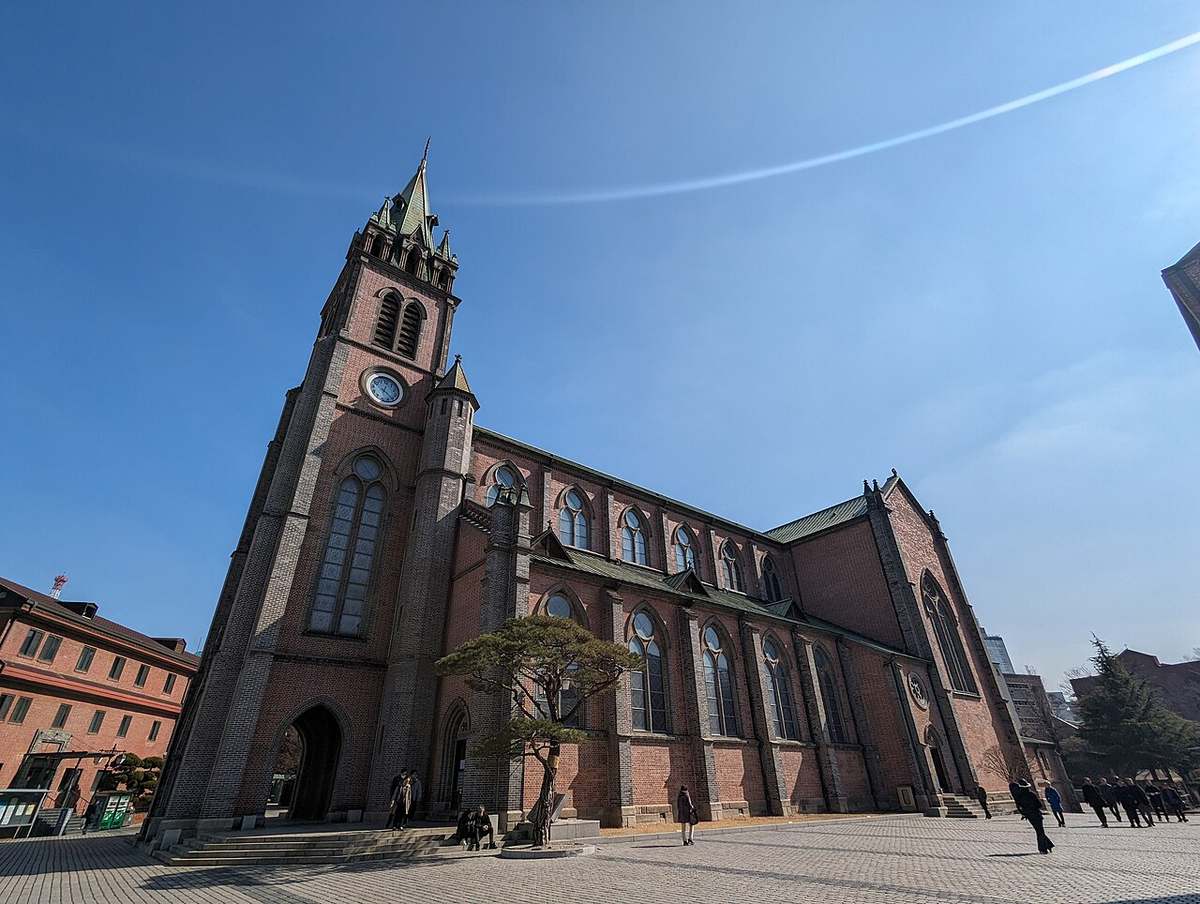
On that hill stands Myeongdong Cathedral, begun in 1892 and consecrated on 29 May 1898. Designed by Father Coste, it was Korea's first parish church and remains the seat of the Archdiocese of Seoul; it was designated a Historic Site in 1977. Yet what fixed the cathedral in Korean memory was not its architecture but the year 1987. At a memorial Mass on 18 May that year, the cover-up of Park Jong-cheol's death under torture was made public, and through the June Democratic Uprising that followed the cathedral became both a sit-in ground and a refuge for demonstrators. That is why it is called a sacred ground of Korea's democracy movement.
Gwangjang Market answered its own era in a wholly different way. After the Russo-Japanese War, Japanese capital took control of Namdaemun Market, while the currency reorganization tightened the screws on Korean merchants' cash. In response a group of Korean merchants — among them Kim Jong-han and Park Seung-jik — pooled their capital and founded the Gwangjang Company in July 1905, opening what became Korea's first permanent market. The name comes from 'Gwang-jang,' meaning the stretch of Cheonggyecheon between Gwanggyo and Janggyo bridges, later written with the characters used today. One of those founders, Park Seung-jik, would go on to found Doosan. Today the market is better known for its food alley, packed with some 5,000 shops — the home of bindaetteok mung-bean pancakes, yukhoe raw beef, and the bite-sized gimbap rolls Koreans nickname 'narcotic gimbap' — plus hanbok, fabric stalls, and a second floor of vintage clothing. A day that starts with K-beauty in Myeongdong and ends with dinner in Gwangjang spans a hundred and twenty years.
✦ Highlights
- ›Myeongdong CathedralConsecrated in 1898, Korea's first parish church and the seat of the Archdiocese of Seoul — a red-brick Gothic building on the hill above Myeongdong, designated a Historic Site in 1977.
More
Ground was broken in 1892 and the church completed six years later, to a design by Father Coste. Its standing as a sacred ground of the democracy movement dates from 1987: at a memorial Mass on 18 May that year, the cover-up of Park Jong-cheol's death under torture was exposed, helping to spark the June Democratic Uprising, and through those weeks the cathedral yard served as both sit-in ground and refuge for protesters. It remains an active church, so keep quiet if a service is under way.
- ›Myeongdong Street and K-BeautyThe street with the highest foot traffic and land prices in Korea, packed with cosmetics and fashion stores — the first stop for K-beauty shopping among foreign travelers.
More
In Joseon times these were the quiet lanes of Myeongnyebang, home to scholars; the present street grid took shape when the colonial-era district of Meijicho was developed for commerce. Today flagship stores of cosmetics brands you already know follow one after another, and after dark street-food carts roll into the middle of the road to form a second street on top of the first. Even if you buy nothing, the sheer density of signs and lights is the sight.
- ›The Gwangjang Market Food AlleyThe lane of stalls at the heart of the market — mung-bean pancakes, raw beef, knife-cut noodles, bite-sized gimbap — drawing some 65,000 visitors a day.
More
Bindaetteok — thick pancakes of stone-ground mung beans fried on a griddle — is the alley's signature dish, and the bite-sized gimbap rolls nicknamed 'narcotic gimbap' started right here. Add yukhoe and knife-cut noodles, and the way it works is one plate at a stall, eaten in a cramped seat, then on to the next; if you come as a group, buy a different plate at each stall and share. Hours run roughly 09:00 to 23:00, but every stall keeps its own schedule and some shutter well before closing time.
- ›Hanbok, Fabric Stalls and the Vintage FloorBeyond the food alley lies the original market: whole blocks of hanbok and fabric shops, with a floor of vintage clothing dealers upstairs.
More
From its founding in 1905, textiles were Gwangjang's real trade. These blocks are still filled with customers after hanbok and bolts of fabric, giving them a completely different face from the tourist-thronged food alley. Upstairs is the vintage clothing floor — the latest chapter of a market that has survived more than a century on the same ground by changing what it sells.
🚶 Self-Guided Walk
- 1Myeongdong CathedralAn eight-minute walk up a gentle slope from Exit 8 of Myeongdong Station brings you to the red-brick cathedral: Korea's first parish church, consecrated in 1898, and a stage of the 1987 June Uprising. Standing on its hill above the shopping streets, it is the right place to begin the day.💡 If a Mass is in progress, look around quietly — and take one photo of the Myeongdong view from the cathedral yard.
- 2Myeongdong StreetComing down from the cathedral you step straight into streets solid with cosmetics and fashion stores — the ward once called Myeongnyebang, then colonial-era Meijicho, and now the most expensive retail ground in the country.💡 After dark the street-food carts move into the middle of the road — save some appetite for Gwangjang.
- 3Cross Town to GwangjangFrom Myeongdong Station it is about 11 minutes by subway to Jongno 5-ga Station on Line 1. With time to spare, walk it instead — 20 to 25 minutes, ideally along the Cheonggyecheon stream.💡 Take Exit 8 at Jongno 5-ga and the market entrance is right there.
- 4Gwangjang Food AlleyThe lane of stalls through the middle of the market. Walk it slowly past the griddles of bindaetteok, the plates of yukhoe and the little gimbap rolls, and pick up one dish at a time.💡 Some 5,000 shops and 65,000 visitors a day pass through here — the aisles are narrow, so wear your bag in front.
- 5Hanbok, Fabric and the Vintage FloorPast the food alley come the blocks of fabric and hanbok shops — the market's original trade in 1905 — and one floor up, the dealers of vintage clothing.
- 6Cheonggyecheon and Saebyeok BridgeStep out of the market's south side and the Cheonggyecheon is right there. Down at the waterline the market's noise drops away a level — a fitting end to the walk, since the name 'Gwangjang' refers to this very stream, the stretch between Gwanggyo and Janggyo bridges.
🧭 Visitor Info
💡 Good to Know
- Gwangjang's general shops close on Sundays. If Sunday is your only option, build the visit around the food alley, which stays open year-round.
- The food alley runs roughly 09:00–23:00, but each stall keeps its own hours, so very early or very late you will find shutters down. If you have a particular stall in mind, come between midday and evening.
- Myeongdong Cathedral is a working cathedral — the seat of the Archdiocese of Seoul — before it is a sight. Move quietly during services and refrain from photographing them.
- The two are about 11 minutes apart by subway, 20–25 minutes on foot. Myeongdong in the morning and Gwangjang in the evening lets the walk end naturally with dinner.
🗺 Pair Your Visit
Gwangjang Market is a textbook case of Korean merchants answering Japanese economic encroachment after the Russo-Japanese War: as Japanese capital took over Namdaemun Market and the currency reorganization squeezed Korean traders' funds, Kim Jong-han, Park Seung-jik and others founded the Gwangjang Company in July 1905 and opened Korea's first permanent market (note that this precedes the Eulsa Treaty of November that year). Myeongdong Cathedral, meanwhile, was the stage for the 1987 exposure of the Park Jong-cheol torture cover-up and for the June Democratic Uprising — letting you tie late-Joseon economic encroachment and modern democratization together in one visit.