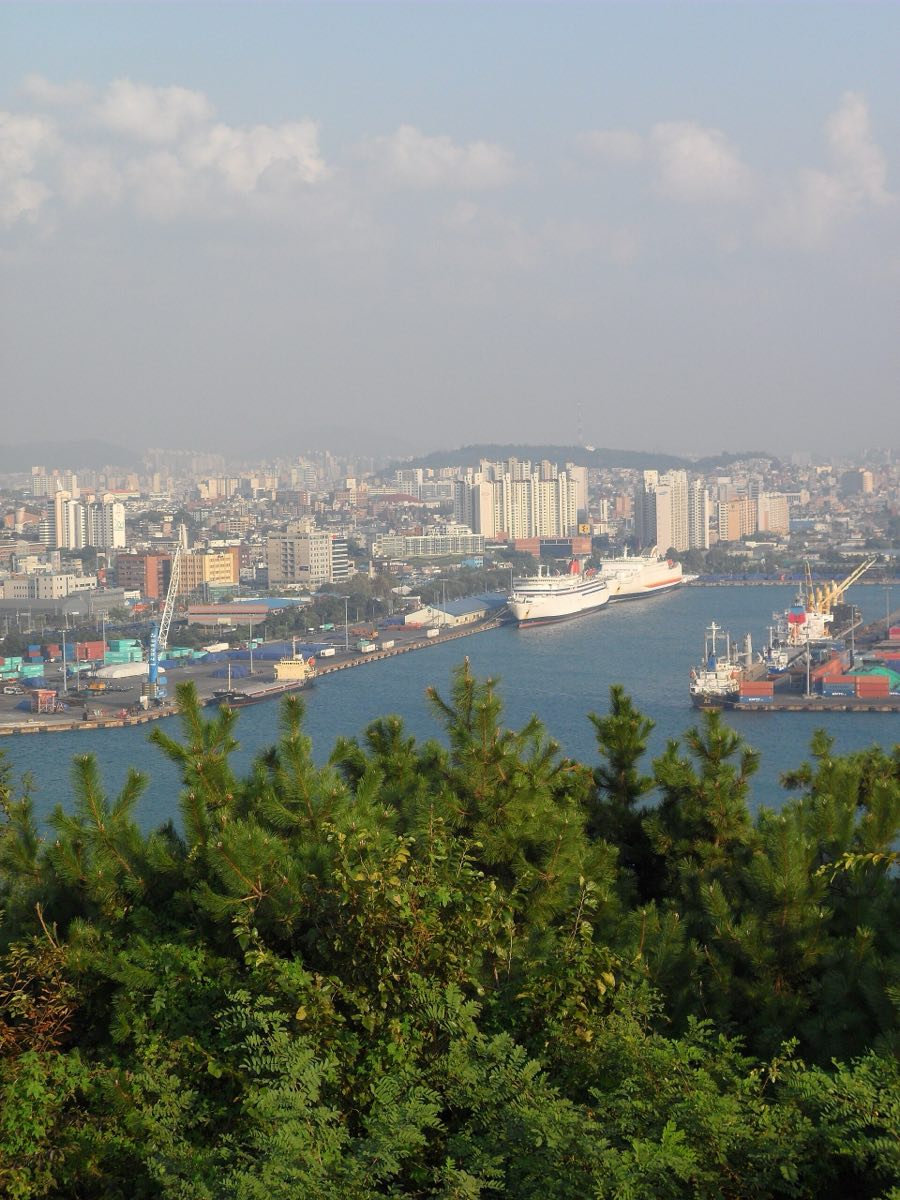
Wolmido and the Incheon Landing Memorial
Green Beach turned amusement quarter, and the names it left behind
Wolmido greets you first with the noise of fairground rides and the smell of raw fish. Yet the ground where the Ferris wheel turns was the first landing point of the Incheon Landing on 15 September 1950, code-named Green Beach. Play and war sharing one place is what gives this island that is no longer an island its character. One thing to know in advance: the Incheon Landing Memorial, usually named in the same breath, is not on Wolmido but some eight kilometres away on the slopes of Cheongnyangsan in Yeonsu-gu. Seeing both means allowing for the journey between them.
📖 The Story
Wolmido was once an island. It was linked to Incheon Station by rail in 1906 and joined to the mainland for good when a breakwater was built in 1917, so the fact that you can walk in today is the work of a century ago. The record of this small patch of ground starts remarkably early. A royal villa stood here in 1656 under King Hyojong; French and American fleets anchored off it during the disturbances of 1866 and 1871; in 1882 Japan put a coal store on the villa site. In 1918 it was designated a pleasure ground, and in 1923 a heated seawater bathhouse opened, making it the place people took the train from Seoul to enjoy throughout the colonial period. The doubleness of a military strongpoint that is also a playground began there.
In the early hours of 15 September 1950, United Nations forces landed at Incheon under the name Operation Chromite. Two hundred and sixty-one ships and about 75,000 troops were committed, under the overall command of Douglas MacArthur. The landing beaches were three: Green Beach at Wolmido, Red Beach around Manseok-dong, and Blue Beach to the south. The condition for success and the greatest danger were one and the same, the tidal range off Incheon. Reaching some ten metres, it exposes two to five kilometres of mudflat at low water, so landing craft could float for only a few hours a day. The landing succeeded, and the UN forces retook Seoul on 28 September.
There is something else this ground asks you to hold. In the days before the landing, between 10 and 12 September 1950, bombing to prepare the beach killed about a hundred civilians living on Wolmido, an island then home to some 120 households, around six hundred people. The survivors were never allowed to return. From 2004 a residents' committee held a long protest, and in 2008 the Truth and Reconciliation Commission concluded that the state bore responsibility for compensation. The military assessment of the operation and this loss do not cancel each other out. A memorial to the victims stands in one corner of Wolmi Park. The land itself, held by the military for half a century, was reopened to the public in 2001 when the forces withdrew.
✦ Highlights
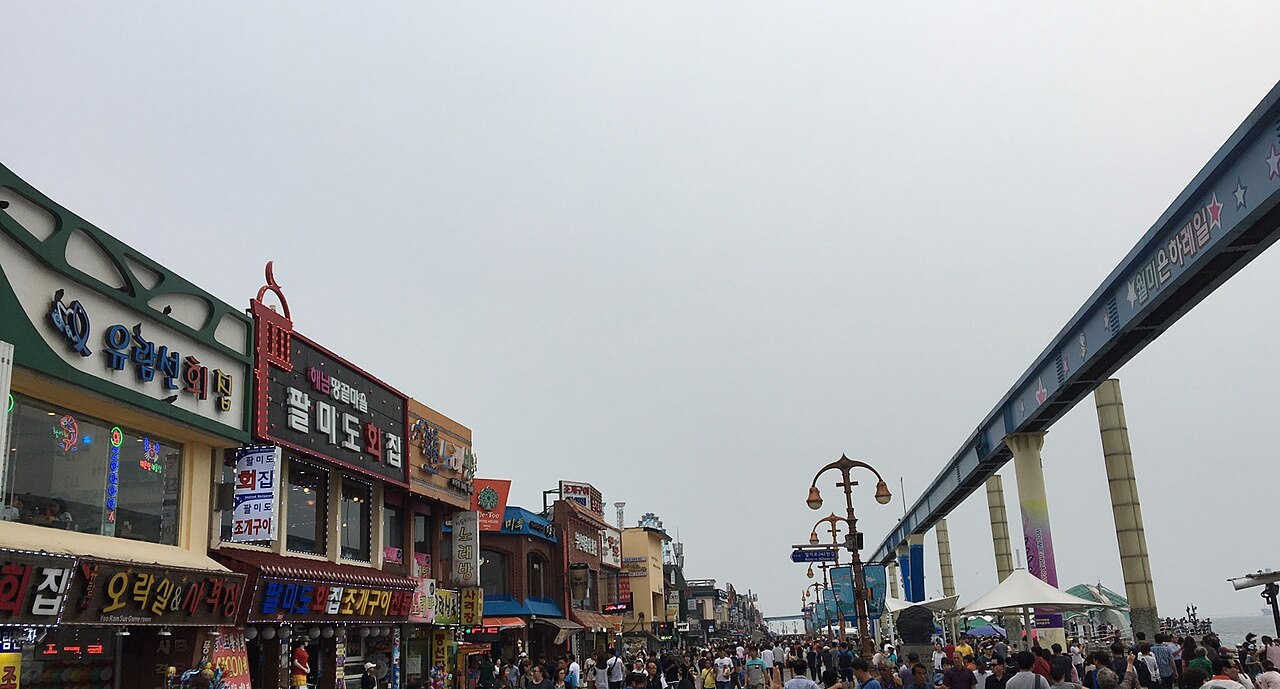
- ›Wolmi Culture StreetA seafront pedestrian street opened in 1989, lined with raw-fish restaurants, shellfish grills and fairground rides, with the Sea Train guideway running overhead.
More
The stretch where the Ferris wheel and the swinging ship stand today was Green Beach. Knowing that, the same street reads differently. On weekend evenings there are street performances, and out on the water the big ships come and go from Incheon's docks. Nowhere else in the city puts fairground noise and harbour cranes in a single frame.
- ›Wolmi ParkA walking park opened to the public in 2001 when the military left. Half a century of restricted access left the woodland intact, and the lookout takes in the harbour.
More
Inside the park a Korean traditional garden sets palace and folk-house styles side by side, and in one corner stands the memorial to the residents killed in the bombing. The path to the summit lookout is gentle, about twenty minutes. From the point where the fairground noise fades, it starts to sink in how long this ground belonged to the army.
- ›Wolmi Sea TrainA 6.1 km monorail circling the island, opened in 2019. One loop takes about 42 minutes, and the elevated track looks down on the docks and the mudflats.
More
The line has a history. Construction began in 2008 as the Wolmi Galaxy Rail, but safety problems kept it from opening and it stood idle for years, reopening at last in 2019 as the Sea Train. It runs slowly, which makes it good for photographs, and since it links the station, the culture street and the park it doubles as transport on a day when walking is too much. Fares and hours change, so check the notices on site.
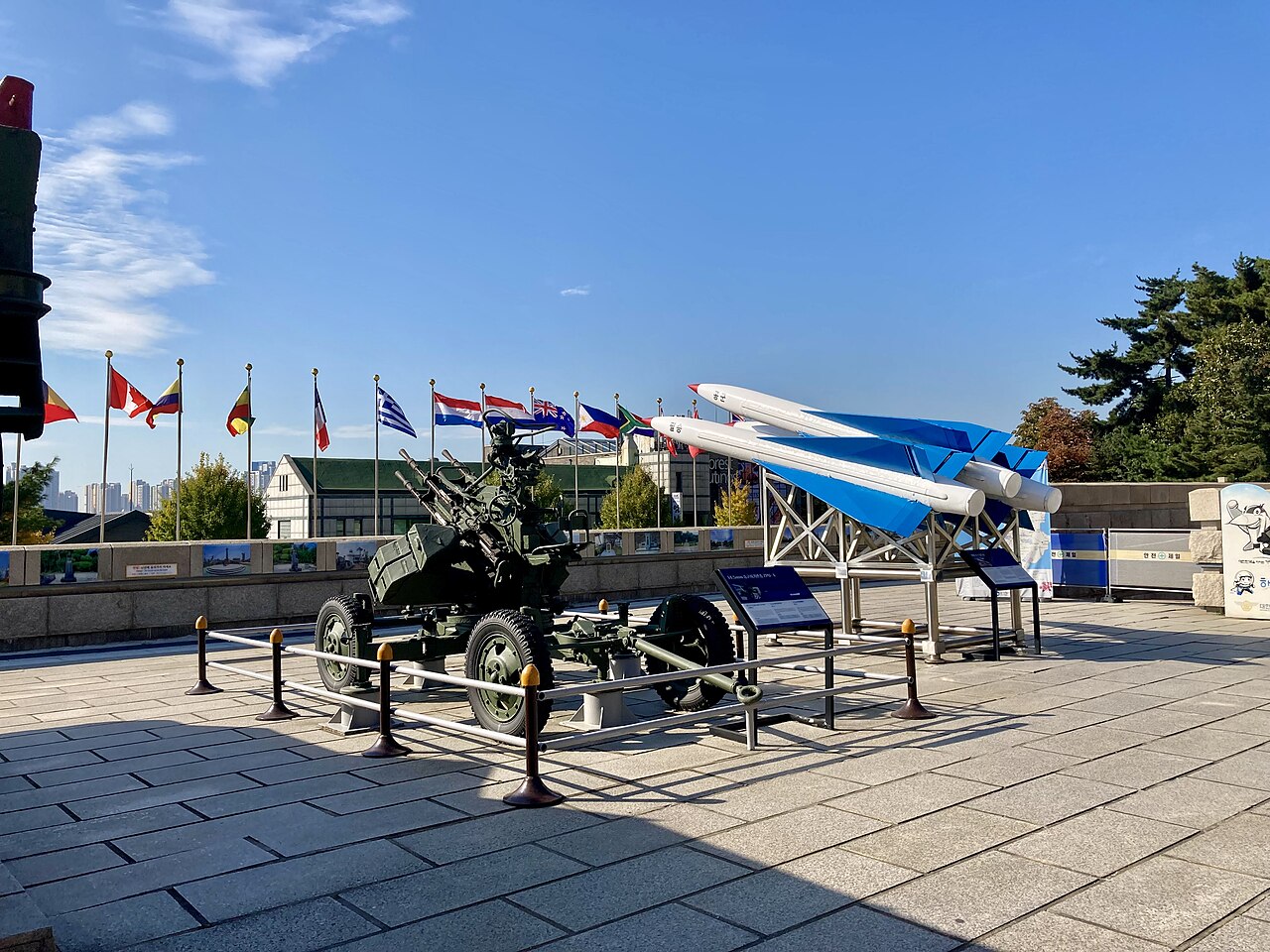
- ›Incheon Landing Memorial HallOpened in 1984 on the 34th anniversary of the operation. Two indoor galleries and an outdoor display of participant-nation flags, tanks and landing vehicles. Admission is free.
More
The location bears repeating: the memorial is not on Wolmido but on Cheongnyang-ro in Yeonsu-gu, more than thirty minutes away by public transport. In the outdoor display the flags of the nations that fought in the Korean War hang in a row, which makes the international character of the war immediately visible. The site is on a rise, and the sea is in view from the entrance, so the outlook explains for itself that the operation began on the water.
- ›Memorial to the Residents of WolmidoA memorial to the residents killed in the bombing that prepared the landing in September 1950: a place to be remembered alongside the operation's success.
More
About 120 households, some six hundred people, lived on Wolmido then, and roughly a hundred were killed. Those who survived were not allowed back. From 2004 a residents' committee campaigned for years, and in 2008 the Truth and Reconciliation Commission found that the state bore responsibility for compensation. It is only a few minutes uphill from a street where you can still hear the rides, and worth the detour if you have come this far.
🚶 Self-Guided Walk
- 1From Incheon Station to WolmidoTen minutes or so by bus or taxi from the terminus at Incheon Station brings you to the water. Take the Sea Train and the journey itself becomes the sightseeing.
- 2Wolmi Culture StreetThe pedestrian street along the water. Walk it holding the fact that the ground under the rides was Green Beach.💡 In the evening the lights of ships moving in and out of the docks come into the view.
- 3Wolmi Park and the Korean traditional gardenWoodland paths and a traditional garden, open since 2001. Half a century as a restricted military zone left the trees thick.
- 4Memorial to the Residents of WolmidoThe memorial to the residents killed in the bombing. It is worth giving this stop the quietest few minutes of the route.
- 5Wolmi Park lookoutAbout twenty minutes up an easy path, with the docks, the mudflats and the bridge in the distance. This is where you can actually see the tidal flats that made the landing so difficult.💡 Come at low tide to see just how far the mudflats reach.
- 6Incheon Landing Memorial (separate journey)Travel across to Cheongnyangsan in Yeonsu-gu for the outdoor display and the two galleries. Free, and closed on Mondays.💡 It is over half an hour from Wolmido, so splitting the day into morning and afternoon works better.
🧭 Visitor Info
💡 Good to Know
- Clear up the common misunderstanding first: the Incheon Landing Memorial is not on Wolmido. It stands on Cheongnyang-ro in Yeonsu-gu, over thirty minutes away by public transport, so seeing both in one day means planning for the journey.
- Check the tide times before you go. At low water the mudflats reach out for kilometres, and that is precisely what turned the landing into a gamble measured in hours. Seen with your own eyes, it needs no explanation.
- Wolmido is better in the evening. By day it is mostly a fairground, but after sunset the harbour lights and the lit Ferris wheel share the view, and the raw fish and shellfish alleys fill up.
- The memorial is free but closed on Mondays. That does not matter for Wolmido itself, but avoid Mondays if the memorial is part of the plan.
🗺 Pair Your Visit
The Incheon Landing of 15 September 1950, code-named Operation Chromite, is regularly examined as the turning point that reversed a war pushed back to the Nakdong River, leading to the recapture of Seoul on 28 September. It is worth noting alongside it that Incheon's large tidal range left only narrow windows in which a landing was possible. The deaths of Wolmido residents in the preparatory bombing were confirmed by the Truth and Reconciliation Commission in 2008.