Gyeongbokgung, Changdeokgung, Changgyeonggung, Deoksugung, and Gyeonghuigung — the five palaces that hosted 500 years of the Joseon dynasty, laid out with their founding years, signature halls, visitor information, and Korean-history exam points.
🏯 Palace Cards
📷 kallerna, CC BY-SA 4.0
Gyeongbokgung Palace景福宮
Founded 1395The main royal palace of Joseon
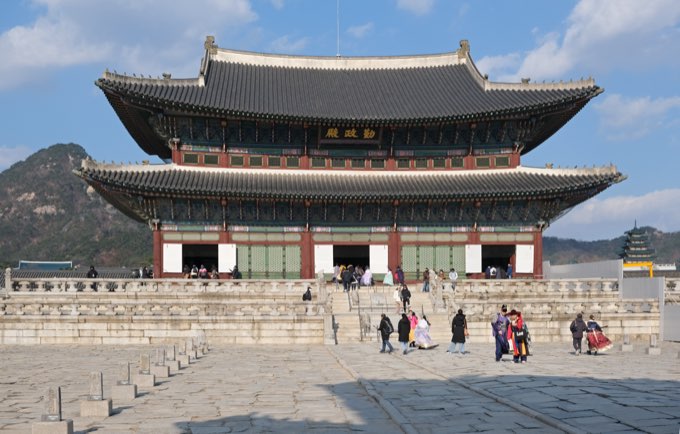
The main royal palace built in 1395 after Yi Seong-gye (King Taejo) founded Joseon; its name and principal halls were named by the scholar Jeong Do-jeon. It burned down during the Imjin War (Japanese invasions, 1592–1598) and lay in ruins for 273 years until the Heungseon Daewongun rebuilt it in 1867. During the Japanese colonial period the Government-General building was erected in front of it and most of its halls were torn down. Restoration since the 1990s has revived Gwanghwamun, Geunjeongjeon, Gyeonghoeru and more, and today it is Seoul's flagship palace.
›Geunjeongjeon Hall — The main throne hall, where coronations and state assemblies were held — one of the largest surviving wooden buildings in Korea.
›Gyeonghoeru Pavilion — A pavilion set over a pond, used for banquets celebrating national events and welcoming foreign envoys.
›Gwanghwamun Gate — The main gate of Gyeongbokgung, from which the Yukjo (Six Ministries) avenue of government offices once extended.
›Hyangwonjeong Pavilion — A hexagonal pavilion on an island in the rear-garden pond.
09:00–18:00 (seasonal; until 18:30 Jun–Aug, 17:00 Nov–Feb)
Closed
Closed Tuesdays
Admission
KRW 3,000
Subway
Gyeongbokgung Stn. (Line 3)
📚 Exam Points (Korean History Exam)
Frequently tested: it was the main palace of Joseon whose name and halls were chosen by Jeong Do-jeon, burned in the Imjin War (1592–1598), and rebuilt 273 years later by the Heungseon Daewongun.
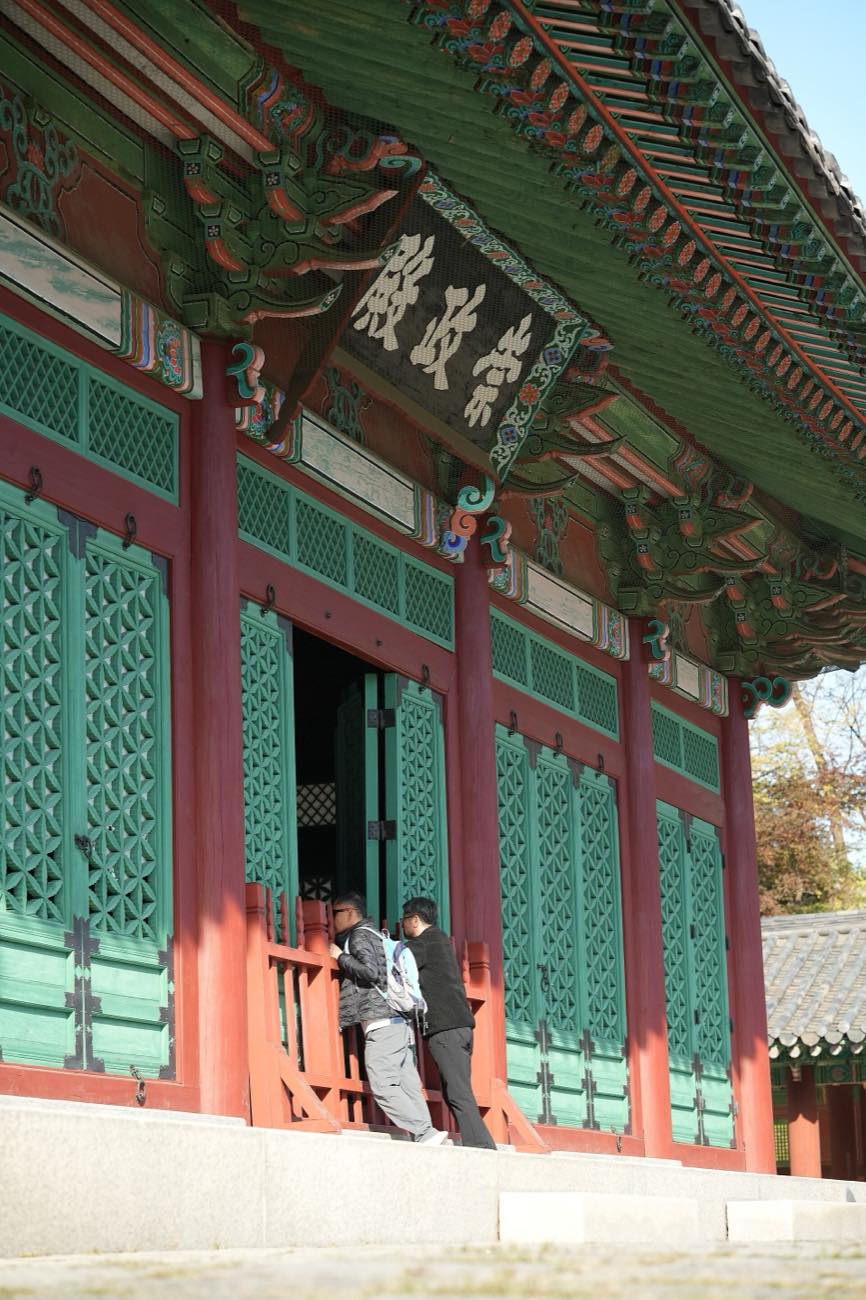
Founded 1405The longest-used of Joseon's secondary palacesUNESCO 1997
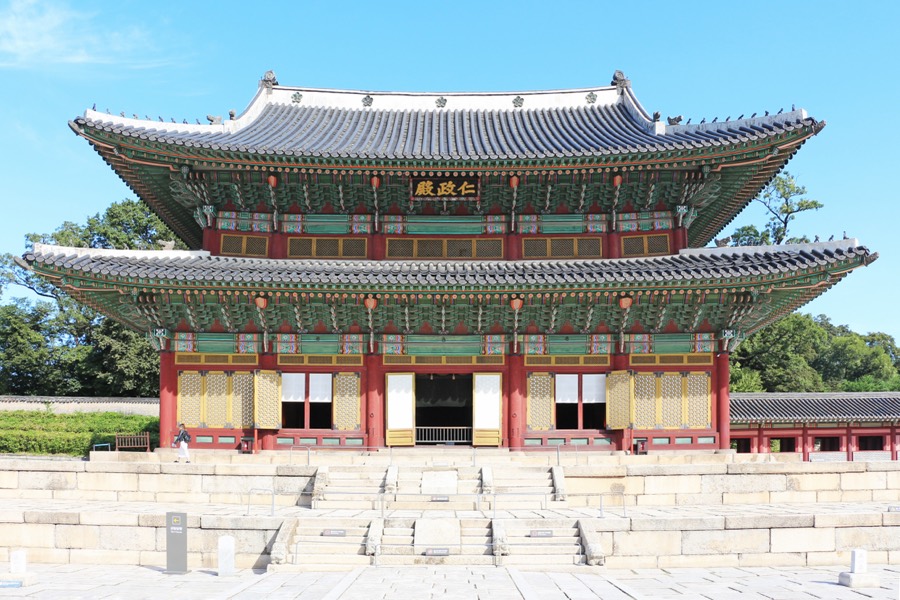
Founded in 1405 by King Taejong as a secondary palace to Gyeongbokgung. Destroyed in the Imjin War, it was the first palace rebuilt under King Gwanghaegun, and it served as Joseon's de facto main palace for about 270 years until Gyeongbokgung was rebuilt in 1867. It is prized for halls laid out in harmony with the natural terrain and for the landscaping of its royal rear garden, the Huwon (Biwon). For these qualities it was inscribed as a UNESCO World Heritage Site in 1997.
›Injeongjeon Hall — The main throne hall of Changdeokgung, where official state ceremonies were held.
›Huwon (rear garden) — The royal rear garden — also called Biwon — landscaped to follow the natural terrain, with ponds and pavilions such as Buyongji and Juhamnu.
›Donhwamun Gate — The main gate of Changdeokgung and the oldest surviving palace gate in Korea.
›Nakseonjae — A plain, unpainted residential compound where the last members of the Joseon royal family lived.
09:00–18:00 (seasonal); the Huwon garden is by timed guided tour
Closed
Closed Mondays
Admission
KRW 3,000 (Huwon garden extra KRW 5,000)
Subway
Anguk Stn. (Line 3)
📚 Exam Points (Korean History Exam)
Exam point: founded by King Taejong as a secondary palace, it served as the de facto main palace until Gyeongbokgung was rebuilt, and it (especially its Huwon garden) was inscribed as a UNESCO World Heritage Site in 1997.
Founded 1483A palace built to house the royal elders
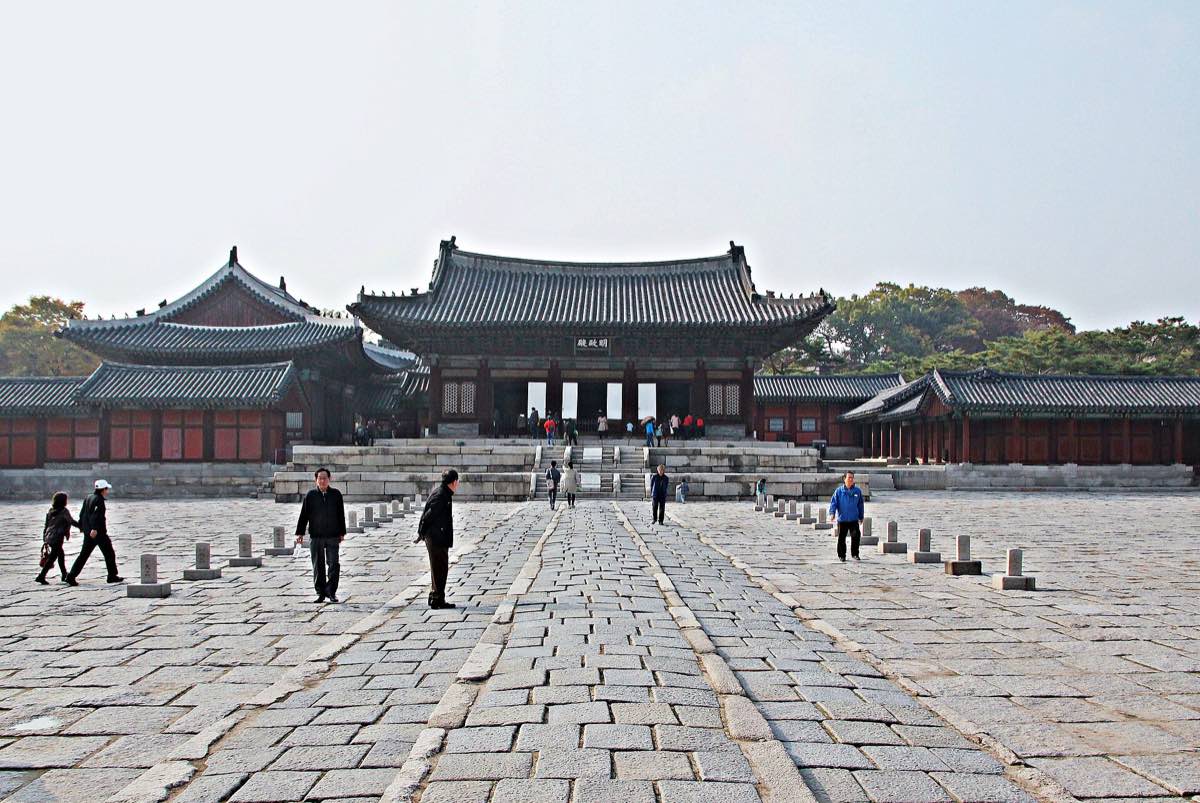
Founded in 1483 by King Seongjong on the site of the former Suganggung to house three royal dowagers (his grandmother and mothers). It was repeatedly destroyed and rebuilt through the Imjin War and several fires. Under Japanese rule a zoo and botanical garden were built inside it and it was demoted to 'Changgyeongwon,' losing its status as a palace. From 1983 the zoo was relocated and the grounds restored, recovering its original name, Changgyeonggung.
›Myeongjeongjeon Hall — The main throne hall of Changgyeonggung and the oldest surviving throne hall among Joseon's palaces.
›Tongmyeongjeon — An inner hall that served as the queen's residence.
›Great Greenhouse — Korea's first Western-style glass greenhouse, built in 1909 — a relic of the Changgyeongwon period.
A frequently cited example of colonial-era damage to the palaces — reduced to 'Changgyeongwon' with a zoo and botanical garden built on its grounds; its Myeongjeongjeon is also noted as the oldest surviving throne hall of Joseon's palaces.
Founded 1593The imperial palace of the Korean Empire
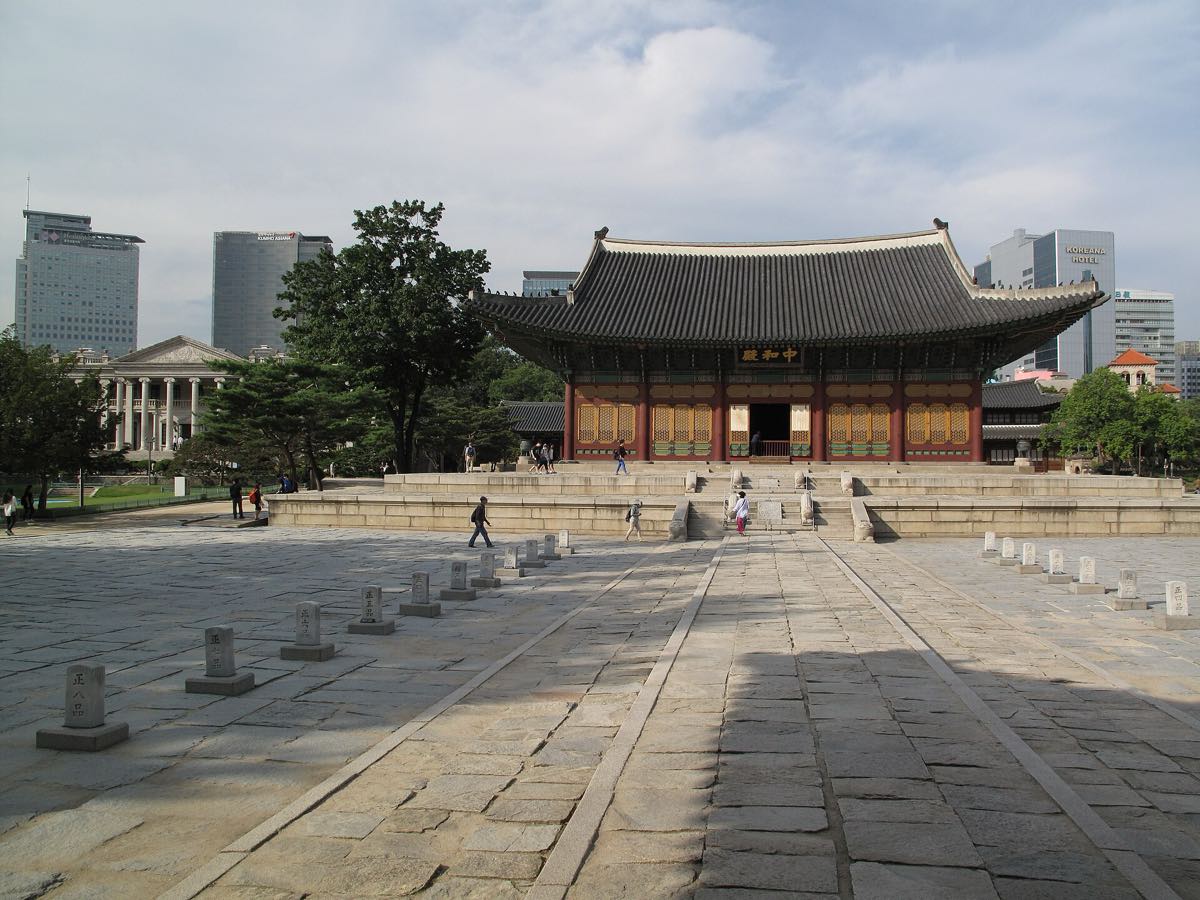
Originally the home of Prince Wolsan, it became a palace in 1593 when King Seonjo used it as a temporary residence after the Imjin War left every palace burned; it was named Gyeongungung under King Gwanghaegun. In 1897, after the royal refuge at the Russian legation (Agwan Pacheon), King Gojong returned here and proclaimed the Korean Empire (Daehan Jeguk), making it the imperial palace. A modern palace, it combines the Western-style stone hall Seokjojeon with traditional buildings. After Gojong abdicated in favor of Sunjong, it was renamed Deoksugung.
›Junghwajeon Hall — The main throne hall of Deoksugung during the Korean Empire, where the emperor conducted affairs of state.
›Seokjojeon — A Western-style stone building completed in 1910, reflecting the modernizing ambitions of the Korean Empire.
›Jungmyeongjeon — The hall where the Eulsa Treaty — the 1905 protectorate treaty imposed by Japan — was signed.
Frequently tested: after the royal refuge at the Russian legation (Agwan Pacheon), King Gojong returned here and proclaimed the Korean Empire (Daehan Jeguk); its annex Jungmyeongjeon was where the 1905 Eulsa Treaty was signed.
Founded 1616A late-Joseon secondary palace, the 'West Palace'
Founded as a secondary palace around 1616 under King Gwanghaegun, it was called the 'West Palace' (Seogwol) for standing on the western side of the capital. From King Injo onward several kings resided here, and together with the 'East Palaces' Changdeokgung and Changgyeonggung it formed one pillar of the late-Joseon court. It once had more than a hundred buildings, but under Japanese rule most were demolished and a school (Gyeongseong Middle School) was built on the site, all but erasing the palace. Today only a few structures such as Sungjeongjeon have been restored, standing beside the Seoul Museum of History.
›Sungjeongjeon Hall — The main throne hall of Gyeonghuigung, where royal coronations and other ceremonies were held.
›Heunghwamun Gate — The main gate of Gyeonghuigung.
›Jajeongjeon — The council hall where the king discussed state affairs with his officials.
Exam point: a late-Joseon secondary palace known as the 'West Palace' (Seogwol); most of its buildings were demolished under Japanese rule, leaving it the least intact of the five grand palaces.