Achasan
峨嵯山A sunrise mountain where Goguryeo soldiers once watched the Han from their forts
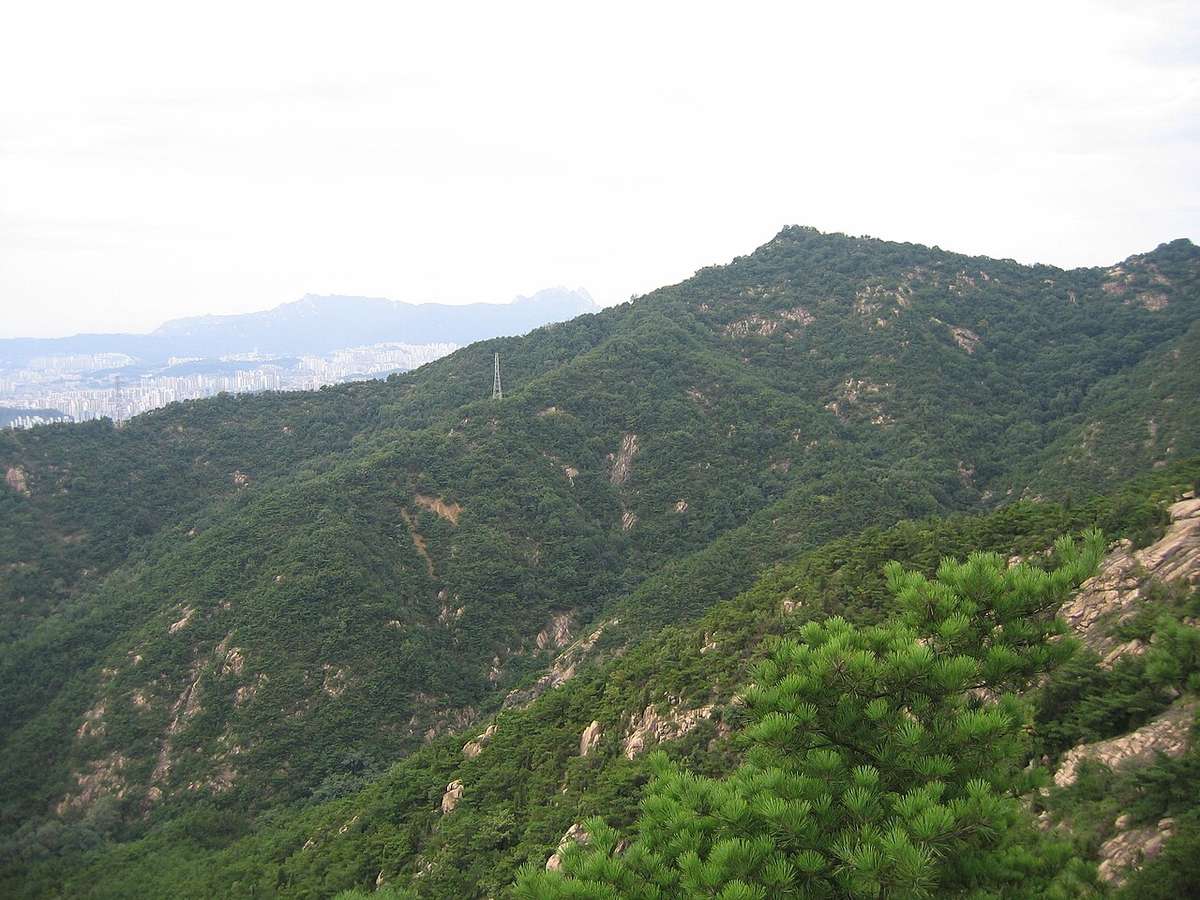
Achasan is a low mountain, under 300 m, at the eastern edge of Seoul, looking down over the Han River. You can start climbing straight from the subway station and reach the ridge in an hour, which makes it especially popular with foreign visitors trying "K-hiking" for the first time. It is among the places in Seoul where foreign visitor numbers are growing fastest, and on New Year's Day crowds come to see the first sunrise. Along its ridge stand the remains of small stone forts built by Goguryeo soldiers some fifteen hundred years ago. Few places in South Korea let you get this close to Goguryeo ruins.
📖 The Story
The Han River basin was the land the Three Kingdoms fought over. In 475 King Jangsu of Goguryeo took Hanseong, the Baekje capital, and according to the Samguk Sagi the captured Baekje king Gaero was put to death below Acha fortress, which has long been identified with the fortress on Achasan. As a result Baekje had to move its capital south to Ungjin, today's Gongju.
Having taken the Han basin, Goguryeo built a dense chain of small stone forts along the ridges of Achasan and Yongmasan. These are called boru, and the forts identified around Achasan were designated together as a single national historic site in 2004. At the Hongnyeonbong fort, alone among those in the area, roof tiles and lotus-pattern end tiles were found, along with building foundations and ondol underfloor heating. It means soldiers ate and slept on this ridge, watching across the river.
When King Jinheung of Silla seized the Han basin in the mid-6th century, the Goguryeo forts were abandoned. The mountain also holds the story of the Goguryeo general Ondal, who set out to win back the lost land and was killed by an arrow below Adan fortress. Some scholars, however, place his death at Ondal fortress in Danyang instead, so opinion is divided. A statue of General Ondal and Princess Pyeonggang at the foot of the mountain commemorates the legend.
✦ Highlights
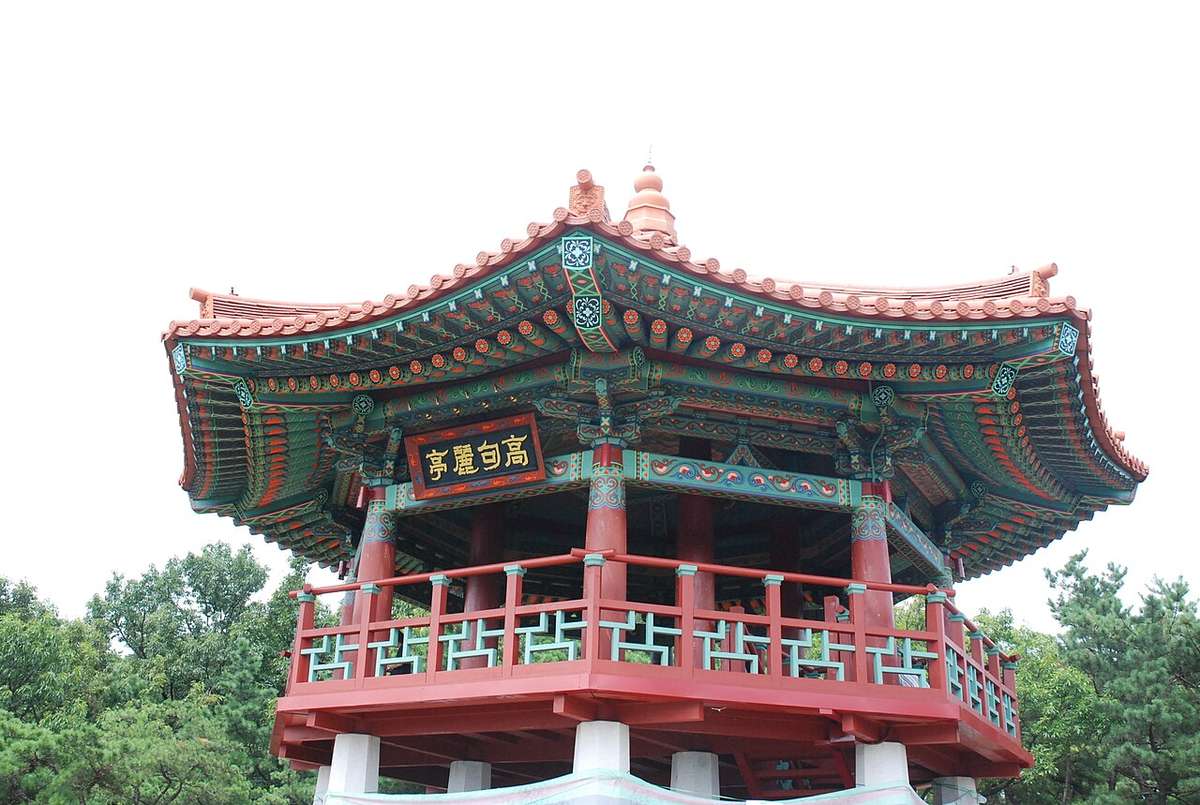
- ›Goguryeojeong pavilion and the sunrise plazaGoguryeojeong, a pavilion built on the site of a Goguryeo fort, and the plaza where the New Year's Day sunrise event is held every year, looking over the Han, Jamsil and Lotte World Tower.
More
Even the pavilion is named after Goguryeo. Look south across the river from here and you see at once why Goguryeo soldiers chose this ridge. Songpa, across the Han, was the heart of Baekje's Hanseong period, and in 475 King Jangsu took its capital, Hanseong. It is about thirty minutes' climb through the woods from the trailhead, easy even for first-time hikers, and on New Year's Day it is packed before sunrise.
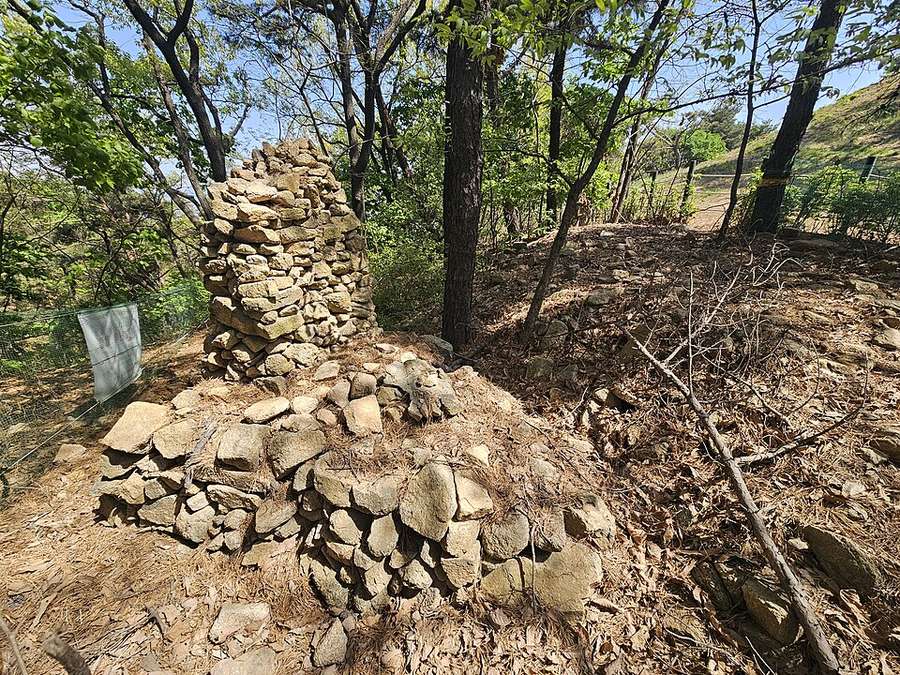
- ›The Achasan fortsSmall Goguryeo stone forts, called boru, strung along the ridge. The forts of Achasan and Yongmasan were designated together as a single national historic site in 2004.
More
A boru was a small military post, thought to hold a few dozen men, set within sight of the next so signals could pass along the chain. At the Hongnyeonbong fort, alone in the area, roof tiles and lotus-pattern end tiles were found, along with building foundations and ondol underfloor heating, showing that soldiers ate and slept up on the ridge. Few places in South Korea have Goguryeo remains gathered like this. Some excavated forts have had their walls restored, so don't climb on the ruins; keep to the paths.
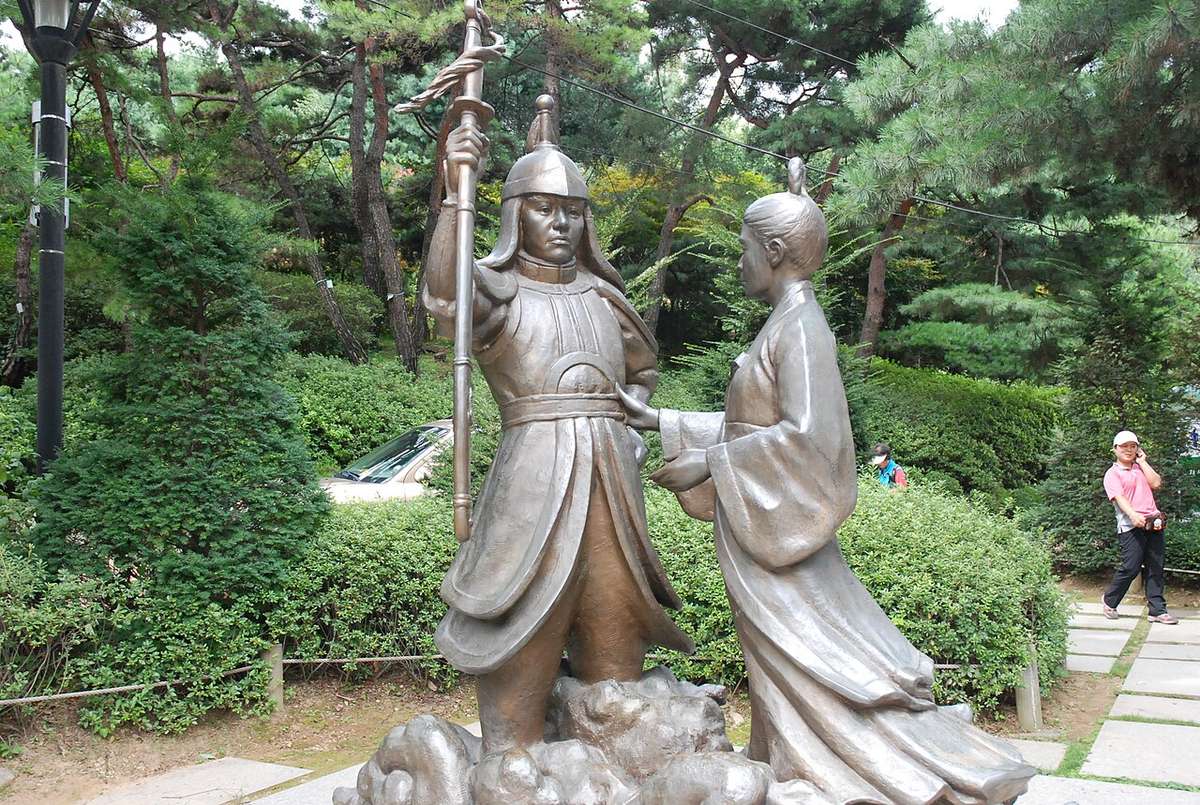
- ›Statue of General Ondal and Princess PyeonggangA statue near the ecological park at the foot of the mountain, commemorating "Ondal the Fool" and Princess Pyeonggang, who made him a general.
More
In the story, the king used to tease the crying princess that he would marry her off to Ondal the Fool, and his joke came true. Most Koreans hear it as children; it is recorded in the biography of Ondal in the Samguk Sagi. Ondal, now a general, set out to win back the lost Han basin and is said to have died below Adan fortress; some identify that fortress with Achasan and others with Ondal fortress in Danyang. The statue commemorates the legend as it is told on this mountain.
- ›Views from the ridgeAlong the bare-rock ridge the views of eastern Seoul stretch from the Han and Jamsil to Namsan, and the path continues north to Yongmasan.
More
The ridge is mostly gentle and easy to walk, but the bare-rock sections are slippery after rain. Downtown Seoul lies to the west and the Han and the towers of Jamsil to the south, so the views are wide for such a low mountain. If you want more, the ridge runs on to Yongmasan, with more Goguryeo forts along the way. For a neat route, come down south past Achasan fortress and the ecological park and finish at Gwangnaru Station.
🚶 Self-Guided Walk
- 1Achasan Station Exit 2Walk about 1 km toward Yeonghwasa temple to the trailhead.
- 2Goguryeojeong pavilionClimb the forest path for about thirty minutes to the pavilion on the old fort site and look out over the Han.
- 3Sunrise plazaClimb a little further to the open plaza.
- 4The Achasan fortsWalk the ridge and look for the Goguryeo fort signs one by one.💡 If you want more, the ridge continues to Yongmasan.
- 5Achasan fortress · ecological park · Gwangnaru StationDescend south past the fortress site and the Ondal statue and finish at Gwangnaru Station.
🧭 Visitor Info
💡 Good to Know
- New Year's Day sunrise is extremely crowded. Set off at least an hour before sunrise and bring a flashlight.
- It is a low mountain, but the top is rocky. Wear proper shoes.
- Pair it on the same day with the Seokchon-dong tombs and Mongchontoseong in Jamsil across the river, and you see the Baekje–Goguryeo contest for the Han from both banks.
🗺 Pair Your Visit
After moving his capital to Pyongyang in 427, King Jangsu of Goguryeo pushed south, taking Baekje's capital Hanseong and killing King Gaero in 475; Baekje moved its capital to Ungjin (Gongju). The Achasan forts are physical evidence of Goguryeo's advance into the Han basin. In the 6th century King Jinheung of Silla took the Han basin and Goguryeo withdrew. Questions often pair it with the Chungju Goguryeo Stele, a record of the southward advance.