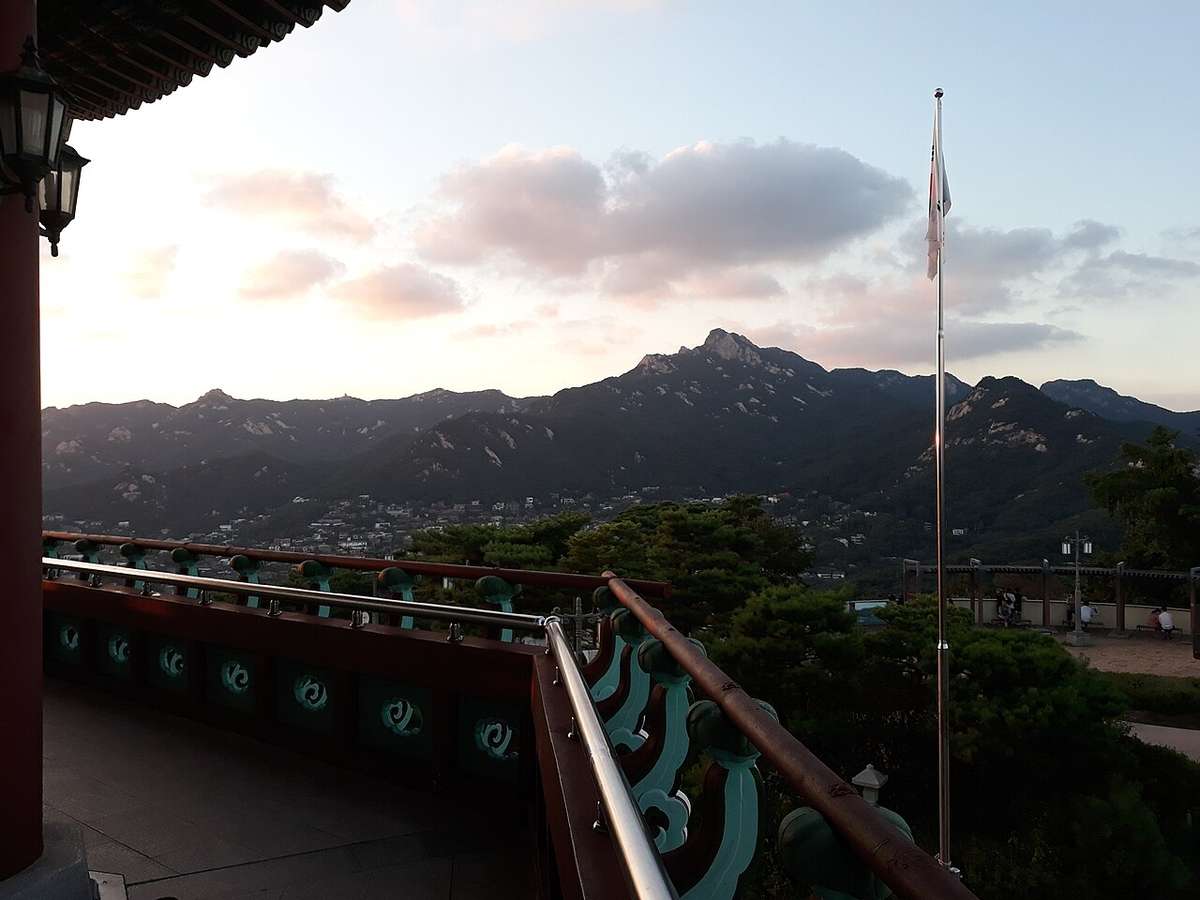
Bugak Skyway and Palgakjeong Pavilion
北岳The mountain armed infiltrators crossed in 1968, and a lookout on a ridge reopened after fifty-four years
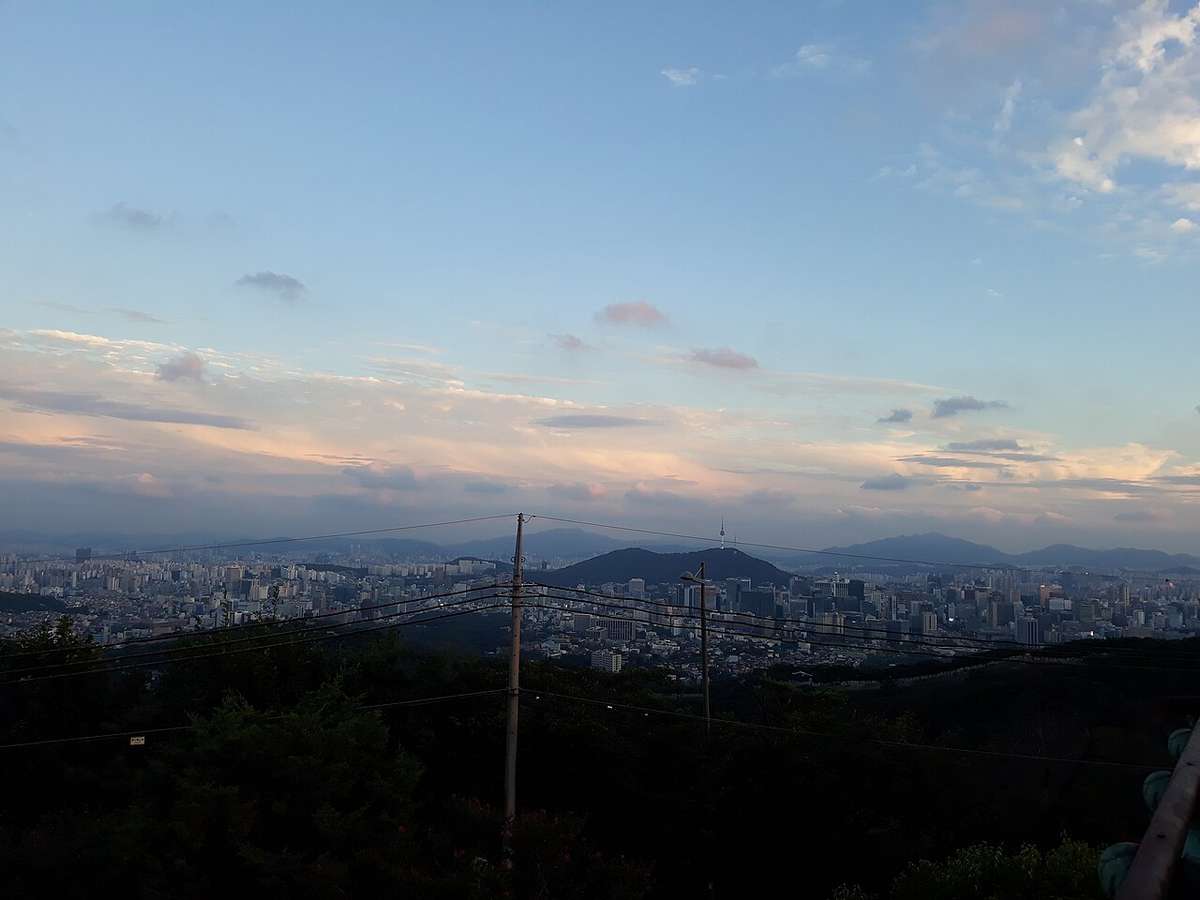
Bugak Skyway is a mountain road that runs along the northern ridge of Bugaksan, the hill behind Gyeongbokgung, and Palgakjeong Pavilion stands at its highest point. From the pavilion's lookout the rocky peaks of Bukhansan rise on one side and downtown Seoul and Namsan spread out on the other, making it one of the city's best night views. But the road was born in a heavier year than its views suggest. In January 1968 armed North Korean commandos came over this mountain almost to the presidential residence, the government sealed the mountain, and that same year this road opened along its ridge. Bugaksan, closed to the public for decades, only reopened in 2020 and 2022.
📖 The Story
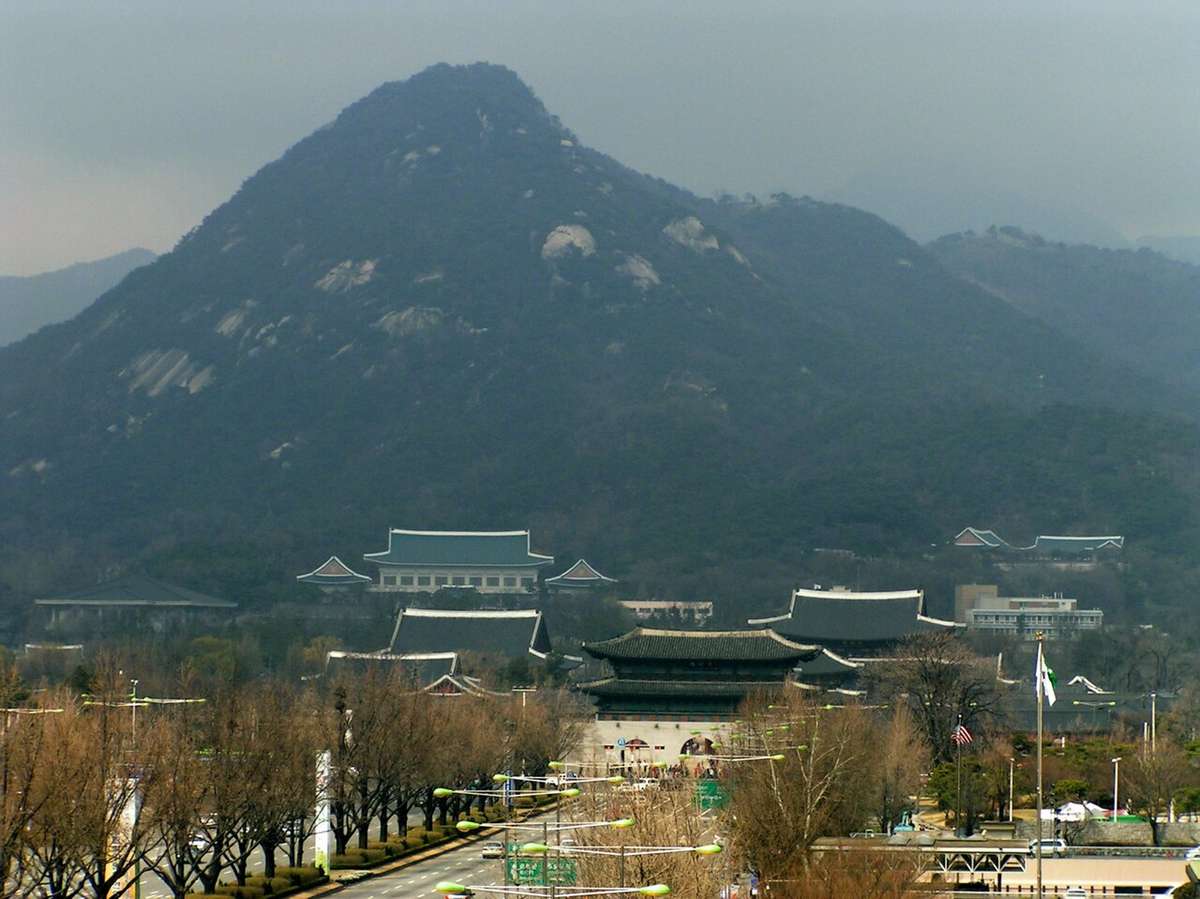
On the night of 21 January 1968, thirty-one armed operatives of North Korea's Unit 124 crossed the armistice line and entered Seoul to assassinate the president. They came down the slopes of Bugaksan to near the Segeomjeong pass, where a checkpoint stopped them and fighting broke out. Most were killed and one, Kim Shin-jo, was captured. The chief of Jongno police station and several civilians died in the fighting. This is known as the 21 January Incident.
The incident changed Korean society. That April the Homeland Reserve Forces were created; from November, resident registration cards were issued on the grounds that they would help expose spies; and the next year military drill became a subject in high schools. Bugaksan was closed to the public, and in the same year Bugak Skyway was laid along its ridge. A mountain in the middle of Seoul stayed shut for decades, like a demilitarized zone in the city.
From the mid-2000s Bugaksan began to open bit by bit along the City Wall trail. In November 2020 the northern slopes opened for the first time in fifty-two years, and with the southern section opened in April 2022 the whole mountain could at last be walked. All four gates of the northern trail now meet Bugak Skyway, so a walk along the wall can end with a step down onto the road and a stroll to the pavilion. A road born in a year of security crisis has become one of Seoul's most beautiful drives and walks.
✦ Highlights
- ›Palgakjeong lookoutAn octagonal pavilion at the highest point of Bugak Skyway. Bukhansan's rocky peaks rise to the north and downtown Seoul and Namsan spread to the south, making it a favorite night-view spot.
More
The building beneath the pavilion has a café, restaurant and convenience store, so it is a good place to rest. At sunset the peaks of Bukhansan glow red, and after dark the city lights spread out to the south. After the mountain was closed in 1968, citizens could not easily walk up here for a long time, so simply enjoying this view freely now shows how times have changed. Drones may not be flown here without permission.
- ›The Bugaksan wall trailThe stretch of the Seoul City Wall that crosses Baegakmaru, the summit of Bugaksan. Closed after 1968, it opened in stages, the north side in 2020 and the south in 2022.
More
It starts at Changuimun and follows the wall over Baegakmaru, the summit, toward Sukjeongmun. There are many steep steps, but the view straight down onto Gyeongbokgung and Gwanghwamun is unique to this path. Long a military zone, the mountain's forest is well preserved. All four gates of the northern trail meet the skyway, so leave by a gate and walk along the road to reach the pavilion.
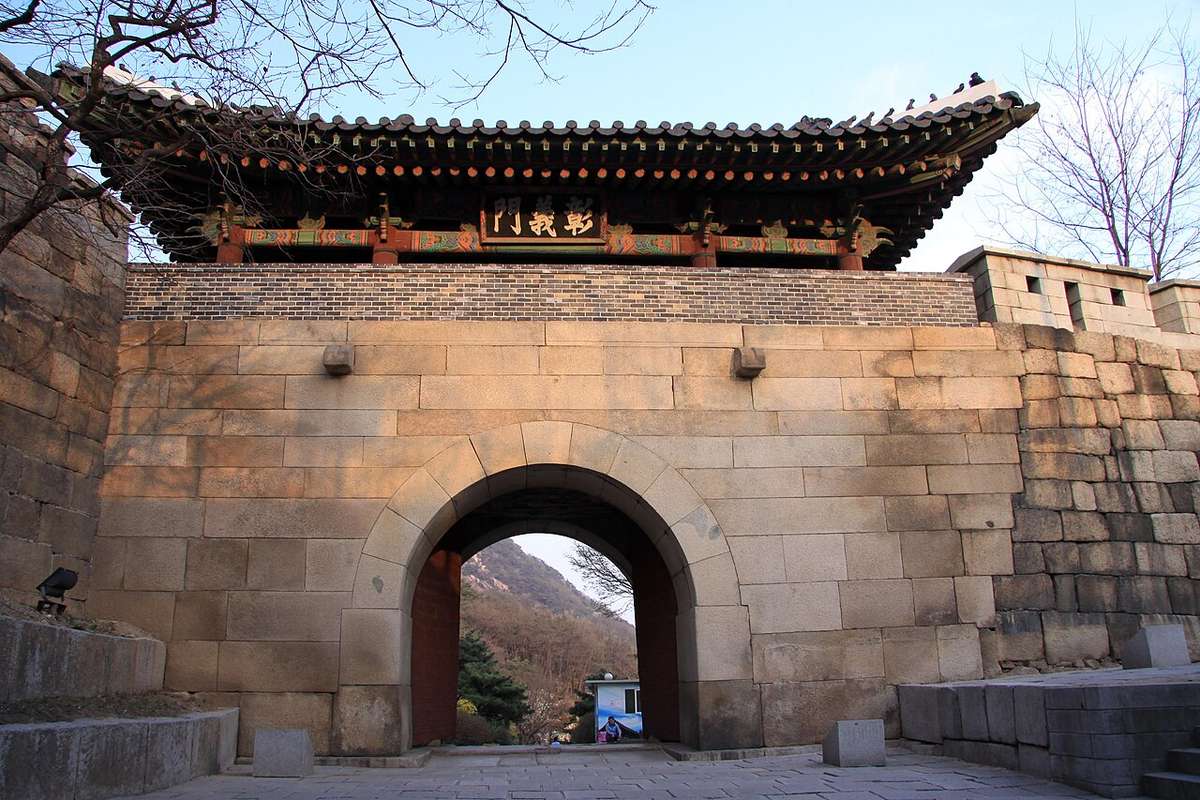
- ›Changuimun GateA small gate in the northwest of the Seoul City Wall. In the coup of 1623 the rebel troops crossed through it toward the palace. Its gate tower, built in 1741, still stands.
More
The troops of the coup that deposed Gwanghaegun assembled at Hongjewon, then crossed through this gate toward Changdeokgung. The gate tower was built in 1741 under King Yeongjo, and a board carved with the names of the coup's merit subjects hangs in it today. It is the starting point of the Bugaksan wall trail and the entrance to the lanes of Buam-dong. The commandos of the 1968 incident came down near this very pass, so twice, nearly 350 years apart, the fate of the nation passed over this ridge.
- ›Yun Dong-ju Literary Museum and Poet's HillJust below Changuimun, the Yun Dong-ju Literary Museum opened in 2012 in a disused water pumping station and its tanks. On Poet's Hill behind it stands a stone carved with his poem "Prelude".
More
In 1941, as a student at Yonhi College, Yun Dong-ju lodged nearby in Nusang-dong and often climbed Inwangsan. In the museum, the second room is a water tank with its roof opened to the sky, and the third is a tank left dark and closed, a space that recalls the poet who died in Fukuoka prison in Japan in 1945. It closes on Mondays, and Poet's Hill looks out over downtown Seoul and the wall on Inwangsan.
🚶 Self-Guided Walk
- 1Gyeongbokgung Station → Yun Dong-ju Literary MuseumTake the bus up to the pass and start with the museum and Poet's Hill.💡 The bus stop is named after the museum, so it is easy to find.
- 2Changuimun GateCross to Changuimun and picture the rebel troops of 1623 marching through.
- 3Bugaksan northern trailEnter the northern trail at the Buam-dong gate and walk east through woods and along the wall.💡 The trail has a last-entry time; if you set off late in the afternoon, walk along the skyway sidewalk instead.
- 4Palgakjeong PavilionCome down from a trail gate onto the skyway and walk to the pavilion. Time it for sunset to see both dusk and the night view.
🧭 Visitor Info
💡 Good to Know
- Few buses go right to the pavilion. Walk from the Changuimun side, or take a taxi up and walk down.
- The skyway is a road, and the sidewalk is narrow in places. Wear something bright and watch for cars when walking at night.
- It is colder and windier on the mountain than in the city. Bring a jacket if you are going for the night view.
🗺 Pair Your Visit
After the 21 January Incident of 1968 the government created the Homeland Reserve Forces, issued resident registration cards and introduced military drill into high schools. Together with North Korea's seizure of the US intelligence ship Pueblo in the same year, this growing security crisis appears in questions on the Park Chung-hee era. Changuimun is linked to the coup of 1623 in which the Westerners faction deposed Gwanghaegun, and Yun Dong-ju, who left "Prelude" and "Counting the Stars at Night" and died in Fukuoka prison in 1945, appears in questions on culture under colonial rule as a poet of resistance.