DDP and Dongdaemun
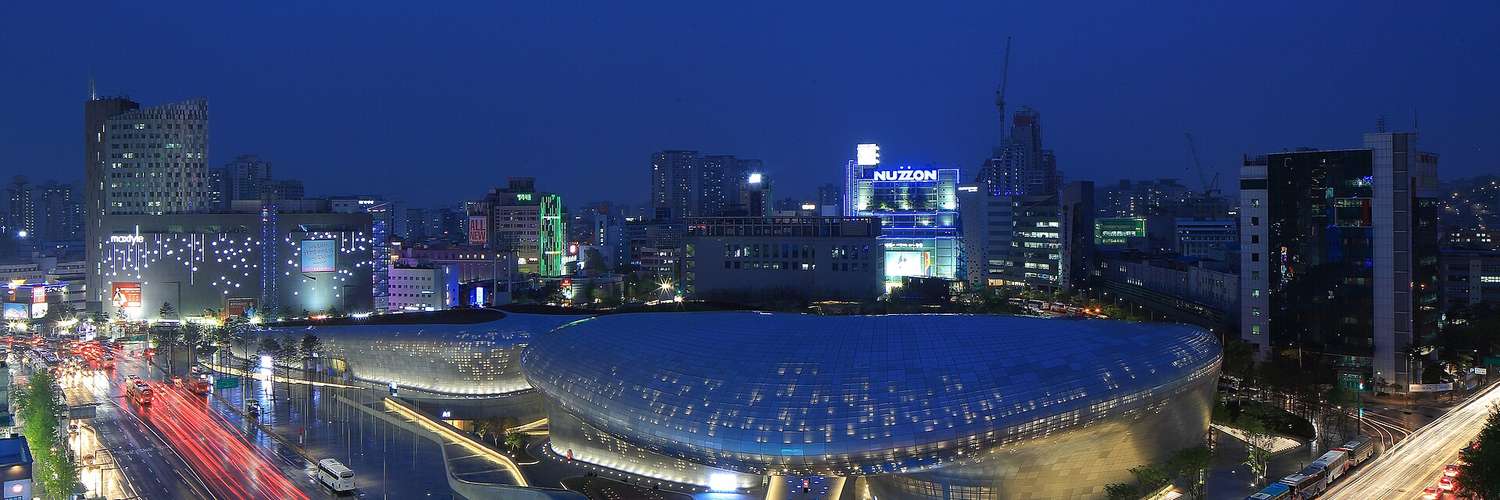
東大門A silver curving building over the remains of a Joseon barracks and the city wall
Dongdaemun Design Plaza (DDP) is the curving building designed by the architect Zaha Hadid that opened in 2014, and it is one of the places in Seoul where foreign visitor numbers are rising fastest. But the site holds a story much older than its design. Beneath it lay a water gate in Joseon's city wall and the remains of an army barracks, and above them a stadium built under Japanese rule stood for more than eighty years. Across the road stands Heunginjimun, the east gate of the old capital, and the market lanes along Cheonggyecheon remember the cry of a young garment cutter in 1970.
📖 The Story
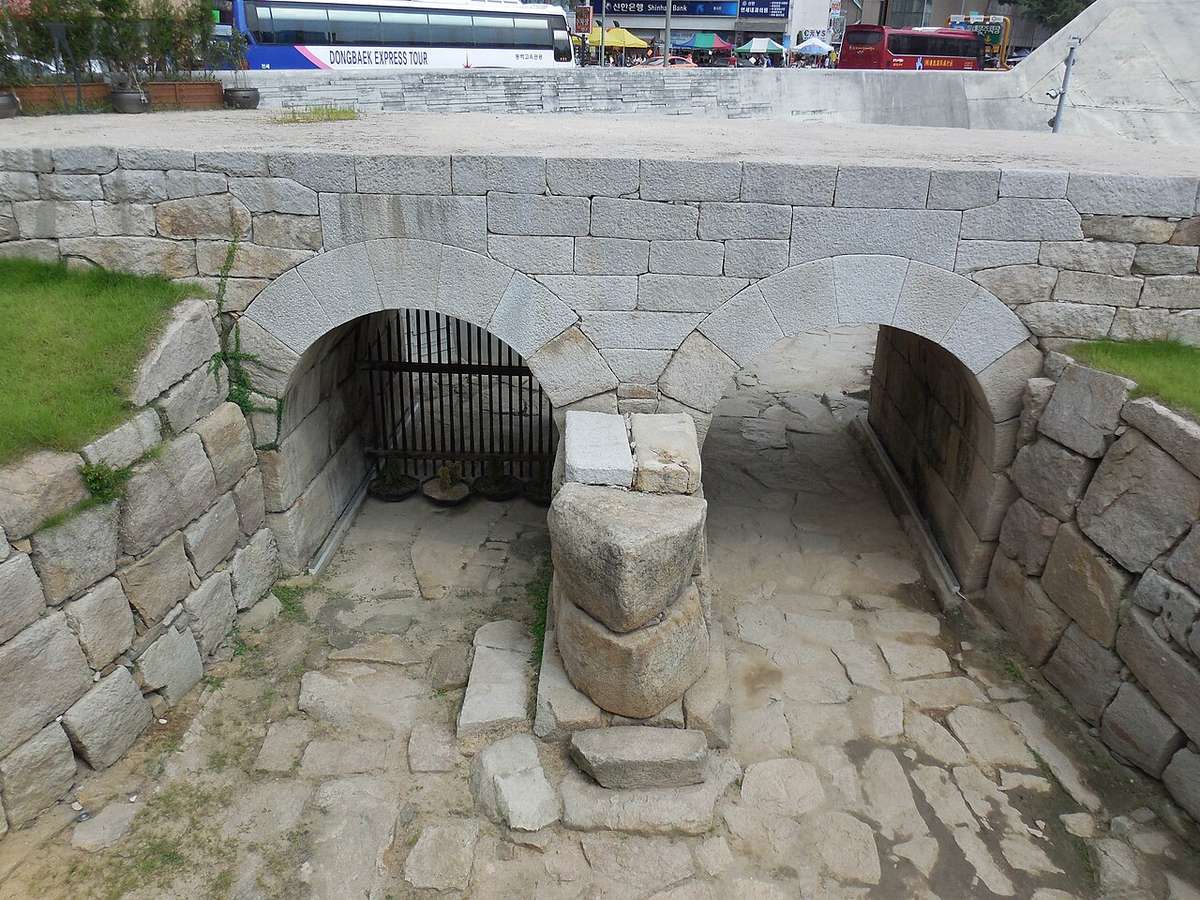
Joseon's city wall had water gates cut beneath it so that the streams running down from Namsan could flow out of the city. Igansumun, south of the east gate, is a gate with two rainbow arches. Beside it stood Hadogam, a branch camp of the Hullyeon Dogam, the professional army created during the Imjin War (Japanese invasions, 1592–1598). Soldiers were quartered and drilled here, and weapons were made. After the ports were opened, a new Western-style unit, the Special Skills Force, was created and Hadogam was closed.
In 1925 the colonial government built Gyeongseong Stadium here, Korea's first modern sports ground, burying part of the wall and the water gate beneath it. After liberation it became Seoul Stadium, and from 1985 Dongdaemun Stadium, the home ground of high school baseball and soccer. When demolition began in 2008, Igansumun, the site of Hadogam, the foundations of the wall and some 2,500 artifacts came to light. The city changed its plans to keep the remains in place and laid out a park and exhibition halls over and around them.
DDP was begun in 2009 and opened on 21 March 2014. Zaha Hadid's design, chosen in an international competition in 2007, is famous for a flowing silver skin without a straight line, though at first it was also criticized for clashing with its surroundings. Today it is one of Seoul's main stages for exhibitions, fashion shows and a media façade at night. Right next door, on a bridge over Cheonggyecheon in front of Pyeonghwa Market, the 22-year-old garment cutter Jeon Tae-il set himself on fire on 13 November 1970, crying "Obey the Labor Standards Act! We are not machines!" The history of this clothing market is also where the Korean labor movement begins.
✦ Highlights
- ›The DDP building and its roof walkThe curving building designed by Zaha Hadid and opened in 2014. Walk once around its curving walls, then climb to the grass-covered path on the roof. The building itself is the exhibit.
More
The flowing silver skin without a straight line was the design chosen in an international competition in 2007, and at first it was also criticized for clashing with its surroundings. Exhibitions inside change from season to season, some free and some ticketed, but the exterior, the roof walk and the park need no ticket. Fashion shows and design events are held here often, so with good timing you can catch the buzz of one. Once the walls light up after dark, it becomes a completely different building.
- ›Igansumun water gate and the city wall remainsThe water gate in Seoul's city wall that was buried when the stadium went up in 1925 and came to light again during demolition in 2008. Streams from Namsan flowed out of the city through its two rainbow arches.
More
Standing in front of the gate you can see how much higher today's ground level is than in Joseon times. The wall foundations run toward DDP and then stop; the gap is the stretch that vanished when the stadium went up. Next to the gate, the excavated remains of Hadogam, a branch camp of the Hullyeon Dogam army, and other buildings are laid out in the open air. Some 2,500 artifacts came out of this site alone, which brings home how thickly Joseon lies buried beneath central Seoul.
- ›Dongdaemun History Museum and Dongdaemun Stadium MemorialTwo branches of the Seoul Museum of History. One uses the excavated finds to tell the story of the army training grounds and Hadogam; the other covers the stadium's eighty-odd years from 1925. Both are free.
More
See the history museum first and when you step outside you are walking over the very place where those finds were buried. The stadium memorial follows, in photos and film, the years when the ground, renamed Seoul Stadium and later Dongdaemun Stadium, was the home of high school baseball and soccer. Outside, some of the old floodlight towers have been kept, so you can see for yourself that a stadium once stood here. Both close on Mondays, so plan around that.
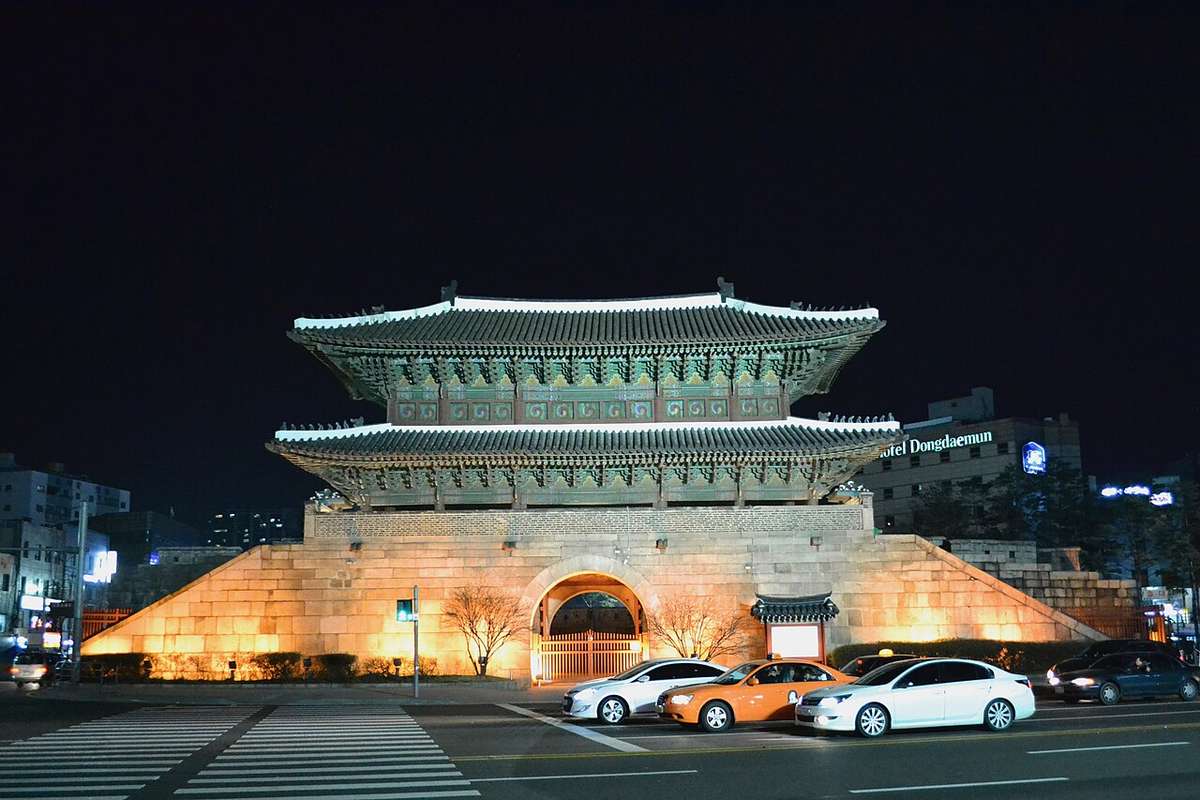
- ›Heunginjimun GateThe east gate among the four great gates of Seoul's city wall, first built in 1398 and rebuilt in 1869. It is the only one of the four with its half-moon outer wall, the ongseong, still standing.
More
The present structure was rebuilt in 1869, the sixth year of King Gojong, and is a fine example of late Joseon timber architecture. The ground to the east is low and hard to defend, so a curved outer wall was built in front of the gate to keep attackers from reaching it directly. It is the only one of the city's eight gates with a four-character name; tradition says the extra character was added to strengthen the land's energy. The wall trail up Naksan starts here, and after dark the lit pavilion anchors the night view of Dongdaemun.
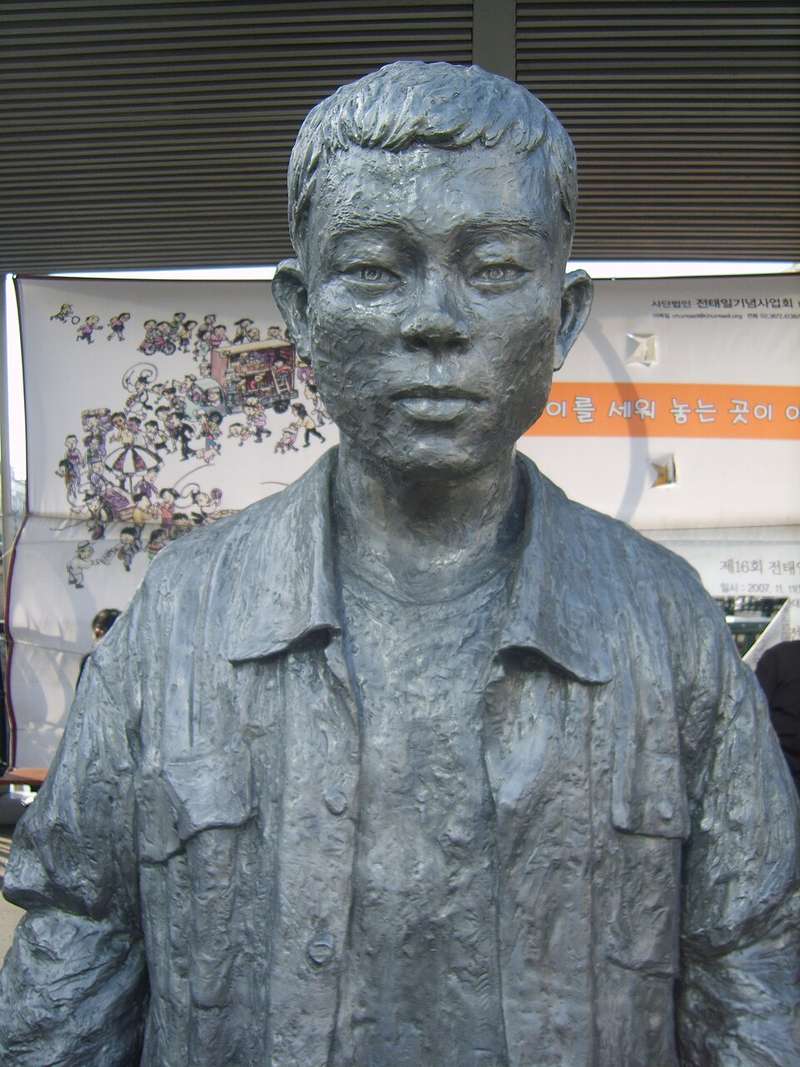
- ›Pyeonghwa Market and Jeon Tae-il BridgeThe clothing markets that line Cheonggyecheon, and the bust of Jeon Tae-il on the bridge in front of them. On this bridge in 1970 a garment cutter cried out for the Labor Standards Act to be obeyed.
More
In the 1960s, in the attic sewing workshops of Pyeonghwa Market, young women worked close to fifteen hours a day. Jeon Tae-il, a cutter, studied the Labor Standards Act and surveyed working conditions, and when nothing changed he set himself on fire on 13 November 1970, crying "We are not machines!" After his death the Cheonggye garment workers' union was formed, and his act became the symbol of the labor movement of the 1970s.
🚶 Self-Guided Walk
- 1Dongdaemun History & Culture Park Station, Exit 1The curving walls of DDP appear as soon as you come out. Head into the park first.
- 2Dongdaemun History MuseumRead the story of Hadogam and the training grounds through the excavated finds.💡 Closed on Mondays.
- 3Igansumun and the excavation siteWalk the ground the finds came from, following the direction water once flowed through the gate.
- 4Dongdaemun Stadium MemorialBeneath the floodlight towers that were kept, see what the stadium years looked like.
- 5DDP roof walkCircle the building and climb toward the roof. Time it for dusk and you will see the façade lights come on.
- 6Heunginjimun GateAbout ten minutes' walk north brings you to the east gate. Walk around the outside of the half-moon wall.
- 7Jeon Tae-il BridgeGo down to Cheonggyecheon and find the bust of Jeon Tae-il on the bridge in front of Pyeonghwa Market.💡 Keep walking west along the stream and it takes you all the way to Gwanghwamun.
🧭 Visitor Info
💡 Good to Know
- Dongdaemun is a night district. Many of the wholesale clothing malls open in the evening and trade until dawn, so see the historic sites by day and the lit-up DDP and markets in the evening.
- Each wholesale mall keeps its own hours, and not every shop sells single items. Ask first whether you can buy just one.
- The station names are easy to confuse. For DDP use Dongdaemun History & Culture Park Station; for Heunginjimun use Dongdaemun Station. They are a little over ten minutes apart on foot.
🗺 Pair Your Visit
Hadogam was a branch camp of the Hullyeon Dogam, created during the Imjin War, and was abolished when the new Western-style Special Skills Force was formed after the ports opened. A frequent exam point is that the Hullyeon Dogam was a professional army organized into three arms: musketeers, archers and swordsmen. The self-immolation of the Pyeonghwa Market cutter Jeon Tae-il on 13 November 1970, demanding that the Labor Standards Act be obeyed, is a staple of questions on the 1970s labor movement and the dark side of industrialization.