Hangang Parks (Yeouido and Banpo)
漢江A sandbank that was an airfield, an island blown up and grown back, and the riverside that serves as Seoul's living room
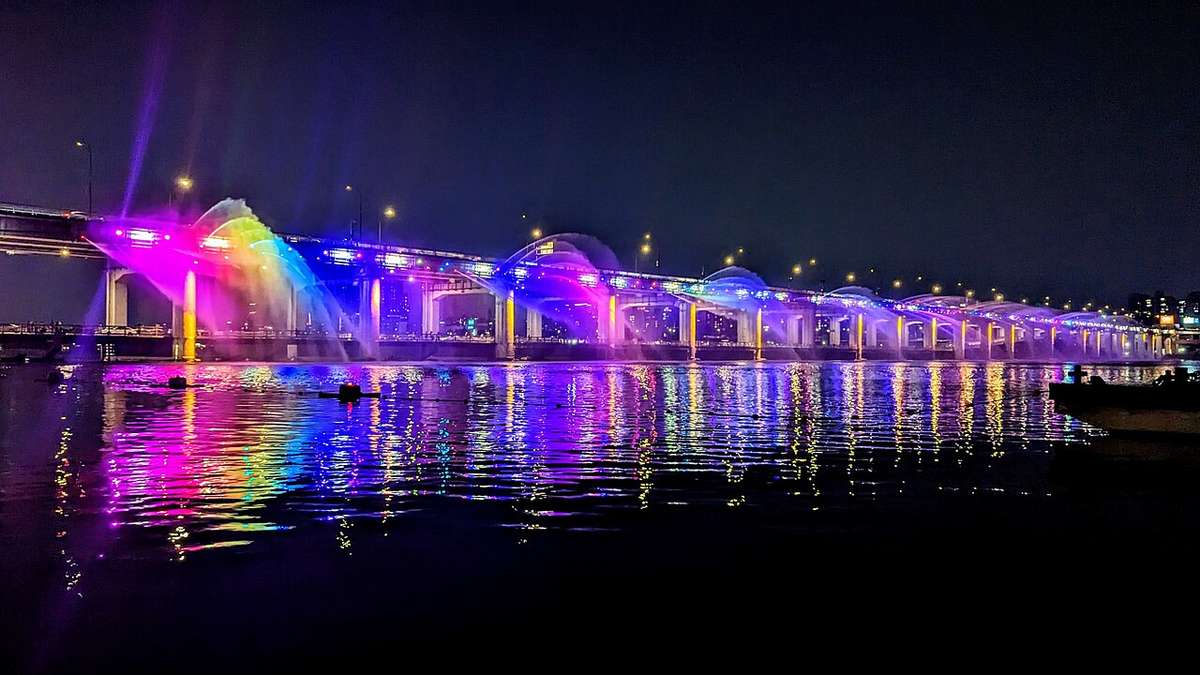
Riverside parks run almost without a break along both banks of the Han, which cuts Seoul from east to west. Yeouido and Banpo are the two that foreign visitors go to most. The "Han River picnic", spreading a mat, eating ramyeon cooked at a convenience store or having fried chicken delivered, is everyday Seoul exactly as it appears in Korean dramas and variety shows. From spring to autumn, water pours from the railings of Banpo Bridge in a fountain show. Yet this riverside was not always a park. Yeouido was the airfield from which a Korean pilot first flew in his homeland's skies, and Bamseom island next to it was blown up in 1968 and has since grown back into an island of migratory birds.
📖 The Story
Yeouido was originally a broad sandbank in the middle of the Han. An airfield was built on it under Japanese rule, and in December 1922 the aviator Ahn Chang-nam took off from it and circled over Seoul. Tens of thousands came to watch this "homecoming flight", the first time a Korean had flown over his own country, and it gave a colonized people a great sense of pride. After liberation the field served as Yeouido Airport until it closed in 1971.
In 1968 the city decided to turn Yeouido into a new town and built the Yunjung embankment around the island. In February the same year the little island of Bamseom next door was blown up, and its residents were moved to the slopes of Wausan in Mapo. Inside its embankment Yeouido gained the National Assembly in 1975 and the 63 Building in 1985, becoming Seoul's political and financial center. Bamseom, thought to be gone, grew back as the river deposited silt, became an uninhabited haven for migratory birds, and was listed as a Ramsar wetland in 2012.
The Han River comprehensive development of the 1980s dredged the riverbed and reshaped the floodplain, creating today's riverside parks on both banks, just ahead of the 1986 Asian Games and the 1988 Seoul Olympics. Since then the parks have become the city's living room, where Seoulites cycle after work and spread out picnic mats at weekends. In 2008 fountains were fitted along 1,140 m of Banpo Bridge, entering Guinness World Records as the longest bridge fountain in the world.
✦ Highlights
- ›Banpo Bridge Moonlight Rainbow FountainFountains pour from both railings of Banpo Bridge along 1,140 m. Listed by Guinness World Records in 2008 as the longest bridge fountain in the world, it adds rainbow lights and music after dark.
More
It runs only a few times a day at set times from April to October, on a timetable that changes with the seasons, so check the Hangang Park website before you go. The best view is from the riverside steps on the Banpo park side, and an evening show lets you see the sunset and the fountain together. Jamsugyo, the lower deck under Banpo Bridge, can be crossed on foot, so you can even walk right beneath the fountain. It stops in rain or strong wind.
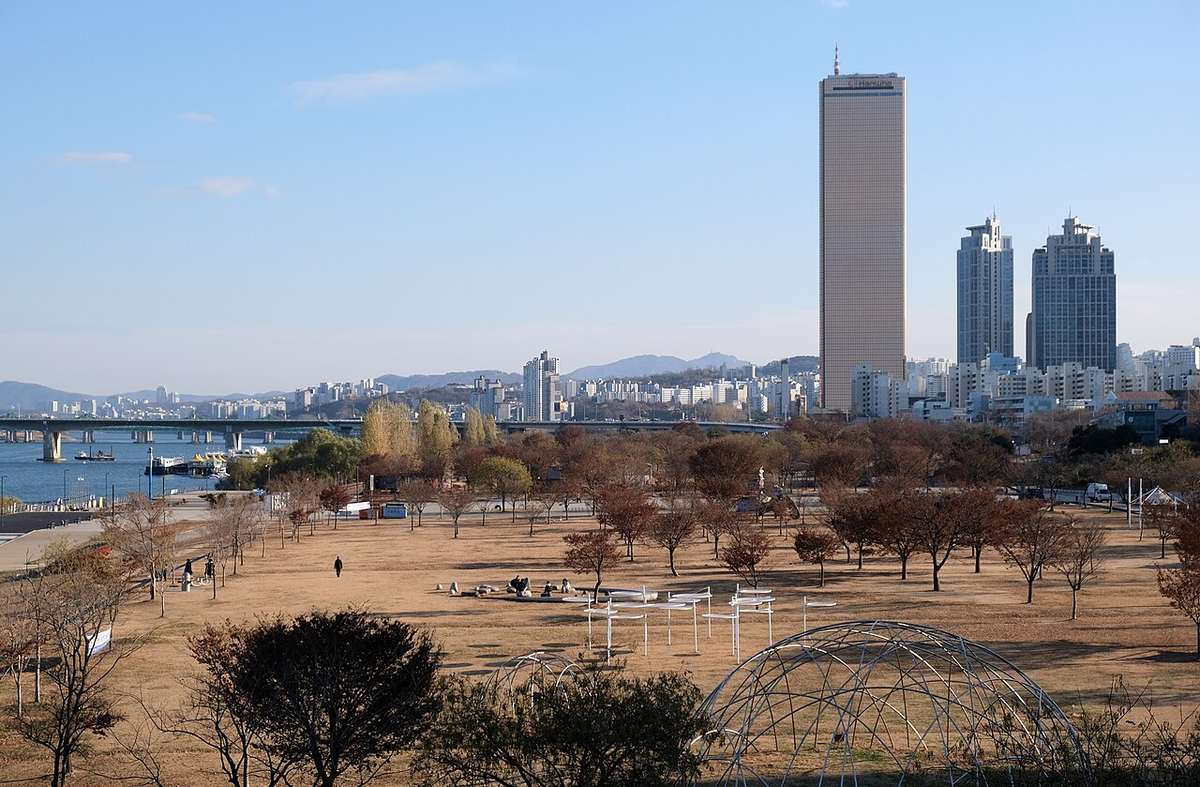
- ›Yeouido Hangang Park and the Han River picnicWide lawns right outside Yeouinaru Station. Spreading a mat and eating convenience-store instant ramyeon and delivered fried chicken, the "Han River picnic", is everyday Seoul exactly as it appears in Korean dramas.
More
Convenience stores in the park have machines where you cook ramyeon yourself, now one of the scenes foreign travelers most love to copy. When ordering chicken, use the park's delivery points instead of an address. Take your trash with you or sort it into the recycling bins. In spring the cherry trees along nearby Yunjung-ro bloom and the whole of Yeouido becomes an avenue of blossom, and in autumn a fireworks festival fills the riverbanks with people.
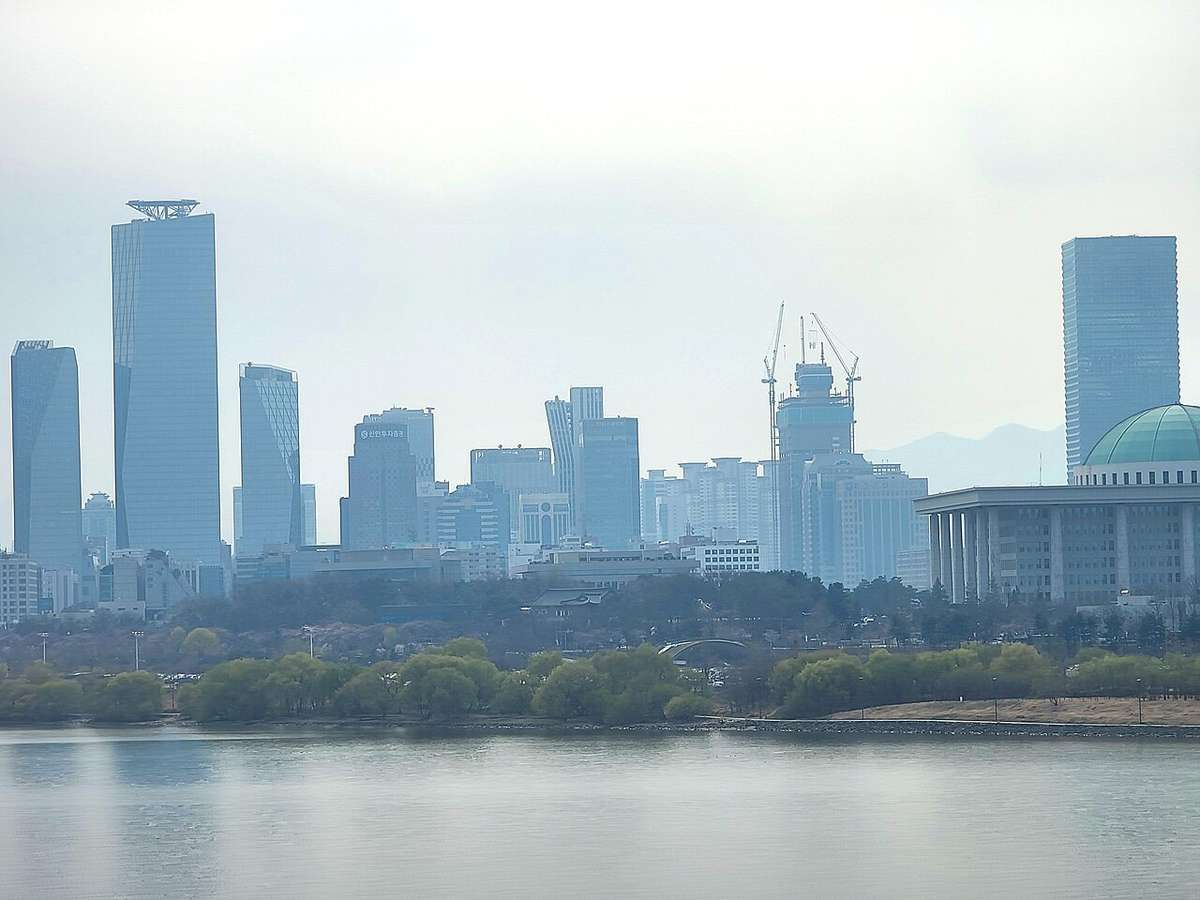
- ›Bamseom islandA small wooded island under Seogang Bridge that you cannot enter. Blown up in 1968 during the development of Yeouido, it grew back on its own from river silt and was listed as a Ramsar wetland in 2012.
More
When the island was destroyed, its residents were moved to the slopes of Wausan in Mapo. Left untouched by people, it has ended up as the most natural ground in central Seoul, a quiet comment on the age of development. You can look across to it from the Yeouido bank or from Seogang Bridge, and flocks of waterbirds gather in winter. Landing on the island is forbidden, so a telephoto lens or binoculars from the bank work best.
- ›Cycling the river on a Ttareungyi bikeRent Ttareungyi, Seoul's public bike, and ride the riverside cycle path, which runs flat and unbroken along the river from Yeouido to Banpo.
More
Buy a pass in the app, unlock a bike, and return it at any of the stations around the parks. The riverside path is flat and easy for beginners, but slow down on weekend evenings when it fills with cyclists and walkers. Even at a leisurely pace an hour is plenty from Yeouido to Banpo, so set off before sunset and you can make the evening fountain show. The river wind is strong, so bring a light layer.
🚶 Self-Guided Walk
- 1Yeouinaru Station · Yeouido Hangang ParkThe lawns start at the station exit. Try a Han River picnic with convenience-store ramyeon.
- 2View of BamseomWalk west along the bank to look across at Bamseom under Seogang Bridge.
- 3Ttareungyi to BanpoPick up a bike at a park station and ride east along the riverside path.💡 Set off before sunset to make the evening fountain show at Banpo.
- 4Banpo Hangang Park · Moonlight Rainbow FountainEnd the day on the riverside steps watching the fountain show.
🧭 Visitor Info
💡 Good to Know
- The river wind is strong; even in summer it turns cool after dark, so bring a light layer.
- Yeouido in cherry blossom season and the autumn fireworks festival bring huge crowds to the parks and stations; arrive early to find a spot.
- Food stalls and convenience stores in the parks stay open late, but check the last train times beforehand.
🗺 Pair Your Visit
Ahn Chang-nam, whose 1922 homecoming flight from Yeouido airfield stirred national pride under colonial rule, appears in questions on 1920s society and culture. The development of Yeouido and the Han River comprehensive development of the 1960s to 1980s illustrate how Seoul changed in the high-growth era, and the 1986 Asian Games and 1988 Seoul Olympics are staples of modern history timeline questions.