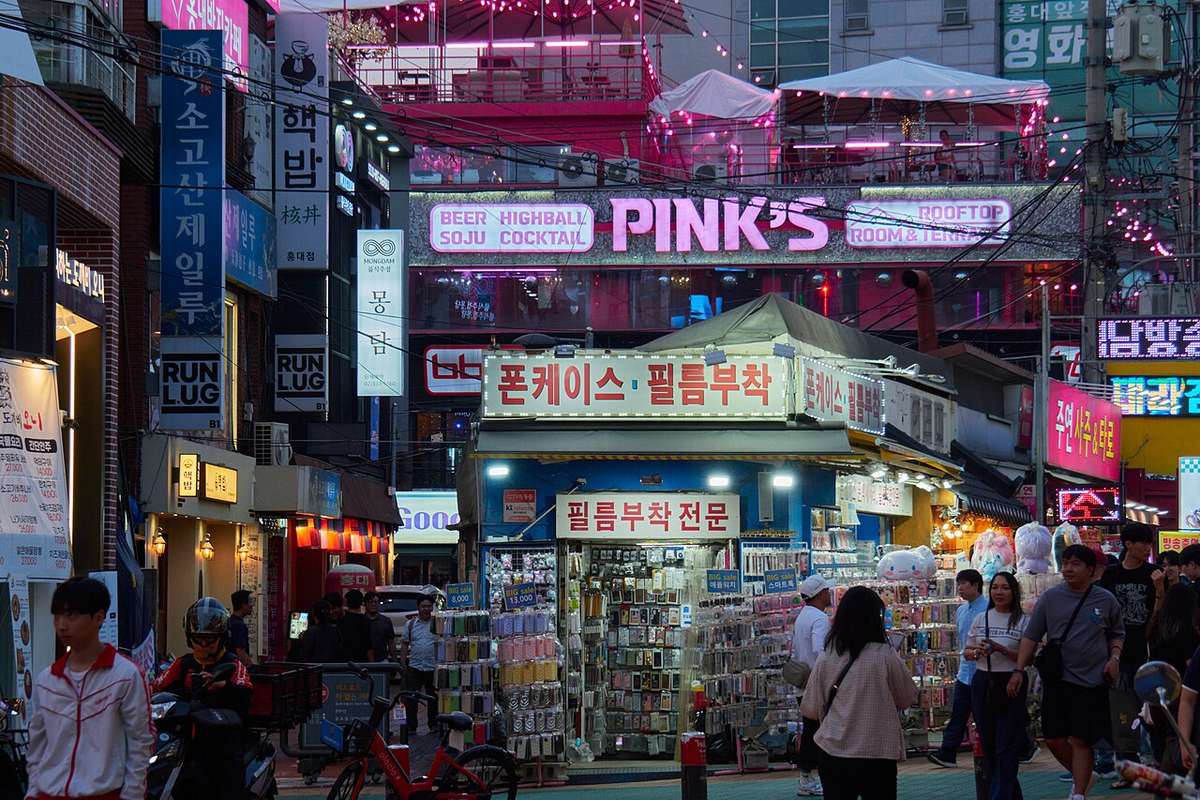
Hongdae and Yeonnam-dong
弘大The streets where Korean indie music grew up, and a park on an old railway
Hongdae is the name for the neighborhood in front of Hongik University. The school is best known for its art college, so studios and cafés came first, and from the mid-1990s small live clubs opened here and Korean indie music grew up in them. Today it is one of the places foreign visitors to Seoul name most often, alongside Myeong-dong and Gyeongbokgung. To the north, Gyeongui Line Forest Park runs over the old railway to Yeonnam-dong, and to the south, on the Han River bank at Hapjeong, lies Yanghwajin, where foreign missionaries of the late Joseon era are buried.
📖 The Story
Hongik University was founded in 1946, the year after liberation from Japanese rule. As its art college became famous, art cram schools, studios and galleries gathered in front of it, and in the early 1990s the road outside the main gate was nicknamed "Picasso Street". A neighborhood where art students and artists came looking for cheap studios: that is where Hongdae's character starts.
The club Drug opened in July 1994. At first it was a listening room that played records, but it soon became a stage where young bands performed live themselves. Crying Nut first made its name in 1996 on a record released by the club's own label, and together with No Brain led the wave people called "Joseon punk". Music made and released by small clubs and independent labels, without big agencies: Korean indie music began in these alleys. The busking on Hongdae's walking street today is that tradition moved out onto the sidewalk.
Gyeongui Line Forest Park, which cuts across the north of Hongdae, sits where the railway used to run. The Gyeongui Line was the route Japan seized the rights to during the Russo-Japanese War and laid in haste as a military railway, joining Seoul and Sinuiju in 1906. In 2005 work began to put this stretch of track underground, and the land left on top became a park. The Yeonnam-dong section opened first, in June 2015, and earned the nickname "Yeontral Park" after New York's Central Park. The full 6.3 km was finished in 2018. Today the Gyeongui-Jungang Line and the Airport Railroad run beneath it.
✦ Highlights
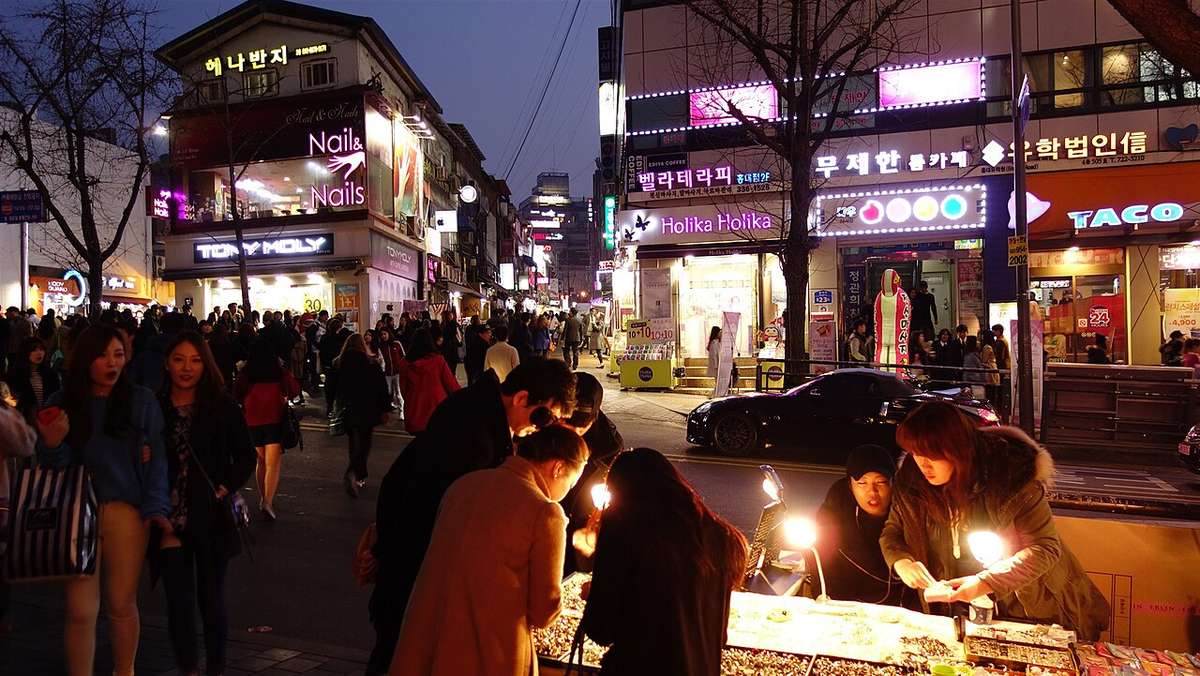
- ›The walking street and its buskersThe pedestrian street that starts at Exit 9 of Hongik University Station. After dark, singers and dance crews set up all along it, and circles of spectators fill the street.
More
There is no timetable, and weekend evenings are the busiest. It is also a stage where trainees hoping to debut and dance teams test themselves, so the size of the circle around each act is that night's ranking. This is the indie tradition that grew up inside the clubs in the 1990s moving out onto the street, and the acts range from singing and rap to dance. Taking photos and video is usually fine, but leave the passage behind the performers clear so the street keeps moving.
- ›The live clubsGo down a flight of basement stairs and you find small venues that hold a few dozen people. This is the format in which Korean indie music first took the stage, starting with the club Drug in 1994.
More
Each club announces its line-up on social media, and the usual format is several bands playing in turn on Friday and Saturday evenings. Many take the entry fee at the door. Since the days when Crying Nut and No Brain led "Joseon punk", music made and released by clubs and independent labels, without big agencies, has carried on even as individual clubs closed and changed hands. Only a few steps separate the stage from the crowd, so you feel the heat of the show up close.
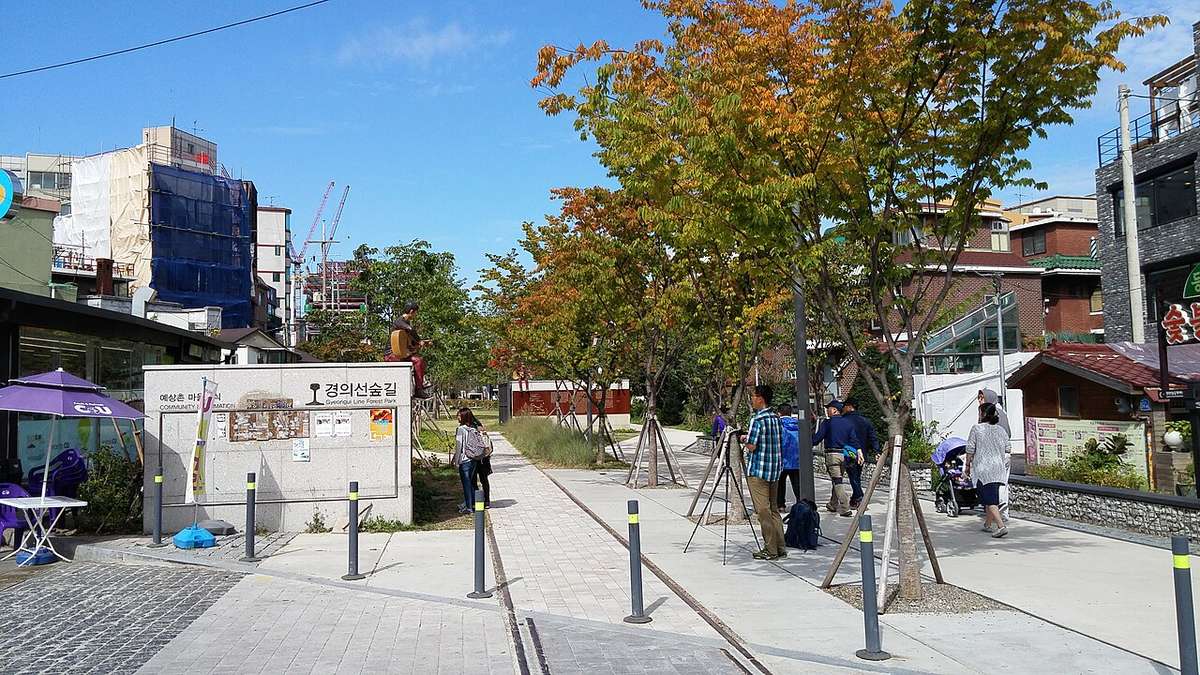
- ›Gyeongui Line Forest Park, Yeonnam-dong sectionThe park starts right outside Exit 3 of Hongik University Station. A few lengths of rail left in the paving remind you that the Gyeongui Line ran here from 1906.
More
After work began in 2005 to put the tracks underground, the land left on top became a park; when the Yeonnam-dong section opened first in June 2015, its lawns filled with people sitting out and it picked up the nickname "Yeontral Park". The Gyeongui-Jungang Line and the Airport Railroad still run beneath it. Small restaurants and cafés line the alleys on both sides. Once you remember that the path follows the line of a military railway Japan laid during the Russo-Japanese War, the stroll looks different.
- ›Yanghwajin Foreign Missionary CemeteryTen minutes' walk from Hapjeong Station toward the Han River. Foreign missionaries and their families who worked in Korean education, journalism and medicine from the opening of the ports onward are buried here, in a cemetery used since 1890.
More
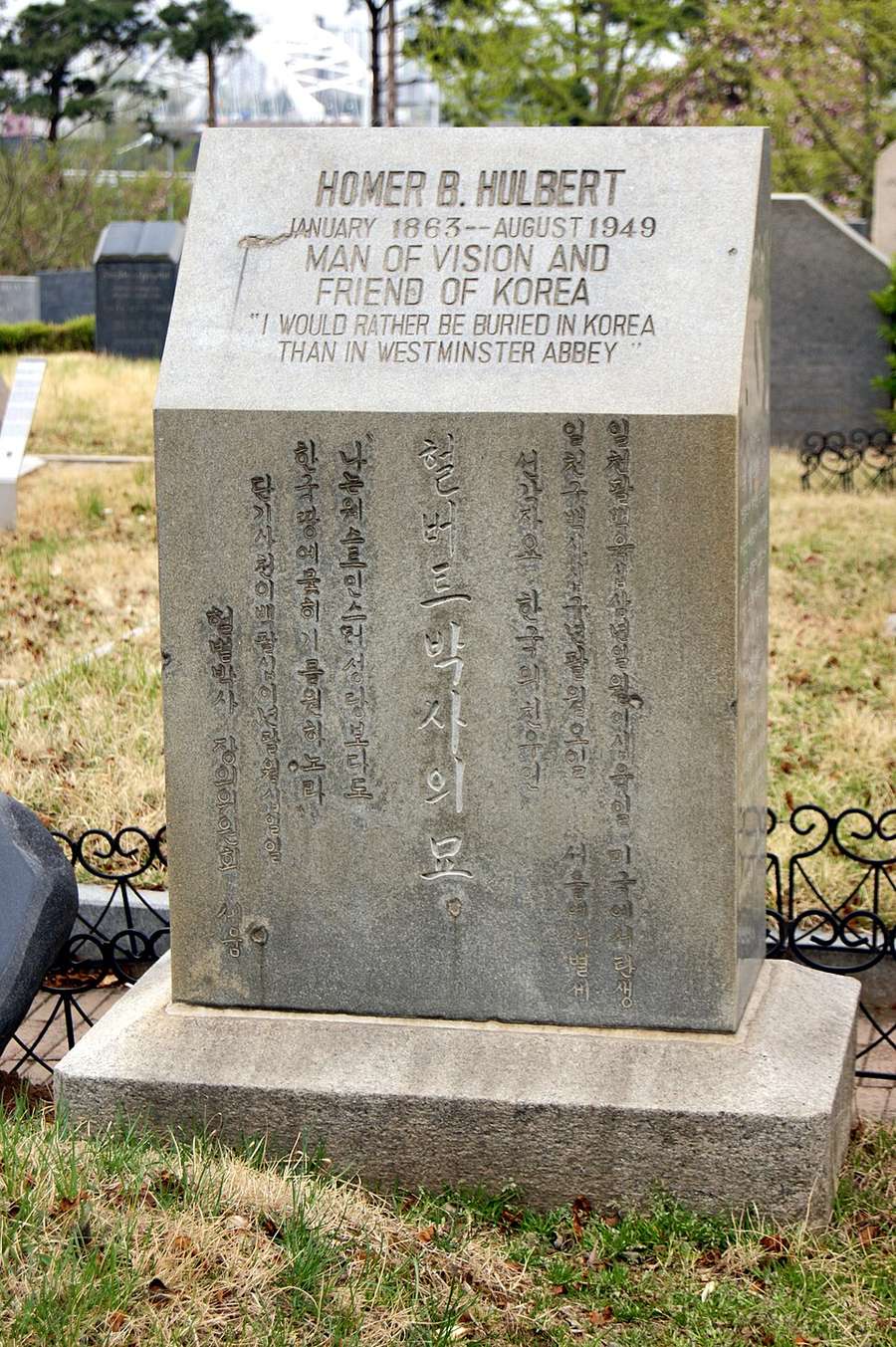
Homer Hulbert, who came to teach at the royal school Yugyeong Gongwon and later helped the secret envoys to The Hague, has a line carved on his gravestone: "I would rather be buried in Korea than in Westminster Abbey." Ernest Bethell, the Englishman who ran the newspaper Daehan Maeil Sinbo with Yang Gi-tak, died in 1909 at thirty-seven and was buried here. You will also find the graves of the Underwood family, founders of what became Yonsei University, and a memorial to Appenzeller, who founded Paichai school. Jeoldusan, the execution ground of the 1866 persecution of Catholics, is right next door, so walking the two together shows you the era when Joseon first collided with the West.
🚶 Self-Guided Walk
- 1Hongik University Station, Exit 3The forest park begins as you step out of the exit. Walk north toward Yeonnam-dong.
- 2Forest park, Yeonnam-dong sectionFollow the rails set into the paving for about fifteen minutes, then turn into a side alley for lunch.💡 There is little shade. Morning or late afternoon is better than a summer midday.
- 3The walking streetHead back to the station and into the pedestrian street by Exit 9. Busking starts in the evening.💡 For performances, come after dark; weekend evenings are liveliest.
- 4Hongik University main gateThe end of the road once nicknamed "Picasso Street" for its art schools and galleries. This is where the neighborhood began.
- 5Hapjeong StationAbout fifteen minutes on foot south of the main gate. Leave by Exit 7 and head toward the river.
- 6Yanghwajin Foreign Missionary CemeteryLook for the graves of Hulbert and Bethell. Right next door is Jeoldusan, the site of the 1866 persecution of Catholics.💡 The cemetery and the shrine are places of remembrance. Keep your voice down and skip group photos among the graves.
🧭 Visitor Info
💡 Good to Know
- Hongdae has a day face and a night face. Forest park and cafés by day, busking on the walking street in the evening, clubs at night: in that order the day falls into place.
- Hongik University Station is a stop on the Airport Railroad's all-stop trains, so you can come straight from Incheon Airport without changing (the express runs only to Seoul Station). That makes it an easy base for the first night when you have luggage.
- Many clubs and bars check ID for age. Foreign visitors should carry their passport.
- Around Exit 9 is extremely crowded on weekend nights. Agree to meet at a named shop nearby rather than at the exit itself.
🗺 Pair Your Visit
The Gyeongui Line was the railway whose construction rights passed from France to the Daehan Railway Company and were then seized by Japan during the Russo-Japanese War; it opened as a military line in 1906. Yanghwajin, next to Hongdae, holds the graves of Ernest Bethell, who founded the Daehan Maeil Sinbo with Yang Gi-tak, and Homer Hulbert, who taught at Yugyeong Gongwon and helped the envoys to The Hague. Neighboring Jeoldusan was an execution ground in the Catholic persecution of 1866, and exam questions follow the thread from that persecution to the French expedition of the same year.