Insadong and Ikseon-dong
仁寺洞 · 益善洞A street of traditional crafts, lanes of 1920s hanok, and the site of the March First Movement between them
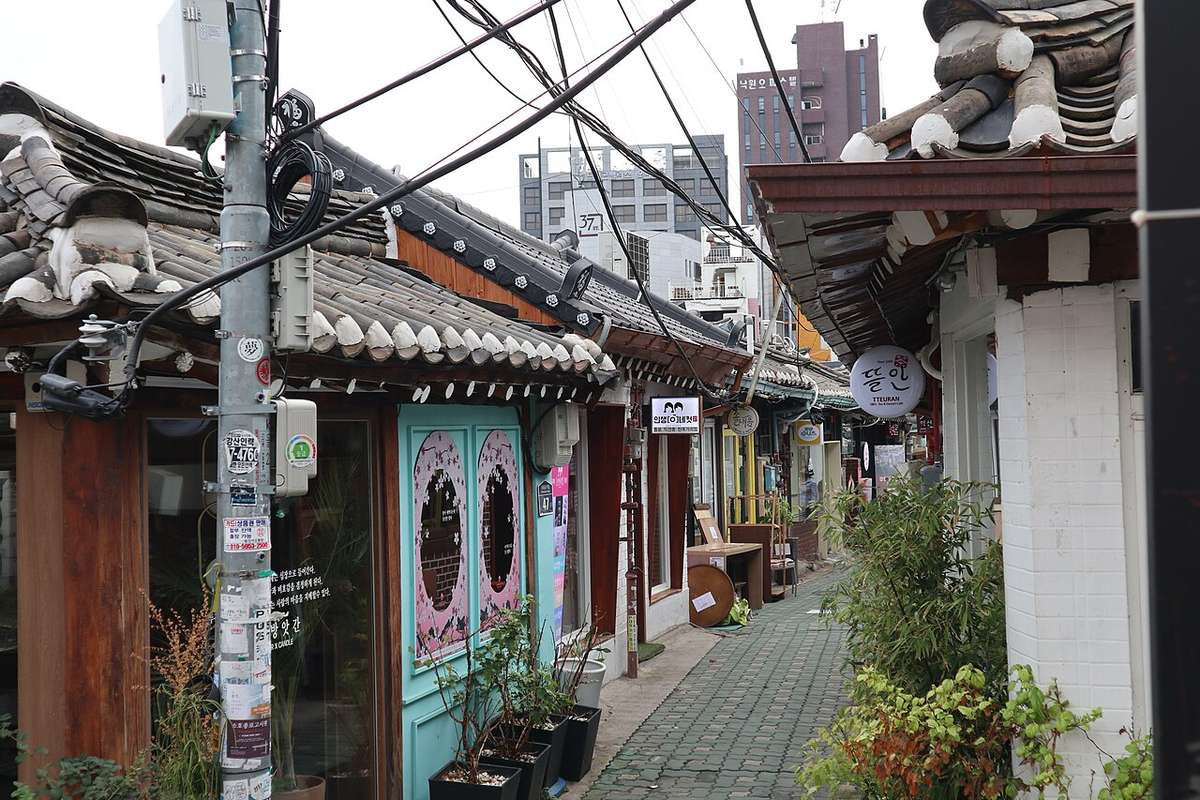
Insadong is the street of shops selling brushes, hanji paper and ceramics, of galleries and tea houses, and it is the first stop for travelers who want to see and buy something distinctly Korean in Seoul. Across the main road, Ikseon-dong is a neighborhood whose lanes are packed with small hanok built in the 1920s, now turned into cafés and restaurants that draw young crowds. Between them lies Tapgol Park, where on 1 March 1919 students and citizens read the Declaration of Independence and marched out into the streets shouting "Manse!". It is known as a shopping street, but walk it for half a day and you find layers of Seoul's history, from a pagoda of King Sejo's reign to the resistance against colonial rule.
📖 The Story
The name Insadong first appeared in 1914, when the colonial government redrew Seoul's districts. It takes one character each from Gwaninbang, a ward of Joseon-era Hanseong, and Daesadong, "the neighborhood of the great temple". That great temple was Wongaksa, founded by King Sejo in 1465. The temple is long gone, but its marble ten-story pagoda of 1467 still stands inside Tapgol Park. It was modeled on the Goryeo pagoda from Gyeongcheonsa now in the National Museum of Korea, so seeing the two together traces a line of pagodas from Goryeo to Joseon.
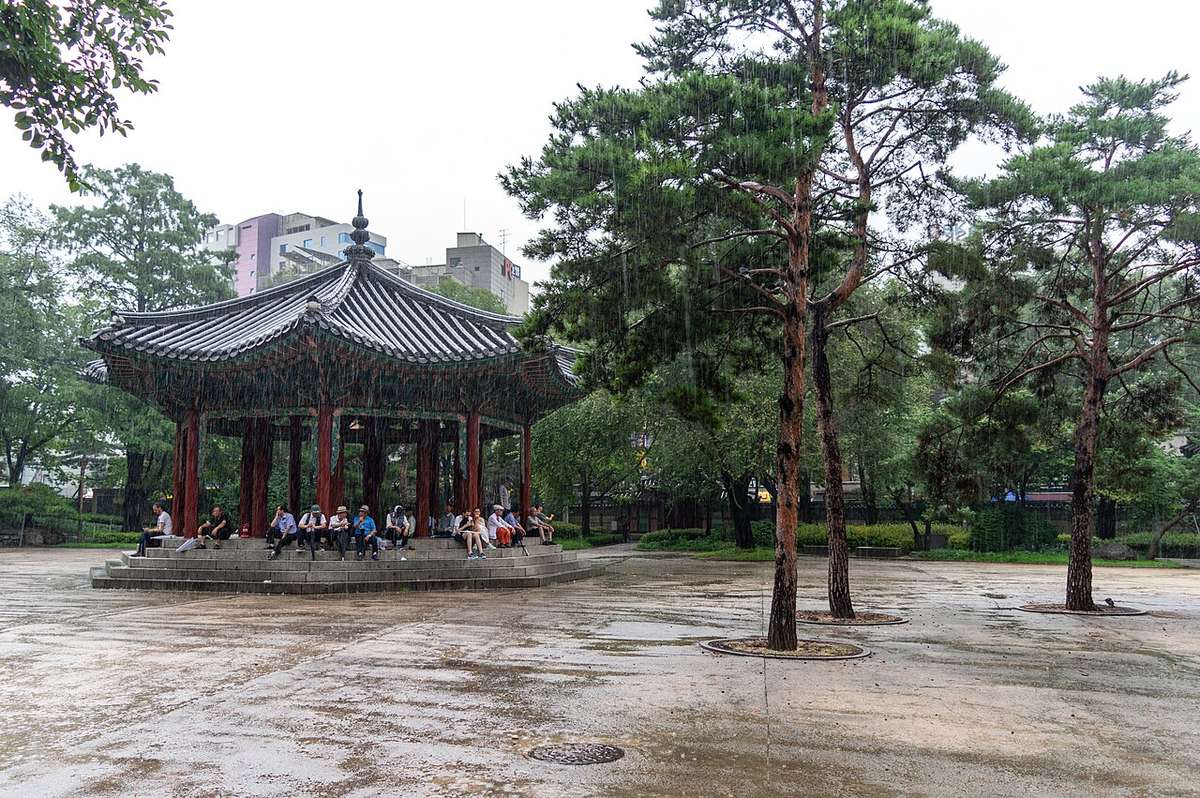
Around 1897 the empty site of Wongaksa became Tapgol Park, Korea's first modern public park. On 1 March 1919, while the national representatives read the Declaration of Independence at the nearby Taehwagwan restaurant, students and citizens gathered in Tapgol Park read it aloud in front of the octagonal pavilion and poured out into the streets waving the national flag. The March First Movement, which spread across the country, began in this park. Inside, a March First Movement memorial tower, murals and a statue of Son Byeong-hui recall that day.
Ikseon-dong's small hanok were built in the 1920s by Jeong Se-gwon, the developer who created the hanok lanes of Bukchon. He divided large plots into small ones and built and sold urban hanok that ordinary people could afford, and Ikseon-dong is counted as his first such estate. Long a run-down residential area, the lanes became one of Seoul's new hotspots in the 2010s as cafés and restaurants moved into renovated hanok. In 2018 the city designated the area a hanok district, capping building heights and keeping large chain stores out. Balancing the preservation of old hanok against the crowds is what this neighborhood is about today.
✦ Highlights
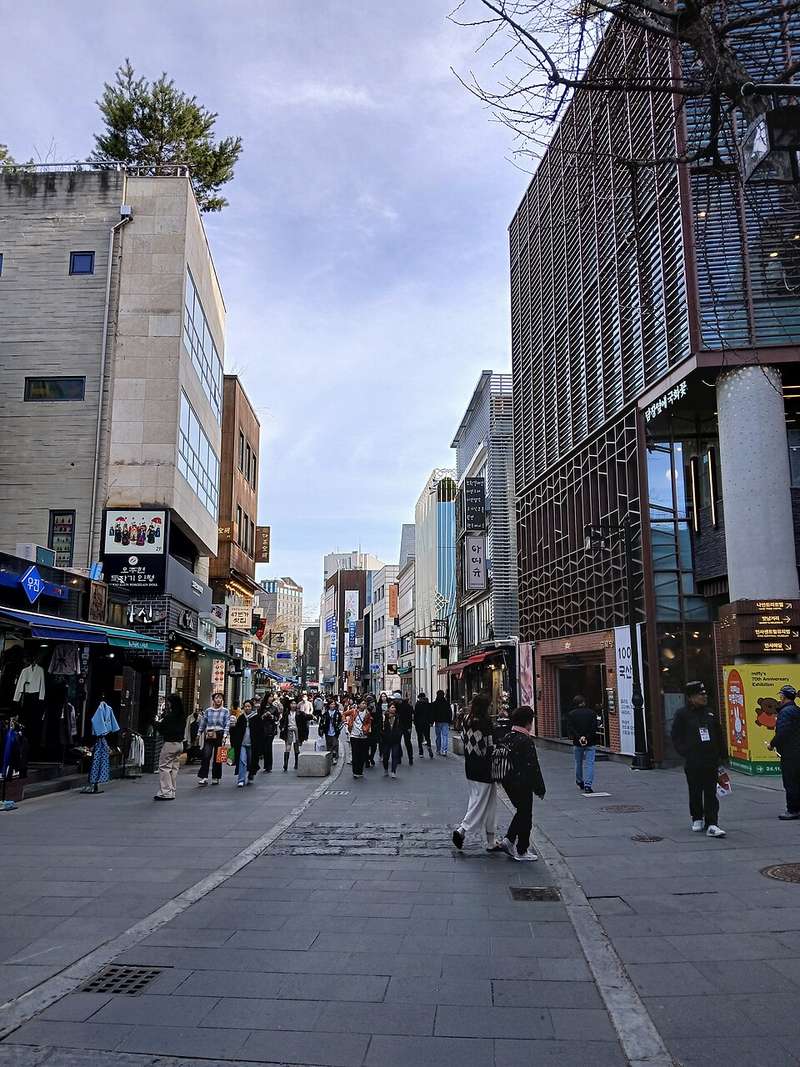
- ›Insadong-gil and SsamziegilThe main street lined with galleries and shops selling brushes, hanji paper, ceramics and traditional tea. About halfway along stands Ssamziegil, the spiral-ramped building that opened in 2004.
More
Instead of stairs, Ssamziegil has a gentle ramp that wraps around its courtyard and circles up to the roof, so walking it takes you past every shop. Many items are made by small workshops, which makes it a good place for souvenirs. Old tea houses and Korean set-meal restaurants hide down the narrow alleys on either side of the main street, so turn into one or two. Shop signs on this street are written in hangeul by rule, and spotting a global coffee chain's sign spelled out in Korean is a small pleasure of its own.
- ›Tapgol Park and the Wongaksa pagodaThe park where, at the octagonal pavilion, students and citizens read the Declaration of Independence and began the March First demonstrations on 1 March 1919, and home to the marble Wongaksa ten-story pagoda raised under King Sejo in 1467.
More
Unusually for Korean pagodas, which are mostly granite, it is made of marble, and every story is crowded with carved Buddhas and floral patterns. In 1999 it was enclosed in a glass shelter to protect it from acid rain and bird droppings, and removing the shelter is now under discussion. With a March First Movement memorial tower, murals of that day and a statue of Son Byeong-hui, the whole park serves as a memorial to the movement. Many elderly locals spend their days here, so look around quietly.
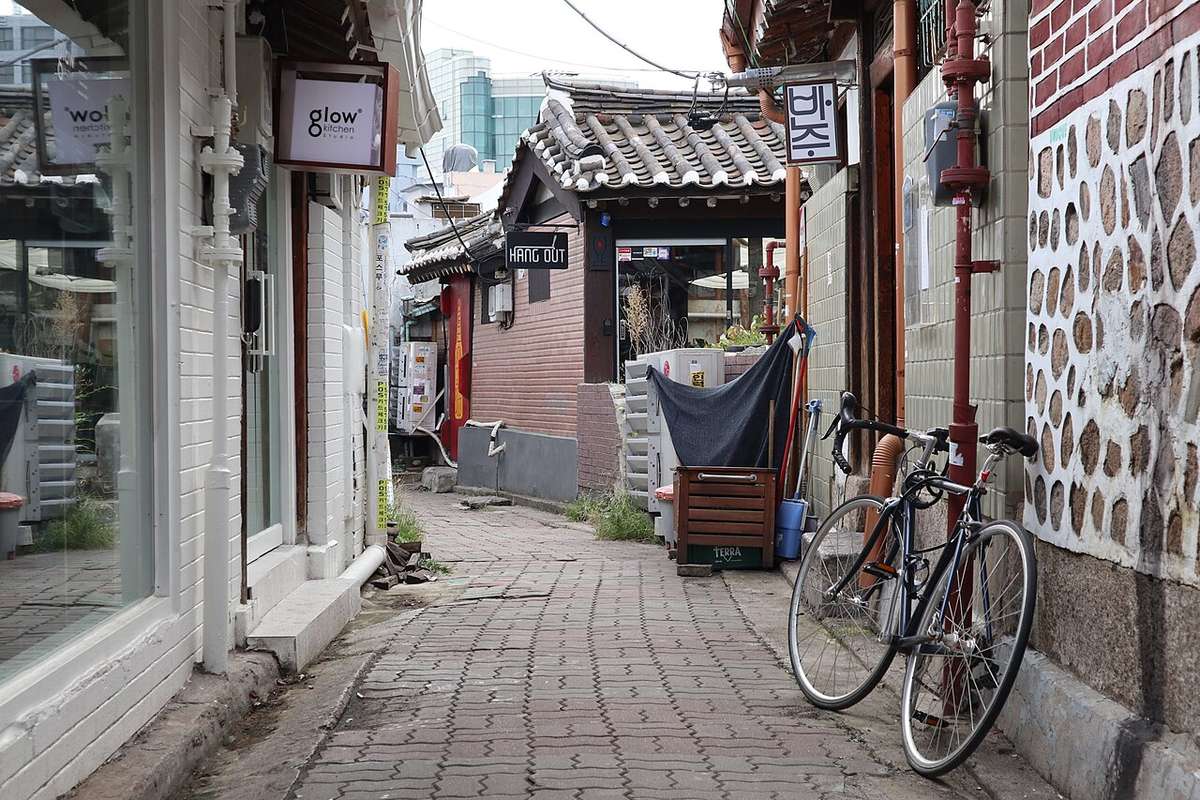
- ›The hanok lanes of Ikseon-dongLanes so narrow your shoulders nearly touch both sides, lined eave to eave with 1920s urban hanok. Most are now cafés, restaurants and small shops, so you can step inside a hanok here.
More
Jeong Se-gwon, who created Bukchon's hanok lanes, built these houses the same way, so the U-shaped and square plans around a small courtyard look alike. Many cafés have roofed the old courtyard in glass and turned it into an indoor room, letting you see the rafters and pillars up close. Since 2018 the area has been a designated hanok district, so building heights are capped and large chain stores are kept out. In the evening the lanes light up and take on a different mood.
- ›UnhyeongungThe home of the Heungseon Daewongun, where King Gojong was born and grew up before taking the throne. It stands across from the northern end of Insadong and is free to visit.
More
When the twelve-year-old Gojong became king, his father the Heungseon Daewongun ruled as regent from this house. His policies, from rebuilding Gyeongbokgung and closing Confucian academies to refusing trade with the West, were made here. The house is divided into men's quarters and women's quarters, so you can compare the space for public business with the space for household life. Smaller and plainer than a palace, it gives a good sense of an upper-class home in late Joseon.
🚶 Self-Guided Walk
- 1Anguk Station Exit 6 · UnhyeongungStart at the house where Gojong grew up, then cross into Insadong.
- 2Insadong-gil · SsamziegilHead south along the main street and ride the Ssamziegil ramp up to the roof.💡 Craft prices vary from shop to shop even for the same item, so look in two or three before buying.
- 3A tea house in the alleysTurn off into an alley and rest over a cup of traditional tea.
- 4Tapgol ParkCome out onto the main road at the south end of Insadong and you are at the park gate. See the pavilion and the Wongaksa pagoda.
- 5The hanok lanes of Ikseon-dongCross the road and walk a few minutes north to Ikseon-dong. Finish with dinner.💡 Lines outside popular places get long on weekend evenings. Weekdays or an early dinner are better.
🧭 Visitor Info
💡 Good to Know
- Insadong's shops mostly open late in the morning, so come after about 11 a.m. rather than early.
- Ikseon-dong's lanes are very narrow and hard to pass in a crowd. Step to one side for photos rather than stopping in the middle.
- Bukchon, Changdeokgung and Jongmyo are all within walking distance; pair this walk with one of them for a full day.
🗺 Pair Your Visit
On 1 March 1919 the national representatives read the Declaration of Independence at Taehwagwan, while students and citizens began the demonstrations in Tapgol Park. The Wongaksa pagoda in Tapgol Park is a marble pagoda of King Sejo's reign, paired in questions with the late Goryeo Gyeongcheonsa pagoda it copies. The master of Unhyeongung, the Heungseon Daewongun, comes up often for rebuilding Gyeongbokgung, closing Confucian academies and setting up the anti-Western stelae. Jeong Se-gwon, who built Ikseon-dong and Bukchon, supported the Korean Production Movement and the Korean Language Society.