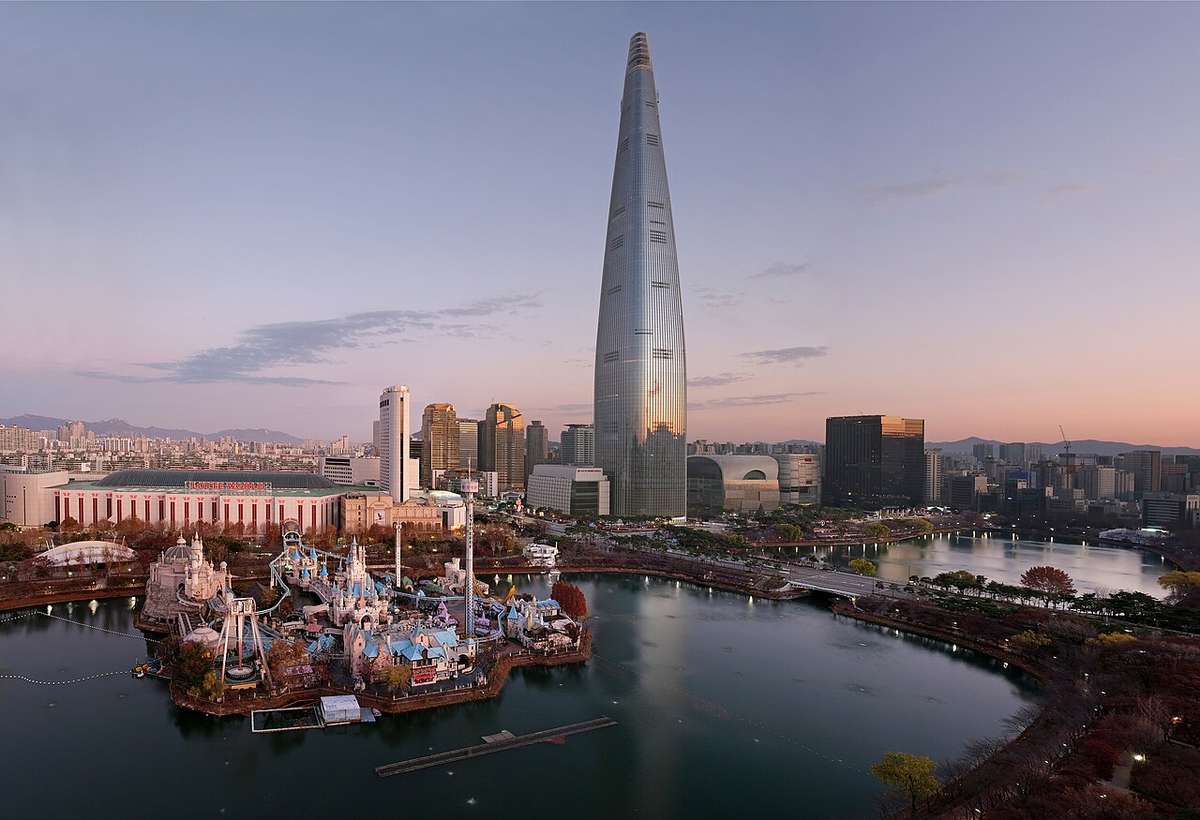
Lotte World Tower and Seokchon Lake
Beneath a 555-meter observation tower, a lakeside where Baekje royal tombs and a stele from the Manchu invasion stand together
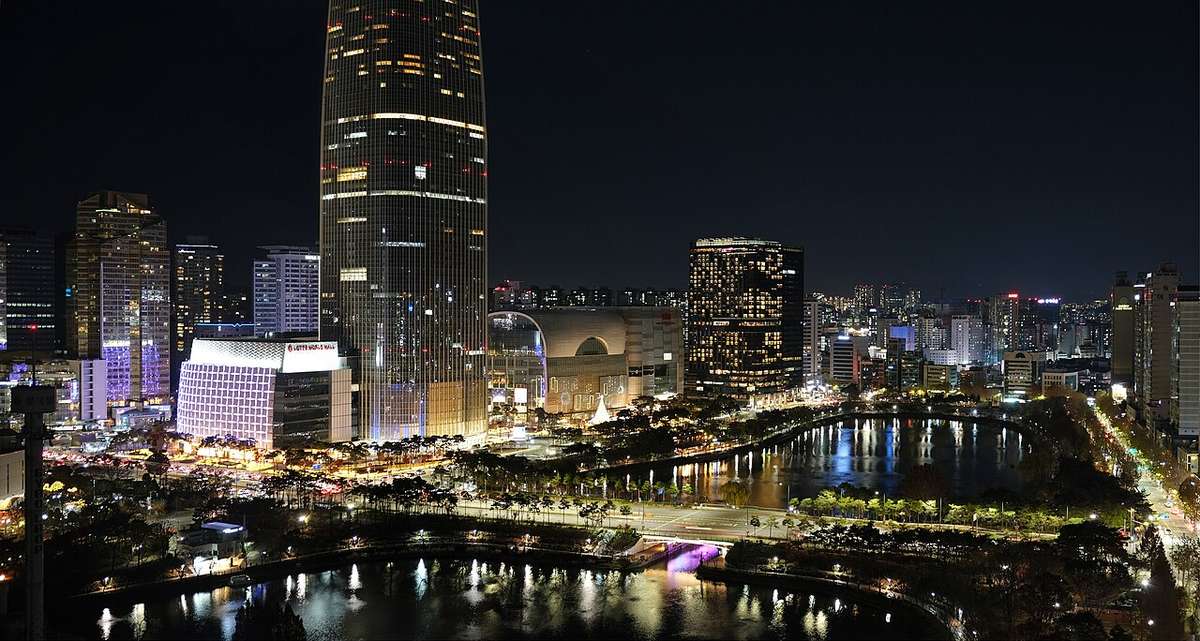
Lotte World Tower in Jamsil, 123 stories and 555 m high, is the tallest building in Korea. Its observation decks fill floors 117 to 123, and on a clear day all of Seoul spreads below, while Seokchon Lake at its foot is a walk famous for spring cherry blossom and night views. Yet this lakeside also touches the oldest layers of Seoul's past. Fifteen minutes away on foot are royal tombs from the time, some sixteen hundred years ago, when Baekje had its capital on the Han, and on the west side of the lake stands the Samjeondo stele, recording King Injo's surrender to the Qing emperor in 1637. Beneath the tallest building in the country you see the beginnings of Baekje and the bitterest day of Joseon side by side.
📖 The Story
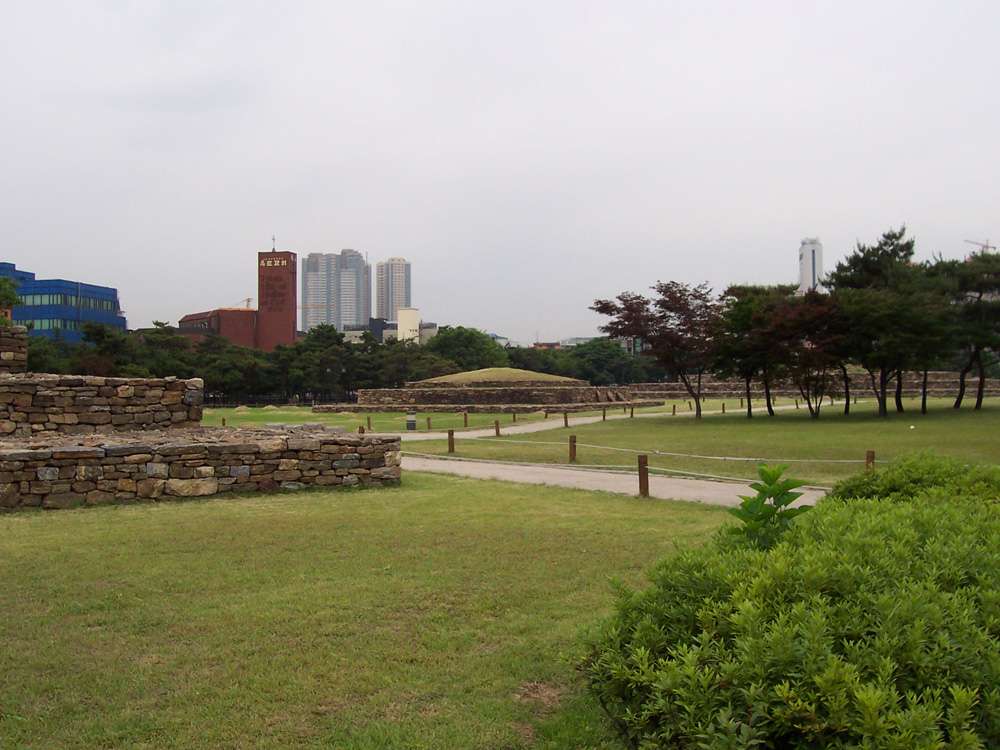
The Songpa area was the heart of Baekje's Hanseong period, when the kingdom had its capital on the Han River. At Seokchon-dong survive stone mound tombs built up in steps, the same type as the royal tombs of Goguryeo. The shape of the tombs backs up the founding legend that the people who established Baekje came south from Goguryeo. The largest, Tomb No. 3, is almost 50 m on a side, and some scholars think it may be the tomb of King Geunchogo, who led Baekje at its height. Under Japanese rule some three hundred tombs still stood here, but most vanished as the city grew.
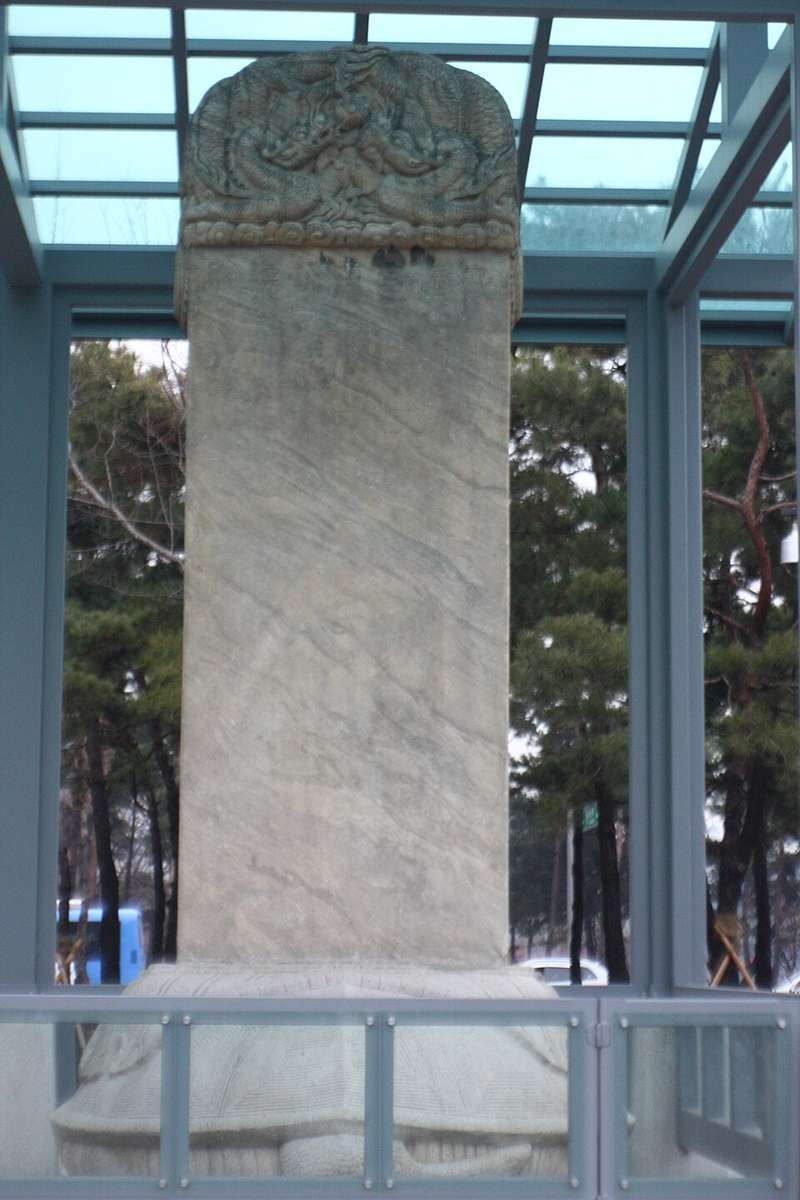
During the second Manchu invasion, King Injo, who had been holding out in Namhansanseong, came down in January 1637 and surrendered to the Qing emperor Hong Taiji at Samjeondo, a ferry crossing on the Han, bowing three times and knocking his head to the ground nine times. The Qing demanded a stele to honor their victory, and in 1639 the "Stele to the Merits of the Qing Emperor" was raised. Its inscription is carved in three scripts: Manchu, Mongolian and Chinese. A symbol of humiliation, it was buried and moved several times before being set up again in 2010 on the west shore of Seokchon Lake, the spot nearest its original site.
Seokchon Lake was not originally a lake but a channel of the Han. Jamsil was land almost like an island in the river, and when it was developed in the 1970s the southern channel, the Songpa River, was dammed to make more land; part of the cut-off channel survives as today's lake. Apartment blocks and the stadiums of the 1988 Seoul Olympics went up on that land, and after nearly thirty years of planning Lotte World Tower opened on 3 April 2017. The capital of Baekje, a Joseon ferry crossing and a new town built by damming a river all overlap in one place.
✦ Highlights
- ›Seoul Sky observatoryThe observatory on floors 117 to 123 of Lotte World Tower, Korea's tallest building. On the 118th floor the Sky Deck's glass floor looks straight down 478 m.
More
To the north lie the Han River and Bukhansan, to the west Namsan and downtown, and to the south the ridges toward Namhansanseong, where the Manchu invasion played out. Below you, Seokchon Lake and the route on this page spread out at a glance, so you can retrace your walk from above. Going up at sunset to see day turn to night is popular. On hazy days the view shrinks a lot, so pick a clear one, and since tickets are often sold by time slot, booking ahead helps.
- ›The Seokchon Lake walkA path around the lake, which is split into east and west halves. It was once the Songpa River, a channel of the Han, and in spring its shores become a tunnel of cherry blossom.
More
When the southern channel was dammed in the 1970s to develop Jamsil, the water left behind became today's lake. Circling both halves takes a little over an hour. At night the lights of the tower and the amusement park across the water reflect in the lake, turning it into a different walk from the daytime. In cherry blossom season weekends are almost too crowded to walk, so aim for a weekday morning.
- ›The Samjeondo steleA large stele inside a glass shelter beside the west lake. At the Qing's demand it records King Injo's surrender to the Qing emperor in 1637 at Samjeondo, a ferry crossing near here.
More
In the second Manchu invasion King Injo held out in Namhansanseong for 47 days, then came down and surrendered at Samjeondo, bowing three times and knocking his head to the ground nine times; in 1639 the "Stele to the Merits of the Qing Emperor" was raised. The dragons on its head and the turtle base follow the full form of a merit stele, with Manchu and Mongolian on the front and Chinese on the back. Buried and moved several times, it was set up in 2010 at its present spot, the nearest to its original site. Think of the officials forced to compose its text and you understand why it is called a humiliation that must not be forgotten.
- ›Seokchon-dong ancient tombsBaekje stone mound tombs of the Hanseong period, preserved as a park in the middle of a residential area. Built up in steps of stone, they closely resemble the royal tombs of Goguryeo.
More
The largest, Tomb No. 3, is almost 50 m on a side, and some scholars think it may be the tomb of King Geunchogo, who led Baekje at its height. Stand in front of it and picture the General's Tomb of Goguryeo. That tombs built the same way survive on both the Yalu and the Han is used as evidence for the founding legend that Baekje's founders came south from Goguryeo. Some three hundred tombs stood here under Japanese rule, but most vanished as the city grew, and parts of the park are still being excavated.
🚶 Self-Guided Walk
- 1Seokchon Gobun Station · Seokchon-dong ancient tombsEven the station is named after the tombs. Start the day walking among Baekje's stone mounds.
- 2The Samjeondo steleAbout fifteen minutes' walk north brings you to the stele by the west lake.
- 3Seokchon Lake, west and eastFollow the lakeside path towards the tower.💡 In cherry blossom season this stretch alone takes a while.
- 4Lotte World Tower, Seoul SkyGo up at sunset and look down on the route you have just walked.💡 Observatory tickets are often sold by time slot; booking ahead cuts the wait.
🧭 Visitor Info
💡 Good to Know
- This route walks from the oldest to the newest. Do it in reverse and you reach the tombs and stele after dark, so keep to the order.
- Add the Hanseong Baekje Museum and Mongchontoseong in Olympic Park and you can cover Baekje's Hanseong period in a day.
- The amusement park across the lake and the mall under the tower connect from the same station, so on rainy days you can move underground.
🗺 Pair Your Visit
The Seokchon-dong stone mound tombs follow a Goguryeo style and are cited as evidence that Baekje's founders came from Goguryeo. In the 4th century King Geunchogo, at Baekje's height, conquered Mahan and attacked Goguryeo's Pyongyang fortress, where King Gogugwon was killed. In the second Manchu invasion King Injo held out in Namhansanseong before surrendering at Samjeondo; Joseon then became a Qing vassal and Crown Prince Sohyeon and Grand Prince Bongnim were taken as hostages. Questions follow the thread through to the northern expedition plans of King Hyojong, formerly Bongnim.