Jeongdong-gil and the Deoksugung Stone Wall Road
貞洞The street of legations and mission schools, where the last scenes of the Korean Empire played out
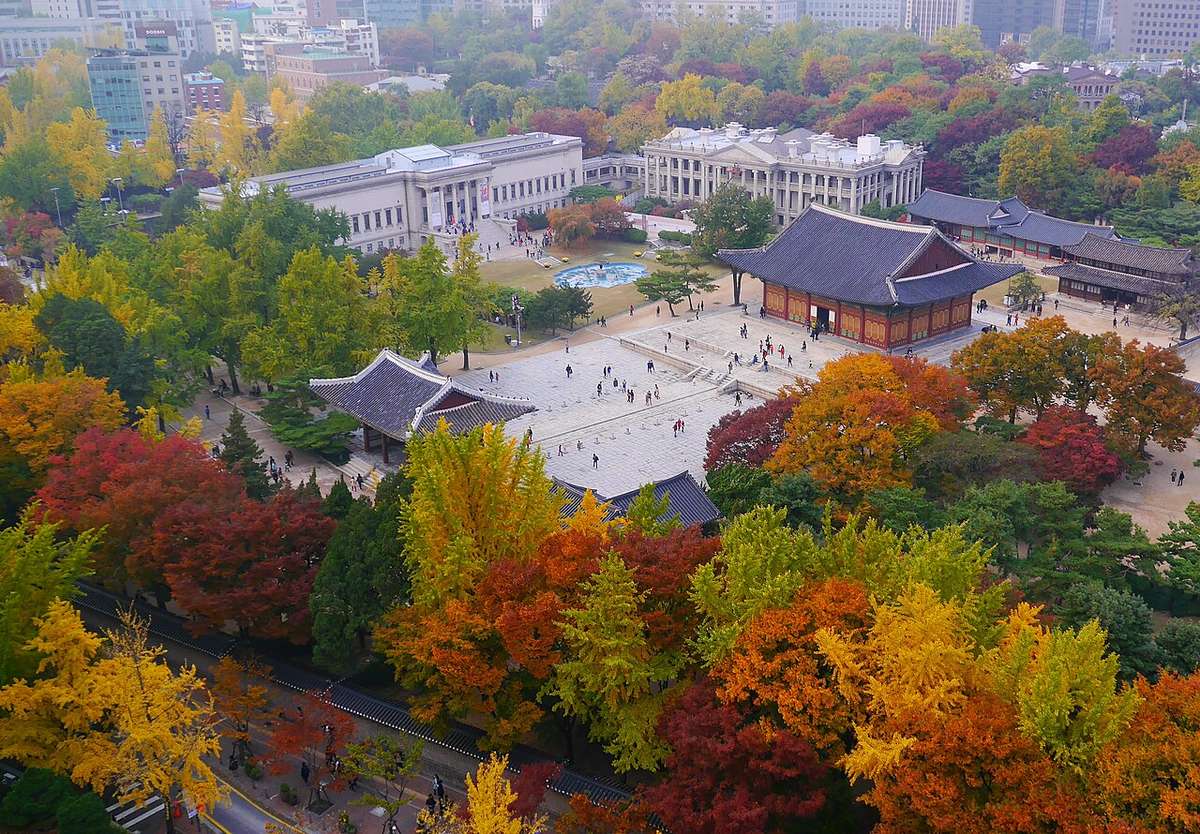
Jeongdong-gil is a short street that starts along the stone wall of Deoksugung and climbs a gentle hill. In autumn, when the ginkgo trees turn gold, it is counted among the most beautiful walks in Seoul. But it is also where Korea first came face to face with the wider world at the end of the 19th century. The legations of the United States, Britain and Russia gathered here, missionaries built schools and churches, and King Gojong took refuge in the Russian Legation on this street before returning to Deoksugung and proclaiming the Korean Empire. Then in 1905, in Jungmyeongjeon right beside it, the Eulsa Treaty stripping the country of its diplomatic rights was forced through. In a thirty-minute walk you pass both the beginning and the end of the Korean Empire.
📖 The Story
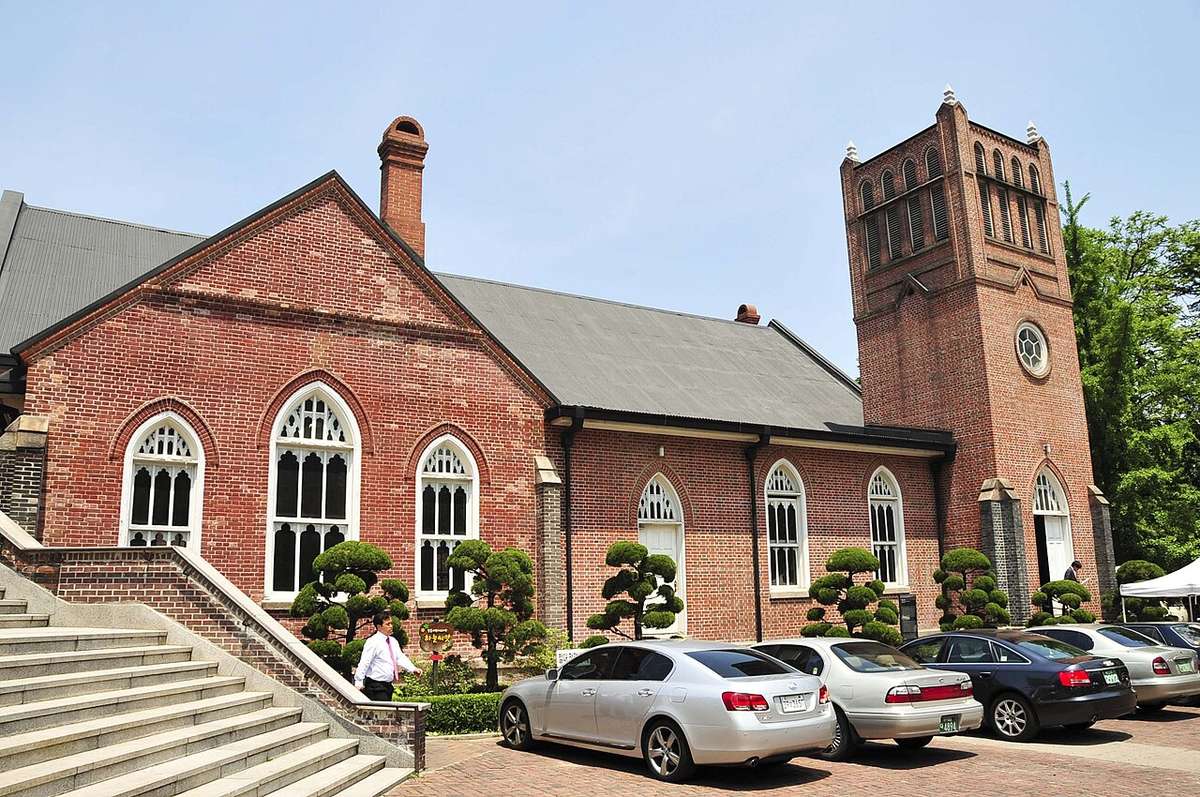
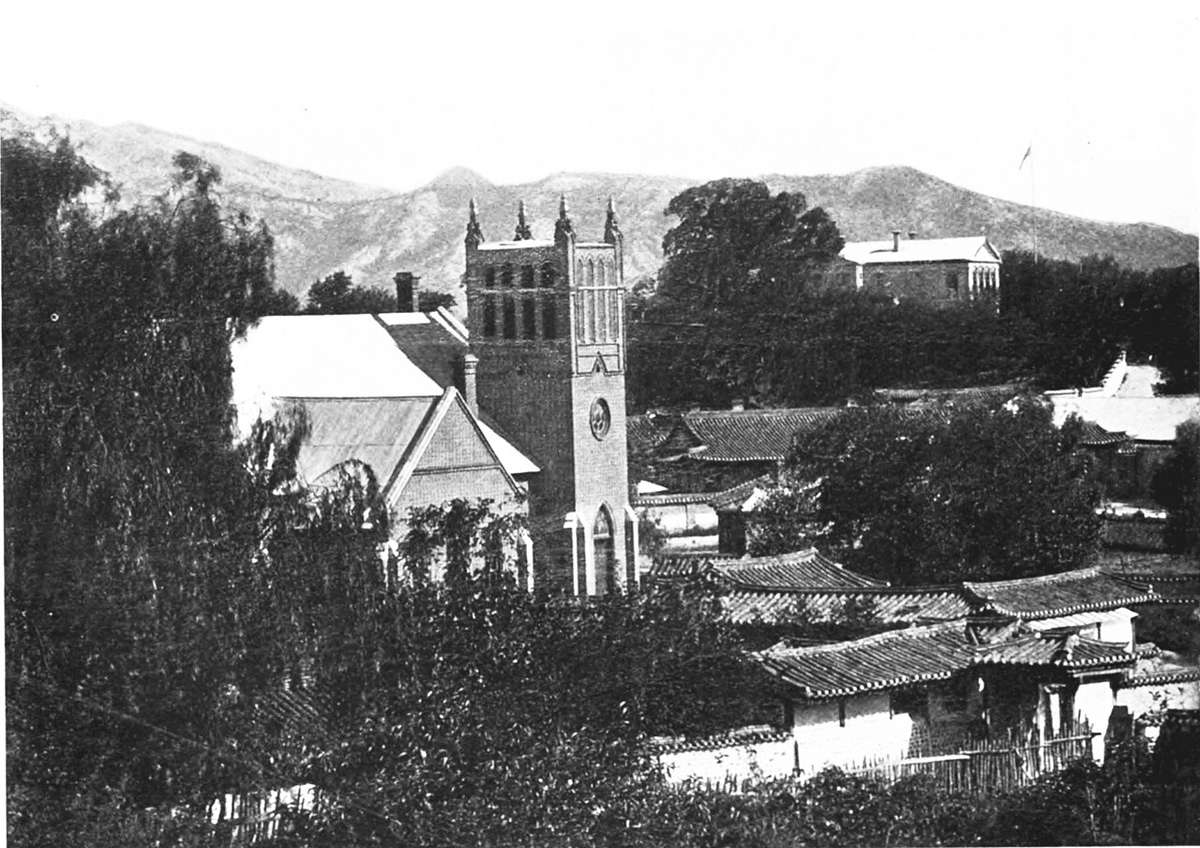
When Joseon signed treaties with Western countries in the 1880s, foreign legations went up one after another in Jeongdong, close to the palace. Missionaries settled here too. In 1885 Henry Appenzeller founded Paichai school, in 1886 Mary Scranton founded Ewha, Korea's first school for girls, and in 1897 the Bethel chapel of Chungdong Church, the first Western-style Protestant church in Korea, was dedicated. The red-brick chapel still stands on the same spot.
After Empress Myeongseong was assassinated by the Japanese in 1895, King Gojong, fearing for his life, slipped out of Gyeongbokgung in February 1896 and moved into the Russian Legation on the Jeongdong hill. This is known as the royal refuge at the Russian legation (Agwan Pacheon). A year later he returned to the neighboring Gyeongungung palace, today's Deoksugung, and in 1897 renamed the country the Korean Empire and took the title of emperor. The Russian Legation, built in 1890, was largely destroyed in the Korean War; only its white tower survives on the hill.
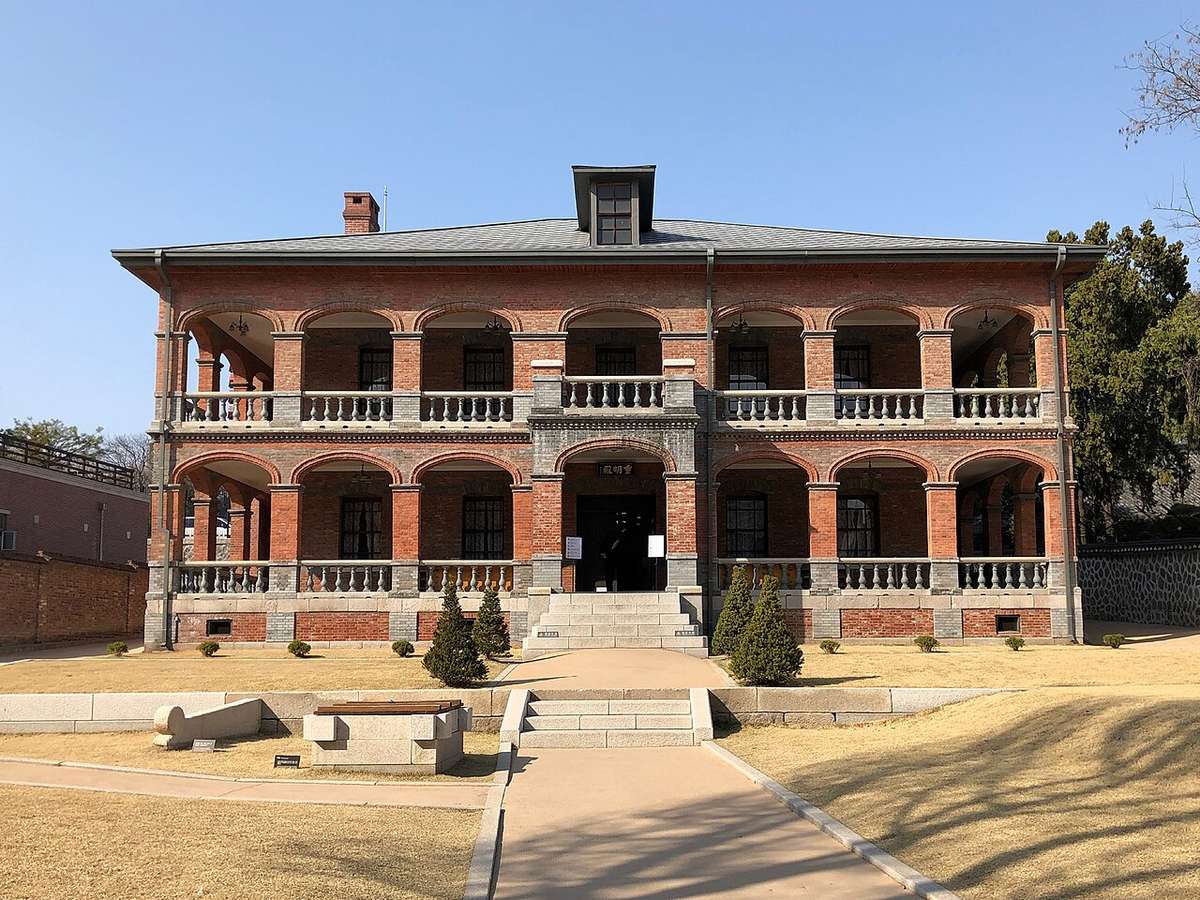
Jungmyeongjeon, behind Deoksugung, is a Western-style building put up as the imperial library. On 17 November 1905, with troops surrounding the palace, Japan forced through the Eulsa Treaty here, taking away the Korean Empire's diplomatic rights. Gojong never accepted the treaty, and in 1907 he sent envoys to the Hague Peace Conference in the Netherlands to declare it void. That mission was used as the pretext to force him to abdicate. Jungmyeongjeon was restored to its original form in 2010 and now tells the story of those days.
✦ Highlights
- ›The Deoksugung stone wall roadThe road that starts beside Daehanmun, Deoksugung's main gate, and follows the palace's stone wall. In autumn, under a cover of ginkgo leaves, it is counted among the most beautiful walks in Seoul.
More
Local lore says couples who walk this road together will break up; the story goes that the family court once stood at the end of the road in Jeongdong, so couples on their way to divorce walked it. Today it is, if anything, a favorite date walk. Traffic has been calmed, so it is pleasant on foot, and the roofs of Deoksugung's halls and Seokjojeon show above the wall, so you can sense the palace even from outside.
- ›JungmyeongjeonThe two-story Western-style building where the Eulsa Treaty was forced through on 17 November 1905. Inside, restored rooms recreate the meeting and tell the story of the envoys to The Hague.
More
Originally called Suokheon, it was built as the imperial library after Gojong returned from the Russian Legation. With troops surrounding the palace, Japan forced through the treaty stripping the empire of its diplomatic rights here, and Gojong never accepted it. Restored from 2007 and opened in 2010, with its arched brick verandas and fireplaces brought back, it holds a beautiful building and a humiliating chapter of history in the same space. Open 09:30 to 17:30.
- ›Tower of the former Russian LegationA white tower 16 m high standing alone on the Jeongdong hill. It is the only surviving part of the Russian Legation, where King Gojong took refuge for a year in 1896.
More
Designed by the Russian Sabatin and completed in 1890, it was a Renaissance-style brick building, but its main block collapsed in the Korean War, leaving only the tower and an underground space. Gojong moved here after the 1895 assassination of the empress, fearing for his life, and during this period the foreign powers seized many concessions. Being on the hill, it looks down over Deoksugung and Jeongdong. Look toward the palace and you feel the weight of a time when a king had to entrust himself to a foreign legation.
- ›Chungdong Church's Bethel chapel and Paichai schoolThe first Western-style Protestant church in Korea, dedicated in 1897, and next to it the history museum on the site of Paichai school, which opened in 1885. Both were founded by Henry Appenzeller.
More
The red-brick chapel still stands on the same spot, a building of more than 120 years that holds the Jeongdong streetscape together. Paichai marks the beginning of modern secondary education in Korea, and its students took part in the Independence Club and The Independent newspaper. Around the same time Mary Scranton founded Ewha nearby, Korea's first school for girls. Appenzeller is commemorated at the Yanghwajin Foreign Missionary Cemetery, so read this alongside the Hongdae page.
🚶 Self-Guided Walk
- 1City Hall Station · DaehanmunStart at Daehanmun, Deoksugung's main gate, and turn left along the wall.
- 2The stone wall roadWalk slowly along the wall; in autumn it becomes a tunnel of ginkgo.
- 3Chungdong Church · Paichai History MuseumAt the roundabout where the road forks, see the red-brick chapel and the Paichai site next door.
- 4JungmyeongjeonGo into Jungmyeongjeon, down a side lane, for the exhibition on the Eulsa Treaty.💡 The lane is easy to miss; turn in beside Jeongdong Theater.
- 5Former Russian Legation towerClimb the hill at the end of the street and look back toward Deoksugung from the white tower.
🧭 Visitor Info
💡 Good to Know
- Seokjojeon and the rest of Deoksugung are covered on this site's palaces page. See the palace first, then walk Jeongdong-gil, and the story of the Korean Empire runs on without a break.
- Early to mid-November, as the ginkgo leaves fall, is the best time. Weekend afternoons are busy.
- Churches, schools and embassies still operate in Jeongdong. Enter buildings only during public hours, and avoid photographing around embassies.
🗺 Pair Your Visit
After the Eulmi Incident of 1895, the assassination of the empress, Gojong took refuge in the Russian legation in 1896 (Agwan Pacheon), a period when the foreign powers seized many concessions. Returning to Gyeongungung in 1897, he proclaimed the Korean Empire and pursued the Gwangmu reforms. The Eulsa Treaty forced through at Jungmyeongjeon in 1905 took away diplomatic rights and set up the Japanese Residency-General, and in 1907 the mission to The Hague was used as the pretext to force Gojong's abdication. Paichai (1885) and Ewha (1886) appear together as modern schools founded by missionaries.