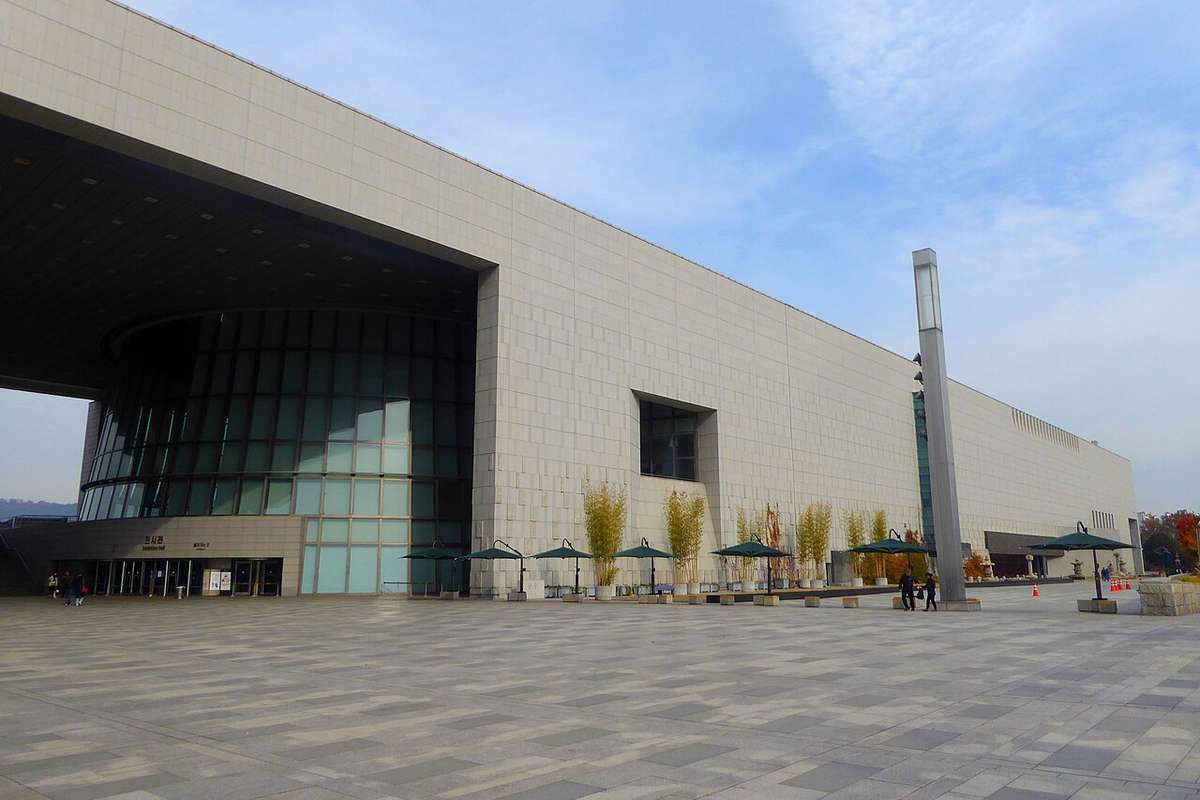
National Museum of Korea
國立中央博物館After sixty years on the move, the home of Korean history's treasures settled in Yongsan
The National Museum of Korea is the country's flagship museum, gathering objects from every period of Korean history, from prehistory to the Korean Empire, under one roof. The permanent galleries are free, and the building is so large that doing a single floor properly takes half a day. Young visitors poured in after the "Room of Quiet Contemplation", with two gilt-bronze pensive bodhisattvas side by side, opened in 2021. In 2025 the museum's souvenirs modelled on the tiger, the magpie and the gat hat from the animated film "KPop Demon Hunters" sold out, and visitor numbers hit an all-time high. If you are studying Korean history, this is where the objects you know from textbook photos stand in front of you at full size.
📖 The Story
The museum opened on 3 December 1945, four months after liberation, taking over the building of the colonial Government-General Museum inside Gyeongbokgung. Over the next sixty years it moved several times: to Seokjojeon hall in Deoksugung, to a new building inside Gyeongbokgung, to the former Japanese Government-General headquarters and to an education hall inside Gyeongbokgung. Demolition of the Government-General building, its home from 1986, began in 1995 to mark fifty years since liberation, and with it ended the era when the nation's treasures were kept inside the very symbol of colonial rule.
The new site chosen was Yongsan: land the US military had used as a helicopter base, which had been returned and was being turned into a park. The new museum that opened on 28 October 2005 has a great open void through its middle; from the steps of the open plaza, Namsan sits in the gap like a picture in a frame. That a house for the nation's history was raised on ground once used by a foreign army is itself part of the story the building tells.
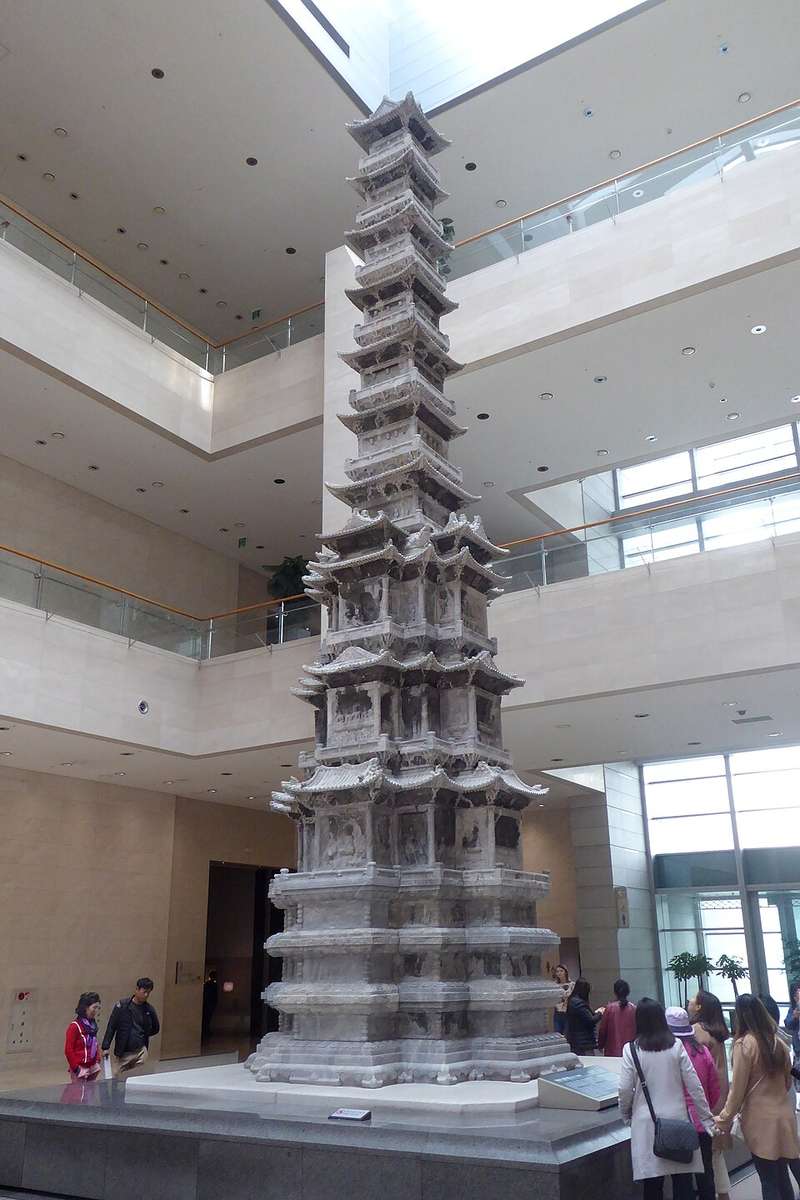
At the end of the Path of History on the first floor stands the ten-story pagoda from Gyeongcheonsa, which carries in itself everything the museum has been through. It is a marble pagoda raised in 1348, under King Chungmok of Goryeo, at Gyeongcheonsa temple near Kaesong. In 1907 the Japanese imperial household minister Tanaka Mitsuaki had it dismantled and smuggled to Japan. Homer Hulbert and Ernest Bethell of the Daehan Maeil Sinbo brought it to international attention, and the pagoda came back a little over ten years later. It came back so badly damaged that it lay dismantled in a cloister of Gyeongbokgung for a long time before being reassembled around 1960. When acid rain and weathering took their toll it was taken apart again in 1995 for conservation, and it was rebuilt inside the new museum in 2005. That is why the ceiling above it opens up through the floors above.
✦ Highlights
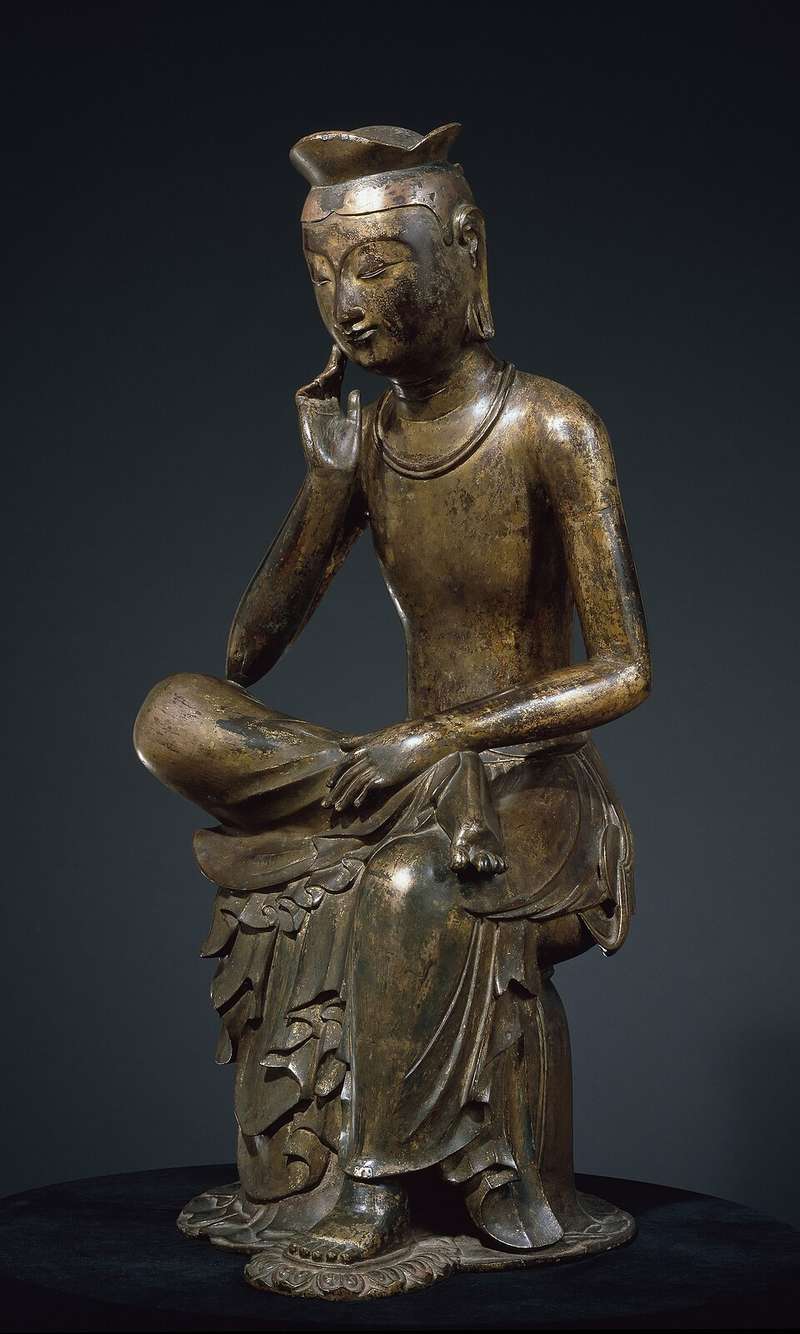
- ›Room of Quiet ContemplationOn the second floor, in a dimmed room, two gilt-bronze pensive bodhisattvas from the Three Kingdoms period of the 6th and 7th centuries sit side by side. Since it opened in 2021 the room has become the face of the museum.
More
Opened in November 2021, the room has walls and floor that tilt slightly, so your pace slows the moment you walk in. One figure wears a crown shaped like a pagoda, the other a crown like three mountain peaks, and their faces and the folds of their robes differ too, which makes comparing them side by side a pleasure. They are placed so you can walk all the way around and see them from behind. The pose, with the right foot on the left knee and a finger at the cheek, is what "pensive" refers to; it is read as Maitreya, the Buddha of the future, lost in thought.
- ›Ten-story Pagoda from GyeongcheonsaAt the end of the Path of History on the first floor, a Goryeo marble pagoda of 1348 that rises to the ceiling. Taken to Japan in 1907 and returned in 1918, it has the most dramatic story in the museum.
More
Most Korean stone pagodas are neat squares of granite, but this one is marble, crowded with carved Buddhas and ornament, its lower stories folded into a cross-like plan. It is seen as late Goryeo work under Yuan Chinese influence, and the ten-story pagoda at Wongaksa in Seoul, raised under King Sejo of Joseon, was modeled on it. See it together with the Wongaksa pagoda in Tapgol Park in Insadong and you can check how closely the two resemble each other. From the railing upstairs you can look down on its top ornament up close.
- ›The open plaza and the Namsan frameBroad steps through the great hollow at the center of the building. Namsan and N Seoul Tower sit in the gap like a picture in a frame, the most photographed spot at the museum.
More
The new museum, opened in 2005 on former US military land in Yongsan, has a great void at its center, so from the top of the steps the view toward Namsan comes straight in. Turn around once at the top of the steps before going into the galleries. On a clear day the tower from this site's N Seoul Tower page stands dead center. The steps are shaded and breezy, good for a rest between galleries, and lovely in the early evening when the lights come on.
- ›MU:DS, the museum shopThe shop for MU:DS, museum goods modeled on objects in the collection. In 2025 items resembling the tiger, magpie and gat hat from "KPop Demon Hunters" sold out, and people now line up to buy.
More
The magpie and tiger come from the Joseon folk painting genre of "magpie and tiger", and the gat from the hat of a Joseon scholar. Find the roots of the film's images in the galleries first and the same goods look different in the shop. Scaled-down replicas of objects, such as the pensive bodhisattva miniatures, have long been popular too. Popular items go early, so if there is something you really want, visit the shop before the galleries.
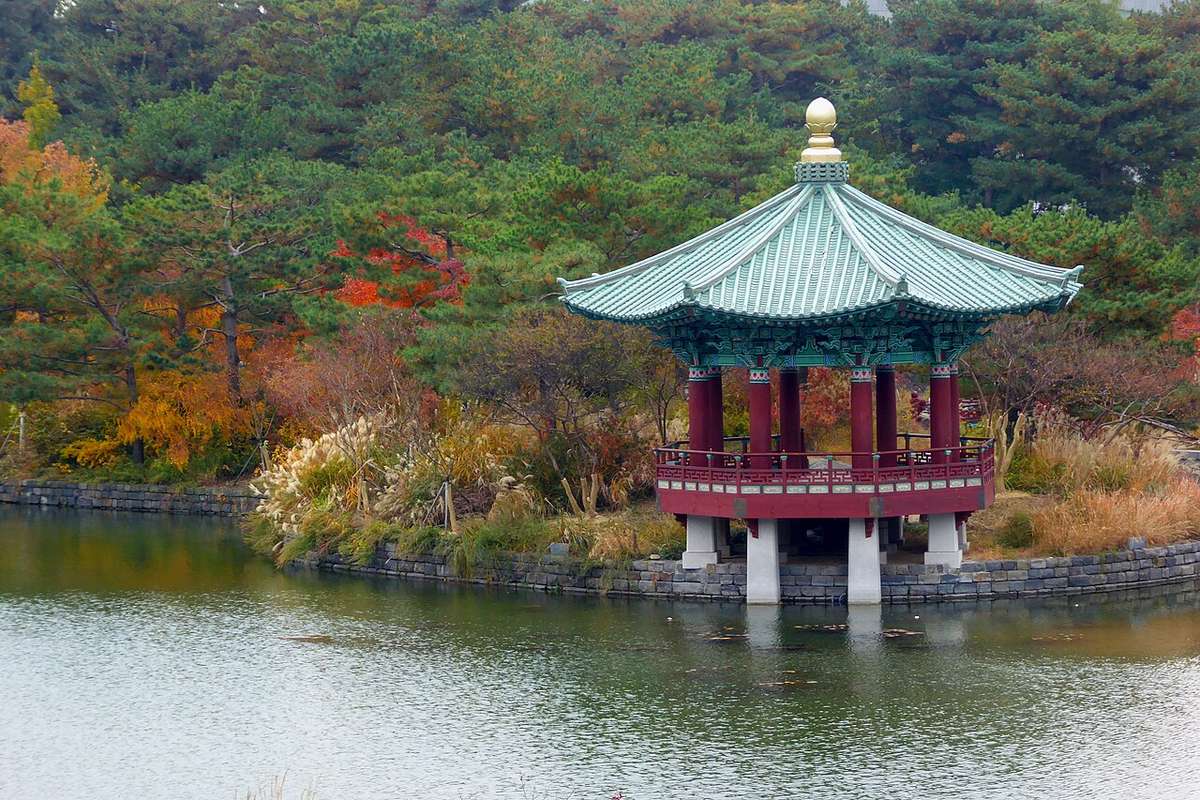
- ›Mirror Pond and the gardensMirror Pond in front of the museum, the pavilion over it, and stone pagodas and lanterns moved outdoors. A garden for a stroll to rest legs tired from the galleries.
More
True to its name, the pond reflects the pavilion and the museum building, and on a windless day the scene becomes a perfect mirror image. Stone pagodas and lanterns from various periods stand around the garden, making it an outdoor gallery of its own. It is especially lovely in cherry blossom season and when the autumn leaves turn. The gardens open earlier and close later than the galleries.
🚶 Self-Guided Walk
- 1The underground passage from Ichon StationFollow the underground passage from the station and come up on the garden side.
- 2The open plazaTurn at the top of the steps for the Namsan frame, then go in.
- 3First floor: prehistory and ancient galleriesFrom hand axes and comb-pattern pottery to the gold crowns of Silla. Walk them in order and the first chapter of the textbook unfolds.💡 Allow two hours for one floor. On a first visit, the first floor plus the Room of Quiet Contemplation is plenty.
- 4Ten-story Pagoda from GyeongcheonsaLook up at the pagoda at the end of the Path of History. From the railing upstairs you can see down to its top.
- 5Second floor: Room of Quiet ContemplationWalk slowly once around the two pensive figures.💡 Wednesday and Saturday evenings are quietest.
- 6The museum shop and Mirror PondBrowse the shop, then end with a rest by the pavilion on the pond.
🧭 Visitor Info
💡 Good to Know
- The museum is huge. Instead of trying to see it all, pick one era, say "today, Goryeo", and you will tire less.
- Popular souvenirs often sell out by midday. If there is something you want, visit the shop before the galleries.
- The National Hangeul Museum stands on the same grounds. If the Korean alphabet interests you, it pairs well on the same visit.
- Skim this site's history study units before you go and the object labels in the galleries will feel familiar.
🗺 Pair Your Visit
The gilt-bronze pensive bodhisattvas reflect Maitreya worship in the Three Kingdoms period and resemble the wooden pensive bodhisattva at Koryu-ji in Japan, so they appear often in questions on the spread of Three Kingdoms culture to Japan. The Gyeongcheonsa pagoda is a late Goryeo marble pagoda showing Yuan influence, and it is paired in questions with the Wongaksa ten-story pagoda of King Sejo's reign, which copied it. The demolition of the former Government-General building, begun in 1995 for the fiftieth anniversary of liberation, turns up in modern history timeline questions.