Seodaemun Prison History Hall and Independence Gate
西大門刑務所Red-brick cell blocks that were a prison for eighty years, and the gate of independence in front of them
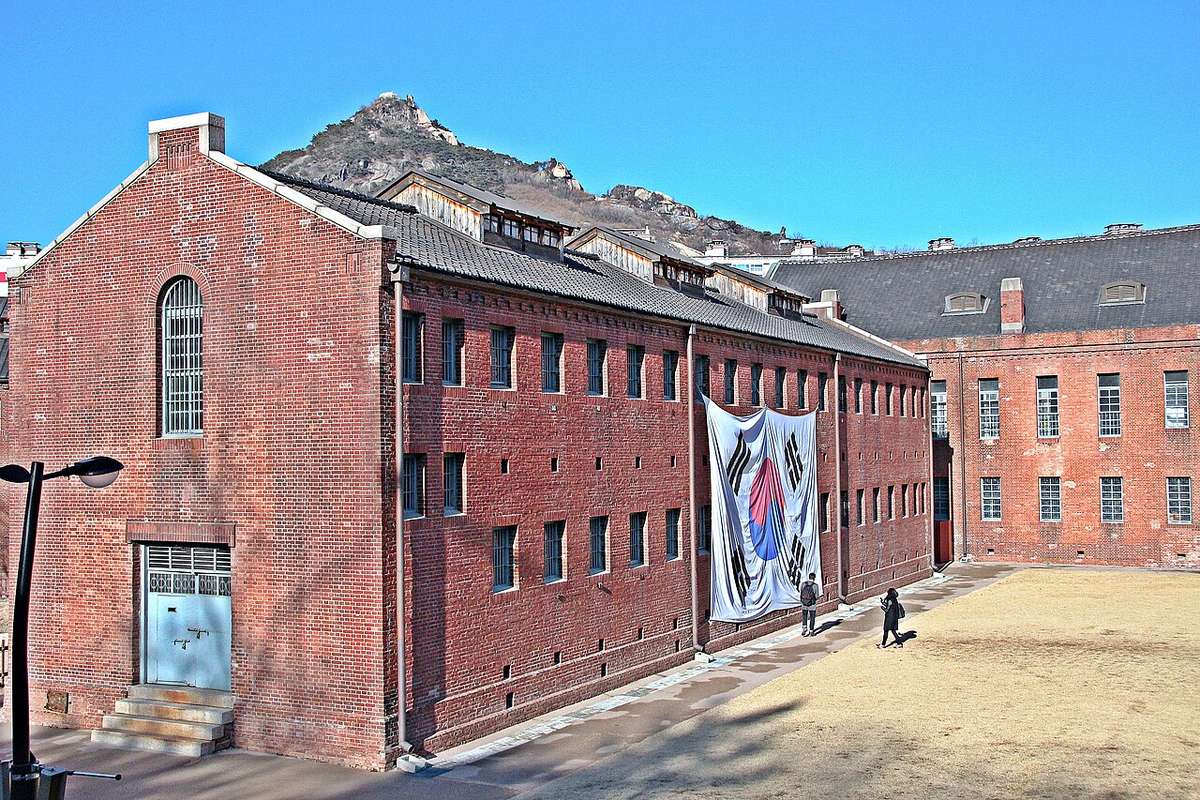
Seodaemun Prison History Hall is a museum made from a prison that was actually in use for eighty years, from 1908 to 1987. Under Japanese rule countless independence activists were held here, Yu Gwan-sun, Kang U-gyu and Kim Gu among them, and after liberation pro-democracy activists passed through the same cells. With the red-brick blocks, the narrow solitary cells and the execution building still standing, it is a place where you feel modern Korean history rather than read it. Just in front, in Seodaemun Independence Park, stands Independence Gate, raised in 1897 by the Independence Club where a gate for welcoming Chinese envoys had been torn down. In a single park you see the gate that declared independence and the prison where those who cried out for it were locked away.
📖 The Story
Once China's grip on Korea had been broken by the Sino-Japanese War, the Independence Club led by Seo Jae-pil decided in 1896 to tear down Yeongeunmun, the gate where Chinese envoys had been received, and raise a new gate nearby. Everyone from the king to ordinary people gave money, the foundation stone was laid in November 1896, and Independence Gate was finished in November 1897. Mohwagwan, the old envoys' hall next to it, was refitted as Independence Hall and became the club's meeting place. Two foundation stones of the demolished Yeongeunmun still stand in front of the gate, showing what was replaced with what.
Eleven years later, in October 1908, the Japanese Residency-General opened Gyeongseong Prison on the slope right next door. It was renamed Seodaemun Jail in 1912 and Seodaemun Prison in 1923, and after the March First Movement of 1919 the number of inmates soared. Kang U-gyu, who threw a bomb at Governor-General Saito at Seoul Station in 1919, was executed here, and Yu Gwan-sun, jailed for her part in the March First Movement, died in the women's block in 1920 after torture and malnutrition. Of the two poplars planted in front of and inside the execution building, the inner one is said to have never grown properly, and it is known as the "poplar of lament".
After liberation the prison carried on under new names, Seoul Prison, Seoul Penitentiary and Seoul Detention Center, and under the dictatorships it held pro-democracy activists. When the detention center moved to Uiwang in Gyeonggi Province in November 1987, most buildings were demolished, but several cell blocks, the execution building and the ward for leprosy patients survived and opened as the history hall in 1998. That a Japanese colonial prison went on being a prison for more than forty years after liberation is part of the history this place shows.
✦ Highlights
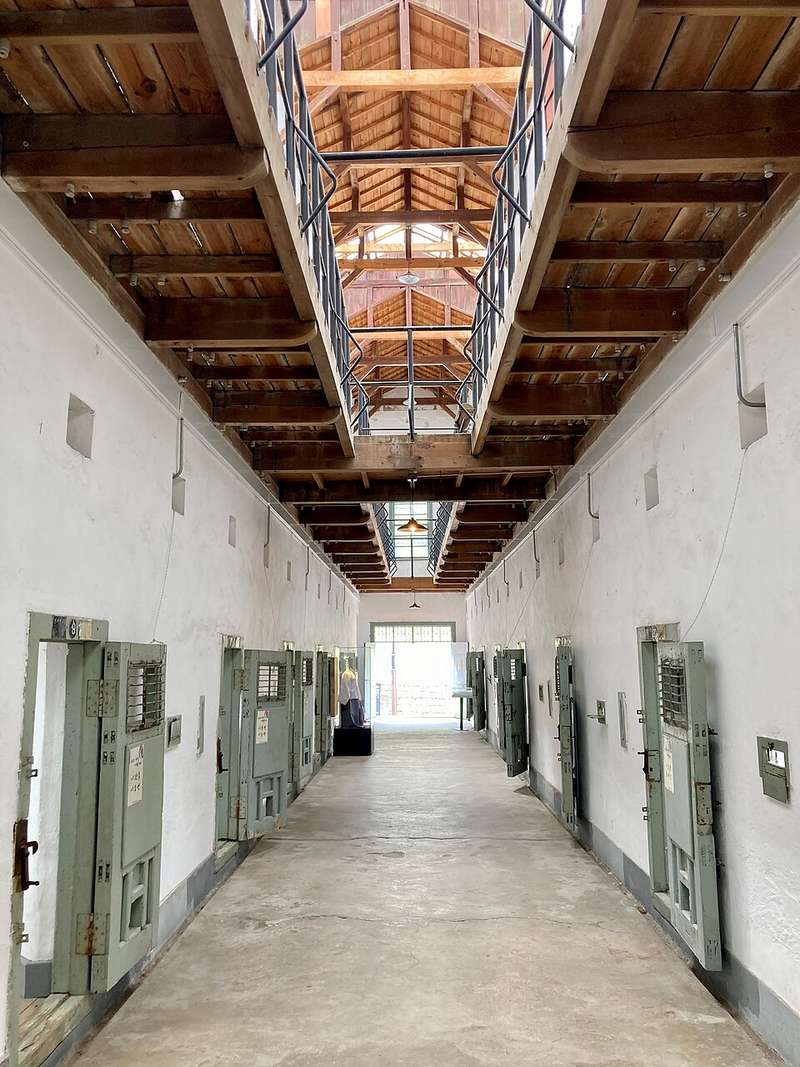
- ›The cell blocks and solitary cellsRed-brick blocks radiating in three wings from a central watch post, with narrow cells lining both sides of each corridor. You can look into the very cells where independence and pro-democracy activists were held.
More
The layout lets a single guard at the center watch all three corridors. The small window above each door and the food slot at the bottom make it clear how cramped life in the cells was. The blocks stayed in use as a prison until 1987, so the same corridors held independence activists under colonial rule and pro-democracy activists under the dictatorships. The reconstructed basement torture rooms can be hard going for some visitors, so you may want to skip them with children.
- ›The women's blockThe block where Yu Gwan-sun and other women independence activists were held, now an exhibition that remembers the women imprisoned there by name and face, one by one.
More
Yu Gwan-sun, arrested after leading the March First demonstration at Aunae market in Cheonan, was held in cell 8 of the women's block, and died here in 1920 after torture and malnutrition. The women who shared her cell are said to have shouted "Manse!" inside the prison on the first anniversary of the March First Movement. The block was pulled down around 1979 and rebuilt on its excavated site after the detention center moved out. Walk slowly past the prison record photos on the walls, and you see the people behind names that survive as a single line in the textbooks.
- ›The execution building and the poplar of lamentA wooden building enclosed by a high wall at the far end of the site, with the tree called the "poplar of lament" in front. It is the heaviest place in the history hall.
More
Kang U-gyu, who threw a bomb at Governor-General Saito at Seoul Station in 1919, and many other independence activists were executed here. Of the two poplars planted in front of and inside the building, the inner one is said never to have grown properly. Behind it survives part of the underground passage through which bodies were secretly taken out of the prison. Much of it is viewed from outside rather than entered, so follow the signs and pass quietly.
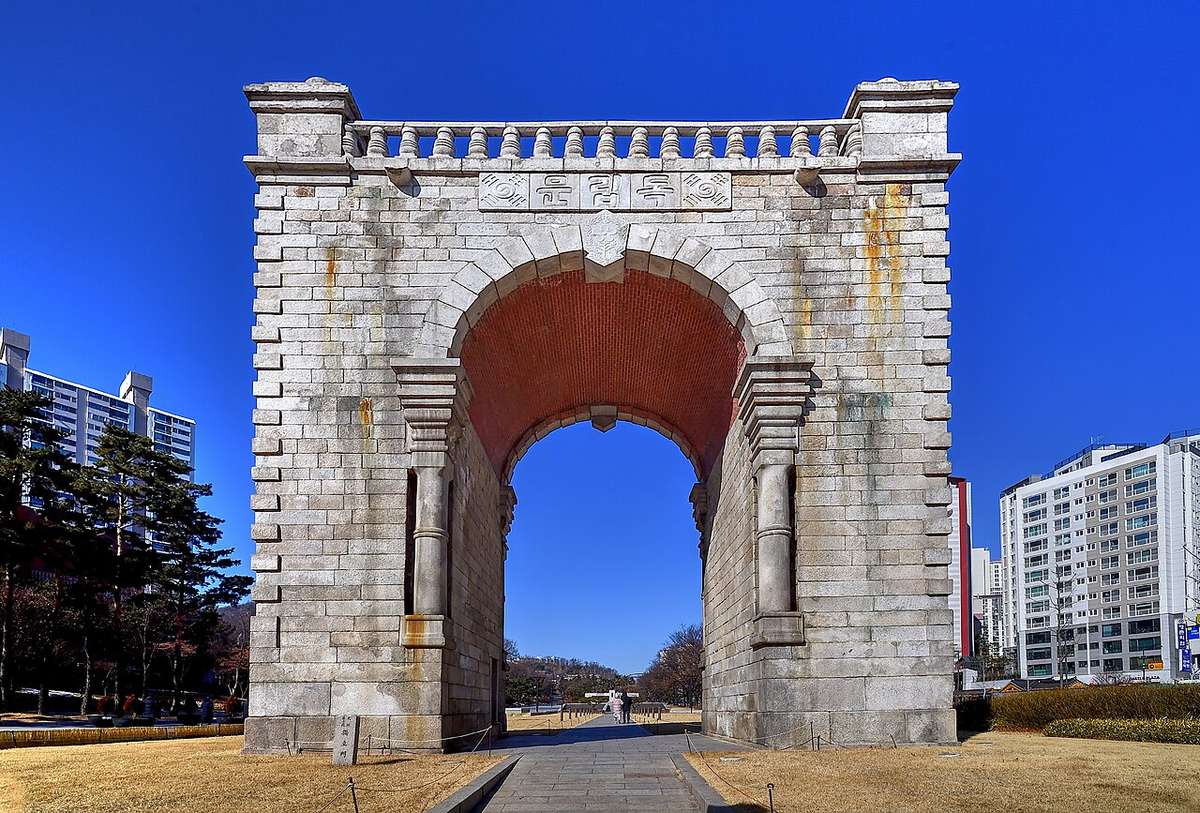
- ›Independence Gate and the Yeongeunmun foundation stonesThe stone gate modeled on the Arc de Triomphe and raised by the Independence Club in 1897. In front stand two foundation stones of Yeongeunmun, the gate for welcoming Chinese envoys, showing what was replaced with what.
More
The Independence Club led by Seo Jae-pil raised it by public subscription to declare national independence once China's grip had been broken, and everyone from the king to ordinary people gave money. The name "Independence Gate" is carved in hangeul on one side of the lintel and in Chinese characters on the other. In 1979 it was moved about 70 m northwest of its original spot to make way for Seongsan-daero. Independence Hall just behind it is a rebuilding on the site of Mohwagwan, where the Independence Club met, so seeing the gate and the hall together gives you a picture of what the club did.
🚶 Self-Guided Walk
- 1Dongnimmun StationCome up from the station into Seodaemun Independence Park.
- 2Independence Gate and the Yeongeunmun stonesLook first at the two foundation stones in front, then pass through the gate and compare the hangeul and Chinese characters on either side.
- 3History exhibition hallRead the prison's eighty-year history first in the exhibition hall, housed in the old security department building.💡 With children, you can skip the reconstructed torture rooms in the basement.
- 4The cell blocksStand at the central watch post, look down the three corridors, then into the cells.
- 5The women's blockRead the names of the women held alongside Yu Gwan-sun.
- 6The execution buildingPause in front of the poplar. This is the last stop.💡 This is a place of mourning. Skip group shots and playful poses.
🧭 Visitor Info
💡 Good to Know
- Seeing it all takes 90 minutes to two hours, so aim to arrive at least an hour before closing.
- It is free on Independence Movement Day and Liberation Day but very crowded then. Weekday mornings are calmer.
- Read the parts of this site's Unit 6 on the loss of sovereignty and the March First Movement first, and the names outside the cells will be familiar.
🗺 Pair Your Visit
The Independence Club was founded in 1896 around Seo Jae-pil; it published The Independent, raised Independence Gate near the site of Yeongeunmun, and held the Manmin Gongdonghoe mass assemblies calling for national sovereignty. Kang U-gyu threw a bomb at Governor-General Saito at Seoul Station in 1919, and Yu Gwan-sun, arrested after leading the March First demonstration at Aunae market in Cheonan, died in Seodaemun Prison. The gate and the prison appear together in photo-based questions spanning the opening of the ports to the colonial period.