The War Memorial of Korea and Haebangchon, Yongsan
解放村A memorial that gathers the memory of war, and a hillside neighborhood under Namsan built by liberation and refuge
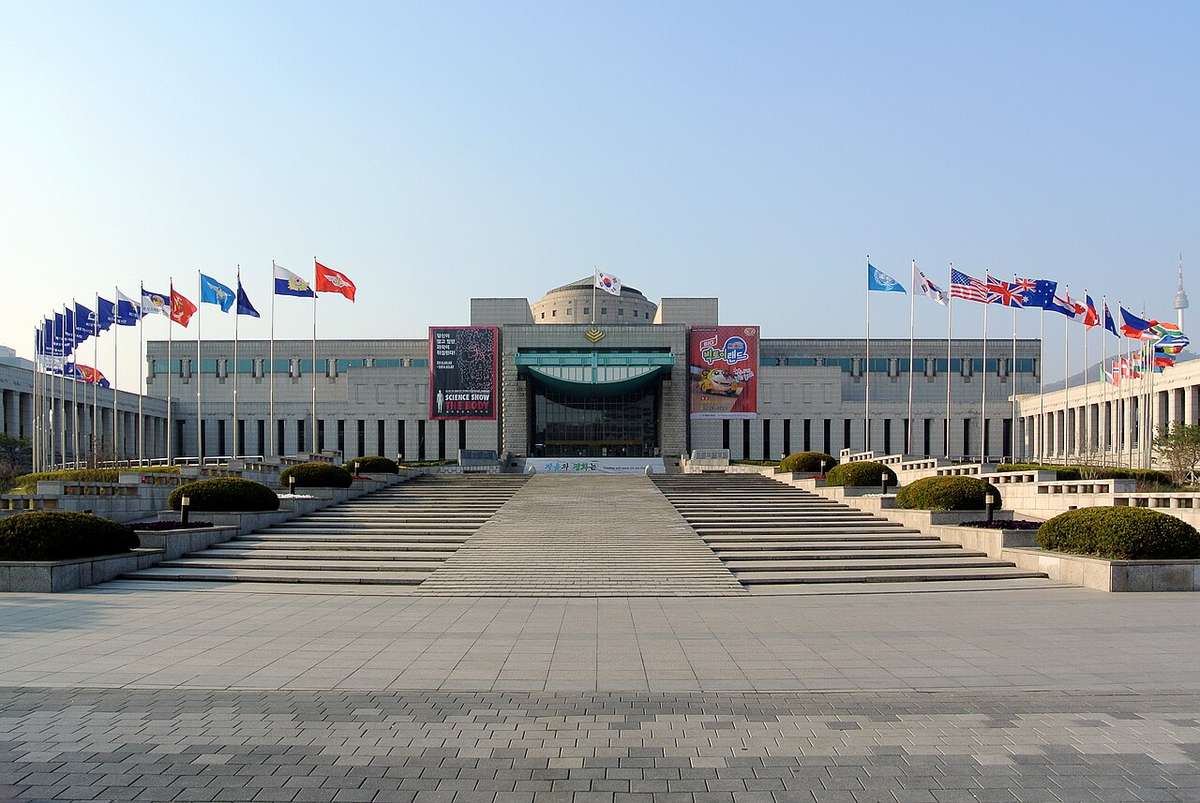
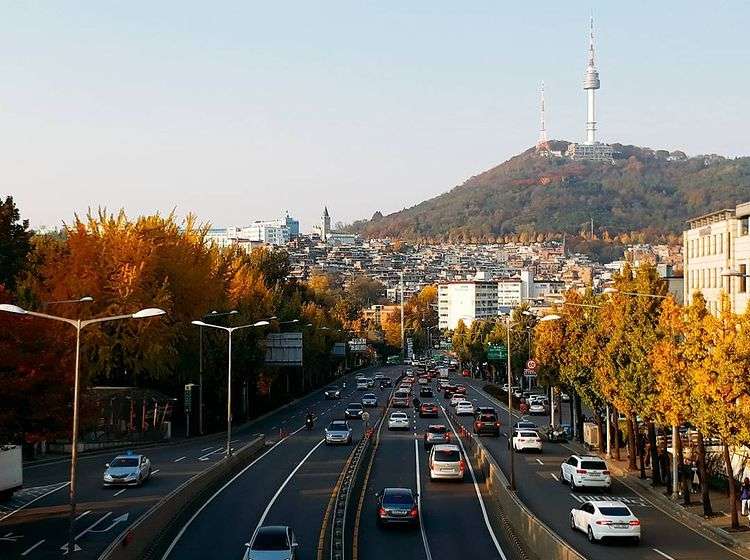
Yongsan sits at the very center of Seoul, yet for a long time it was the land of foreign armies. On one side of it stands the War Memorial of Korea, opened in 1994, a large museum of the peninsula's wars from the Three Kingdoms to the Korean War; its permanent galleries are free, and real aircraft and tanks line its grounds. Climb the hill toward Namsan and you reach Haebangchon, "Liberation Village". It grew up after liberation in 1945, when Koreans returning from abroad, refugees from the North and then Korean War evacuees built shacks on the southern slope of Namsan. Today foreign visitors come for its rooftop cafés looking over the city and its international restaurants.
📖 The Story
On the Haebangchon slope runs a long stairway called the 108 Steps, built in 1943 as the approach to a Shinto shrine the colonial government put up on the slopes of Namsan. Two years later came liberation, the shrine disappeared, and people with nowhere else to go gathered on its empty grounds and the slope around it. Koreans returning from abroad and refugees who had crossed the 38th parallel from the North built shacks, and the village took the name Haebangchon, "Liberation Village".
When the Korean War broke out, evacuees swelled the village further. Sinheung Market, opened in 1953, became the hillside residents' marketplace, and in the 1960s and 70s small knitting workshops run by local people filled the alleys. The spire of a church founded by people from the North still stands at the top of the hill. In the 2010s young businesses moved into the old market and lanes, and a neighborhood that holds Seoul's modern history intact came back to life.
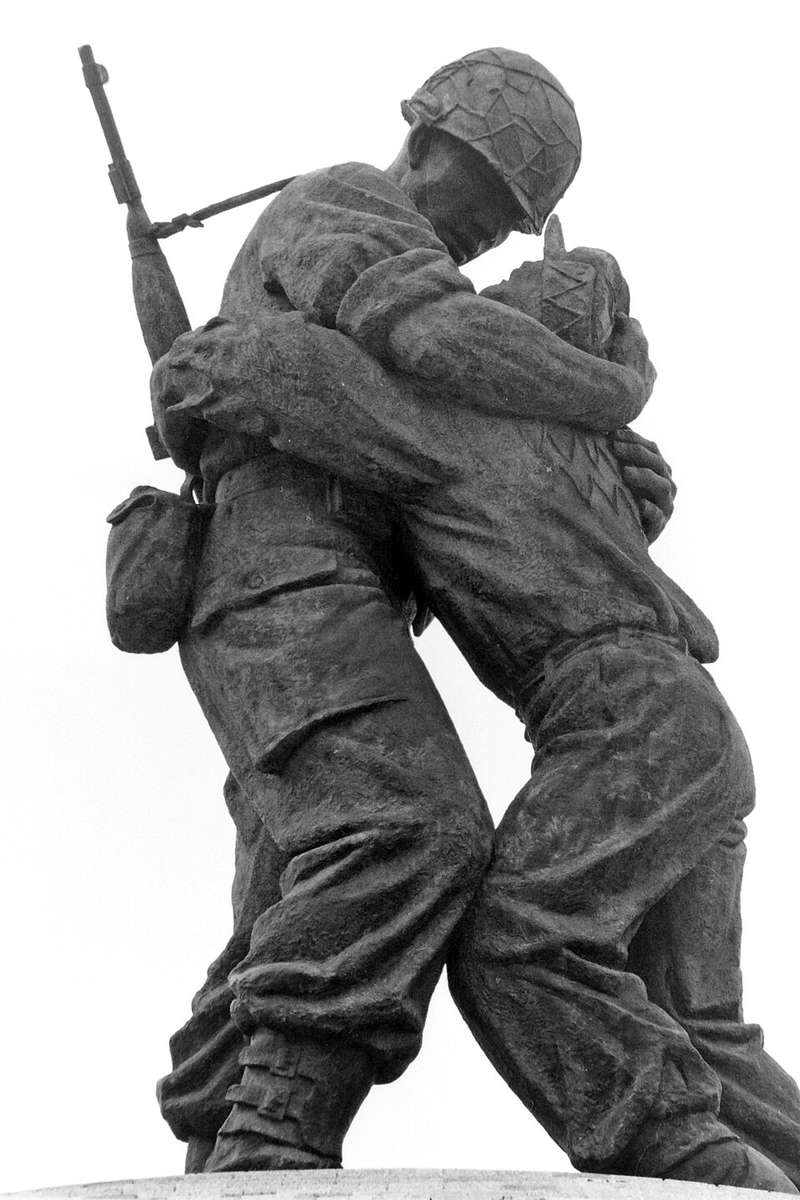
The flat land of Yongsan below Haebangchon was garrisoned in turn by Qing troops in late Joseon, the Japanese army under colonial rule, and the US military after liberation. The War Memorial of Korea opened in June 1994 on the site of the former Army Headquarters. The "Statue of Brothers" in the entrance plaza shows an older brother in the South Korean army and a younger brother in the North Korean army meeting and embracing on the battlefield, capturing the tragedy of a war in which one people turned their guns on each other. Since the US base moved away, part of its land is being turned into a park.
✦ Highlights
- ›The War Memorial's galleries and outdoor exhibitsThe War Memorial of Korea, opened in 1994 on the site of the former Army Headquarters. Indoor galleries cover everything from the Three Kingdoms to the Korean War and the deployment to Vietnam, and an outdoor area is lined with real aircraft and tanks.
More
The permanent galleries are free. The Korean War galleries follow events in order, from the outbreak on 25 June 1950 through the Incheon landing and Chinese intervention to the armistice of July 1953. The records of the countries that fought under the UN flag get a large share of space, and you often see visitors from those countries looking for their own nation's part. Seeing it all takes half a day, so on a first visit focus on the Korean War galleries and the outdoor area.
- ›The Statue of BrothersThe large sculpture in the War Memorial's entrance plaza, showing a South Korean soldier and his younger brother in the North Korean army meeting and embracing on a Korean War battlefield.
More
It is said to be based on the story of real brothers in the Korean War. That it commemorates not victory but the pain of a divided people turning their guns on each other says a great deal about what the memorial wants to convey. You can also look around the space inside, beneath the sculpture. Stand in front of it before you go into the museum, and you will see the exhibits in a different light.
- ›The 108 Steps and the Haebangchon hillSteps built in 1943 as the approach to Gyeongseong Hoguk Shrine, a Japanese shrine on the slopes of Namsan. They are now the way up and down for Haebangchon's residents, with an inclined elevator added in 2018.
More
The shrine, built to honor the war dead and stir up support for Japan's wars, vanished with liberation, leaving only the steps. On its empty grounds and the slope around it, Koreans returning from abroad and refugees from the North pitched tents and built shacks, and Haebangchon, "Liberation Village", was born. Turn around on the way up and Yongsan and the city toward the Han spread out below. That steps built for colonial rule became the lane of a living neighborhood after liberation is the history of Haebangchon in a single image.
- ›Sinheung Market and the rooftop viewsA hilltop market in Haebangchon running since 1953, where old shops mix with new cafés, and nearby rooftops look out on N Seoul Tower and downtown Seoul.
More
From the 1960s to the 80s, small knitting workshops run by local people filled the alleys, and Sinheung Market was their marketplace. A new roof over the market brought in young businesses, but old hardware and mending shops still open their doors. At the top of the hill stands the spire of a church founded by people from the North. N Seoul Tower and the city lights seen from a rooftop at dusk are the neighborhood's signature view.
🚶 Self-Guided Walk
- 1Samgakji Station · War MemorialSee the Statue of Brothers first, then the indoor galleries, focusing on the Korean War rooms.💡 The outdoor exhibits are easiest to see on foot after the indoor galleries.
- 2Toward NoksapyeongWalk northeast to the Noksapyeong Station area.
- 3The 108 StepsClimb the steps onto the Haebangchon hill, or take the inclined elevator.
- 4Sinheung Market · Haebangchon junctionPass through the market lanes and browse the shops along Haebangchon's main street.
- 5Dusk on a rooftopEnd on a hilltop rooftop with N Seoul Tower and the city lights.
🧭 Visitor Info
💡 Good to Know
- Haebangchon is all hills and steps. If you have walked a lot at the War Memorial, take a bus or taxi up the hill.
- Haebangchon is still a residential area with many long-time residents. Keep the noise down in the lanes late at night.
- Read the Korean War timeline on this site's division and DMZ pages first, and the War Memorial's exhibits will make more sense.
🗺 Pair Your Visit
The Korean War (1950–1953) began with the North's invasion and passed through the Incheon landing, Chinese intervention and the January 4th Retreat before the armistice of July 1953 halted it. In the process great numbers of northern refugees and evacuees poured into Seoul, creating neighborhoods like Haebangchon. The returning Koreans and northern refugees of the immediate post-liberation years, and the hardening of division after the armistice, come up often in modern history questions.