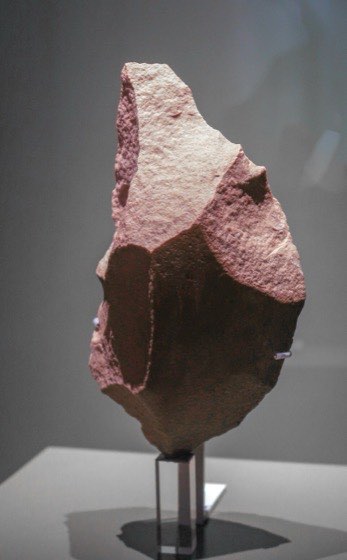
The history of the Korean Peninsula begins in the Paleolithic Era, about 700,000 years ago. People used chipped stone tools made by striking stone, lived by hunting and gathering, and moved in search of food, living in caves or riverside pit-huts.
- Yeongcheon Jeongok-ri site (found 1978) — the first Acheulean-type hand-axe in East Asia was excavated here, a world-class site that overturned the Movius theory that "East Asia had only a chopper culture."
- Gongju Seokjang-ri site — the first Paleolithic site excavated in South Korea (1964) and the starting point of Paleolithic research on the peninsula.
- Key tools: the hand-axe (an all-purpose tool) → in the later period, refined into microliths such as tanged points.
- People used fire, burial customs appeared, and it was an egalitarian society with no classes.
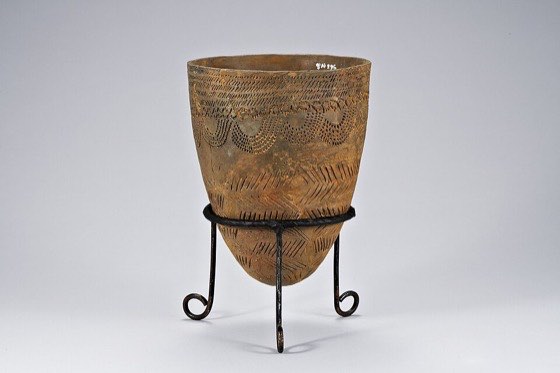
About 10,000 years ago, humans began growing grains such as millet and barnyard millet, ending their nomadic life. This great shift to farming and settlement is called the Neolithic Revolution.
- Comb-pattern pottery — a symbol of the Neolithic, its pointed base was stuck into riverbank sand to store and cook food. The Seoul Amsa-dong and Busan Dongsam-dong (shell mound) sites are representative.
- They used ground stone tools shaped by grinding stone, grinding stones and slabs for milling grain, and spindle whorls and bone needles for spinning thread (early handicrafts).
- They settled in pit-houses (round floors, a central hearth) by rivers and coasts.
- Primitive beliefs such as animism, totemism, and shamanism appeared, but it was still an egalitarian society.
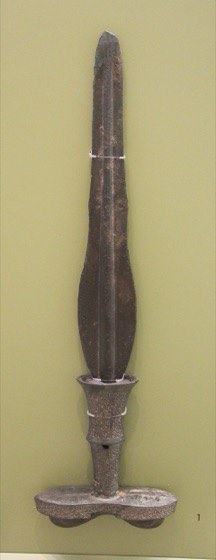
As bronze spread, rice farming took hold and private property and social classes emerged. On this basis, Dangun Wanggeom founded Gojoseon, the first state in our history (BC 2333, per the Samguk yusa).
- Dolmens (goindol) — about 40% of the world's dolmens are concentrated on the Korean Peninsula. The Gochang, Hwasun, and Ganghwa dolmen sites are UNESCO World Heritage (2000). Moving stones of tens of tons is itself evidence of the rise of rulers (chieftains) — that is, of a class society.
- Key artifacts: the lute-shaped bronze dagger, coarse-patterned mirrors, plain (mumun) pottery, and the half-moon stone knife for rice harvesting.
- Dangun Wanggeom = "Dangun (high priest) + Wanggeom (political ruler)," showing a society with unity of religious and political rule.
- The Eight Prohibitions (8jo-beop) — three articles survive, such as "one who kills another shall be put to death," showing that life, labor, and private property were valued.
- Under Wiman Joseon (BC 194) it grew through adopting iron and intermediary trade → destroyed by the invasion of Emperor Wu of Han (BC 108).
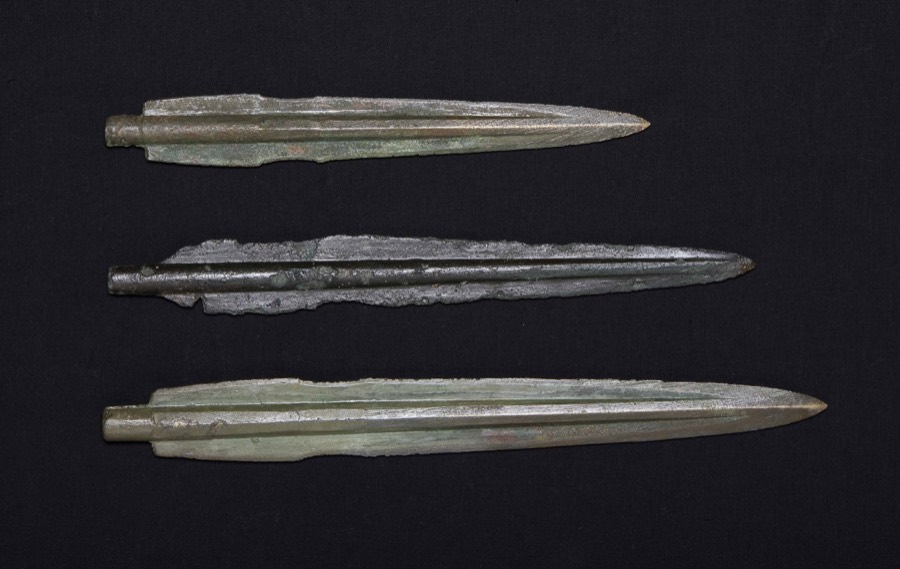
As iron farming tools and weapons spread, production grew greatly, and several states rose across Manchuria and the Korean Peninsula. These states became the roots of the Three Kingdoms.
- The Korean-style slender bronze dagger and casting molds — the culmination of an independent bronze culture. Excavated Mingdao and Banliang coins (Chinese currency) and brushes show exchange with China and the use of Chinese characters.
- Buyeo — a five-tribe confederation (sachul-do), with the Yeonggo heaven-worship festival (12th month).
- Okjeo — the child-bride custom · Dongye — the chaekhwa (village-boundary fine), the Mucheon heaven-worship festival, and short bows, ponies, and spotted-seal skins.
- Samhan (Mahan, Jinhan, Byeonhan) — the priest cheon-gun and the sacred zone sodo (separation of religion and politics), the 5th- and 10th-month seasonal rites, and Byeonhan's iron exports.
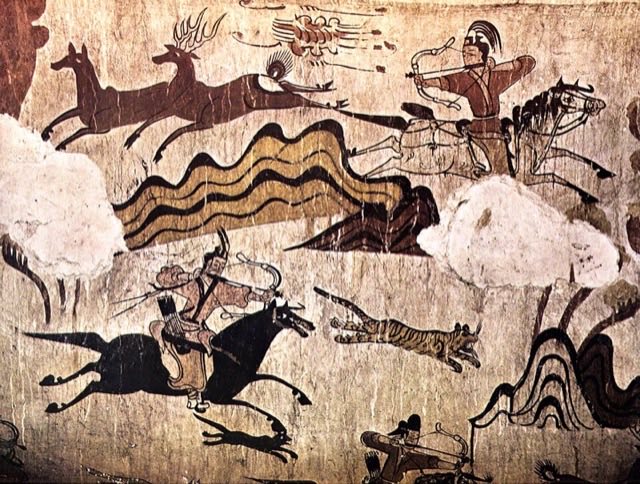
An era when the three kingdoms of Goguryeo, Baekje, and Silla grew while competing over the Han River basin — they peaked in turn: Baekje in the 4th century → Goguryeo in the 5th → Silla in the 6th, while in the south stood the confederated kingdom of Gaya, not counted among the three. Click a country's name to learn more.
- Founding — BC 37, Jumong (King Dongmyeong) founded it at Jolbon. King Sosurim organized the state by establishing the Taehak academy and adopting Buddhism (372).
- Gwanggaeto the Great — expanded the territory to its greatest extent, reaching Manchuria, and repelled the Wa who invaded Silla (the Houmyeong vessel is evidence). His son King Jangsu moved the capital to Pyongyang (427) and pursued a southward policy — his achievements survive on the Gwanggaeto Stele and the Chungju (Jungwon) Goguryeo Stele.
- Wars with Sui and Tang — Eulji Mundeok's Battle of Salsu (612, repelling a Sui army of 1.13 million) and the Battle of Ansi Fortress (645, repelling Emperor Taizong of Tang). Goguryeo served as a breakwater for East Asia.
- Culture — tomb murals such as the hunting scene in the Muyong Tomb and the Four Guardian Deities in the Gangseo Great Tomb. Marked by a bold, majestic spirit.
- Founding — BC 18, Onjo, who came down from Goguryeo, founded it in the Han River basin (Wiryeseong). Thanks to the Han River's advantages, it peaked first.
- King Geunchogo (4th c.) — conquered Mahan and attacked Goguryeo's Pyongyang fortress (King Gogugwon was killed). He bestowed the Chiljido (seven-branched sword) on Japan, and Wangin and Achiki transmitted learning, influencing Japan's Asuka culture.
- Tomb of King Muryeong — a Chinese Southern Dynasties-style brick tomb found intact and unlooted (1971), proving Baekje's international outlook. King Seong moved the capital to Sabi (Buyeo, 538) and sought a revival.
- Culture — the Baekje Gilt-bronze Incense Burner, the stone pagoda at the Mireuksa Temple site in Iksan (Korea's largest and oldest stone pagoda), and the five-story stone pagoda at the Jeongnimsa Temple site in Buyeo. The aesthetic of "frugal but not shabby, splendid but not extravagant" (geomibullu hwaibulchi).
- Fall — despite Gyebaek's Battle of Hwangsanbeol, it fell to the Silla–Tang allied forces (660).
- Founding — BC 57, Bak Hyeokgeose. The Bak, Seok, and Kim clans took the throne in turn until the Kim clan's hereditary rule settled in. It ran a strict status system, the bone-rank system (golpum).
- State organization — King Jijeung (adopted the name 'Silla,' conquered Usan-guk in 512 — the root of sovereignty over Dokdo) and King Beopheung (promulgated a legal code, recognized Buddhism in 527).
- King Jinheung (6th c.) — took the Han River basin (the Danyang Jeokseong Stele and four royal inspection steles) and organized the Hwarang as a state institution.
- Culture — Cheomseongdae (built under Queen Seondeok, the oldest observatory in East Asia), gold crowns (Cheonmachong and Hwangnam Daechong tombs), and Bunhwangsa Temple.
- Unification of the Three Kingdoms — Kim Chunchu's (King Taejong Muyeol) Silla–Tang alliance → the fall of Baekje (660) and Goguryeo (668) → then drove out even the Tang army at Maeso-seong and Gibeolpo, completing unification (676, King Munmu). Kim Yusin was the military leader.
- Founding — AD 42, King Suro (the Gujiga legend). A confederated kingdom centered on Geumgwan Gaya in Gimhae in the early period and Dae Gaya in Goryeong later.
- The kingdom of iron — it prospered by exporting high-quality iron as ingots to Nangnang and the Wa. Many iron armors and plate armors have been excavated.
- Culture — Gaya pottery directly influenced Japan's Sue ware. The gayageum created by Ureuk was passed on to Silla and continues to this day. The Gaya Tumuli are UNESCO World Heritage (2023).
- Limits — never developing into a centralized state, Geumgwan Gaya (532) and Dae Gaya (562) were annexed by Silla.
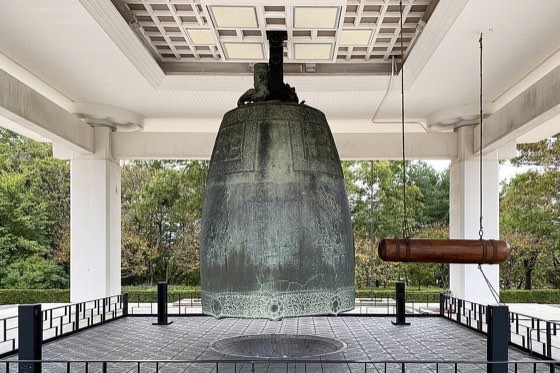
An era when Unified Silla in the south and Balhae in the north coexisted. Because Balhae succeeded Goguryeo, it is called the "North–South States period."
- Unified Silla — King Sinmun organized the 9 provinces and 5 secondary capitals and founded the Gukhak academy. Bulguksa Temple and Seokguram Grotto (UNESCO World Heritage) are the essence of Buddhist art, and the Great Dharani Sutra of Immaculate and Pure Light found in the Seokgatap pagoda is the oldest surviving woodblock print in the world.
- Wonhyo (anyone could attain buddhahood by chanting 'Namu Amitabul' — popularizing Buddhism) and Uisang (the Hwaeom school), and Jang Bogo's Cheonghaejin (828, dominating maritime trade).
- Balhae — the Goguryeo refugee Dae Joyeong founded it at Mount Dongmo (698). Its consciousness of succeeding Goguryeo is clear, calling its ruler "King of Goryeo (Goguryeo)" in a state letter sent to Japan.
- It peaked under King Seon — China called it the Haedong Seongguk (the flourishing land east of the sea). It was destroyed by the Khitan (926).
- Late period: the rise of local lords and the head-rank-six (6-dupum) class → division into the Later Three Kingdoms (Gyeon Hwon's Later Baekje, Gung Ye's Later Goguryeo).
Wang Geon founded it (918) and unified the Later Three Kingdoms (936). Arab merchants frequenting the international trade port of Byeongnando made 'Goryeo' known to the West, and the name KOREA comes from here.
- State organization — King Gwangjong's Slave Review Act and the introduction of the gwageo civil service examination (958), and King Seongjong's Confucian governance (Choe Seungno's 28-Point Memorial).
- Overcoming invasions — Khitan: Seo Hui's diplomatic negotiation (the Six Garrison Settlements east of the river, 993) → Gang Gamchan's Battle of Gwiju (1019). Jurchen: Yun Gwan's Special Military Corps. Mongols: resistance after moving the capital to Ganghwa Island, and the Sambyeolcho's fight to the end.
- A printing revolution — the Sangjeong Gogeum Yemun (1234) is the world's first record of metal movable-type printing, and the Jikji (1377) is the oldest surviving book printed with metal movable type (UNESCO Memory of the World, some 70 years ahead of Gutenberg). The Tripitaka Koreana, carved to overcome the Mongol invasion by the power of the Buddha, is a marvel of over 80,000 woodblocks with almost no errors.
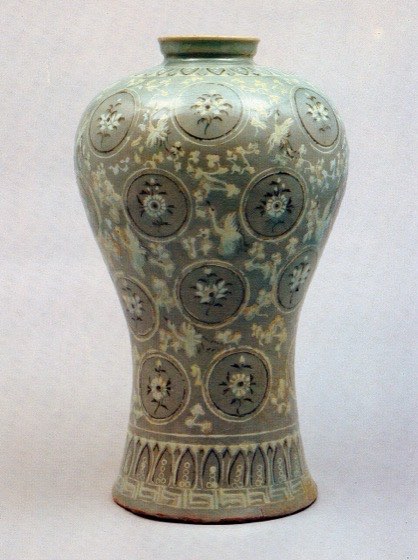
- Goryeo celadon — the peak of its jade-green (bisaek) color through the original sanggam inlay technique. After King Gongmin's anti-Yuan reforms for independence, the new scholar-officials and Yi Seong-gye rose, leading to a change of dynasty.
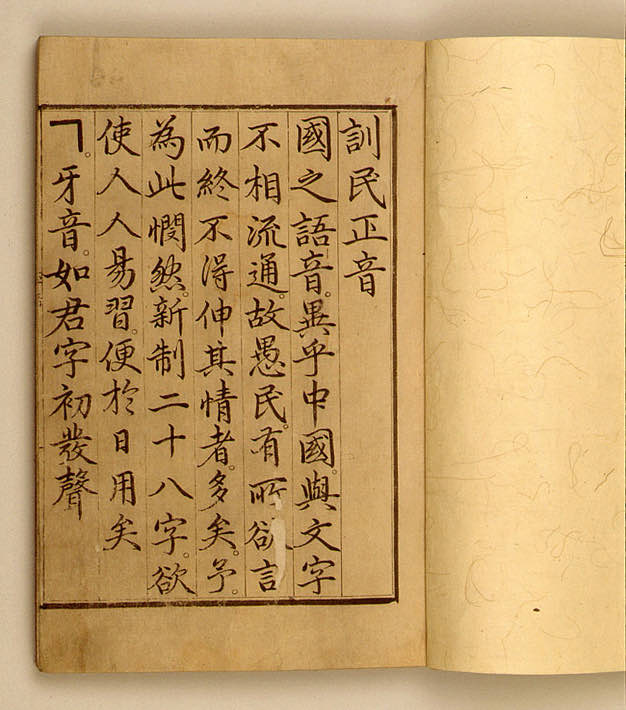
Yi Seong-gye seized power through the turn-back of the army at Wihwado (1388), founded the dynasty in 1392, and moved the capital to Hanyang. It was a dynasty that lasted 518 years with Confucianism (Neo-Confucianism) as its ruling ideology.
- King Sejong — the creation (1443) and promulgation (1446) of Hunminjeongeum (the Korean script), the rain gauge, self-striking water clock, and sundial (by Jang Yeong-sil), and the opening of the Four Forts and Six Garrisons (fixing today's border). Under King Seongjong, the Gyeongguk daejeon (the National Code) was completed, establishing rule of law.
- The Imjin War (1592–1598) — overcome through Yi Sun-sin's Battle of Hansando (the crane-wing formation), the Battle of Myeongnyang (defeating 133 ships with 13), and the Battle of Noryang, the turtle ships, and righteous armies such as Gwak Jae-u's. Later, Byeongja Horan (the Manchu invasion of 1636) forced a subject relationship with the Qing.
- The Yeongjo–Jeongjo renaissance — King Yeongjo's policy of impartiality (tangpyeong) and the Equalized Tax Law, and King Jeongjo's Royal Library (Gyujanggak) and Suwon Hwaseong Fortress (built with Jeong Yak-yong's crane device, a UNESCO World Heritage site).
- Silhak (Practical Learning) — Jeong Yak-yong (Mongmin simseo) and Bak Jiwon and Bak Jega (the Northern Learning school). The Annals of the Joseon Dynasty (472 years of records) and the Diaries of the Royal Secretariat form a world-class record culture (UNESCO Memory of the World).
- The turbulence of modernity — the opening of ports by the Ganghwa Island Treaty (1876) → the Donghak Peasant Movement and the Gabo Reforms (1894) → the proclamation of the Korean Empire (Daehan Jeguk, 1897) → the Eulsa Treaty (1905) → the loss of national sovereignty (1910).
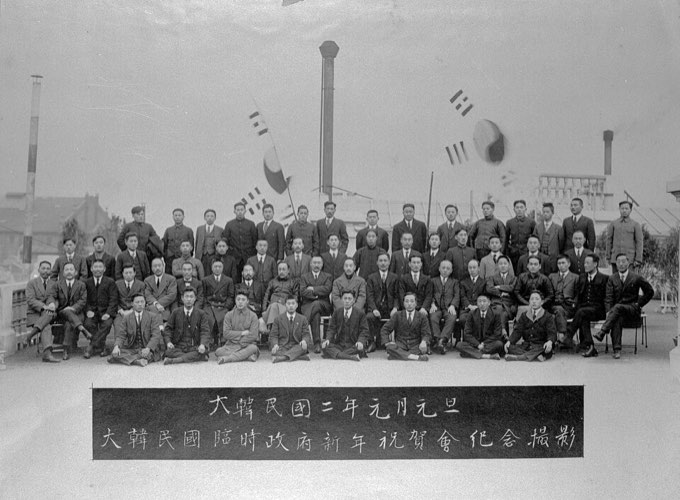
For the 35 years after national sovereignty was taken, the independence movement never stopped at home or abroad. Japanese rule shifted from military rule → "cultural rule" → the policy of national erasure, but resistance only grew.
- The March First Movement (1919) — the largest mass demonstration, with 2 million people nationwide. It led to the establishment of the Provisional Government of the Republic of Korea in Shanghai (a democratic republic — the root of today's constitutional spirit).
- Armed struggle — Hong Beom-do's Battle of Bongodong and Kim Jwa-jin's Battle of Cheongsanri (1920), the Heroic Corps (Kim Won-bong), the patriotic acts of Yi Bong-chang and Yun Bong-gil (1932), and the founding of the Korean Liberation Army (1940).
- Building strength and preserving culture — the Buy Korean movement, the Singanhoe (1927, a left–right coalition), the Gwangju Student Anti-Japanese Movement (1929), and the Korean Language Society's efforts to protect Hangeul.
- From the 1930s, the policy of national erasure forced name-changing to Japanese and Shinto shrine worship → Liberation on August 15, 1945.
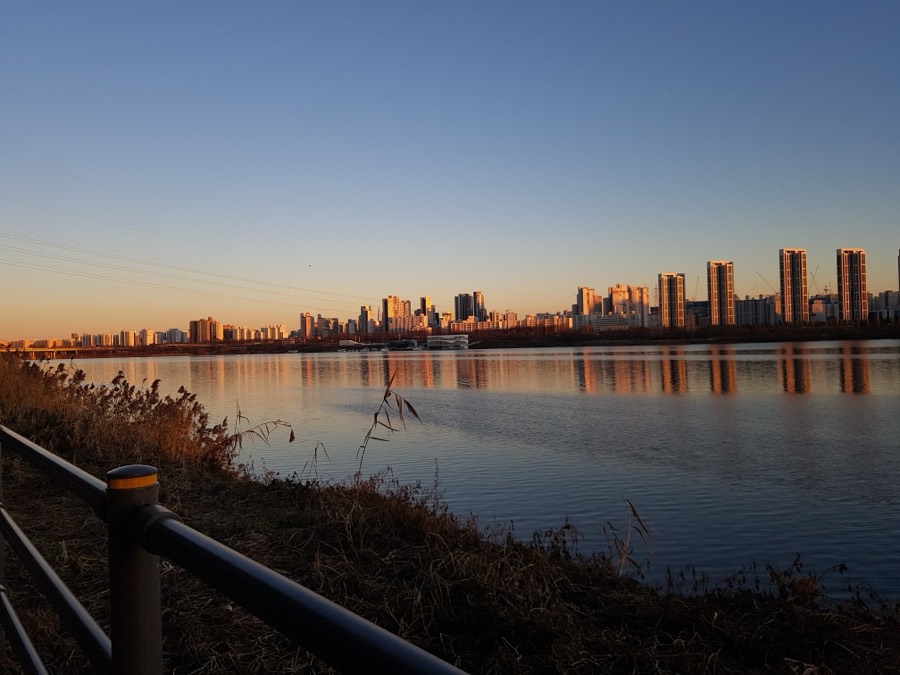
Starting from the ruins of war, it achieved industrialization and democratization at once — a nation without parallel in world history. It is the only country to go from receiving aid to giving it.
- Founding of the government — through the May 10 general election and the founding constitution, the Republic of Korea government was established on August 15, 1948. The Korean War (1950–1953) — the Incheon Landing reversed the tide, and the armistice (July 27, 1953) cemented the division.
- Industrialization — the Five-Year Economic Development Plans, the Gyeongbu Expressway (1970), and the New Village (Saemaul) Movement → the Miracle on the Han River, extending to steel, shipbuilding, and semiconductors.
- Democratization — the April 19 Revolution (1960) → the May 18 Democratization Movement (1980) → the June Democratic Uprising (1987), winning direct presidential elections.
- A leap forward — the Seoul Olympics (1988), OECD membership (1996), the early overcoming of the 1997 IMF currency crisis through efforts like the gold-collecting campaign, and reaching the World Cup semifinals in the Korea–Japan tournament (2002).
- K-culture — from BTS and BLACKPINK to the film Parasite (2020 Academy Award for Best Picture) and Squid Game — an era of meeting the world through culture.