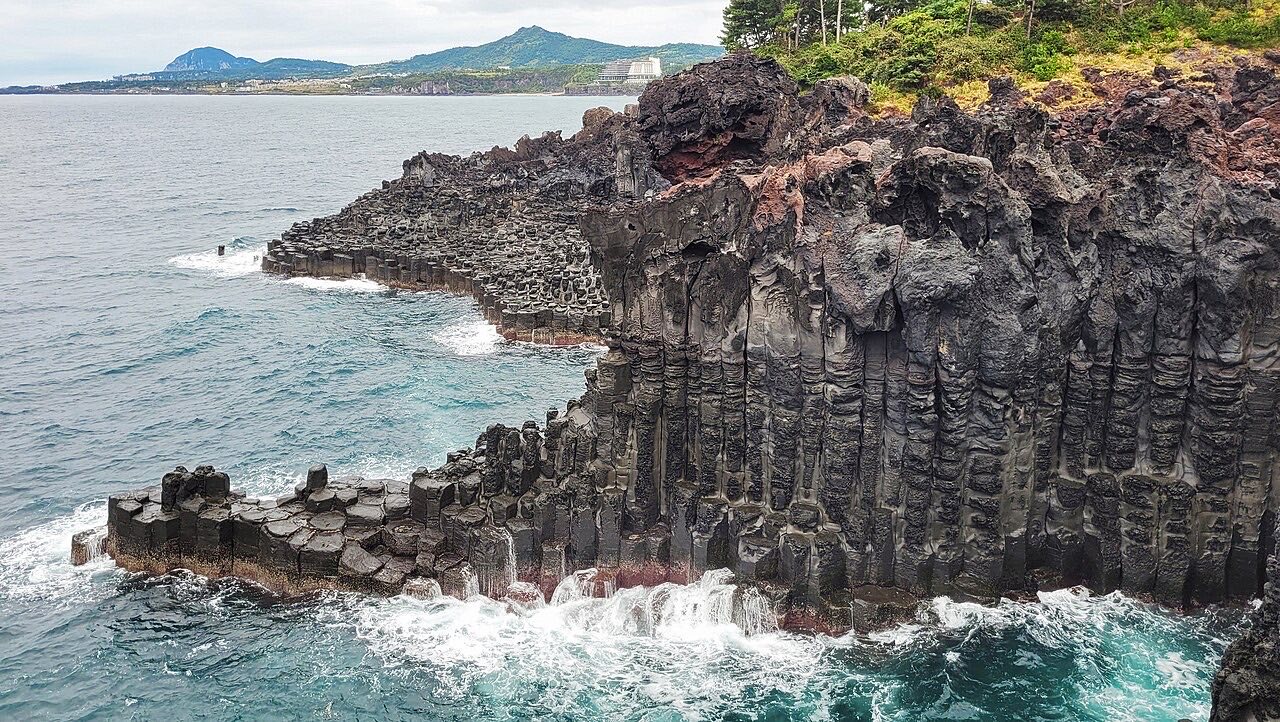
Korea's largest island, shaped by volcanoes — a UNESCO natural heritage
Jeju is Korea's largest island, formed by volcanic activity, and its Hallasan, Seongsan Ilchulbong, and lava tubes are inscribed as UNESCO World Natural Heritage. A distinctive island culture lives on — black basalt stone walls, the haenyeo (women divers), and dolhareubang stone statues — giving it a feel quite different from the mainland. With the coastal Olle trails, oreum (volcanic cone) hikes, and year-round resorts, it is a favorite destination for Koreans and foreigners alike. Its mild climate fills the landscape with palm trees and tangerine groves.
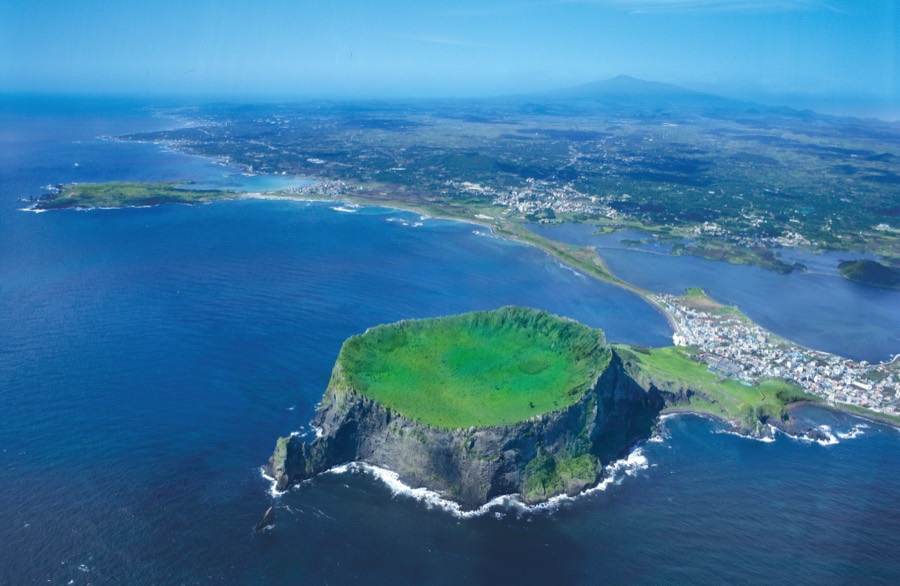
- ›Seongsan Ilchulbong — A volcanic crater rising from the sea; the sunrise seen from its summit is spectacular, giving it the name 'Sunrise Peak.' Details →
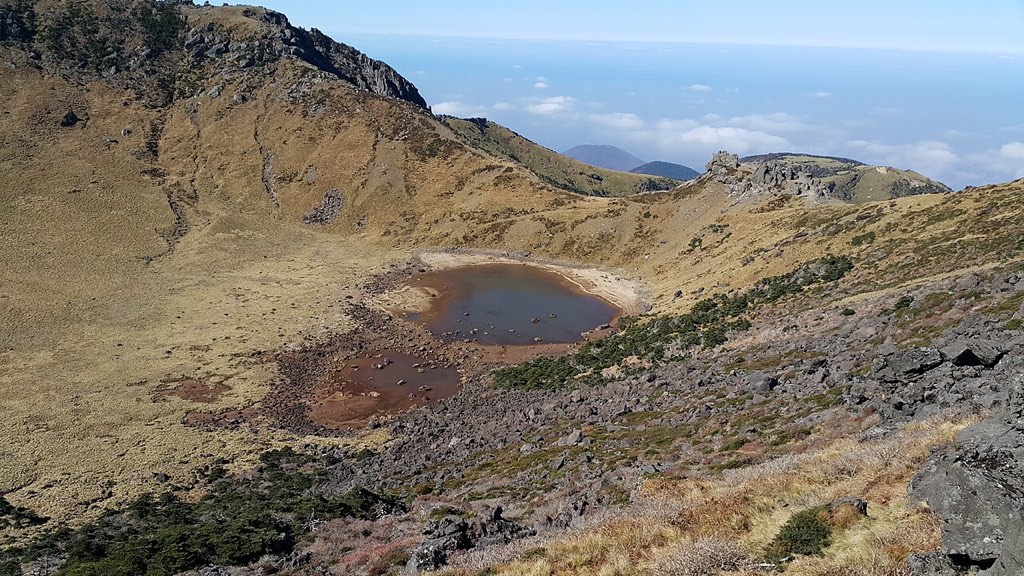
- ›Hallasan — At 1,947 m the highest mountain in South Korea and the heart of the island, crowned by the Baengnokdam crater lake. Details →
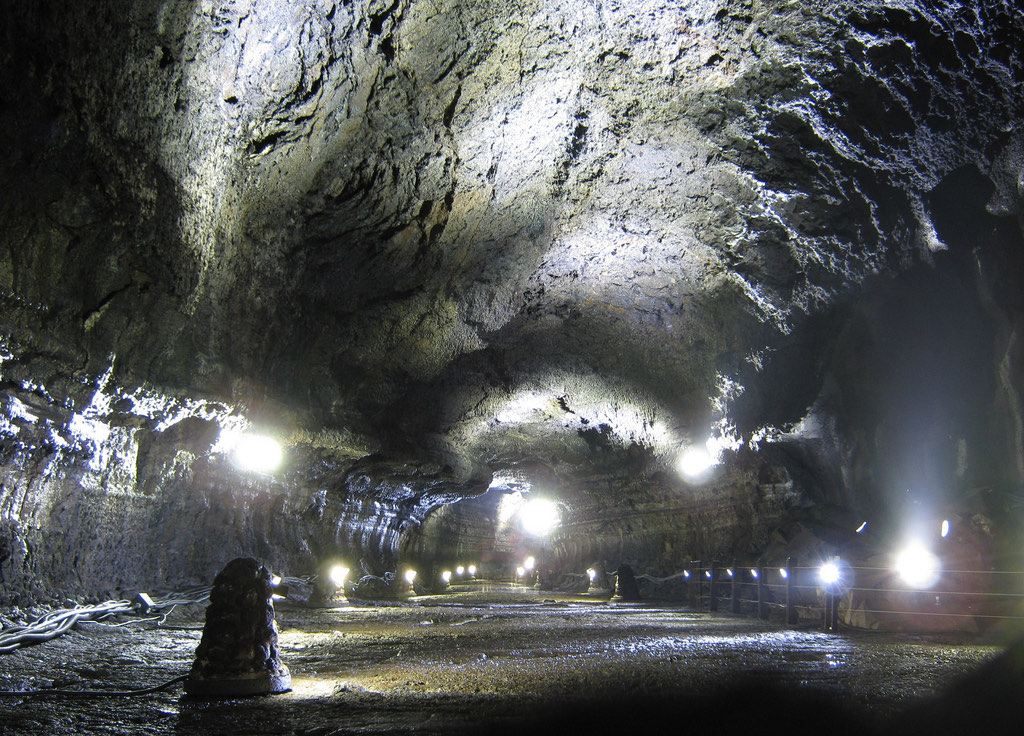
- ›Manjanggul Lava Tube — One of the world's larger lava tubes, revealing how the volcanic island of Jeju was formed. Details →
- ›Olle Trails — Walking routes linking the coast and villages, letting you experience Jeju's nature and daily life at a slow pace.
Jeju is the setting of the Jeju April 3 Incident (1948–1954), which arose amid the turmoil of Cold War and division after Liberation. In the conflict surrounding the establishment of a separate government, many islanders lost their lives, and the event is treated as important in modern history.