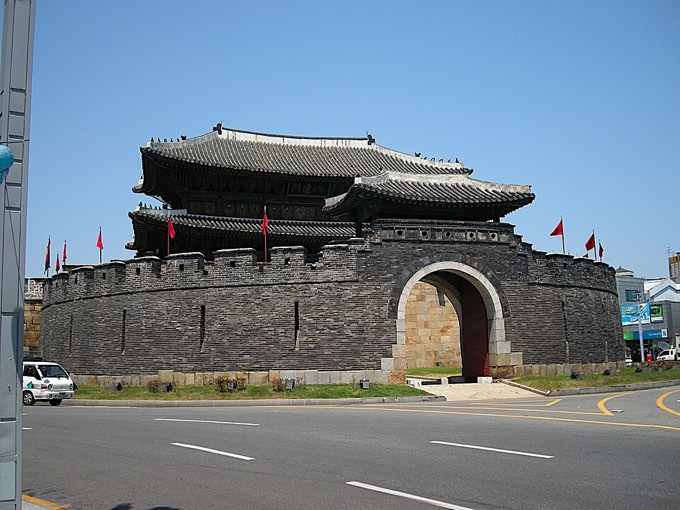
A fortress city that embodies King Jeongjo's vision
Suwon is the main city of Gyeonggi Province just south of Seoul, famous for Suwon Hwaseong Fortress, built by King Jeongjo in the late Joseon period. Walking along the walls you meet gates and pavilions such as Paldalmun, Hwaseomun, and Banghwasuryujeong, while at Hwaseong Haenggung palace, performances re-enact court events of Jeongjo's era. City life and a UNESCO World Heritage site blend together, making it appealing both day and night. Reachable from Seoul by subway, it also makes a fine day trip.
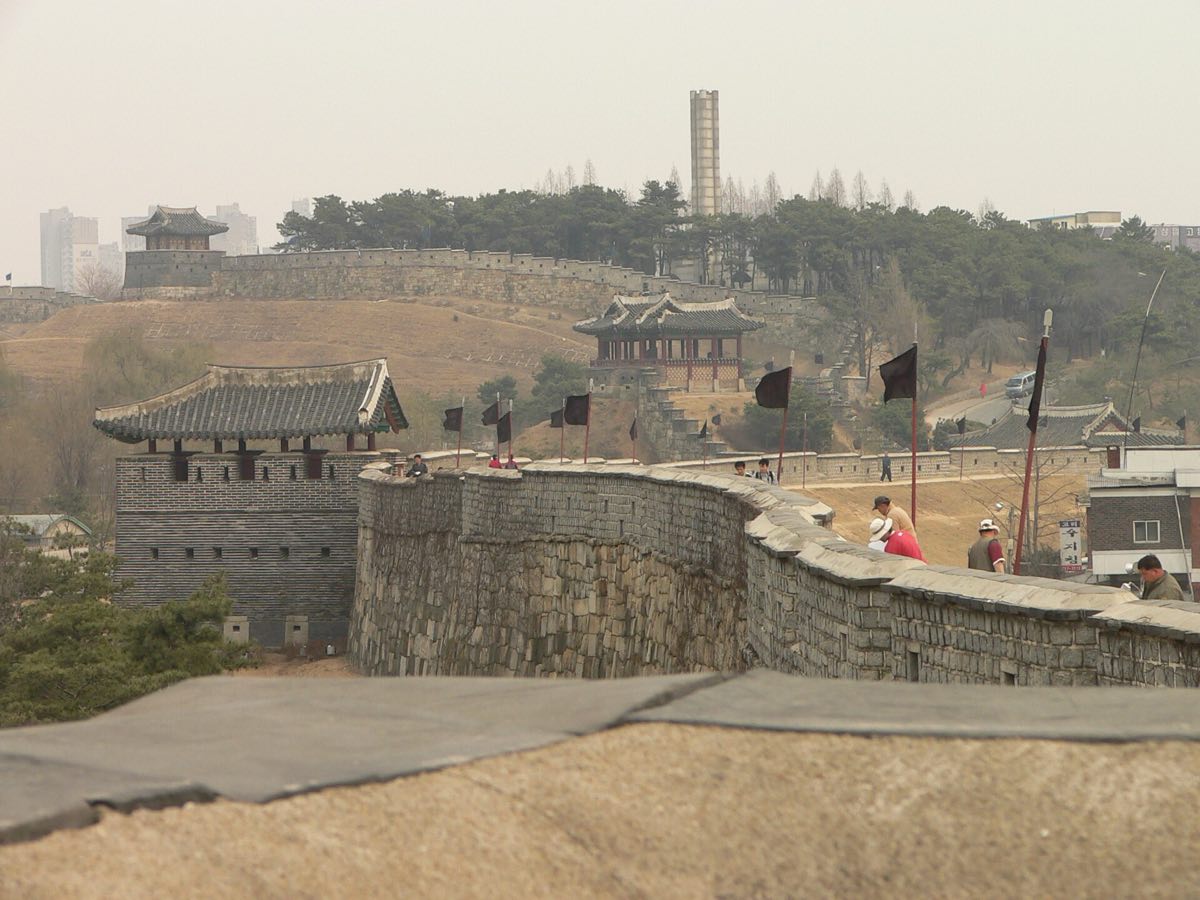
- ›Suwon Hwaseong Fortress — A fortress completed by King Jeongjo in 1796, built with the technology of its day such as Jeong Yak-yong's geojunggi (crane) and inscribed as a UNESCO World Heritage Site. Details →
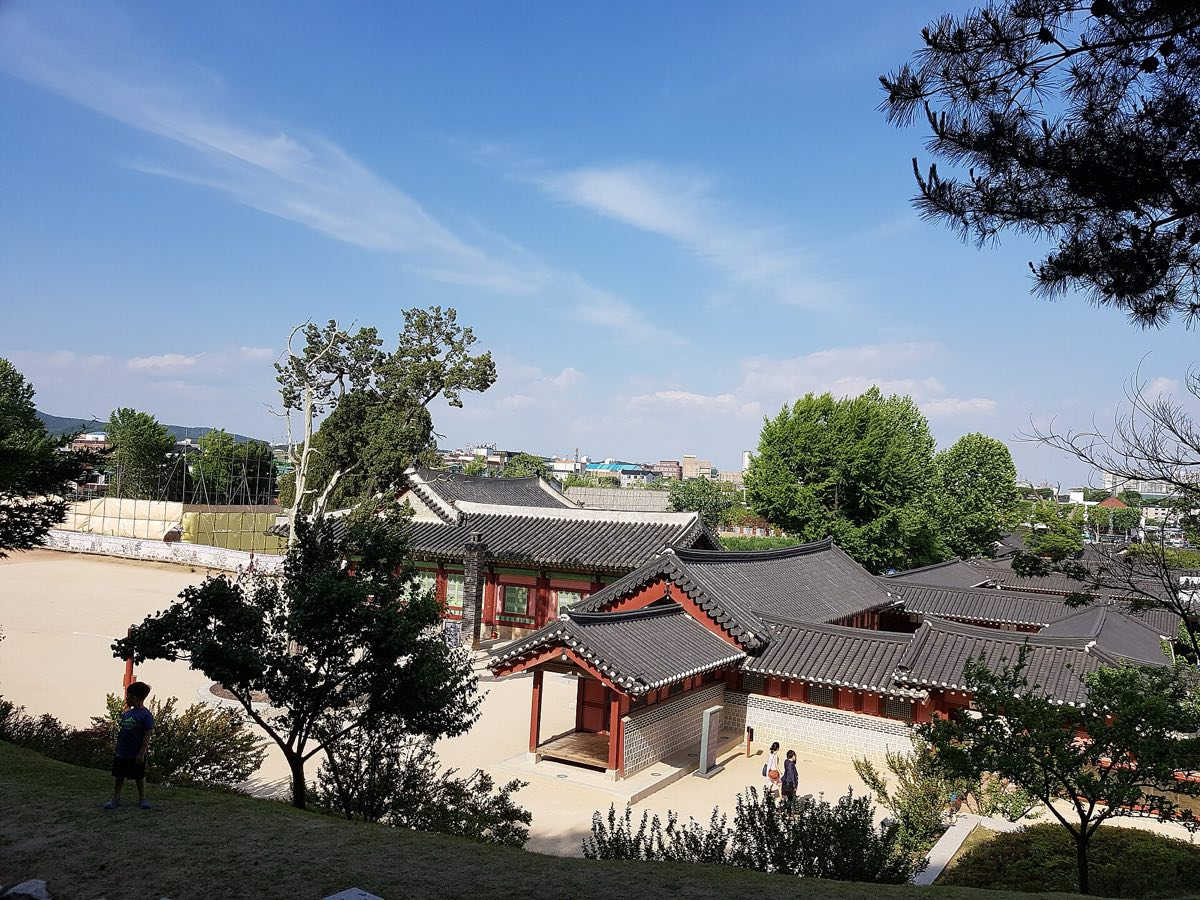
- ›Hwaseong Haenggung — The temporary palace where King Jeongjo stayed on his visits to Hwaseong, now the stage for re-enactments of court martial arts and ceremonies. Details →
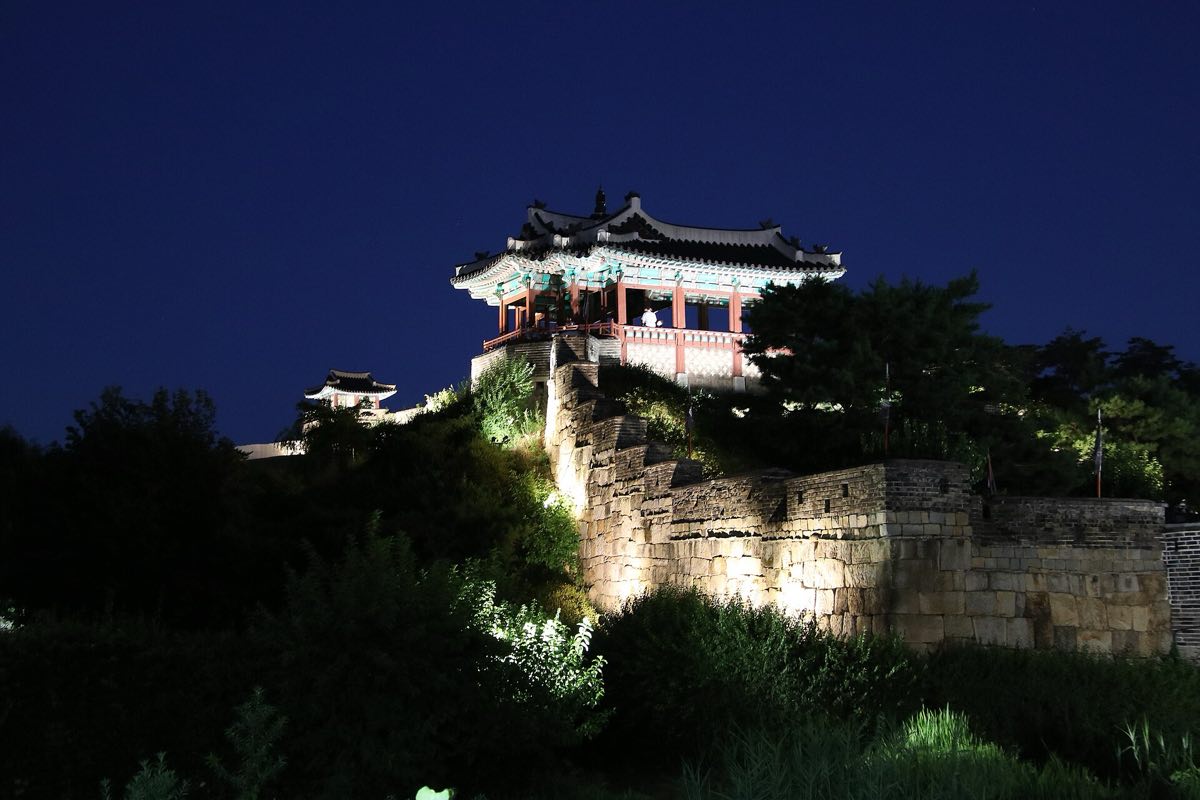
- ›Banghwasuryujeong Pavilion — A pavilion set by a pond on the fortress wall, counted among the most beautiful scenes of Hwaseong. Details →
- ›Paldalmun Market — A traditional market that grew up around Paldalmun, the south gate of Hwaseong, easy to enjoy alongside a walk on the walls.
Suwon Hwaseong is a planned fortress raised by King Jeongjo in 1794–1796 in the late Joseon period, built with the geojunggi (crane) devised by Jeong Yak-yong. It appears in exams as a landmark showing King Jeongjo's reform politics and the achievements of Silhak (Practical Learning).